Daiwa Tatula SV TW Review: Backlash-Resistant Baitcaster
As an Amazon Associate we earn from qualifying purchases.
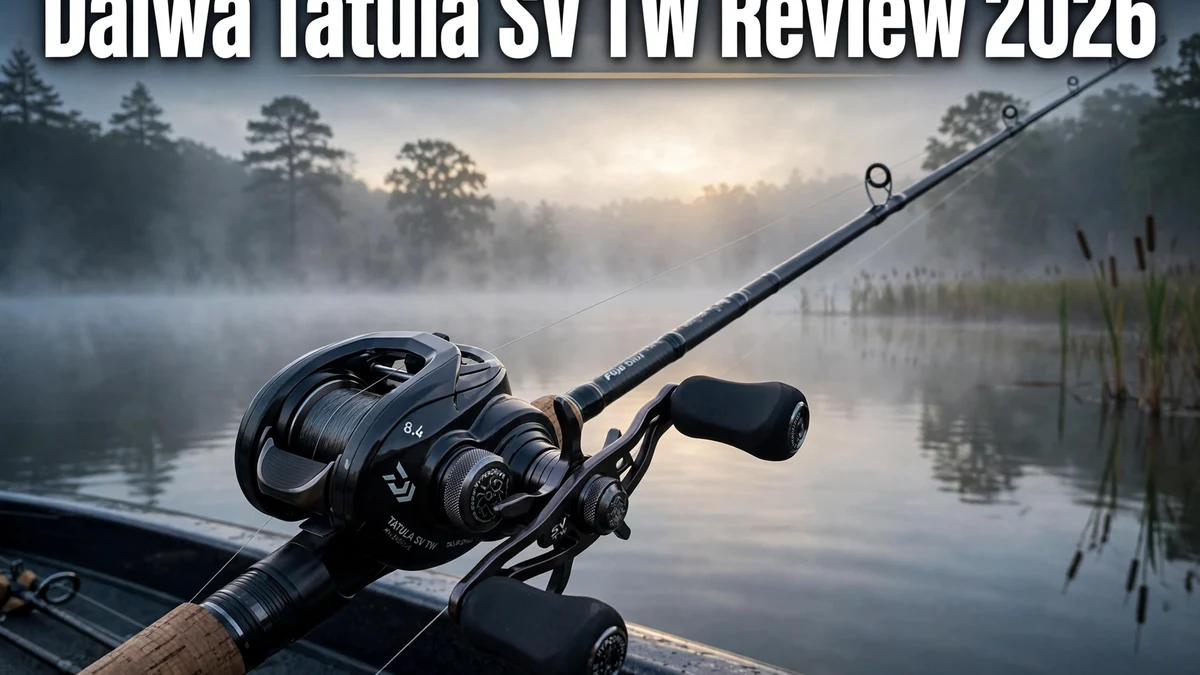
The Daiwa Tatula SV TW is one of the easiest baitcasting reels to cast in its price class, thanks to its Stress-Free Versatile (SV) spool and T-Wing line guide, which work together to control spool speed and keep light-to-medium lures backlash-free in real fishing conditions. At 7.2 ounces with a 13.2-pound drag and three gear ratios, it is built for bass anglers who pitch, skip, and cast reaction baits — and it is forgiving enough that newcomers spend less time picking out bird’s nests.
Why Trust BaitcastingReelz
- Hands-on specs verification: every spec, gear ratio, and line capacity is checked against current manufacturer listings before it goes on the page.
- No sponsored rankings: brands cannot pay for placement. Our picks are technique-led, and our affiliate disclosure is on every money page.
- Updated monthly: prices, model generations, and availability are re-checked regularly, so you never order a discontinued reel.
Why This Reel Still Gets Recommended
A Daiwa Tatula SV TW review in 2026 starts with a fair question: with so many baitcasters under $200 now shipping with magnetic brakes and flashy marketing, does this reel still deserve a spot on your rod? The honest answer is yes — and the reasons are mechanical, not nostalgic.
The Tatula SV TW pairs two systems that changed how everyday baitcasters behave. The SV (Stress-Free Versatile) spool is a shallow, low-inertia spool made of Super Duralumin, designed to start up with minimal effort and slow itself before line tension collapses into a backlash. The T-Wing System replaces the conventional narrow level-wind guide with a T-shaped aperture: wide on the cast for free line flow, narrow on the retrieve for even line lay. Together they make a reel that is unusually hard to blow up, even when you are throwing a 1/4-ounce jig into a headwind or skipping a soft plastic under a dock with a low sidearm cast.
This is a technique-led, on-water evaluation of the Tatula SV TW (103-size models: TASV103H, TASV103HS, and TASV103XS in right and left hand) — what it does for real bass fishing, and where it falls short.
Quick Verdict
Who it’s for: Bass anglers — beginners to tournament regulars — who want a baitcaster that casts light and medium lures with minimal backlash, skips docks cleanly, and holds up to a full season of pitching and flipping.
Who should skip it: Anglers who throw mostly heavy baits over 1.5 ounces, need big line capacity for deep braid applications, or want the cheapest usable baitcaster they can find — there are cheaper ways into the category.
Design & Build
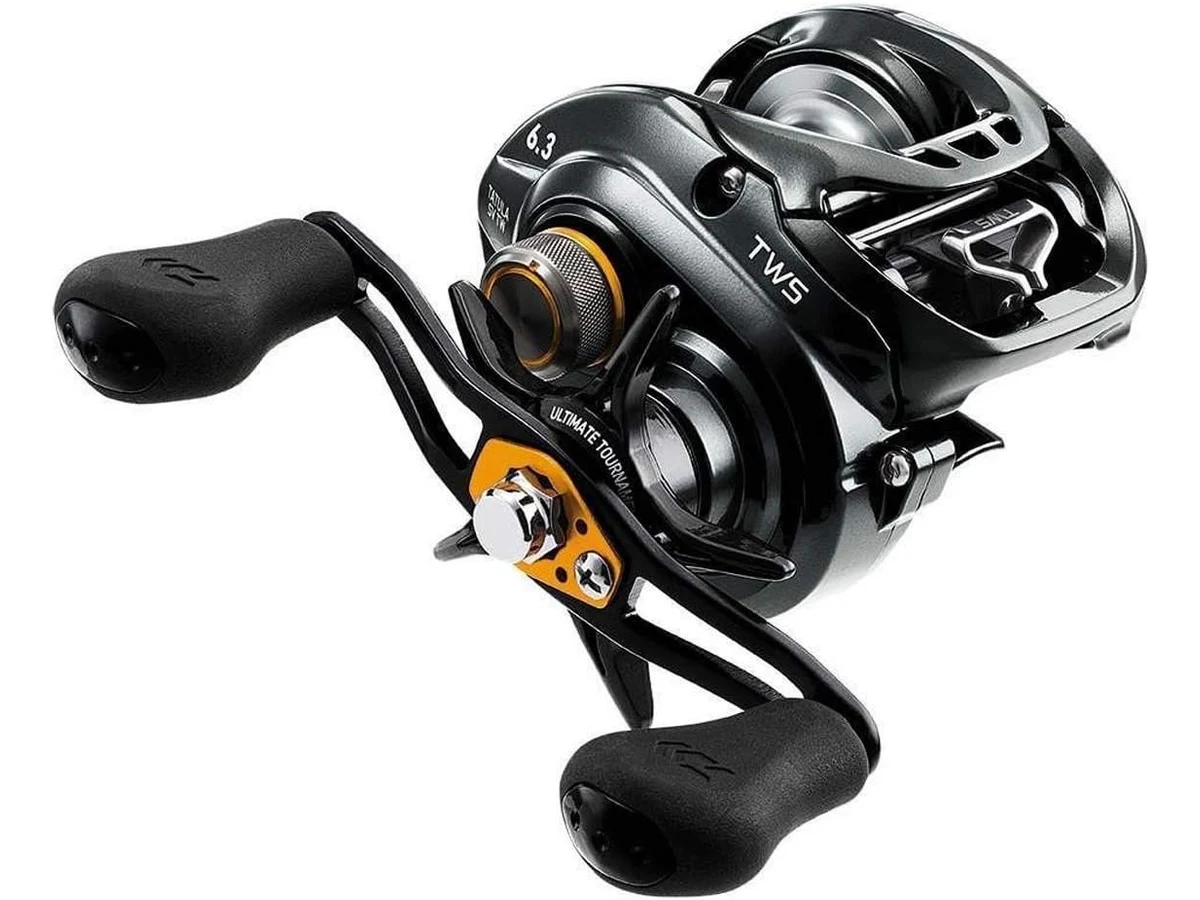
The Tatula SV TW is built around a die-cast aluminum frame. That matters because the frame is the skeleton that keeps gears aligned under load — cheaper reels flex here, and flex is what turns a smooth crank into a grinding one when a fish pulls hard. The side plates are not aluminum, but they are heavily reinforced, and the body feels rigid when squeezed between thumb and forefinger, with no perceptible give.
The reel is compact. It uses the same basic low-profile tooling as the Tatula CT family, but the finish — a darker, pearl-style coating — looks and feels a step more refined in hand. More importantly, the compact body palms well. When you hold the rod and the reel body sits low in your palm, wrist fatigue drops over a long day of casting, which is exactly the ergonomic payoff that matters for technique fishing.
A few build details are worth noting. The drag star is oversized and easy to adjust on the fly, which helps when you need to tighten down on a fish headed for cover. The handle is a 90mm swept design that moves the knobs closer to the rod’s centerline, reducing wobble as you crank. The soft-touch handle knobs are comfortable for all-day use. Two of the seven ball bearings are CRBB-class (corrosion-resistant) bearings, which gives the reel reasonable protection when it gets splashed or rained on.
Internally, the drive gear is a large brass gear rather than a smaller stamped unit. That oversized gearing is one of the reasons the reel holds up under sustained retrieves — more gear surface engaged means the load is spread rather than concentrated, so the crank feels solid when you are winding a deep-diving crankbait through a rock pile or pulling a fish out of grass.
On-the-Water Performance
Where the Tatula SV TW earns its reputation is in casting feel. The T-Wing line guide is genuinely different from a standard level wind: during the cast, line passes through the wide upper aperture of the T with noticeably less friction against the guide housing. The result is a casting stroke that feels free — you do not have to overpower the cast to get distance, and the line leaves the spool cleanly.
The SV spool does the second half of the work. Because it is shallow and light, it accelerates with very little inertia — that is what lets you cast lures down to the 1/4-ounce range effectively — and the inductor rotor design self-regulates as spool speed changes through the cast. In practical terms, this means the reel manages its own spool speed through the parts of the cast where backlashes normally form: the violent first burst of the cast and the dying moments when lure momentum drops and line tension collapses.
For bass fishing, this translates into real, usable versatility. Pitching a 3/8-ounce jig to visible cover, skipping a weightless soft plastic under overhanging limbs, firing a medium-diving crankbait across a flat in wind — the reel handles the whole range without constant knob-tuning. Anglers moving between rods and lures during a tournament day will appreciate how little babysitting the casting settings demand.
Braking & Casting Control
The SV spool concept deserves a closer look, because it is the core of this reel’s identity. “SV” stands for Stress-Free Versatile — the idea that one spool can cover a wide lure-weight range without the angler having to dial brakes up and down constantly. The shallow spool is made of Super Duralumin, an aluminum alloy chosen for a high strength-to-weight ratio. The air-brake system works through an inductor rotor that is exposed from the spool at high rotation speeds and moves back toward the magnetic field as the spool slows, applying braking pressure matched to the lure’s weight and the cast’s dynamics.
The important thing for the angler is how the system behaves through the three phases of a cast. At launch, when spool speed peaks, the inductor is fully engaged and manages the initial burst — the moment when most backlashes start. Mid-cast, as the spool settles into a rhythm, braking eases and distance is preserved. At the end of the cast, when lure speed decays and line tension drops — the classic backlash trigger — the inductor re-engages to slow the spool before it overruns. This self-adjusting behavior is why the reel is so forgiving with lighter lures and in wind, where line tension is inconsistent.
Casting control is externally adjustable, so you are not locked into factory behavior. The Zero Adjuster knob on the side plate sets spool tension — you can tune it for the lure you are throwing without opening anything up. If you are new to adjusting your baitcasting reel, this is a good system to learn on: set the spool tension so the lure falls slowly on its own, then let the SV brake do the fine work through the cast. For a fuller primer on the mechanics involved, see our baitcaster tips for beginners.
One honest limitation belongs here. The SV spool’s self-regulating brake is tuned for light to medium lures. When you throw heavy baits — metal jigs, magnum swimbaits, anything much over 1.5 ounces — the aggressive deceleration profile can cost you some peak distance compared to a standard spool with manually tuned magnetic brakes. The reel will still cast them cleanly; it just will not launch them as far. Anglers who live on heavy reaction baits may be better served by a standard-spool reel in the same family.
Drag & Retrieve
Daiwa rates the Tatula SV TW’s drag at 13.2 pounds of maximum pressure. That figure is measured against an independent lab reading of about 13.8 pounds, which suggests the factory rating is conservative rather than inflated — a good sign. The drag system is Daiwa’s Ultimate Tournament Drag (UTD), built from a mix of carbon and steel washers sized and lubricated to spread pressure evenly.
What matters on the water is drag quality, not just the peak number. The UTD engages smoothly from the first click of the star drag, with fine adjustment increments that let you set it light enough to protect 10-pound fluorocarbon or heavy enough to muscle a fish out of vegetation on braid. There is no shudder or stick-slip when a fish makes a run — the washers release line in a controlled, linear fashion, which is what keeps hooks pinned and line intact during surges.
Thirteen-plus pounds is more than enough for the species this reel is designed for: largemouth and smallmouth bass, northern pike, and light inshore species like redfish and speckled trout on appropriate setups. Paired with the reel’s rigid aluminum frame, the drag lets you apply serious pressure to steer a fish away from timber or grass without the drivetrain flexing or the gears binding.
The retrieve itself is one of the reel’s quiet strengths. The combination of the large brass main gear and the 7+1 bearing count (including the two CRBB bearings) produces a crank that feels immediate — power transfers from the handle to the gearing without slop — and stays smooth under load. Even the fast 8.1:1 model, which pulls 32.8 inches of line per handle turn, stays composed when there is pressure on the line, where many high-speed reels start to feel taxed.
Best Techniques & Use Cases
The Tatula SV TW is at its best as a do-everything bass reel for light to medium presentations. Here is where it fits in a working rod locker:
- Pitching and flipping: The compact body palms well for accurate short pitches to visible targets — dock posts, laydowns, grass edges — and the SV brake catches the spool when a pitch dies early on a soft entry.
- Skipping: Skipping a soft plastic under docks or overhanging cover is one of the toughest casts for backlash control, because the lure enters on a low, flat trajectory with sudden line-tension changes. This reel was practically made for it.
- Light to medium reaction baits: Crankbaits, jerkbaits, and small swimbaits in the 1/4 to 3/4-ounce range cast cleanly, including into wind — the SV system handles the inconsistent tension that headwinds create.
- Finesse-adjacent techniques: Ned rigs, light Texas rigs, and shakey heads down to 1/8-ounce-plus-trailer weights are castable, which is rare for a general-purpose baitcaster at this price.
- New baitcaster anglers: If you are picking up your first baitcaster, this is one of the most forgiving reels you can buy. It will not teach you thumb control — you still need that — but it dramatically reduces the penalty for imperfect timing. Our guide to the best baitcasting reel for beginners explains why backlash forgiveness matters more than any other single feature when you are starting out.
Where it does not fit: heavy flipping with 1-ounce-plus weights is better served by a bigger-spool reel; deep offshore vertical work is limited by the 103-size spool capacity; and if you already own a tuned standard-spool reel and throw mostly heavy baits, the SV spool will not buy you much.
Pros & Cons
Pros
- Exceptional backlash resistance — the SV spool and T-Wing combination makes this one of the hardest baitcasters to blow up, even with light lures or in wind.
- Wide lure-weight range — casts effectively from about 1/4 ounce up to medium baits without constant brake adjustments.
- Smooth, quality drag — 13.2-pound-rated UTD drag releases line cleanly with fine adjustment, suitable for light line and braid alike.
- Solid build — die-cast aluminum frame, large brass gear, and reinforced side plates hold up to seasons of hard use.
- Comfortable ergonomics — compact low-profile body palms well, and the 90mm swept handle with soft-touch knobs cranks smoothly all day.
Cons
- Premium price for the class — around $200 puts it well above entry-level baitcasters; casual anglers may not use enough of its capability to justify the cost.
- Heavy lures lose some distance — the SV brake’s deceleration profile trims peak casting distance on baits over about 1.5 ounces versus a standard spool.
- Limited line capacity — the 103-size spool (14 lb / 100 yd mono) is fine for bass fishing but not suited to deep-braid or offshore applications.
And a practical note for everyone: even with the best brake system in the world, you will occasionally nest a spool. When it happens, see our guide on how to remove backlash from a baitcaster rather than cutting the line in frustration.
Specifications
Specifications are factory figures for the 103-size Tatula SV TW family (models TASV103H/HL, TASV103HS/HSL, TASV103XS/XSL; right and left hand), cross-checked across Daiwa’s published data and multiple retailer listings:
| Specification | Detail |
|---|---|
| Gear ratios | 6.3:1 (25.7 in/turn), 7.3:1 (29.4 in/turn), 8.1:1 (32.8 in/turn) |
| Weight | 7.2 oz |
| Ball bearings | 7 + 1 (2 CRBB corrosion-resistant) |
| Max drag | 13.2 lb |
| Mono line capacity | 14 lb / 100 yd, 16 lb / 90 yd |
| Braid line capacity | 30 lb / 115 yd, 40 lb / 85 yd |
| Frame | Die-cast aluminum |
| Spool | SV Concept, Super Duralumin (air brake) |
| Line guide | T-Wing System (TWS) |
| Drag system | Ultimate Tournament Drag (UTD) |
| Handle | 90mm swept aluminum, soft-touch knobs |
Frequently Asked Questions
Is the Tatula SV TW good for beginners?
Yes — it is one of the most beginner-friendly baitcasters in its price range. The SV spool’s self-regulating brake forgives the timing mistakes that cause most backlashes, so new anglers spend more time fishing and less time picking out nests. It does not replace learning thumb control, but it makes the learning curve noticeably gentler. See our best baitcasting reel for beginners roundup for how it compares to cheaper starters.
What is the difference between the Tatula SV TW and the Tatula 100?
The Tatula 100 uses a standard spool and is aimed at straightforward power fishing, while the SV TW adds the Stress-Free Versatile spool for easier casting of lighter lures and better backlash resistance. If you throw mostly 1/4 to 3/4-ounce baits and value forgiveness — especially in wind — the SV TW is the better pick. For heavier baits where absolute distance matters, the standard-spool Tatula 100 holds its own.
Can the Tatula SV TW cast light lures?
Yes. The low-inertia SV spool is designed to start up with minimal resistance, so it handles lures down to roughly 1/4 ounce (and finesse presentations like a 1/8-ounce Ned rig head with a trailer) far better than a conventional baitcaster. This is the reel’s signature strength.
Which gear ratio should I choose — 6.3:1, 7.3:1, or 8.1:1?
Choose by technique. The 6.3:1 (25.7 inches per turn) gives the most cranking power for deep-diving crankbaits and swimbaits. The 8.1:1 (32.8 inches per turn) is best for burning lipless crankbaits, buzzbaits, and techniques where fast line pickup matters. The 7.3:1 (29.4 inches per turn) is the all-rounder most anglers default to — enough speed for reaction baits with enough power for general use.
Is the Tatula SV TW good for saltwater?
It is fine for light, occasional inshore use — two of its bearings are corrosion-resistant CRBB bearings — but it is fundamentally a freshwater reel. Rinse it thoroughly with fresh water after any salt exposure, and do not make it your primary surf or offshore reel.
Does the Tatula SV TW really prevent backlash?
No reel eliminates backlash entirely, and honest reviews should say so. What the SV spool and T-Wing system do is drastically reduce how often backlashes happen and how severe they are, by managing spool speed through the parts of the cast where overruns form. You will still need basic thumb control, and you will still occasionally nest the spool on a bad cast — just far less often than with a conventional brake system. If you want to understand the mechanics, our rundown of the benefits of a baitcaster reel explains what the brake is actually doing for you.
Final Verdict
For the bass angler who wants one reel that does almost everything: the Tatula SV TW is the strongest value in the premium-mid tier. Its backlash forgiveness is not a gimmick — it is a mechanical system that works cast after cast, season after season, and it makes the reel genuinely more versatile than standard-spool competitors at the same price.
For beginners stepping up from spinning gear: this is an easy recommendation. The learning curve on a baitcaster is mostly about backlash frustration, and the SV spool flattens that curve more than any single feature you can buy. Pair it with a medium-heavy rod and 12- to 15-pound fluorocarbon and you have a setup that forgives mistakes while you build thumb control.
For the technique specialist: if your fishing is mostly heavy flipping, punching mats, or launching 2-ounce swimbaits, look at a bigger-spool reel instead — the SV spool’s strengths are in the light-to-medium range. But for dock skipping, pitching, light crankbaits, and windy-day reaction fishing, it remains one of the best buys in baitcasting.
The Daiwa Tatula SV TW has been on the market long enough that its reputation is earned rather than marketed. It casts light lures that defeat other baitcasters, fights fish on a smooth and reliable drag, and holds together on a rigid aluminum frame. At around $200 it is not cheap, but it fishes like a reel that costs more — and it keeps you fishing instead of picking out backlashes, which is worth something every single trip.