Tackle Buyer’s Guide · 2026
Best Baitcasting Reels for Beginners (2026)

Your first baitcaster decides whether you fall in love with the technique or go home frustrated. These are the best baitcasting reel for beginners picks we can recommend — brakes you can actually tune, spools that behave, and prices that do not punish mistakes.
The best baitcasting reel for beginners is not the most expensive one. It is the reel that behaves predictably while you learn thumb control: brakes that respond to a dial, a spool that forgives a slightly early release, and a frame rigid enough that hooksets do not feel vague.
We focused on low-profile 100- and 150-size reels for freshwater bass fishing and judged every pick on what matters to a new caster: brake understandability, cast consistency across lure weights, drag smoothness, and whether the reel still earns deck space after the learning curve flattens. Below: technique-led, on-water evaluation plus the setup routine we give every beginner we teach.
Beginner picks at a glance
Beginner baitcasting reels compared
Prices move with sales and seasons — check the live listing before you buy.
| Reel | Best for | Gear ratio | Weight | Bearings | Max drag | Approx. price |
|---|---|---|---|---|---|---|
| Shimano SLX A 150 | All-round first baitcaster | 6.3:1 / 7.2:1 / 8.2:1 | 6.9 oz | 5+1 | 12 lb | ~$100 |
| Daiwa Fuego CT | Magnetic-brake learning | 6.3:1 / 7.3:1 / 8.1:1 | 7.6 oz | 7+1 | 13.2 lb | ~$100 |
| Lew’s Speed Spool LFS | All-day comfort | 6.8:1 / 7.5:1 / 8.3:1 | 7.5 oz | 10+1 | 15 lb | ~$100 |
| Abu Garcia Revo X | Power techniques | 6.6:1 / 7.3:1 | 7.6 oz | 7+1 | 18 lb | ~$100 |
| Abu Garcia Max X | Cheapest safe start | 6.4:1 | 7.7 oz | 7+1 | 15 lb | ~$60 |
Best baitcasting reels for beginners: full reviews
Best overall beginner baitcasting reel
Shimano SLX A 150
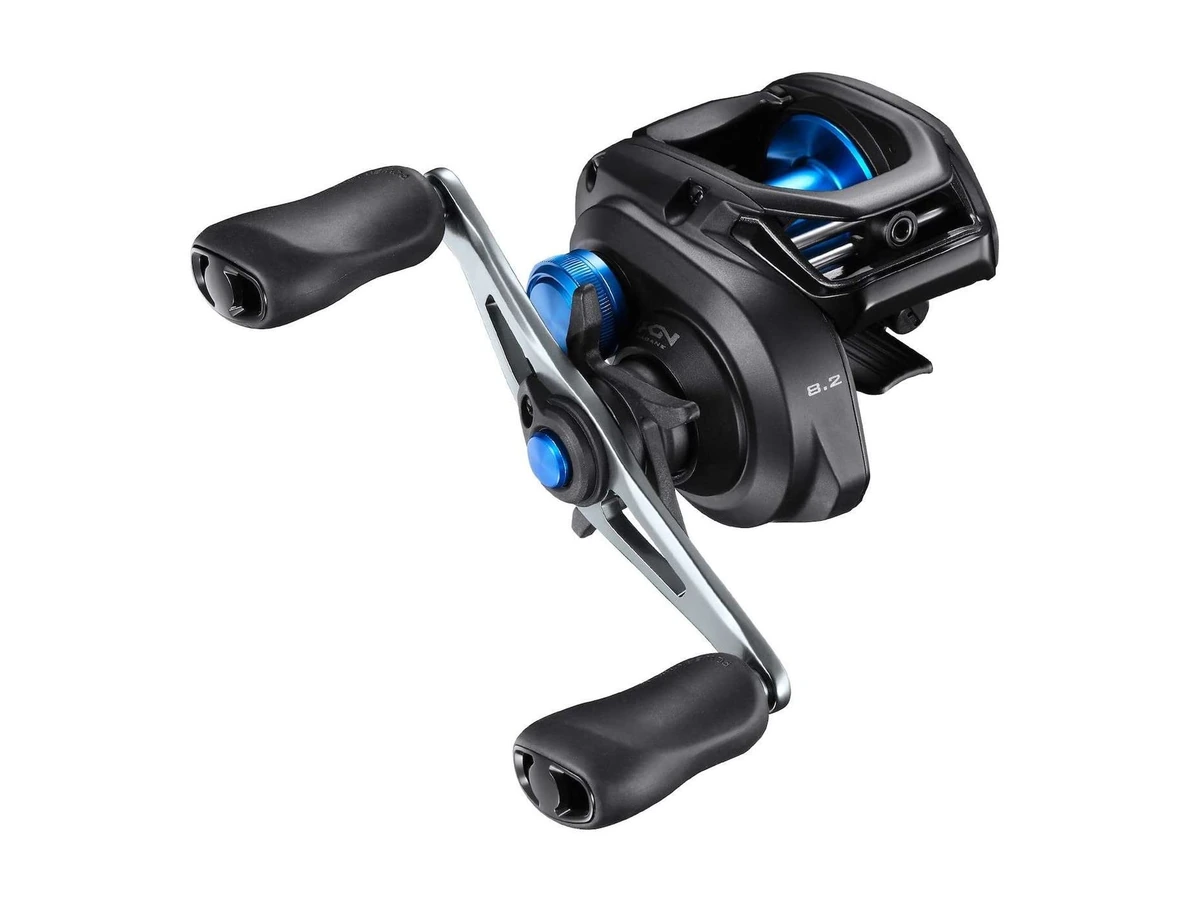
The Shimano SLX A 150 is the reel we hand to beginners more than any other. Its Hagane aluminum body removes the two biggest beginner failure modes — a flexy frame that makes hooksets feel mushy, and a brake that is either on or off.
The SVS Infinity centrifugal brake has external adjustment — you can dial it for a 3/8 oz jig, then back it off for a 1/2 oz spinnerbait without popping the side plate. That feedback loop is exactly what a learner needs. Spool it with 14 lb monofilament and the core Shimano hardware (X-Ship gear support, S A-RB bearings) means this is no disposable trainer reel: it is a legitimate workhorse you will still fish years from now.
Pros:
- Rigid aluminum Hagane body — no flex on hooksets
- Externally adjustable centrifugal brakes are easy to tune per lure
- Smooth X-Ship gears feel premium for the price
- Available in 6.3:1, 7.2:1 and 8.2:1 — pick one, learn, then specialize
Cons:
- Brake pins need occasional cleaning after heavy use
- Handle knobs are serviceable but plain at this price
Pair it with: a 7’0″ medium-heavy, fast-action rod and 14 lb monofilament for the learning phase, switching to 30 lb braid once thumb control is automatic.
Best magnetic-brake beginner reel
Daiwa Fuego CT
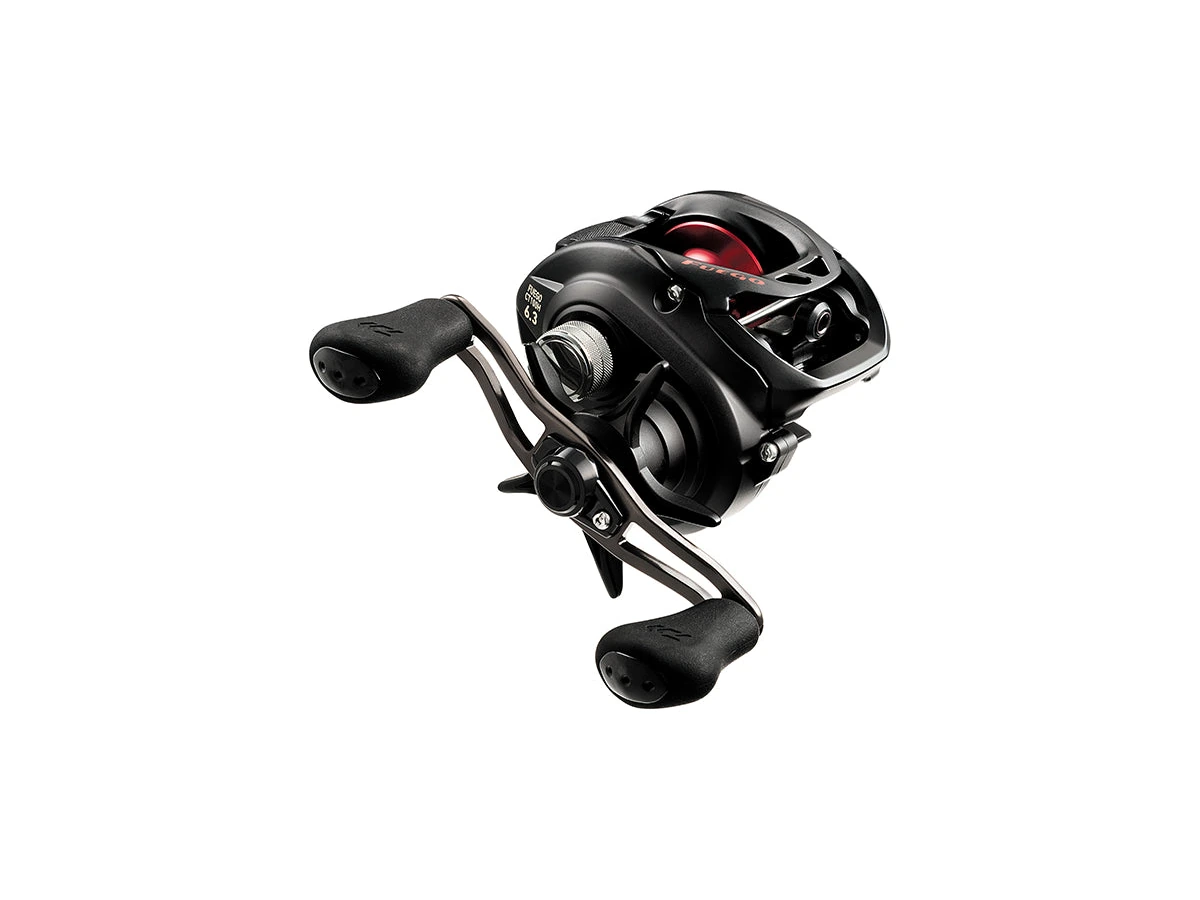
Magnetic brakes are the training wheels of baitcasting: unlike centrifugal pins that bite hardest at the start of the cast and fade at the end, a magnetic brake applies constant, predictable resistance through the whole cast. Daiwa’s Magforce-Z system in the Fuego CT is the most forgiving implementation under $100, and it shows the moment a new caster tries their first cast into a light breeze — the spool simply does not run away.
The 100-size CT body palms beautifully for smaller hands, and the T-Wing line guide (Daiwa’s T-shaped levelwind) widens on the cast to reduce line friction — free distance without forcing the cast, and forcing the cast is the number-one cause of backlashes. The frame is not as rigid as the SLX under heavy cranking, but for pure learnability this is the reel most likely to keep a beginner casting instead of re-tying.
Pros:
- Magnetic brake dial is intuitive — turn up, cast, relax
- T-Wing line guide reduces friction and adds free distance
- Compact CT body palms well for smaller hands
- Excellent value at roughly $100
Cons:
- Frame is not as rigid as the Shimano SLX under heavy loads
- Cosmetic finish scuffs more easily
Pair it with: a 6’10” medium, fast-action rod and 12 lb monofilament — the lightest setup in this guide, ideal for smaller hands.
Best ergonomics for long learning days
Lew’s Speed Spool LFS
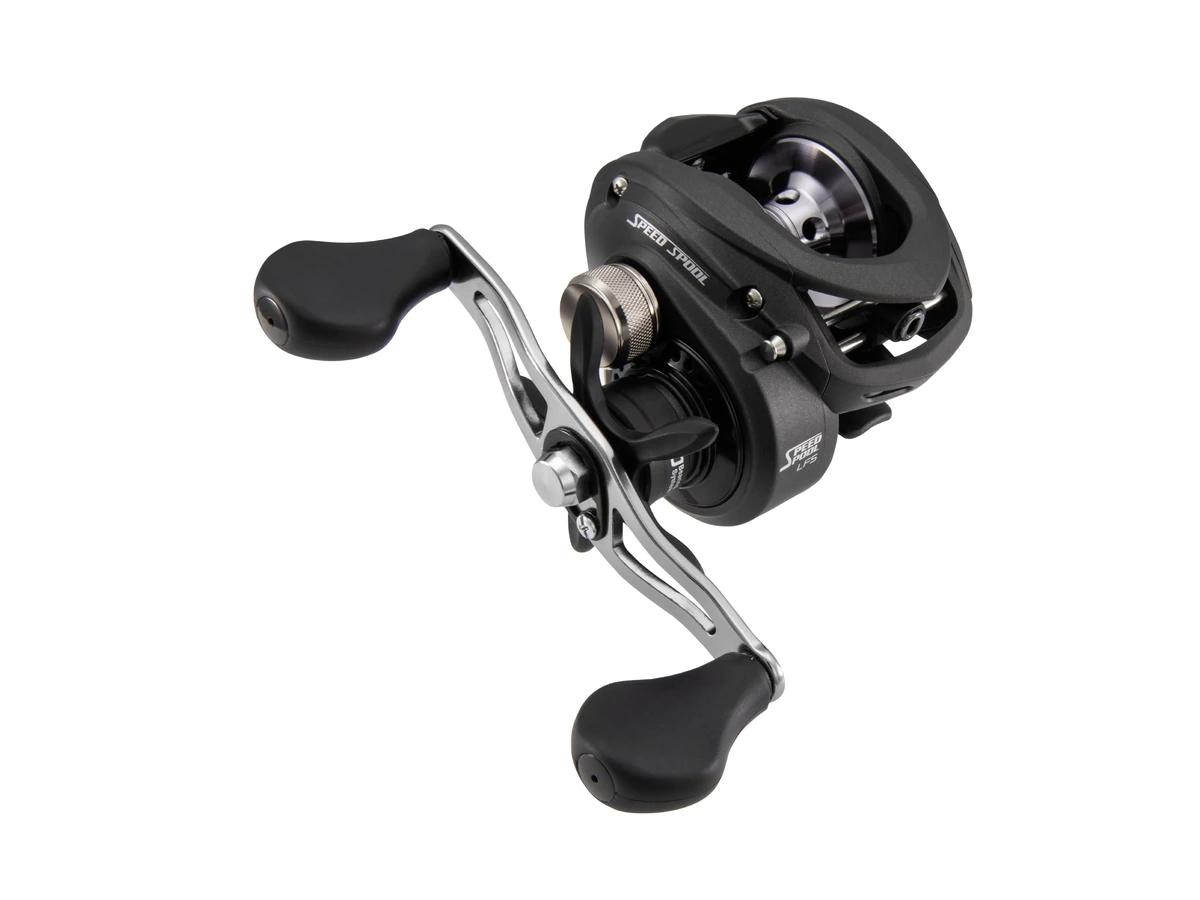
Here is something beginners rarely consider until their fourth hour on the water: the reel has to feel good in your hand for hundreds of casts. The Speed Spool LFS is Lew’s compact one-piece graphite-frame design, and it is the most comfortable reel in this price class to palm — the low profile lets your thumb ride the spool naturally, which is where thumb control actually develops.
The externally adjustable Multi-Setting Brake (MSB) is a dual system — magnetic plus centrifugal — giving you constant magnetic pressure plus early-cast pin bite. The LFS casts 1/4 oz to 3/4 oz lures without drama, and the 6.8:1 ratio (roughly 28 inches per turn) is the sweet spot for general bass work. The bowed handle with Winn Dri-Tac knobs grips well with wet hands, a premium touch at this price. The graphite frame will not stay as tight as aluminum after years of heavy flipping, and the spool tension cap can back off slightly — check it when you re-tie.
Pros:
- Extremely comfortable compact body for long sessions
- Dual magnetic + centrifugal MSB brake is easy to fine-tune
- Winn Dri-Tac knobs grip well with wet hands
- 15 lb drag and 10+1 bearings at the $100 mark
Cons:
- Graphite frame flexes slightly more than aluminum rivals
- Spool tension cap can back off — check it when re-tying
Pair it with: a 7’0″ medium-heavy rod and 15 lb fluorocarbon once you are past the backlash phase — the LFS rewards a step up in line quality.
Best beginner reel for power techniques
Abu Garcia Revo X
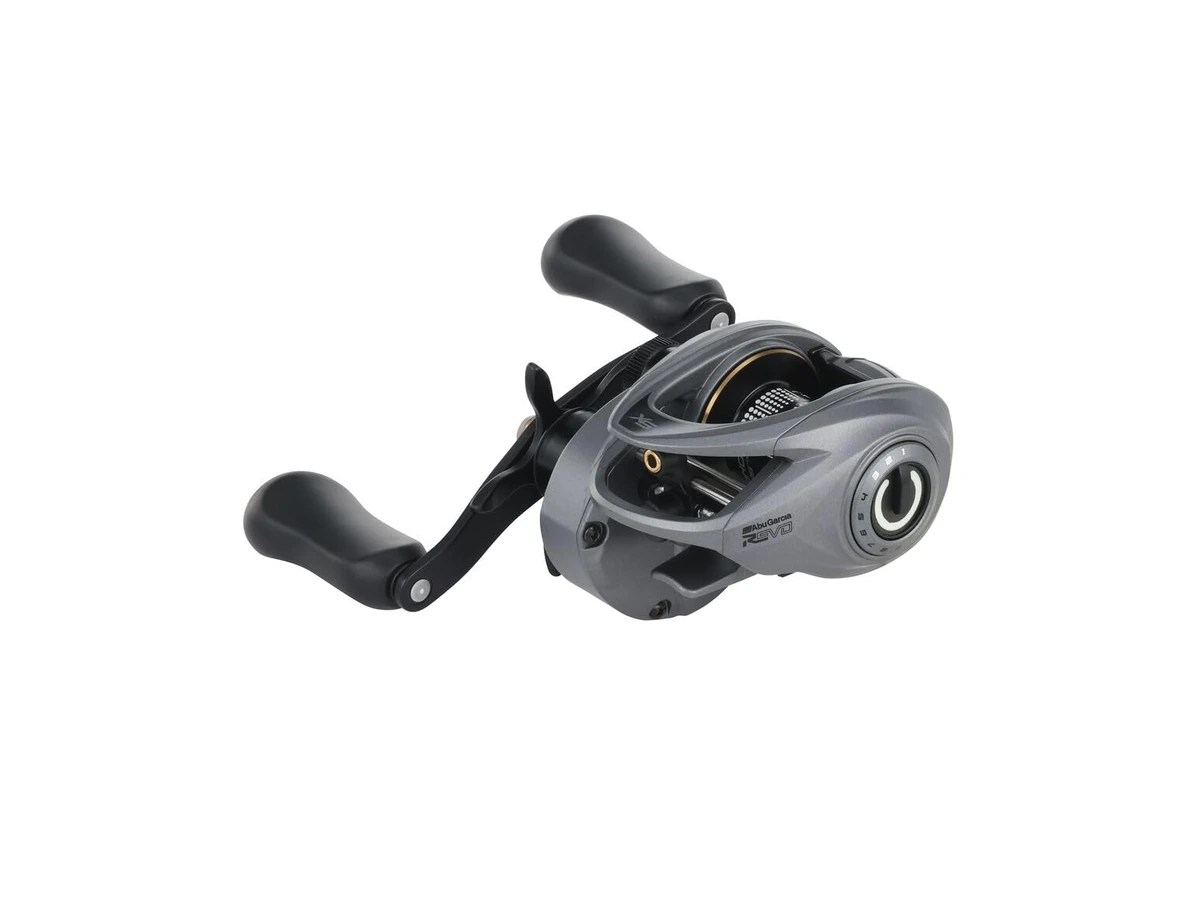
Not every beginner starts with finesse. If your plan is flipping jigs into brush, frogging mats, or cranking through timber — the kind of fishing where you set the hook like you mean it — the Revo X is the entry-level reel built for it. The headline spec is the Power Stack Carbon Matrix drag: 18 lb of smooth, stackable stopping power, which is serious overkill for a $100 reel and exactly what you want when a bass buries in cover on your first season’s best bite.
The MagTrax magnetic brake is a straightforward external dial — fewer settings to overthink — and the X2-Cräftic alloy frame keeps the reel compact despite the beefy internals. The 7.3:1 ratio picks up about 30 inches per turn: fast enough to keep a frog moving, torquey enough for a jig. The honest caveat is that it prefers 3/8 oz and up — it is less forgiving on light lures than the Fuego CT, and the MagTrax dial has fewer detents. But for heavy-cover beginners, nothing else at this price brings this much drag and backbone.
Pros:
- 18 lb carbon drag — best in class at this price
- X2-Cräftic alloy frame stays rigid on hard hooksets
- Simple external MagTrax dial, easy to understand
- 7.3:1 ratio balances speed and winching power
Cons:
- Less forgiving on light lures under 3/8 oz
- Fewer brake detents than Daiwa magnetic systems
Pair it with: a 7’3″ heavy, fast-action flipping stick and 50 lb braid — lean into what this reel was built for.
Best ultra-budget first baitcaster
Abu Garcia Max X
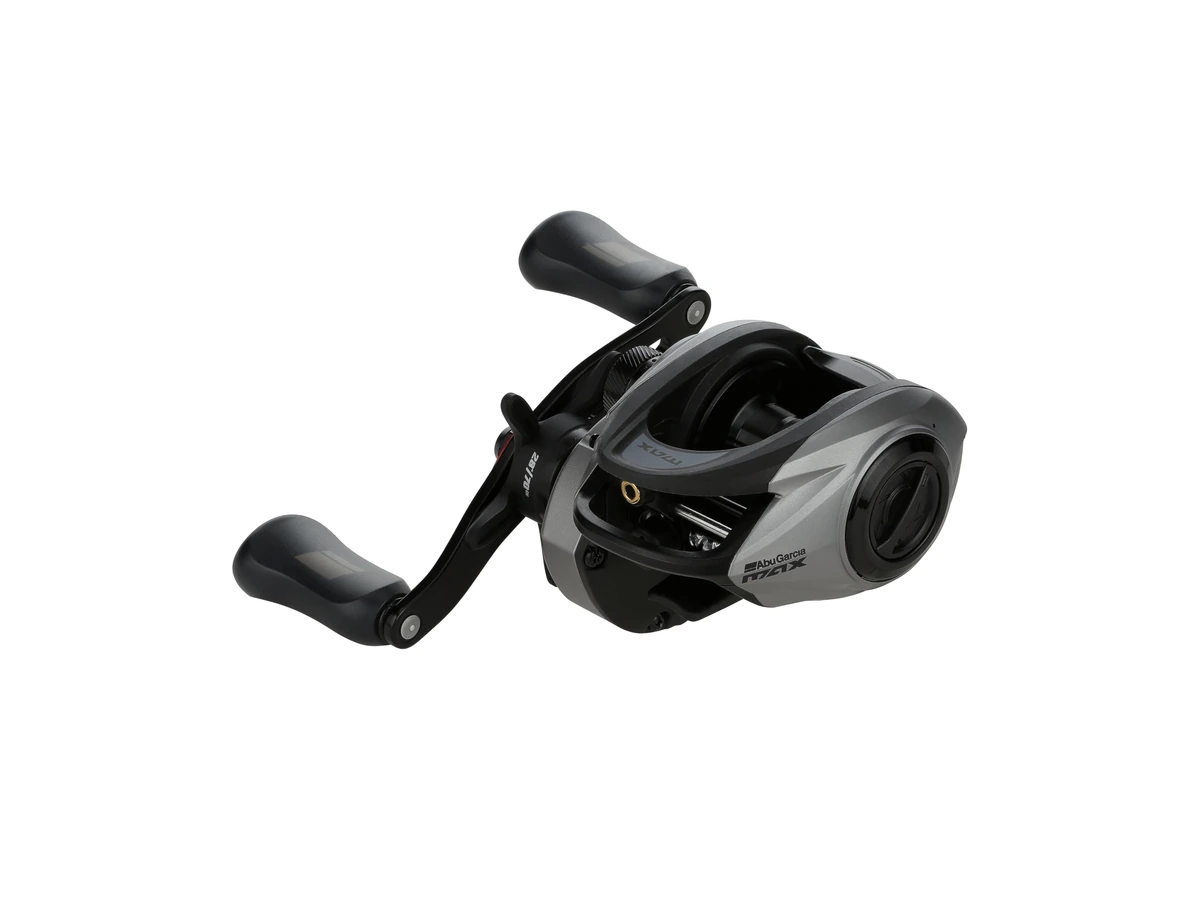
The Max X answers one question honestly: what is the cheapest baitcaster that will not ruin the experience? At roughly $60, it carries the same MagTrax magnetic brake concept as its pricier Abu siblings — an external dial that is genuinely understandable on day one — in a light graphite frame.
Spool it with 14 lb mono, tie on a 1/2 oz practice plug, set the MagTrax dial high, and you will make clean casts while learning the same fundamentals — spool tension, brake setting, thumb finish — that transfer to any reel you buy later. The 6.4:1 ratio is a sensible all-around choice. What you give up is refinement: gears are not as silky as the SLX, the frame flexes more on hard hooksets, and heavy weekly use shows wear sooner.
Pros:
- Lowest price of any reel we can actually recommend
- External MagTrax dial is beginner-friendly
- Light graphite frame is easy on the wrist
- Good for pond bass, docks, and light cover
Cons:
- Gears and finish feel budget next to $100 reels
- Frame flex is noticeable on hard hooksets
Pair it with: an inexpensive 6’6″ medium-heavy combo rod and 14 lb monofilament — keep the whole first setup under $120.
How we evaluate beginner baitcasting reels
Every reel here was judged on five criteria: brake understandability (can a new angler set it from our guide alone?), cast consistency across 1/4 oz to 3/4 oz lures in calm and breezy conditions, drag smoothness on real fish, ergonomics over a full day, and value after the learning curve flattens.
Our framing is technique-led and on-water: Texas rigs around docks, spinnerbaits on windy banks, jigs in brush, topwater at dawn. We weight forgiveness over peak performance — a reel that casts slightly shorter but backlashes far less is the better beginner reel, every time.
Buying guide: what actually matters in a first baitcaster
Gear ratio and IPT: the numbers that matter
Gear ratio is spool turns per crank: 6.x:1 for power, 7.x:1 all-around, 8.x:1 for speed techniques. The number that truly matters is IPT (inches per turn) — actual line recovered per crank. For a first reel, 6.x:1 to 7.x:1 covers nearly everything.
Braking systems: magnetic vs centrifugal vs dual vs digital
Magnetic brakes apply constant resistance via an external dial — easiest to learn (Fuego CT, Abu MagTrax). Centrifugal brakes use pins that bite hardest at cast start; Shimano’s SVS Infinity adds external adjustment. Dual combines both; digital/DC (Shimano DC) reads spool speed with a microchip — closest to backlash-proof, at a premium. Beginners: magnetic first, adjustable centrifugal second.
Backlash: the fear, demystified
A backlash (“bird’s nest”) happens when the spool outruns the line. No reel is 100% backlash-proof. The cure is a system: correct spool tension, enough brake for conditions, a smooth cast, and thumb pressure to stop the spool the instant the lure lands.
Spool, drag, bearings, and frame
A lighter, shallower spool starts easier and casts light lures better; deeper spools hold more line. Drag washers should be carbon or carbon-matrix — a jerky drag pulls hooks. Bearing quality (stainless, shielded, corrosion-resistant) matters more than the count. Aluminum frames resist flex on hooksets; graphite is lighter and cheaper but flexes more. A rigid frame like the SLX’s Hagane body is a genuine long-term advantage.
Line, line capacity, and hand retrieve
Start with 12–15 lb monofilament: cheap, forgiving, and far easier to pick out after a backlash than braid. Hold at least 110–120 yards so a break-off does not end the day. Most reels come in left- and right-hand retrieve; right-hand casters often prefer left-hand retrieve to keep the dominant hand on the rod.
Price tiers and freshwater vs saltwater
Expect quality steps at roughly $60 (usable learner), $100 (legitimate long-term reels — every pick here), $150–$250 (refinement and DC brakes), and $300+ (flagships). These are freshwater reels: occasional saltwater use is survivable if you rinse with fresh water after every trip, but dedicated saltwater reels have sealed bearings these lack — see our saltwater guide if the coast is your home water.
Setup guide: dial in your reel in 10 minutes
1. Set spool tension for the actual lure
Tie on your lure, hold the rod at 45 degrees, and press the thumb bar. Tighten the tension knob until the lure falls slowly and the spool stops the instant it lands. Too loose: overrun. Too tight: no distance.
2. Start the brakes high
Set magnetic dials to 7–8 out of 10. Make smooth casts, clicking the brake down one setting at a time until casts stay just clean — that is your setting for the day.
3. Cast smooth and finish with your thumb
Accelerate smoothly, release at 11 o’clock, feather the spool with your thumb, and clamp it the instant the lure touches down. Your thumb is the final brake.
4. Adjust for wind, then practice deliberately
Into the wind: add two clicks of brake. Spend one session aiming at targets 30 feet away — accuracy practice builds thumb control fastest.
Frequently asked questions
What is the best baitcasting reel for beginners?
The Shimano SLX A 150: rigid Hagane frame, externally adjustable SVS Infinity brakes, and gear quality that keeps it relevant for years. For maximum forgiveness, the Daiwa Fuego CT’s magnetic Magforce-Z system is the easiest brake to learn on. Correct setup matters as much as the reel — follow the 10-minute guide above.
What gear ratio is best for a beginner baitcaster?
A 6.x:1 to 7.x:1 ratio covers Texas rigs, jigs, spinnerbaits, crankbaits, and topwater. Faster 8.x:1 reels are specialized tools for frogs and flipping — buy one as your second reel, not your first.
How can I prevent baitcaster backlashes?
Set spool tension so the lure falls slowly and the spool stops on landing, start brakes at 70–80%, cast smoothly, and stop the spool with your thumb the instant the lure lands. Add brake when casting into wind. No reel is fully backlash-proof, but this routine makes backlashes rare.
Should I buy a graphite or aluminum baitcaster frame?
Aluminum resists flex on hooksets and stays tight for years — the better long-term choice. Graphite keeps price and weight down and is fine for moderate use; the Abu Garcia Max X proves a graphite reel can be a legitimate learner. If you fish weekly, stretch to aluminum.
What line should beginners use on a baitcaster?
Start with 12–15 lb monofilament: affordable, forgiving, and far easier to pick out after a backlash than braid. Move to fluorocarbon or braid once thumb control is automatic, usually after a few weeks of regular fishing.
How long does it take to learn a baitcaster?
Most anglers make controlled short casts within one or two practice sessions. Reliable accuracy at distance takes a few weeks. Practice deliberately: targets at 30 feet, thumb on the spool, brakes backed off one click at a time.
Final verdict
Best overall: Shimano SLX A 150 — the reel we recommend to the most beginners, because it teaches good habits and never needs replacing.
Easiest to learn on: Daiwa Fuego CT — magnetic Magforce-Z brakes and the T-Wing guide make this the most backlash-forgiving reel here.
Most comfortable: Lew’s Speed Spool LFS — the best palming body for long practice days.
For heavy cover: Abu Garcia Revo X — 18 lb of drag and an alloy frame for jigs, frogs, and flipping.
Tightest budget: Abu Garcia Max X — the cheapest reel we can recommend without reservations, perfect for testing the waters. For a closer look at one beginner-friendly option, read our 13 Fishing Concept Z3 review.
Whichever you choose, spool 12–15 lb mono, run the 10-minute setup above, and give yourself two practice sessions before judging the reel.
Read next
© baitcastingreelz.com · Affiliate disclosure: As an Amazon Associate, baitcastingreelz.com earns from qualifying purchases. This does not change our editorial selection criteria. Product availability, exact specifications and prices may change.