Fishing fundamentals · US guide
Most Common Types of Fishing Lures
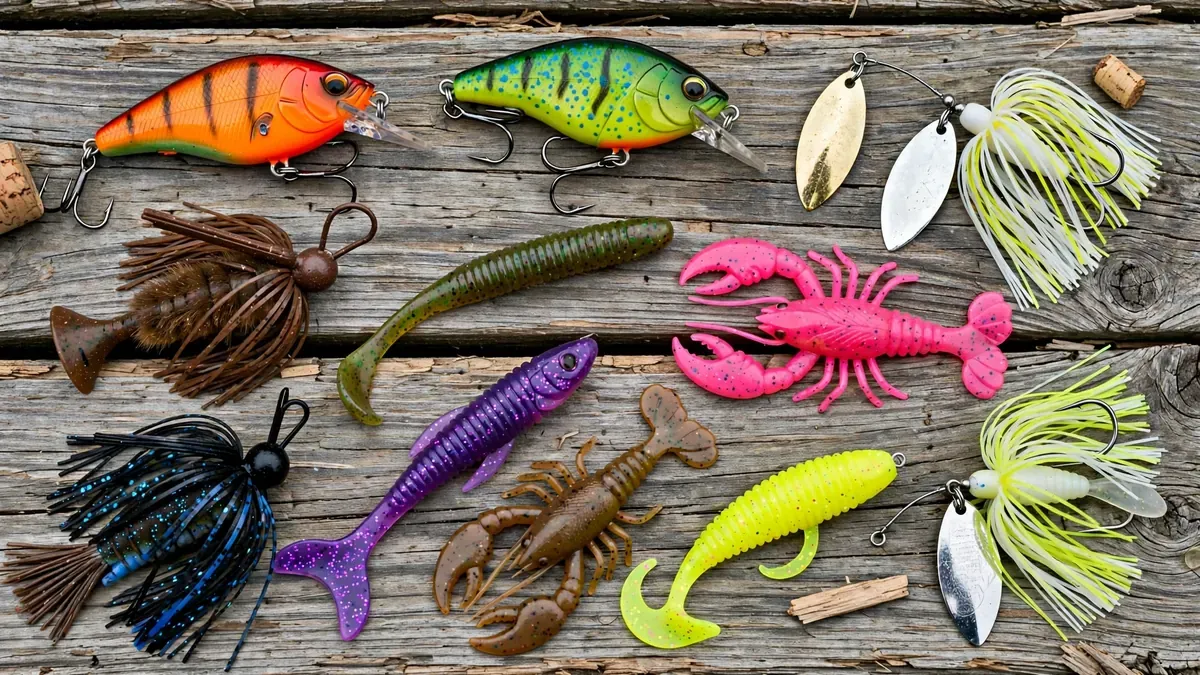
Every trip starts with the same decision: which of the many types of fishing lures goes on first. It is not about which lure has the flashiest package, it is about which one can get into the strike zone where fish are actually holding and give them a reason to eat. Learn the eight common categories below, then choose by depth, cover, water clarity and forage.
By Natalia · Updated 15 October 2026 · 12-minute read
Start by asking what the lure must do
A lure has one job: get in front of a fish and convince it to bite. Some do it by imitating shad or crawfish, some by flashing and vibrating so a predator finds them in stained water, and some by triggering a reaction a fish cannot talk itself out of. No single category wins everywhere, which is why a short list of versatile types beats a tackle box full of random purchases. For a species-specific starting point, see our guide on how to catch bass; for bottom-fishing fundamentals, see how to jig fish.
Eight common types of fishing lures
1. Soft plastics
The most versatile category in fishing. A 5-inch stick bait like a Senko, wacky-rigged or fished weightless on a 3/0 hook, is one of the deadliest slow presentations ever made, cast it past visible cover and let it fall. Creature baits and craws in green pumpkin or black-blue work Texas-rigged with a 3/16 to 1/4 oz bullet weight through grass and brush, while a 3.3-inch paddle-tail swimbait on a 1/4 oz jig head covers open-water bass and walleye. Salt-cured or scented formulas help fish hold on longer, which matters on light-biting days.
Common targets: Bass, crappie, walleye and many inshore species.
2. Jigs
A jig is a hook plus a lead head, simple, cheap and endlessly adaptable. A 3/8 oz football-head jig with a craw trailer is the standard for crawling rock and ledges; a 1/2 oz flipping jig in black-blue goes straight into the thickest brush piles where bass live. Hair jigs shine in cold water, and small 1/16 to 1/8 oz jigs tipped with a plastic body are the bread and butter of crappie fishing. Dressed jigs like the original bucktail also remain a saltwater staple. Fish them slowly, feel every rock, and set the hook on anything that feels “different.”
Common targets: Bass, crappie, walleye and saltwater bottom fish.
3. Crankbaits
Hard-bodied plugs with a lip that dives them to a designed depth, cast and reel, and the bait does the rest. A squarebill like the Strike King KVD 1.5 in chartreuse-black hunts through shallow wood and rock at 2 to 5 feet, deflecting off cover to trigger reaction strikes. A lipless crankbait such as the Red Eye Shad in 1/2 oz shines over shallow grass, where you rip it free from the vegetation to draw vicious strikes. Medium divers reach 6 to 10 feet on the flats, and deep divers probe 12 to 20-foot ledges. Match the lip to the depth you want to fish, and pick shad patterns for clear water, bright chartreuse or firetiger for stained.
Common targets: Bass, walleye, pike and other predators.
4. Spinnerbaits and inline spinners
Flash plus vibration plus a profile, the classic “search bait” for covering water fast. A 3/8 to 1/2 oz spinnerbait with double willowleaf blades in white or shad patterns is the pick for clear water; switch to painted blades and a Colorado blade (which thumps harder) in stained water or low light, with chartreuse-white skirts. Burn it just under the surface for active fish, slow-roll it deep for lethargic ones. Inline spinners like the Mepps Aglia in size #3 are a trout, panfish and small-bass staple on light tackle, cast across current and retrieve just fast enough to spin the blade.
Common targets: Bass, trout, panfish and pike.
5. Spoons
Curved metal that wobbles and flashes on the fall and retrieve, one of the oldest lure designs still in heavy use because it keeps catching. A 1/2 oz weedless Johnson Silver Minnow in gold slides over shallow grass and pads where treble-hooked lures would foul instantly. Jigging spoons dropped on a slack line under the boat fool suspended bass, walleye and stripers over deep structure, especially in winter. Heavier casting spoons let you bomb casts into the wind and work long, slow retrieves. Gold for sunny days, silver or nickel for overcast, the old-timers had it right.
Common targets: Trout, salmon, pike, bass and saltwater fish.
6. Topwater lures
Nothing in fishing beats a surface explosion, and topwater lures exist to make it happen. Poppers like the Rebel Pop-R, twitched with slack line so they spit and pause, call bass out of pockets and shade edges. Walking baits such as a Zara Spook or Heddon Super Spook, worked side-to-side with a rhythmic rod cadence, draw strikes from open water and over submerged grass. Buzzbaits churn the surface at dawn and dusk, and hollow-body frogs (covered in our frog guide) go where no other lure can. Throw topwater when fish can see the surface, calm to moderate mornings, evenings, and around any shallow cover.
Common targets: Bass, pike and selected inshore species.
7. Jerkbaits
Slim, minnow-shaped hard baits you work with snaps of the rod tip and long pauses, the pause is the strike trigger. A 110mm suspending jerkbait like the Megabass Vision 110 or Rapala X-Rap, in clown or ghost-minnow patterns, is lethal for prespawn bass holding in 4 to 8 feet: jerk-jerk-pause, then watch the line for the tick that means a fish inhaled it on the fall. Longer pauses (five to ten seconds) in water under 55°F; shorter, more aggressive cadences when water is warming. Twitchbaits also tempt walleye, pike and big trout on the flats.
Common targets: Bass, walleye, trout and pike.
8. Swimbaits
Realistic baitfish profiles with a built-in swimming tail, built for matching the forage the predators are keyed on. Small 3 to 4-inch paddle tails on jig heads are deadly for bass, walleye and inshore reds around bait schools; hollow-belly styles rigged weedless with a belly-weighted hook slip through grass that would snag anything else. Bigger 5 to 8-inch hard swimbaits target trophy bass willing to eat one big meal. Fish them with a steady retrieve most of the time, the tail does the work, and match the size of the local shad, herring or bluegill as closely as you can.
Common targets: Bass, striped bass, walleye and inshore fish.
Choose a lure by water and conditions
| Situation | Useful starting categories | Why |
|---|---|---|
| Heavy grass, pads or surface cover | Frog, weedless soft plastic, jig | Weedless designs travel where exposed hooks and trebles foul. |
| Open water with active fish | Crankbait, spinnerbait, swimbait, spoon | Moving baits cover water and give fish flash and vibration to find. |
| Bottom or structure | Jig, soft plastic, jigging spoon | They reach bottom fast and stay in the strike zone longer. |
| Shallow low-light feeding window | Topwater, spinnerbait, buzzbait | Surface disturbance and a horizontal silhouette trigger upward strikes. |
| Light tackle or finesse conditions | Small jig, soft plastic, inline spinner | Compact profiles at controlled speeds fool pressured fish. |
Topwater frogs deserve their own decision process around vegetation and shallow cover, use our guide on when to use frog baits for bass. For crappie, downsizing jigs and controlling depth are the whole game, see crappie fishing tips. And remember colour selection: start natural (shad, green pumpkin, craw patterns) in clear water, then go brighter (chartreuse, firetiger) or darker (black-blue, junebug) as water stains; colour fine-tunes a good decision, it rarely rescues a bad one.
Which lure for which fish, and when
The table below turns the eight types above into a quick starting point, using the targets and seasonal cues already in this guide.
| Bait type | Best for | Best season or window | Why it works then |
|---|---|---|---|
| Soft plastics | Bass, crappie, walleye and many inshore species | All seasons | The most versatile category; slow presentations work whenever fish hold tight to cover. |
| Jigs | Bass, crappie, walleye and saltwater bottom fish | All seasons; hair jigs in cold water | A hook plus a lead head reaches bottom fast and stays in the strike zone. |
| Crankbaits | Bass, walleye, pike and other predators | All seasons; match the lip to the depth | Cast and reel, and the lip dives the bait to its designed depth. |
| Spinnerbaits and inline spinners | Bass, trout, panfish and pike | All seasons; stained water and low light | Flash plus vibration help fish find the bait when visibility is poor. |
| Spoons | Trout, salmon, pike, bass and saltwater fish | Winter for jigging spoons over deep structure | The wobble and flash on the fall fool suspended fish over deep structure. |
| Topwater lures | Bass, pike and selected inshore species | Calm mornings and evenings, dawn and dusk | Surface explosions happen when fish can see the surface and feed shallow. |
| Jerkbaits | Bass, walleye, trout and pike | Prespawn and cold water under 55F; shorter pauses as water warms | The long pause is the strike trigger for prespawn bass holding in 4 to 8 feet. |
| Swimbaits | Bass, striped bass, walleye and inshore fish | All seasons; match the local forage | Realistic baitfish profiles work when predators are keyed on a specific forage. |
Build a small, useful lure kit
You do not need every type of fishing lure to catch fish, you need one from each job description. A practical starter kit: a 5-inch soft stick bait, a 3/8 oz jig with a couple of trailers, a squarebill crankbait, a 3/8 oz spinnerbait, and one topwater (a popper or a frog, depending on your cover). That five-lure box covers surface, shallow cover, mid-depth and bottom in almost any US freshwater fishery. Learn how each one feels on your rod before adding anything else. A balanced light-line outfit makes smaller lures far easier to fish; our ultralight fishing setup guide explains that system.
Keep a simple log after each trip: depth, cover, water clarity, retrieve and what got bit. These broader fishing tips help turn each outing into a pattern you can repeat.
Frequently asked questions
What is the most common fishing lure?
Soft plastics, jigs, crankbaits, spinnerbaits, spoons and topwater lures are the most common categories in US freshwater fishing. The right one depends on depth, cover, forage and species.
What lure should a beginner start with?
Start with something forgiving: a 3/8 oz spinnerbait or a small squarebill crankbait covers water with a simple cast-and-retrieve, and a weightless soft stick bait teaches you how fish bite. Master one presentation at a time before expanding.
How do you choose a fishing lure?
Pick the depth and cover first, then choose a lure that can reach that zone and move through it cleanly. Factor in water clarity (natural colours in clear water, brighter or darker profiles in stained water) and match the local forage size. Retrieve speed and location almost always matter more than the exact shade of paint.
How many lures do you actually need?
Far fewer than marketing suggests. One soft plastic, one jig, one moving bait and one topwater cover the main jobs in most fisheries. Add types only when you find a situation your current box genuinely cannot fish.
Affiliate disclosure: baitcastingreelz.com participates in the Amazon Associates Program and may earn from qualifying purchases. The optional link is for convenience and does not affect editorial guidance.