Bottom fishing fundamentals · US guide
High Low Rig Fishing: How to Tie, Bait and Fish a Hi-Low Rig
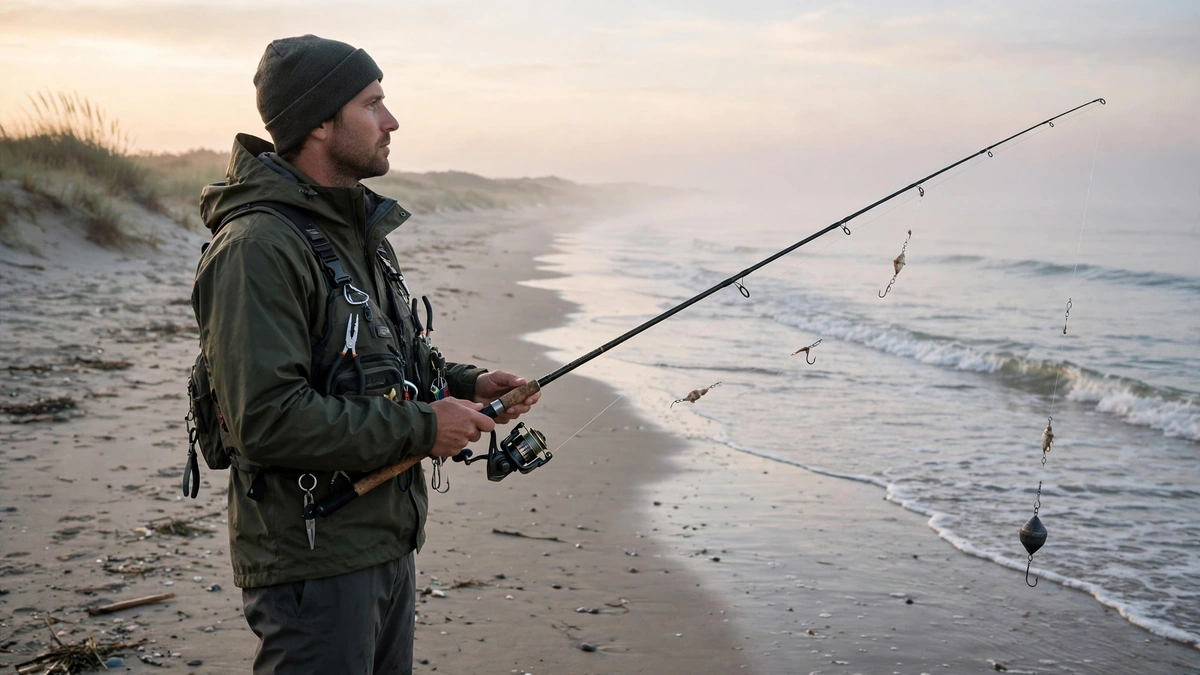
A high low rig is the workhorse bottom rig of surf, pier and bank fishing: two hooks ride above a sinker, keeping baits just off the bottom at two different heights while the sinker holds in current. It’s simple, effective and easy to tie in minutes — but a rig that catches versus one that tangles comes down to spacing, sinker choice and bait discipline.
By Natalia · Updated 15 October 2026 · 12-minute read
Why the high low rig works
Bottom-feeding fish — whiting, spot, croaker, pompano, black drum, winter flounder — hunt by smell and vibration in the first couple of feet above the seabed. The high low rig (also called a hi-lo rig or two-hook bottom rig) holds two baits right in that strike zone at slightly different heights, while the sinker anchors everything and the short droppers flutter naturally in the current.
It also turns the rig into a search tool: fish two different baits — shrimp on one hook, clam on the other — and the fish tell you which one they want. That flexibility is why regulars from the Gulf to the mid-Atlantic tie their own instead of buying pre-tied packs. Our guide to different types of fishing baits covers bottom-bait choices in more depth.
Parts and sizes: build for the water you’ll fish
No single “correct” rig exists — components depend on current, depth, bottom type and target species. These starting points cover most surf, pier and bank situations:
| Component | Common choice | Notes |
|---|---|---|
| Main line | 15–20 lb mono or 30–50 lb braid | Braid casts farther and feels bites better in surf; mono is cheaper and friendlier on crowded piers. |
| Rig leader | 30–50 lb monofilament, 3–5 ft total | Stiff mono resists tangles and abrasion better than braid for the rig body itself. |
| Top swivel | Size 4–6 barrel swivel | Connects main line to rig; inspect it and the knot before every trip. |
| Hooks | 1/0–3/0 circle hooks for surf and piers; 2/0–4/0 for larger baits and fish | Match hook to the bait, not the species — the point should clear the bait easily. |
| Droppers | 4–6 in long, spaced 12–18 in apart | The spacing rule that prevents most tangles: the two hooks must not be able to reach each other. |
| Sinker section | 6–12 in below the lower hook | Finish with a surgeon’s loop so sinkers can be swapped quickly. |
| Sinkers | 2–6 oz pyramid or sputnik in surf; 1–3 oz bank/coin sinkers in bays, rivers and piers | Pyramid and sputnik shapes dig into sand; rounded sinkers roll in surf and belong in calmer water. |
Hooks and bait
Circle hooks are the default for bait fishing — fish hook themselves in the corner of the mouth, which improves release survival. Keep bait compact: a small piece of shrimp, a Fishbites strip or a half-clam fishes cleaner and tangles less than a big ball of bait.
Sinker logic
Start light and add weight only until the rig stops drifting. Too much sinker kills sensitivity and snags more in rocky bottom. Change shape before size — a sputnik’s wire legs hold where a round sinker rolls.
Our how to fish for crappie guide covers matching presentation to a species, and our how to surf fish guide covers open-beach conditions.
How to tie a high low rig, step by step
The classic build uses dropper loops — knots tied in the leader that stand out as stiff arms for the hooks. About five minutes at the tying bench, and it costs almost nothing.
- Cut your leader. Snip 3–5 feet of 30–50 lb monofilament — four feet is the sweet spot for most surf and pier fishing, and shorter rigs are easier to cast, bait and unhook.
- Tie the top swivel. Use an improved clinch knot or palomar knot to attach a barrel swivel to one end. This is the connection your main line will join.
- Tie the first dropper loop. About 12–18 inches below the swivel, double the leader into a 4–6 inch loop, twist the loop around the standing line 4–6 times, pull the loop tip through the small opening in the twists, wet the line and cinch steadily.
- Tie the second dropper loop. Repeat 12–18 inches below the first. The critical test: hold the rig vertically and make sure the two loops — plus the hooks you’ll add — cannot touch each other.
- Finish the sinker connection. Leave 6–12 inches of leader below the lower loop and tie a surgeon’s loop (two overhand wraps through one loop, pulled tight) or a perfection loop at the end. This loop takes the sinker and lets you swap weights in seconds.
- Attach the hooks. Pass a dropper loop through the hook eye, fold the loop over the point and cinch. The hook hangs with the point exposed; circle hooks ride point-up off the loop — exactly what you want.
- Test before you cast. Hold the finished rig vertically and shake gently. If hooks overlap or loops catch, baits will make it worse in current — retie with more spacing or shorter droppers. If long leaders feel unwieldy, our how to cast a spinning reel guide has the mechanics.
Optional supply: high low rig components
Leader material, barrel swivels, circle hooks and an assortment of pyramid and bank sinkers let you tune a bottom rig to bait, current and bottom type rather than forcing one pre-tied setup into every situation.
The three-way swivel alternative
Some anglers build high low rigs with two three-way swivels instead of dropper loops: the leader passes through the swivels, short hook leaders tie to the side eyes, and the sinker clips to the bottom. Three-way rigs are stronger and tangle less under heavy current and heavy sinkers — popular for big-fish bait fishing and heavy structure — but they cost more per rig and take longer to tie.
Rule of thumb: dropper loops for light-to-medium surf and pier fishing where speed wins; three-way swivels for heavy sinkers, heavy structure, or fish where a knotted dropper is the weak link. Our spinning reel sizes reference helps match rod, reel and rig weight.
How to fish a high low rig
Cast or lower the rig, let the sinker reach bottom, then reel in slack until the line is just tight — you should feel the sinker without lifting it. Too much slack hides bites; constantly pulling drags the sinker out of your zone.
Watch the rod tip: most bottom fish bite as rapid taps or small jerks. Reel down to take up slack and lift smoothly — circle hooks set themselves, so skip the big yank. Check both baits after every bite, snag or long soak: pickers strip bait without drama, and an empty hook catches nothing.
What the high low rig catches
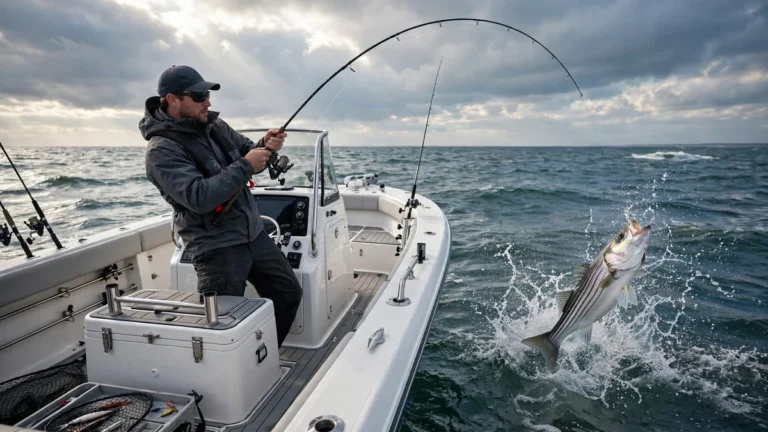
On Atlantic and Gulf surf and piers it’s the standard setup for whiting, pompano, spot, croaker, puppy drum, black drum and schoolie stripers; in the Northeast it accounts for plenty of winter flounder and black sea bass. With larger hooks and chunks of menhaden, the same two-hook layout takes slot-sized stripers.
It crosses into freshwater too: catfish anglers use essentially the same rig on rivers and reservoirs, and panfish anglers fish downsized versions off docks. The limit is regulations — many states allow two or three hooks per line, but some waters restrict multiple hooks, and trout waters often require single hooks. Check your rules before fishing two hooks.
Fix common high low rig problems
| Problem | First fix | Why it works |
|---|---|---|
| Hooks tangle together | Increase dropper spacing, shorten droppers, use more compact bait | Keeps the two presentations from reaching each other |
| Can’t feel bottom | Add sinker weight gradually; improve your line angle | Restores connection without over-weighting |
| Rig twists on the drop | Secure bait compactly; lower the rig under control | Most fouling happens on the way down |
| Repeated snagging | Move, switch sinker shape, or shorten the sinker section | Snags are usually a rig-and-bottom issue, not a bite problem |
| Bait disappears, no fish | Check baits more often; downsize hooks | Pickers strip bait silently — an empty hook catches nothing |
Frequently asked questions
What is a high low rig used for?
A high low rig is a bottom-fishing setup with two baited hooks above a sinker, presenting two baits near the bottom at different heights. It’s the standard rig for surf, pier and bank fishing for whiting, spot, croaker, pompano, redfish and striped bass.
How far apart should hooks be on a high low rig?
Space the dropper loops 12–18 inches apart with droppers about 4–6 inches long, so the two hooks can’t regularly reach each other. If tangles persist, increase spacing, shorten droppers or trim the bait.
Dropper loops vs three-way swivels — which is better?
Dropper loops are the classic choice: fast to tie, cheap, and ideal for light-to-medium surf and pier rigs. Three-way swivels make stronger, more tangle-resistant rigs for heavy sinkers and big fish, at the cost of more time and hardware.
Can you use a high low rig in freshwater?
Yes — the two-hook bottom principle works for catfish, panfish and other bottom feeders wherever regulations allow multiple hooks per line. Rules vary by water, so check before you fish. For broader trip prep, these practical fishing hacks and fishing tips help round out the plan.
What sinker should you use on a high low rig?
Use the lightest sinker that holds bottom contact: pyramid or sputnik sinkers of 2–6 ounces in surf, 1–3 ounce bank or coin sinkers in calmer water. Add weight in small steps as current builds.
Affiliate disclosure: baitcastingreelz.com participates in the Amazon Associates Program and may earn from qualifying purchases. The optional link is provided for convenience and does not affect editorial guidance.