Catch care · US guide
How Long Can You Keep Fish on Ice? Ungutted Fish, Honestly Answered
How long can you keep fish on ice? Get them on ice immediately and clean them the same day if you can. A well-iced, ungutted fish held near 32–38°F usually keeps good quality for 24–48 hours; gutting promptly extends that to several days.
By Natalia · Updated 15 October 2026 · 12-minute read
The quick answer, without the internet mythology
Search this question and you will find confident hour counts stated like physics constants. They are not. The real answer depends on how fast the fish was chilled, how cold it stayed, whether meltwater was managed, the species, and the weather. What is constant: an ungutted fish carries its gills and internal organs with it, and those are the parts that decline first. Prompt chilling slows that process; prompt cleaning removes the question.
General food-safety guidance for raw fish typically frames refrigerated storage in days, not as a fishing-trip promise, and that guidance assumes cleaned fish under steady refrigeration. An ungutted catch sitting in a cooler is a different, less controlled situation, which is exactly why cleaning promptly matters more than memorizing a number.
Why an ungutted fish is on a clock
Organs and gills decline first
A whole fish keeps everything it swam with: gills, gut contents, blood. These tissues break down faster than the fillet meat, and their condition drives both flavor and handling risk. Gutting and bleeding remove the fastest-declining parts of the equation.
Temperature is the master variable
Every degree above the 32–38°F target shortens your window. A fish buried in ice in a closed cooler is in a different universe from one lying on a warm boat deck “waiting for ice later.”
Meltwater is the silent killer
Fish soaking in warming, bloody meltwater lose quality far faster than fish resting on drained ice. Managing the water matters as much as having the ice.
Handling stacks up
Clean cooler, clean ice, clean hands, clean tools. Contamination at any step, a dirty cooler, bait residue, unwashed hands, works against everything the ice is doing for you.
A realistic timeline for fish on ice
Think of these as planning ranges for fish chilled immediately and held at 32–38°F, not guarantees. Your conditions move the needle.
| Situation | Realistic planning window | What makes it work |
|---|---|---|
| Ungutted, on good ice, drained | Same day; often 24–48 hours | Chilled within minutes, 32–38°F, meltwater drained, cooler kept closed |
| Ungutted, marginal icing | Hours, not days | Little ice, hot day, fish sitting in meltwater, clean it at the ramp |
| Gutted, bled and iced | Several days | Cavity rinsed, fish kept cold and drained like any fresh fish |
| Cleaned fillets, refrigerated | Follow current food-safety guidance (commonly framed in days) | Steady refrigeration at or below 40°F, clean storage |
The jump from the first row to the third is the whole argument for carrying a knife: ten minutes of gutting at the cleaning station buys you days of margin. If you only remember one thing from this guide, remember that.
Set up the cooler before the first bite
- Start clean and pre-chill. Wash the cooler before the trip, and throw in a sacrificial bag of ice the night before if you can, a warm cooler melts your working ice fast.
- Bring more ice than feels reasonable. A good rule is at least as much ice as fish by volume, and plan to replenish on hot days. Cubes chill fast; block ice lasts longer, a mix of both is ideal.
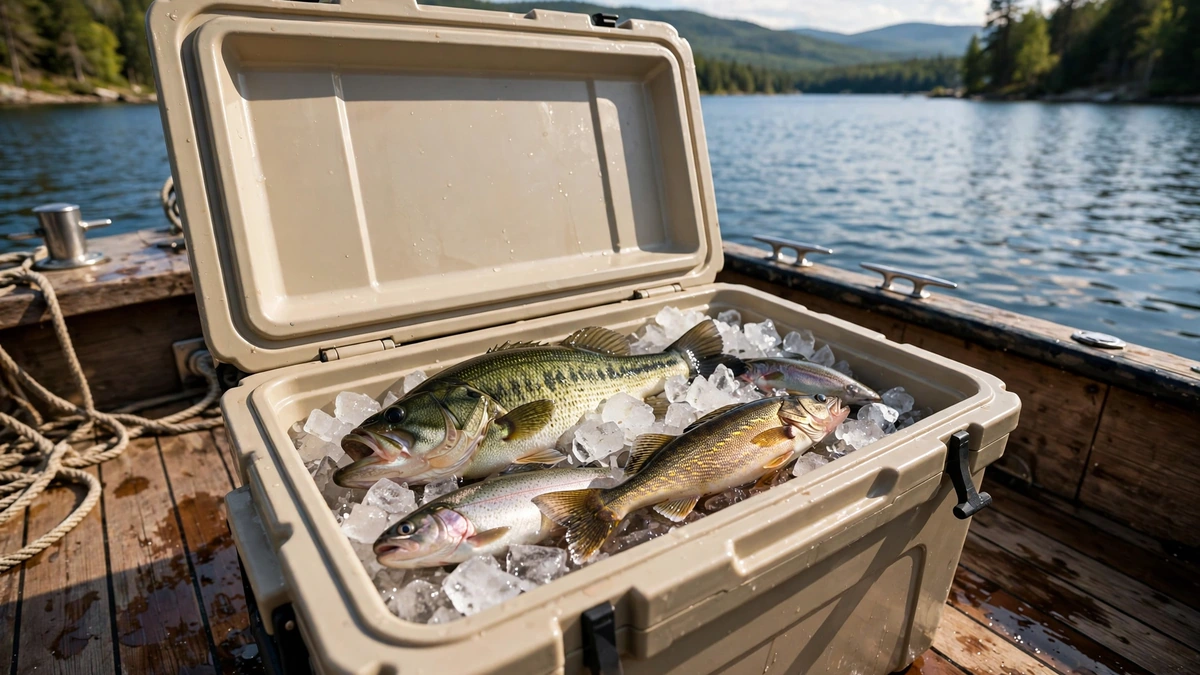
- Bury the fish, don’t top it. Pack ice under, around and over each fish so it is surrounded by cold, not resting on a warm cooler floor with cubes sprinkled on top.
- Manage meltwater from hour one. Crack the drain plug or elevate fish on a rack or spare ice layer so they never sit in standing water. Drain and re-ice rather than letting fish swim.
- Keep the lid shut. Every opening trades cold air for warm. Decide what you need, grab it, close it.
Optional supply: insulated fish cooler
An insulated cooler holds the 32–38°F zone far longer than a thin-walled one, especially on multi-day trips. Size it to your actual catch plan, dead air space melts ice for nothing.
Getting the catch home in good shape
The drive home is where good cooler discipline usually fails. Park in shade whenever you stop, keep the cooler out of direct sun in the truck bed, a cooler baking in sunlight can gain surprising internal temperature even with the lid closed, and top off ice before a long drive rather than after. On multi-hour summer drives, check the drain at fuel stops: a cooler full of meltwater is a cooler full of problems.
If you are transporting fish a long distance, gutting and bleeding before the drive is the single highest-value step you can take. A gutted fish on fresh ice travels like the fresh fish at a market; an ungutted one travels like a countdown. For the cleaning itself, our best fish scalers guide helps when the skin stays on, and before you keep anything, our piece on whether you can eat bass explains why the current advisories for your exact water come before the cooking decision.
Spoilage signs: what to watch for
These are quality indicators, not a safety test, a fish can look fine and still have an uncertain handling history. But they are genuinely useful for judging whether your icing did its job:
- Eyes: clear and full is fresh; sunken, cloudy eyes suggest time and temperature abuse.
- Gills: bright red to pink is fresh; brown, gray or slimy gills point the other way.
- Smell: fresh fish smells like clean water or the sea. Sour, ammonia-like or strongly “fishy” odors are warning flags.
- Flesh: firm flesh that springs back when pressed is fresh; flesh that stays dented or feels mushy is not.
- Skin and slime: clear, natural slime is normal; thick, discolored or foul slime is not.
When in doubt, throw it out is a cliché because it is correct. No fillet is worth the gamble, and the regulations side matters too: keep only what is legal to retain, and check requirements before the trip, a point our guide to fishing without a license reinforces.
Four mistakes to avoid
1. Treating ice as a timer
Ice is temperature control, not permission to delay. The condition of the ice, the cooler, the fish and your handling all decide the outcome, a number from the internet decides nothing.
2. Letting fish soak in meltwater
Warming meltwater undoes the ice’s work and bathes the fish in exactly what you are trying to avoid. Drain early, drain often, re-ice as needed.
3. Trusting your nose as a safety instrument
Smell and appearance are quality clues, not safety proof. Temperature control and prompt processing are the actual safety levers, use those, and consult authoritative guidance when unsure.
4. Skipping the gutting step “to save time”
Gutting at the cleaning station takes minutes and buys days. It is the best return on effort in all of catch care, and there is no cooler trick that substitutes for it.
Frequently asked questions
How long can ungutted fish stay on ice?
Plan on cleaning them the same day. Well iced at 32–38°F with meltwater managed, ungutted fish often hold quality 24–48 hours; but heat, sun, species and handling can shorten that, so treat it as a planning range, not a guarantee.
Should fish sit in melted ice water?
No. Keep fish on drained ice, not soaking in warming meltwater. Use the drain plug or a raised rack, and replenish ice as it melts.
Does gutting really extend storage time?
Yes, it is the single biggest improvement you can make. Removing gills, organs and blood eliminates the fastest-declining tissues, stretching a same-day-or-two window into several days under proper icing.
Can you eat fish that was not iced quickly?
Do not rely on appearance or smell alone. If you cannot verify prompt chilling and proper temperature control, the cautious choice is not to eat it, check current food-safety guidance for your specific situation.
Affiliate disclosure: baitcastingreelz.com participates in the Amazon Associates Program and may earn from qualifying purchases. The cooler and handling advice above is the same guidance we would give with no links on the page.