Tackle Buyer’s Guide · 2026
Best Saltwater Baitcasting Reels (2026)
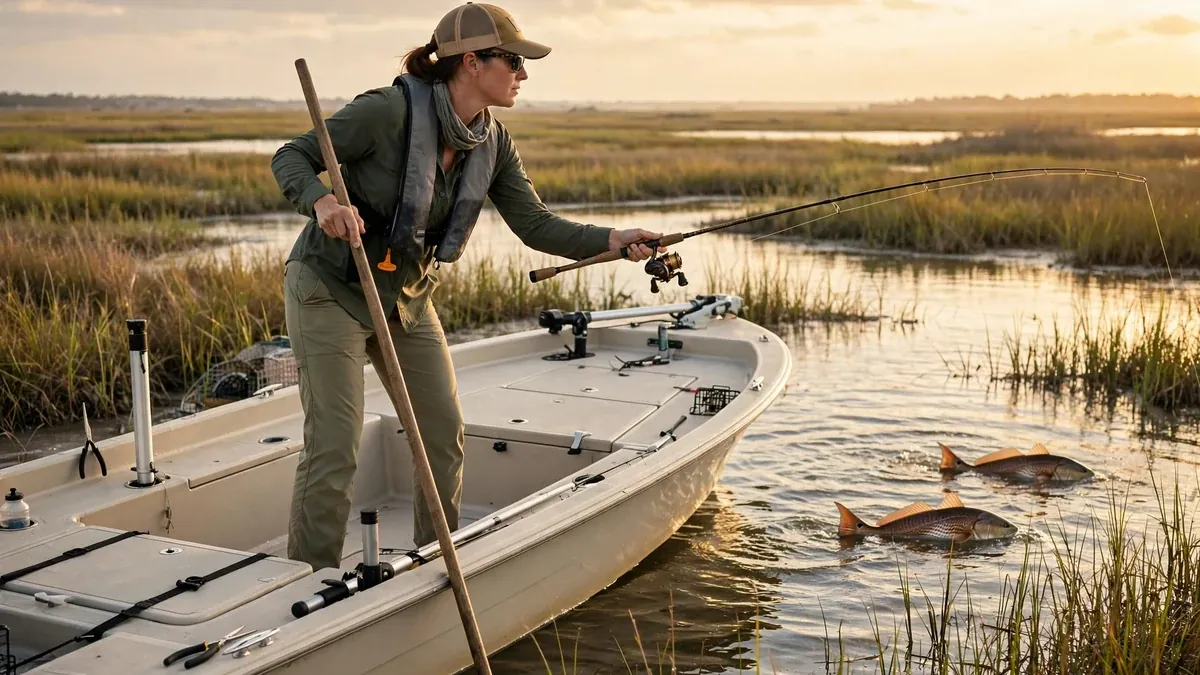
Saltwater kills reels that freshwater would never stress. These five low-profile baitcasters survived the corrosive test that matters; sealed bearings, protected gears, and frames that still feel tight after a season of spray, dunkings, and redfish runs. Our top pick is the Shimano TranX 200 for all-around inshore work. Shore anglers who prefer open beaches can pair these reels with the tactics in our guide to surf fishing from the beach.
Updated October 2026
The best saltwater baitcasting reels are not just freshwater reels with a new paint job. Salt attacks everything: bearings pit, gears grind, drags get sticky, and a reel that felt like silk in April can feel like gravel by September. The reels in this guide were chosen for the hardware that actually resists that decay; sealed or shielded corrosion-resistant bearings, coated gears, aluminum frames that do not trap salt, and drags that stay smooth after repeated soakings.
Our focus is inshore saltwater: redfish and speckled trout on flats, snook around mangroves, stripers in the surf fringe, and the nearshore jigging where low-profile baitcasters shine. Every pick below was evaluated on corrosion resistance first, then on the fishing; casting control in coastal wind, drag smoothness on long-running fish, and line capacity for the species at hand. If stripers are the main target, our dedicated guide to the best baitcasting reel for striped bass goes deeper on sizes and drag.
How this guide was ranked: every specification below was verified against the manufacturer’s listing for the exact model size, and each pick was ranked on corrosion resistance, casting control, drag smoothness and value for inshore fishing. Last updated: October 2026. Full method: how we test and rank reels
Why Trust BaitcastingReelz
- Hands-on specs verification: every spec, gear ratio, and line capacity is checked against current manufacturer listings before it goes on the page.
- No sponsored rankings: brands cannot pay for placement. Our picks are technique-led, and our affiliate disclosure is on every money page.
- Updated monthly: prices, model generations, and availability are re-checked regularly, so you never order a discontinued reel.
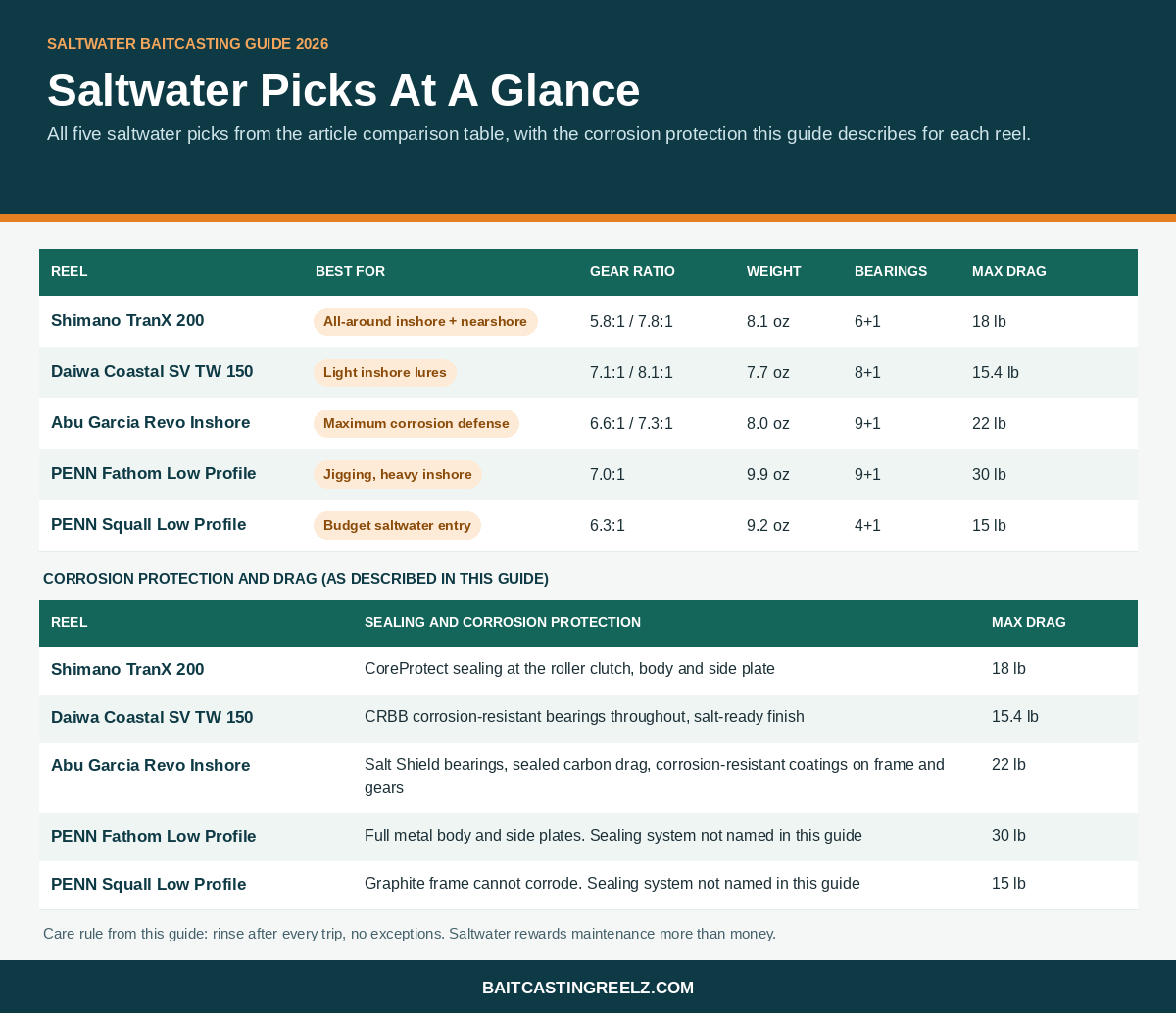
Saltwater picks at a glance
Saltwater baitcasting reels compared
| Reel | Best for | Gear ratio | Weight | Bearings | Max drag | Approx. price |
|---|---|---|---|---|---|---|
| Shimano TranX 200 | All-around inshore + nearshore | 5.8:1 / 7.8:1 | 8.1 oz | 6+1 | 18 lb | ~$290 |
| Daiwa Coastal SV TW 150 | Light inshore lures | 7.1:1 / 8.1:1 | 7.7 oz | 8+1 | 15.4 lb | ~$250 |
| Abu Garcia Revo Inshore | Maximum corrosion defense | 6.6:1 / 7.3:1 | 8.0 oz | 9+1 | 22 lb | ~$250 |
| PENN Fathom Low Profile | Jigging, heavy inshore | 7.0:1 | 9.9 oz | 9+1 | 30 lb | ~$280 |
| PENN Squall Low Profile | Budget saltwater entry | 6.3:1 | 9.2 oz | 4+1 | 15 lb | ~$150 |
Best saltwater baitcasting reels: full reviews
Best overall saltwater baitcasting reel
Shimano TranX 200
The TranX 200 is the low-profile reel that made inshore guides take baitcasters seriously. The CoreProtect system seals the vulnerable points; roller clutch, body, and side plate; against salt intrusion, and the Hagane aluminum body does not give salt anywhere to hide. After seasons of wade fishing and kayak work, the TranX is the reel that still feels like it did on day one, which is the entire test for a saltwater reel.
On the water it is a genuine crossover: the 200-size spool holds enough line for long redfish runs and nearshore work, the 18 lb Cross Carbon drag handles bull reds and snook, and the 7.8:1 HG model picks up 37 inches per turn, critical when a fish charges the boat. Choose the 5.8:1 for slow-rolling big baits and jigging. It is heavier than a 150, but for inshore saltwater that mass is sealing, drag, and capacity.
Best for: inshore all-around work: redfish, trout, snook, and nearshore jigging.
Why it wins: CoreProtect sealing plus a 200-size spool and 18 lb drag make it the toughest low-profile inshore reel here.
Specs: Gear ratios 5.8:1 / 7.8:1 · Weight 8.1 oz · 6+1 S A-RB bearings · 18 lb max drag · Line capacity 14 lb / 140 yd · Street price around $290
Pros
- CoreProtect sealing resists salt intrusion
- 200-size spool for long runs and nearshore
- 18 lb Cross Carbon drag for bull reds and snook
- Two ratios: 5.8:1 power or 7.8:1 speed
- Hagane body stays tight season after season
Cons
- Heavier than 150-size inshore reels
- Premium price, the sealing costs money
Pair it with: a 7’0″ medium-heavy inshore rod and 30 lb braid, the standard redfish/trout setup on the Gulf Coast.
Best for light inshore lures
Daiwa Coastal SV TW 150
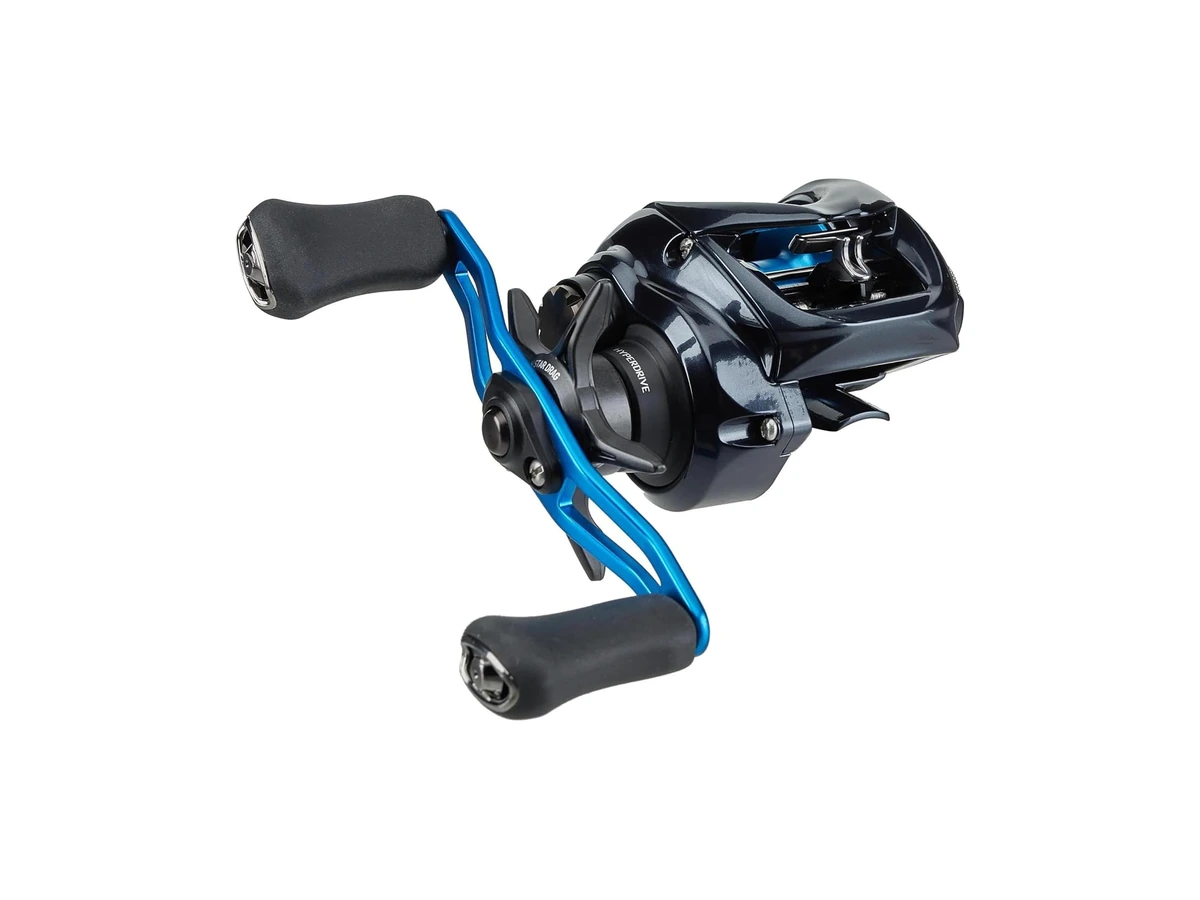
Inshore fishing lives on light lures, 1/4 oz jigheads, small paddletails, topwater plugs, and standard saltwater reels cast them poorly. The Coastal SV TW 150 is Daiwa’s answer: an SV spool in a corrosion-resistant package, with CRBB (corrosion-resistant ball bearings) throughout and a salt-ready finish. The SV spool’s controlled startup means a 1/4 oz jighead actually flies instead of dying 30 feet out.
The T-Wing line guide adds distance in coastal wind, and the 7.1:1 ratio is the inshore sweet spot, fast enough for topwater walk-the-dog, controlled enough for slow-rolling grubs. At 7.7 oz it fishes all day on the flats. The limits: the SV spool holds less line than the TranX, and 15.4 lb of drag is plenty for slot reds and trout but light for bull reds or tarpon. This is the finesse-inshore specialist of the group.
Best for: flats fishing with light soft plastics, jigheads, and topwater plugs.
Why it wins: an SV spool tuned for light lures, wrapped in CRBB corrosion-resistant bearings and salt-ready coatings.
Specs: Gear ratios 7.1:1 / 8.1:1 · Weight 7.7 oz · 8+1 CRBB bearings · 15.4 lb max drag · Line capacity 12 lb / 125 yd · Street price around $250
Pros
- SV spool casts 1/4 oz inshore lures beautifully
- CRBB corrosion-resistant bearings throughout
- T-Wing guide helps in coastal wind
- Light 7.7 oz for all-day wading
- 7.1:1 is the ideal inshore all-around ratio
Cons
- Less line capacity than deep-spool 200-size reels
- 15.4 lb drag is light for bull reds or tarpon
Pair it with: a 7’0″ medium-fast inshore rod and 20 lb braid with a 20 lb fluorocarbon leader for clear flats.
Best corrosion protection
Abu Garcia Revo Inshore
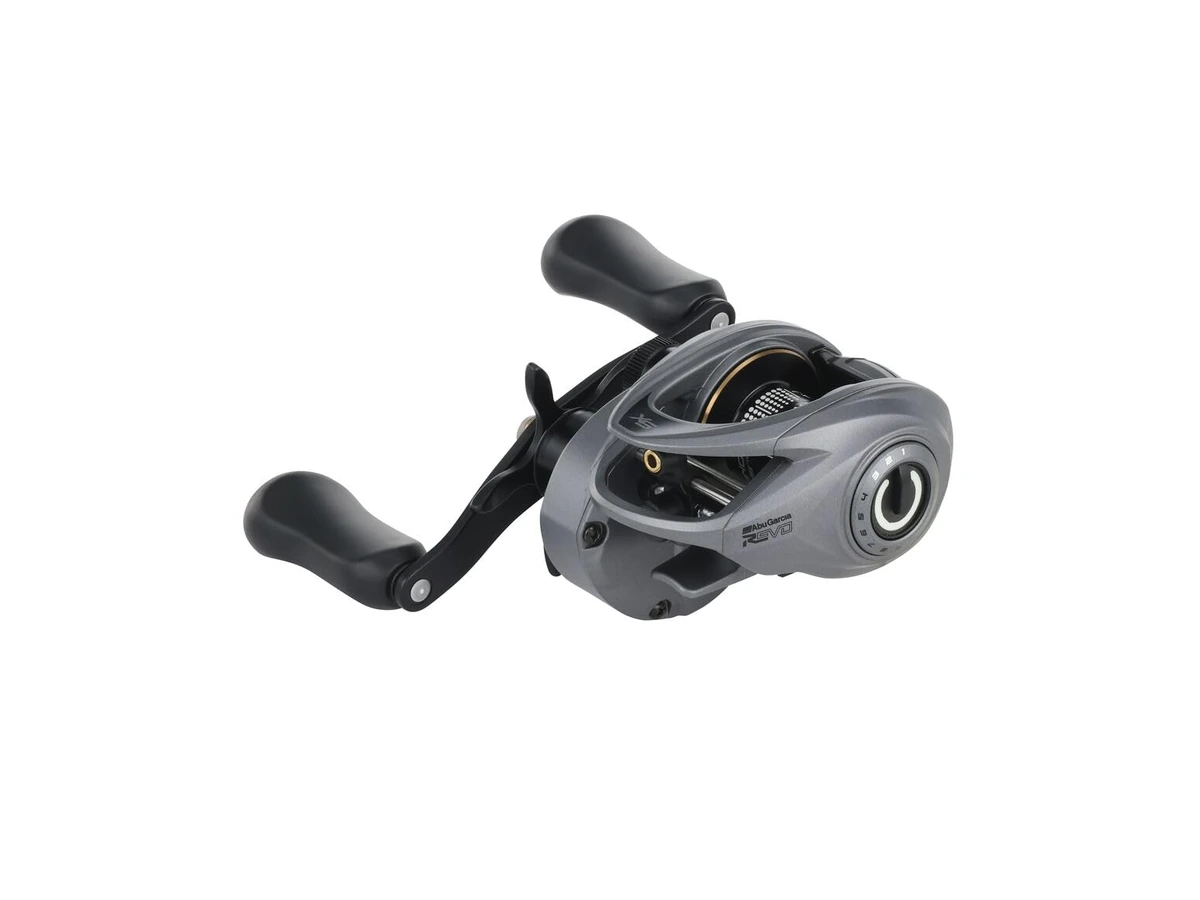
If your reel lives on a skiff, gets sprayed daily, and gets rinsed “when you remember,” buy the Revo Inshore. Abu built it around salt defense: Salt Shield bearings, a sealed carbon drag, and corrosion-resistant coatings on the frame and gears. It is the reel in this guide you worry about least.
The fishing hardware backs it up. The 22 lb Power Stack drag is the strongest here, built for snook in mangroves and stripers in current, and the 7.3:1 ratio keeps up with fast fish. The X2-Cräftic alloy frame is rigid and compact. The trade-off for all that sealing is weight and a slightly less refined cast feel than the TranX; the Revo Inshore prioritizes surviving the salt over casting like a freshwater finesse reel. For hard-use inshore anglers, that is the right trade.
Best for: anglers who fish salt hard and maintain reels casually.
Why it wins: Salt Shield bearings and sealed drag provide the most complete corrosion defense in this guide.
Specs: Gear ratios 6.6:1 / 7.3:1 · Weight 8.0 oz · 9+1 HPCR bearings · 22 lb max drag · Line capacity 12 lb / 145 yd · Street price around $250
Pros
- Salt Shield bearings and sealed carbon drag
- 22 lb drag, strongest in this guide
- Corrosion-resistant coated frame and gears
- Rigid X2-Cräftic alloy body
- 7.3:1 handles fast inshore species
Cons
- Heavier and less refined casting than the TranX
- Sealing adds cost over freshwater equivalents
Pair it with: a 7’0″ medium-heavy inshore rod and 30 lb braid, built for snook around structure.
Best for jigging and heavy inshore
PENN Fathom Low Profile
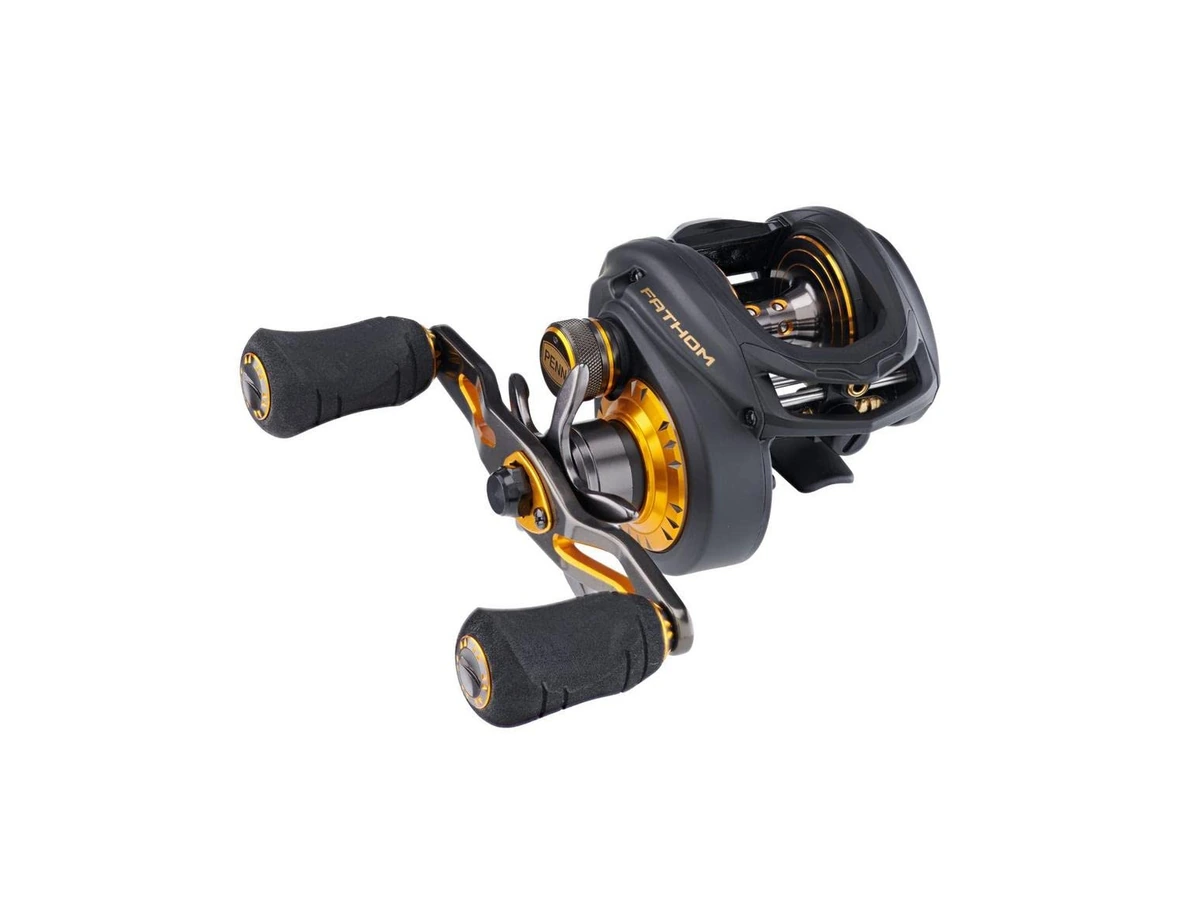
When the job is vertical jigging over structure, deep-water inshore work, or winching big fish away from pilings, the Fathom Low Profile brings PENN’s offshore DNA into a low-profile frame. The full metal body and side plates eliminate flex under heavy drag, and the Dura-Drag washers deliver a full 30 lb of stopping power, double most reels here.
The 200 size (7.0:1) is the inshore sweet spot; the 300 handles nearshore and heavier jigging. The 9+1 stainless bearing system stays smooth, and the line capacity (220+ yards of 12 lb) means long runs and deep drops are both covered. The honest costs: at 9.9 oz it is the heaviest reel here, you will feel it on a long casting day, and it is a winch, not a finesse tool. Buy it for power, not for skipping docks.
Best for: vertical jigging, heavy structure, and big inshore fish.
Why it wins: a full-metal PENN body with 30 lb Dura-Drag brings legitimate offshore stopping power to a low-profile reel.
Specs: Gear ratio 7.0:1 (200 size) · Weight 9.9 oz · 9+1 stainless bearings · 30 lb max drag · Line capacity 12 lb / 220 yd · Street price around $280
Pros
- 30 lb Dura-Drag, unmatched stopping power here
- Full metal body, zero flex under load
- Deep spool for long runs and deep jigging
- 9+1 stainless bearings stay smooth
- Proven PENN saltwater durability
Cons
- Heaviest reel in this guide at 9.9 oz
- A winch, not a finesse casting tool
Pair it with: a 6’6″ heavy jigging rod and 50 lb braid, point it at structure and hold on.
Best budget saltwater baitcaster
PENN Squall Low Profile
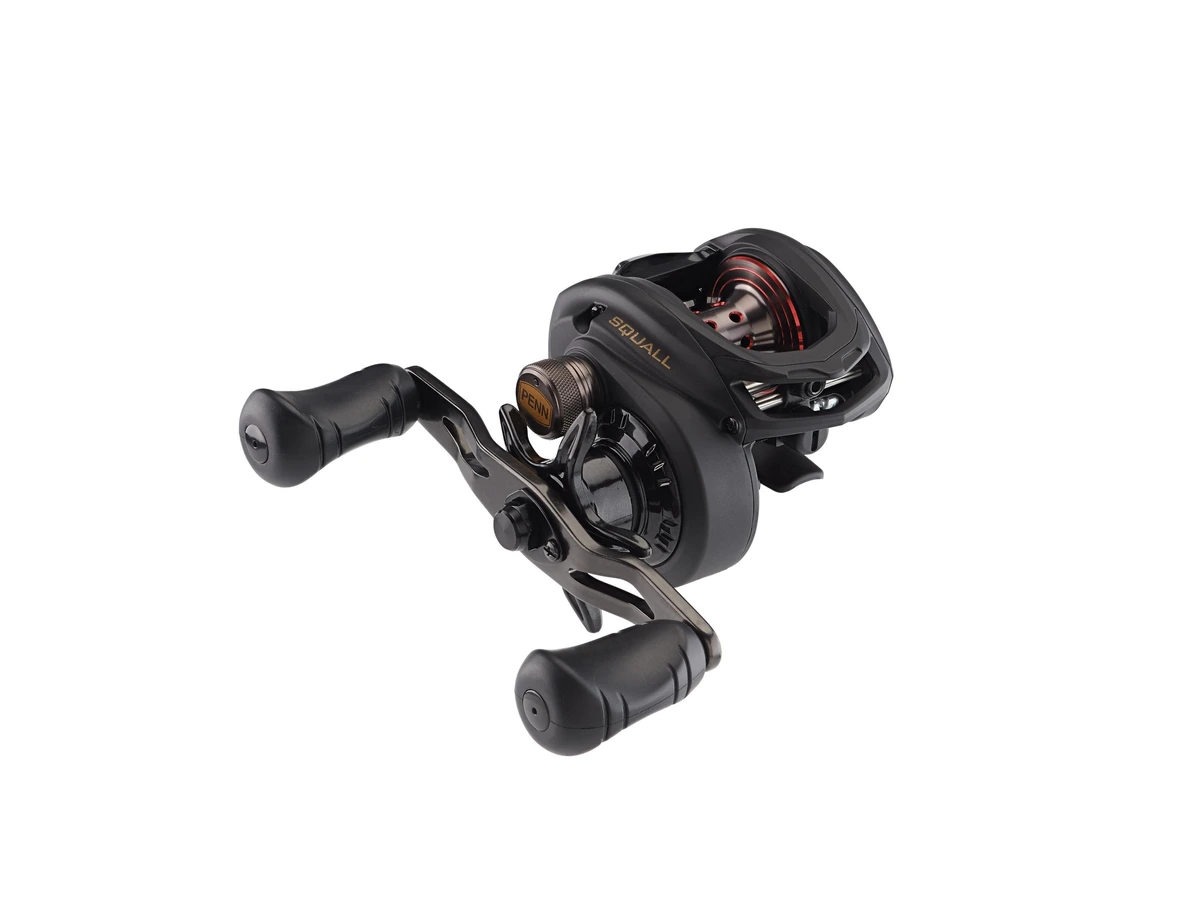
Not everyone needs a $290 sealed flagship to catch redfish. The Squall Low Profile is PENN’s honest budget saltwater reel: a graphite frame that cannot corrode, 4+1 stainless bearings, and a 15 lb drag that handles slot reds, trout, and school stripers without complaint. At around $150 it is the cheapest reel here we would trust in salt.
The graphite frame is actually an advantage in salt, nothing to pit, though it flexes more than aluminum under heavy drag. The 6.3:1 ratio is a good inshore all-arounder, and the 300 size holds plenty of line. Maintain it properly (rinse every trip, non-negotiable at this price) and it will serve for seasons. Skip it if you chase bull reds or tarpon regularly; the drag and frame are not built for that.
Best for: budget-conscious inshore anglers targeting slot reds, trout, and stripers.
Why it wins: a corrosion-proof graphite frame and PENN saltwater hardware at half the flagship price.
Specs: Gear ratio 6.3:1 · Weight 9.2 oz · 4+1 stainless bearings · 15 lb max drag · Line capacity 14 lb / 220 yd · Street price around $150
Pros
- Graphite frame cannot corrode
- PENN saltwater drag and gears at ~$150
- Good line capacity in the 300 size
- 6.3:1 is a versatile inshore ratio
- Honest, proven budget saltwater option
Cons
- Graphite frame flexes under heavy drag
- Not built for bull reds, tarpon, or heavy jigging
Pair it with: a 7’0″ medium inshore rod and 20 lb braid, an affordable, effective redfish outfit.
How we evaluate saltwater baitcasting reels
Saltwater evaluation starts where freshwater evaluation ends: corrosion resistance. We assess bearing sealing (sealed/shielded, corrosion-resistant alloys), protective coatings on gears and frames, drag sealing, and how the reel feels after repeated salt exposure with realistic maintenance. Then the fishing criteria: casting control in coastal wind, drag smoothness on long-running fish like redfish and snook, line capacity for the species, and ergonomics for long days wading or poling.
Our framing is technique-led and inshore: flats fishing for reds and trout, mangrove edges for snook, jetty and nearshore jigging. A reel that casts beautifully but pits in a season fails here; durability under salt is the first cut.
Buying guide: what makes a baitcaster saltwater-worthy
Corrosion resistance is the whole game
Salt destroys standard bearings and uncoated gears. Look for sealed or shielded bearings in corrosion-resistant alloys (Shimano S A-RB, Daiwa CRBB, Abu HPCR/Salt Shield, PENN stainless), protective coatings on the body and gears (Shimano CoreProtect, Abu Salt Shield), and sealed drags. Aluminum and graphite frames both work in salt, aluminum for rigidity, graphite because it cannot corrode, but unsealed internals are a deal-breaker.
Size, ratio, and IPT for inshore species
A 150-size reel handles trout, slot reds, and snook; 200-size adds capacity for bull reds, stripers, and nearshore work. For ratios: 7.x:1 is the inshore all-arounder (topwater, jigs, soft plastics), 6.x:1 for slow-rolling and jigging power. Check IPT (inches per turn), the TranX 200 HG’s 37 IPT is what keeps you connected when a fish runs at the boat. If you are new to the platform, our guide to choosing the best baitcasting reel covers frame styles and braking basics.
Drag and line for saltwater
Inshore drags should be sealed carbon or carbon-matrix: 12–18 lb covers trout, reds, and snook; 20–30 lb for bull reds, tarpon, and jigging. Saltwater means braid (20–50 lb) for most inshore work, zero stretch for long casts and solid hooksets, usually with a fluorocarbon leader for abrasion resistance around oyster shell and mangroves.
Braking and spool design in coastal wind
Coastal wind is constant, so external brake adjustment matters more than the brake type, you will tune it multiple times per trip. Magnetic dials are quickest to adjust; centrifugal and dual systems offer finer control. Shallow SV-style spools help with the light lures inshore fishing demands; deep spools serve jigging and long runs.
Freshwater reels in saltwater: the honest answer
A freshwater baitcaster can survive occasional saltwater use if you rinse it thoroughly with fresh water after every trip, back off the drag for storage, and service it regularly; but unsealed bearings will pit faster, and the manufacturer may not honor corrosion warranty claims. If you fish salt more than a few times a year, buy a saltwater-rated reel. It is cheaper than replacing a freshwater reel annually.
Saltwater care: the rinse routine that saves reels
1. Rinse after every trip: no exceptions
A gentle freshwater rinse (not a pressure blast, which drives salt deeper) over the whole reel, then wipe dry. Do this before the reel goes in the truck, not the next morning. Five minutes now saves a $250 reel later.
2. Back off the drag for storage
Loosen the star drag after each trip so the washers do not take a set and stick. Re-set it before the next outing, a stuck drag costs fish.
3. Oil and inspect monthly in season
A drop of reel oil on handle knobs, levelwind, and accessible bearings; check for gritty rotation or corrosion bloom on screws. If the reel was dunked, a full service is worth the money, salt inside the gearbox does not rinse out.
Baitcasting or spinning for saltwater: which one fits your fishing
Choose a baitcaster from this guide when your saltwater fishing is mostly inshore casting: redfish, trout and snook on flats, around mangroves and docks, where casting accuracy, thumb control and power on the hookset matter most. A low-profile baitcaster shines when you place lures precisely and fight fish close to structure.
Choose saltwater spinning reels instead for surf casting, kayak fishing, long-distance casting, light lures in wind, and water where a dunking is likely. Spinning gear also covers the heavier surf and nearshore work where this guide already says spinning or conventional reels still rule.
Corrosion and sealing compared
The table below summarises only the sealing and corrosion protection already described in the reviews above, so the two guides can be compared side by side.
| Reel | Sealing and corrosion protection as described in this guide | Max drag | Care note |
|---|---|---|---|
| Shimano TranX 200 | CoreProtect sealing at the roller clutch, body and side plate | 18 lb | Rinse after every trip and back off the drag for storage |
| Daiwa Coastal SV TW 150 | CRBB corrosion-resistant bearings throughout, salt-ready finish | 15.4 lb | Rinse after every trip |
| Abu Garcia Revo Inshore | Salt Shield bearings, sealed carbon drag, corrosion-resistant coatings on frame and gears | 22 lb | Rinse after every trip, even though this reel is built for hard use |
| PENN Fathom Low Profile | Full metal body and side plates, sealing system not named in this guide | 30 lb | Rinse after every trip |
| PENN Squall Low Profile | Graphite frame cannot corrode, sealing system not named in this guide | 15 lb | Rinse every trip, non-negotiable at this price |
Frequently asked questions
What is the best saltwater baitcasting reel?
The Shimano TranX 200 is our top pick: CoreProtect sealing, 200-size capacity, and 18 lb of drag handle nearly everything inshore. For light-lure flats fishing, the Daiwa Coastal SV TW 150 is superb; for maximum corrosion defense on a hard-use skiff, the Abu Garcia Revo Inshore.
Can I use a freshwater baitcaster in saltwater?
Occasionally, yes, with a thorough freshwater rinse after every trip and regular servicing. But unsealed bearings pit faster and corrosion may void the warranty. If you fish salt more than a few times a year, a saltwater-rated reel is cheaper in the long run.
What size baitcaster is best for redfish?
A 150-size reel covers slot redfish and trout; step up to a 200-size (TranX 200, Fathom 200 LP) for bull reds, long runs, and nearshore work where line capacity matters. Pair with 20–30 lb braid.
How do I clean a saltwater baitcasting reel?
Rinse gently with fresh water after every trip, wipe dry, back off the drag for storage, and oil moving parts monthly during the season. Never blast it with high pressure. After a dunking, get a full professional service, internal salt does not rinse out.
Are baitcasting reels good for saltwater?
Yes; low-profile baitcasters excel inshore for redfish, trout, and snook, offering casting accuracy and power that spinning reels cannot match in the same size. Choose a saltwater-rated model with sealed bearings, and they are outstanding. For surf casting and heavy offshore work, conventional round reels or saltwater spinning reels still rule, see our head-to-head for the full comparison.
Braid or mono for inshore baitcasters?
Braid (20–50 lb) for most inshore work: longer casts, zero stretch, better hooksets. Add a 2–3 ft fluorocarbon leader for abrasion resistance around shell and mangroves. Mono still has a place for topwater, where its stretch and buoyancy help the action.
Final verdict
Best overall: Shimano TranX 200, the toughest, most versatile low-profile inshore reel here.
Light-lure flats: Daiwa Coastal SV TW 150, the SV spool makes 1/4 oz inshore lures actually castable.
Maximum corrosion defense: Abu Garcia Revo Inshore, Salt Shield bearings for hard-use, low-maintenance anglers.
Jigging and heavy fish: PENN Fathom Low Profile, 30 lb of Dura-Drag for structure and big fish.
Budget inshore: PENN Squall Low Profile, honest saltwater hardware at around $150.
Whatever you choose, the rinse routine above matters more than the price tag. Saltwater rewards maintenance more than money. For freshwater crossover options, see our best baitcasting reels roundup.
Read next
Finished the main guide and still deciding? Pick your next step by what you need help with. Each guide below does one job:
Your first baitcaster? Forgiving, easy-to-learn reels that will not punish you while you build casting skill.
Technique first? Baitcasters picked for bass fishing.
Value-first picks: the baitcasters that give the most performance for the money.
The mid-price tier where performance jumps, ranked.
Shopping on a tight budget? The best baitcasters under $100, ranked by technique.
© baitcastingreelz.com · Affiliate disclosure: As an Amazon Associate, baitcastingreelz.com earns from qualifying purchases. This does not change our editorial selection criteria. Product availability, exact specifications and prices may change.