Tackle Buyer’s Guide · 2026
Best Baitcasting Reels for the Money (2026)
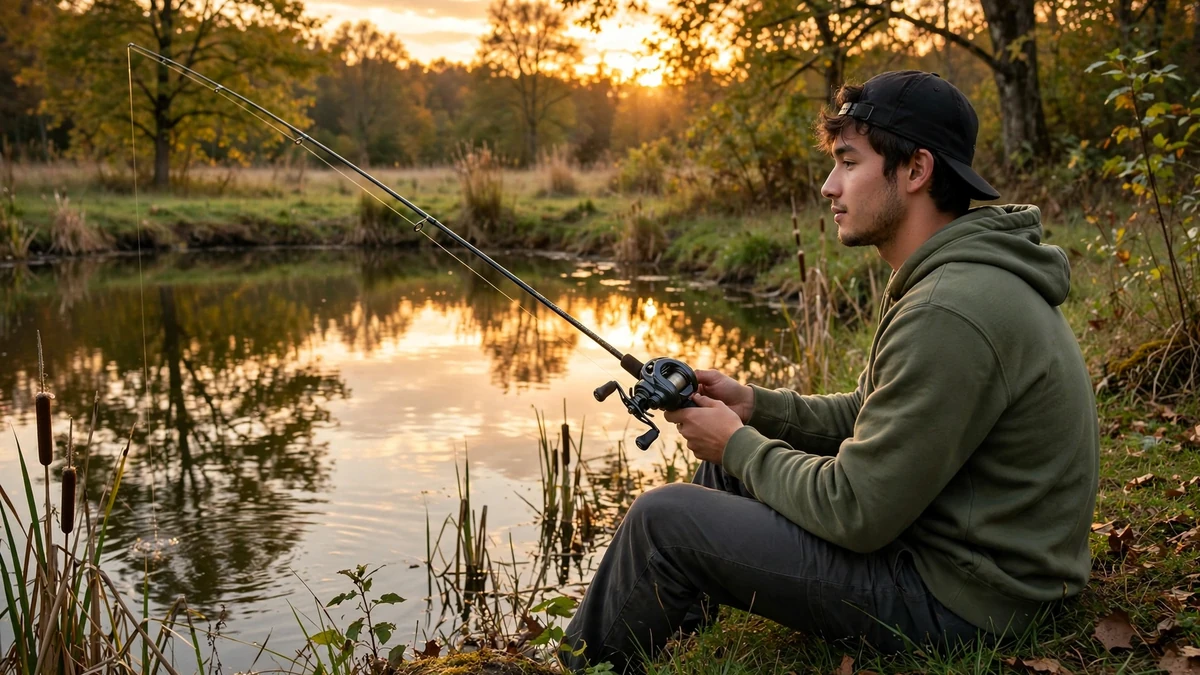
Value is not the cheapest price — it is the most fishing per dollar. These are our picks for the best baitcasting reel for the money — five reels that earned their place by out-fishing their price tags: the hardware, durability, and on-water performance you actually keep, divided by what you pay.
The best baitcasting reel for the money is a harder question than “best reel” or “cheapest reel.” A $60 reel you replace in a year costs more than a $100 reel you fish for five. So we scored value the only honest way: performance and longevity divided by price. Every reel below was judged on what its dollars actually buy — frame rigidity, brake quality, gear smoothness, drag strength — and penalized for anything you will pay to upgrade later.
The short version: the $100 tier is where value peaks in 2026. Below it you trade durability; above it you pay for refinement most anglers will never feel on the water. Our top pick costs about $100 and fishes like reels costing twice as much — and the budget pick at $60 is the rare cheap reel that is genuinely worth owning, not just worth trying.
Best value picks at a glance
Baitcasting reels for the money, compared
| Reel | Best for | Gear ratio | Weight | Bearings | Max drag | Approx. price |
|---|---|---|---|---|---|---|
| Shimano SLX A 150 | Maximum long-term value | 6.3:1 / 7.2:1 / 8.2:1 | 6.9 oz | 5+1 | 12 lb | ~$100 |
| Daiwa Fuego CT | Forgiveness per dollar | 6.3:1 / 7.3:1 / 8.1:1 | 7.6 oz | 7+1 | 13.2 lb | ~$100 |
| Lew’s Speed Spool LFS | Ergonomics per dollar | 6.8:1 / 7.5:1 / 8.3:1 | 7.5 oz | 10+1 | 15 lb | ~$100 |
| Abu Garcia Revo X | Drag power per dollar | 6.6:1 / 7.3:1 | 7.6 oz | 7+1 | 18 lb | ~$100 |
| Abu Garcia Max X | Lowest cost of entry | 6.4:1 | 7.7 oz | 7+1 | 15 lb | ~$60 |
Best baitcasting reels for the money: full reviews
Best value overall
Shimano SLX A 150
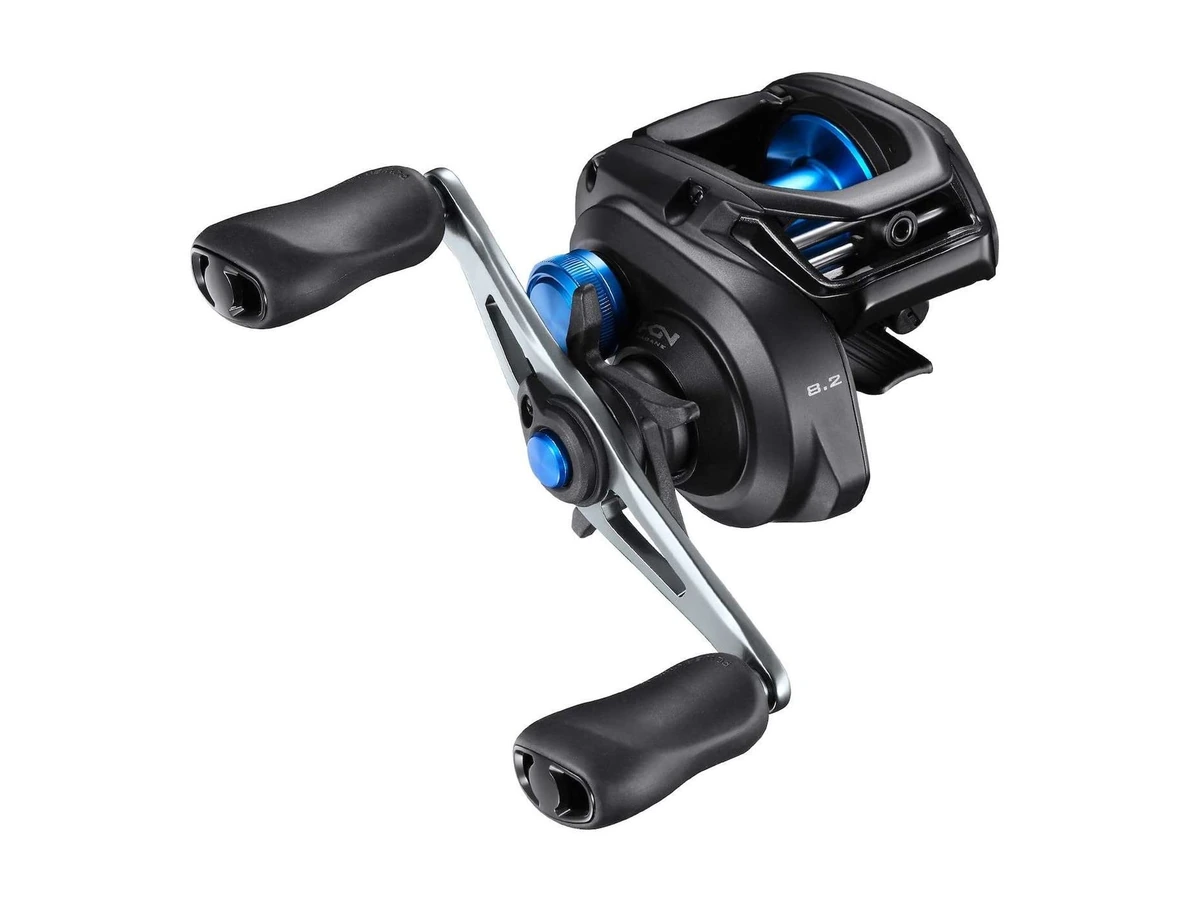
Value is performance divided by price, and the SLX A 150 wins the division. Its Hagane aluminum frame, X-Ship gear support, and S A-RB bearings are architecture shared with Shimano reels costing $200 — you are essentially buying last decade’s flagship engineering at an entry price. On the water that means hooksets stay crisp, gears stay meshed under load, and the reel still feels tight after seasons that kill cheaper reels.
The value compounds over time. A $100 SLX fished for five years costs $20 per season; a $60 reel replaced twice in that span costs more and fishes worse throughout. The externally adjustable SVS Infinity brakes mean you will not outgrow it as your casting improves, and three available ratios (6.3:1, 7.2:1, 8.2:1) let you specialize later without switching platforms. This is the benchmark every other value pick is measured against.
Pros:
- Flagship-grade frame and gear architecture
- Lowest long-term cost per season
- Externally adjustable brakes grow with your skill
- Three ratios for future specialization
- Holds value well on the used market
Cons:
- $40 more than the cheapest pick here
- Knobs and cosmetics are plain for the price
Pair it with: a 7’0″ medium-heavy rod — a setup that fishes like $300 worth of gear for half of it.
Best brake for the dollar
Daiwa Fuego CT
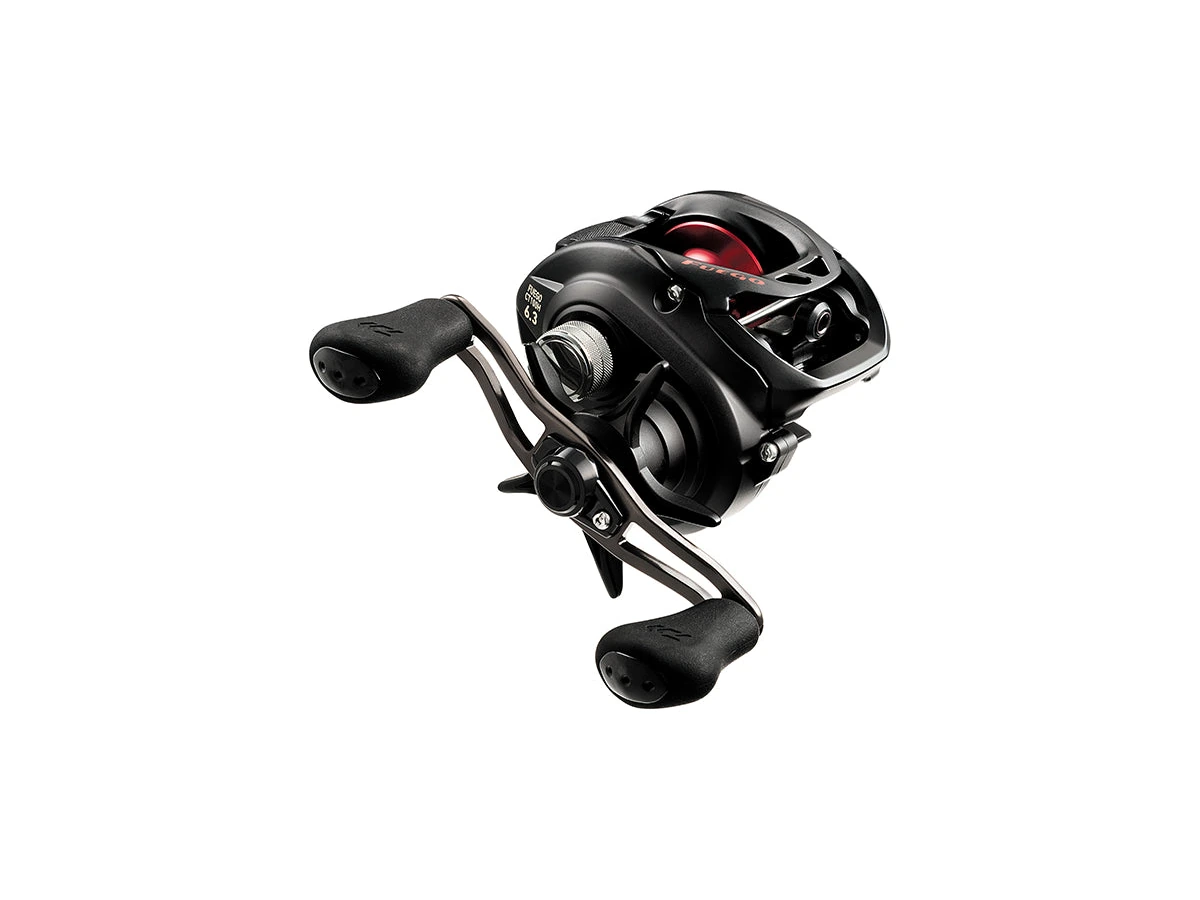
Here is what $100 buys in braking technology: Daiwa’s Magforce-Z magnetic system, an external dial with genuine range, and the T-Wing line guide that measurably extends casting distance. Reels costing twice as much do not brake meaningfully better for general bass fishing — they just do it with fancier materials. The Fuego CT is the point of diminishing returns for cast control.
Where the value shows on the water is in saved fishing time. A forgiving brake means fewer backlashes, which means more casts per hour and less line wasted picking out nests — and braid is not cheap. The compact CT body suits smaller hands without a “small reel” price penalty. You trade some frame rigidity versus the SLX, but for anglers who value clean casting over winching power, this is the smartest $100 in the guide.
Pros:
- Braking rivals reels costing twice as much
- T-Wing guide adds free casting distance
- Fewer backlashes saves line and fishing time
- Compact body at no size penalty
- 13.2 lb drag overdelivers for the price
Cons:
- Frame less rigid than the SLX under heavy loads
- Finish wears faster cosmetically
Pair it with: a 6’10” medium rod and 12 lb mono — an inexpensive, high-performing learning setup.
Best comfort per dollar
Lew’s Speed Spool LFS
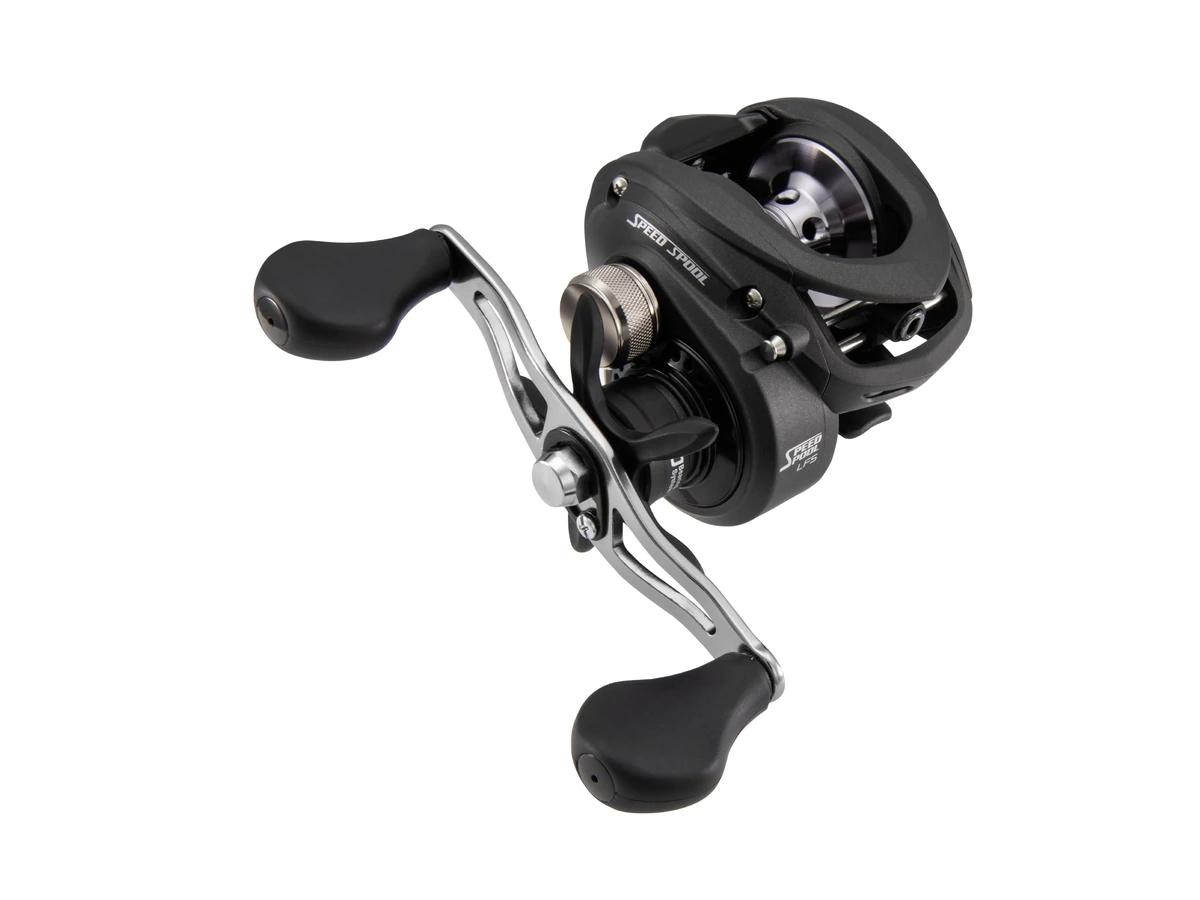
Comfort is undervalued in value discussions until you price an orthopedic bill — or, more realistically, until hour six of a tournament day. The Speed Spool LFS delivers the best ergonomics under $100: a compact palming body, a 95 mm bowed handle, and Winn Dri-Tac knobs that are legitimately premium components. Lew’s essentially bundled $30 worth of handle upgrades into a $100 reel.
The dual MSB brake (magnetic plus centrifugal, both externally adjustable) gives you tuning flexibility that single-system reels at this price cannot match, and the 10+1 bearing count is the highest here. The graphite frame is the value compromise — fine for normal bass fishing, less ideal for heavy flipping year after year. If your fishing is high-volume casting rather than heavy winching, this is the best-feeling $100 you can spend.
Pros:
- Best ergonomics under $100
- Premium Winn Dri-Tac knobs included
- Dual MSB brake, both sides externally adjustable
- Highest bearing count in this guide
- 15 lb drag handles bigger fish
Cons:
- Graphite frame is the durability compromise
- Less refined gears than the Shimano picks
Pair it with: a 7’0″ medium-heavy rod — comfort-matched for long days of casting.
Best power per dollar
Abu Garcia Revo X
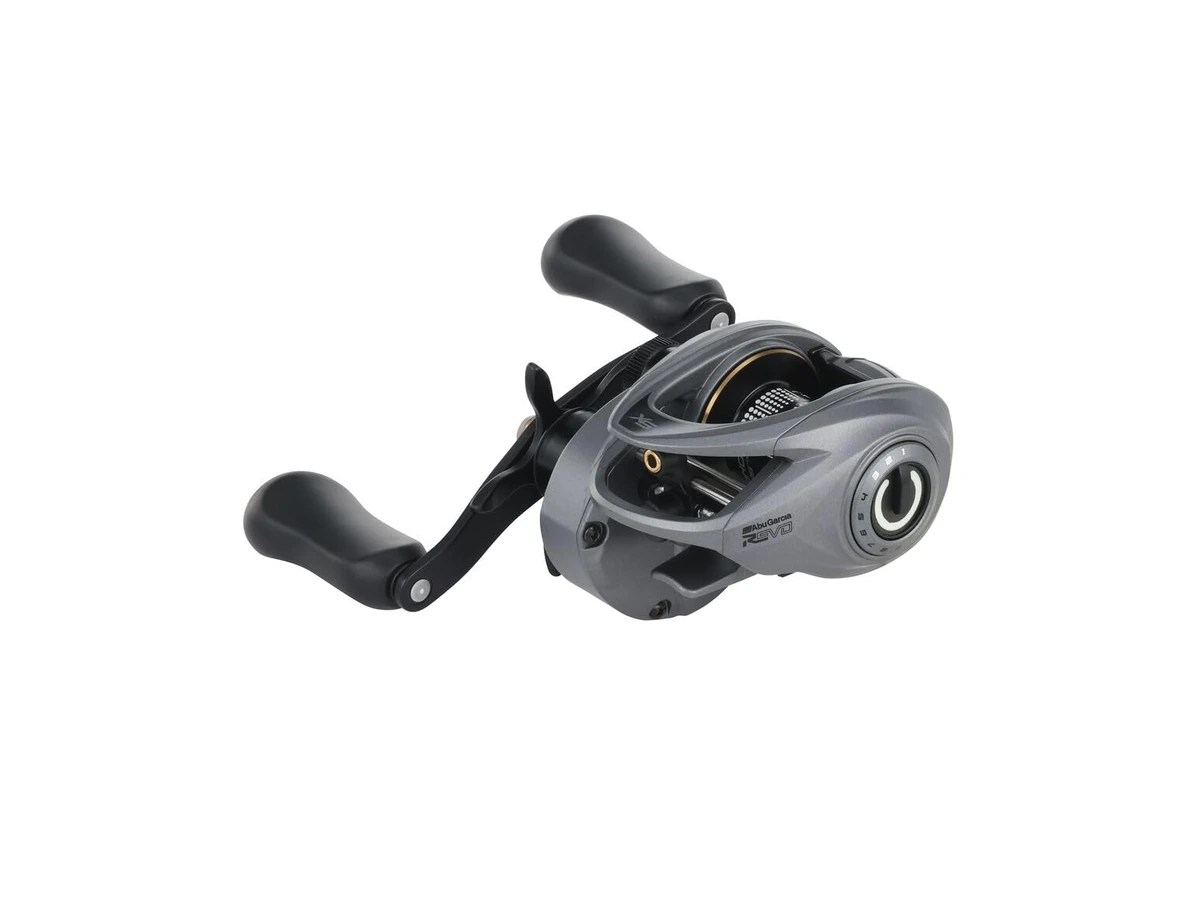
Drag is the most expensive component to upgrade, and the Revo X gives you 18 lb of Power Stack Carbon Matrix drag for $100 — a figure that embarrasses reels at $150+. For anglers who fish jigs in brush, frogs over mats, or any heavy cover where stopping power decides the outcome, that drag alone justifies the price.
The X2-Cräftic alloy frame keeps everything rigid when that drag is working hard, and the 7+1 HPCR corrosion-resistant bearings are a durability spec you normally pay more for. The MagTrax brake is simple rather than sophisticated — fewer detents than Daiwa’s dial — so finesse anglers should look elsewhere. But measured in stopping power per dollar, nothing in this guide touches the Revo X.
Pros:
- 18 lb drag embarrasses pricier reels
- Rigid alloy frame under heavy loads
- HPCR corrosion-resistant bearings
- Simple, understandable MagTrax brake
- Duragear brass gears for longevity
Cons:
- Brake has fewer detents than rivals
- Not a finesse reel — prefers 3/8 oz and up
Pair it with: a 7’3″ heavy flipping stick and 50 lb braid — a heavy-cover outfit for the price of one premium reel.
Best ultra-budget value
Abu Garcia Max X
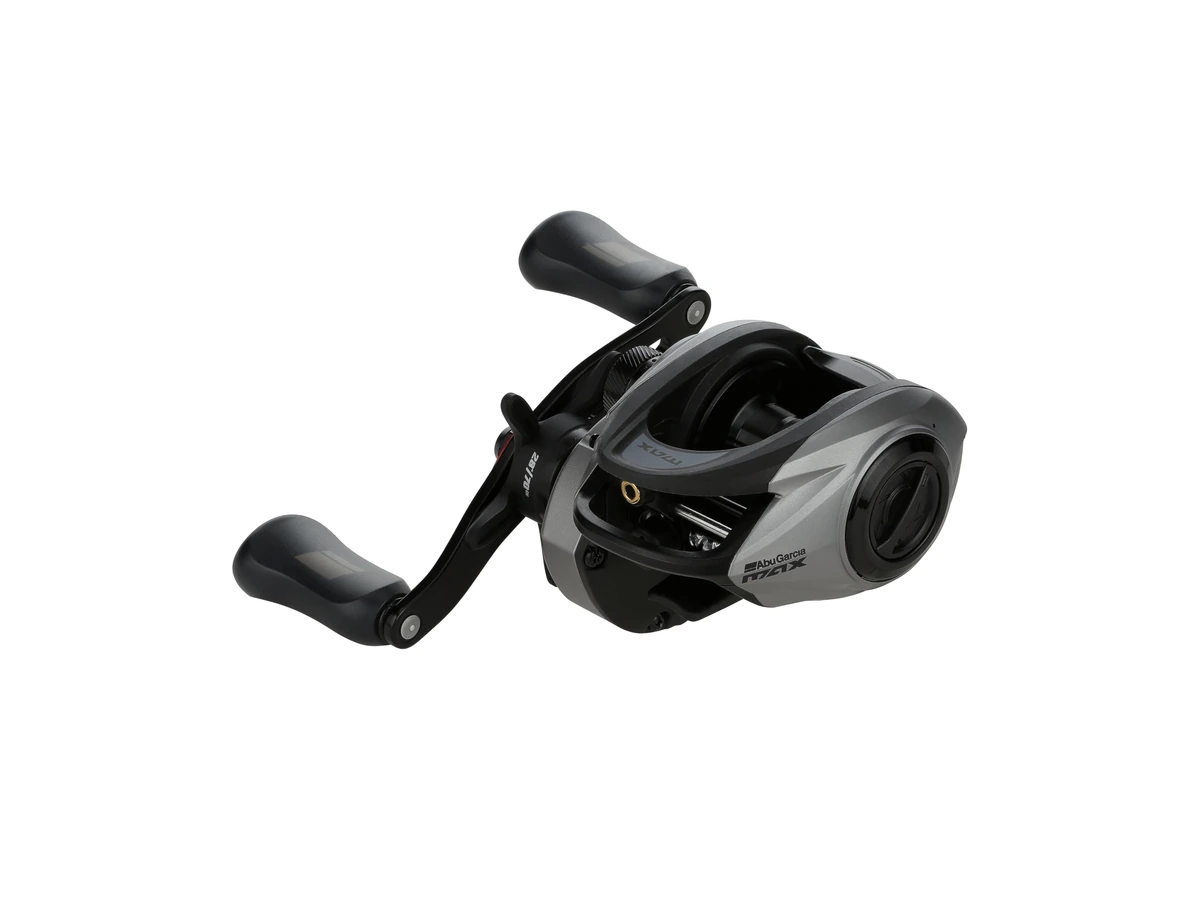
The Max X is the answer to “what is the least I can spend and still get a real baitcaster?” At roughly $60, it undercuts everything else here by 40% while keeping the essentials: an external MagTrax magnetic brake you can actually learn on, a 6.4:1 all-around ratio, and 15 lb of usable drag.
The value proposition is specific: it is a low-risk trial. If baitcasting clicks for you, you have spent $60 to find out, and the fundamentals you learn transfer directly. If it does not, you are out the cost of a tank of gas. What $60 does not buy is longevity — gears are rougher, the graphite frame flexes, and heavy use will wear it faster. Buy it as a smart experiment, not as a five-year reel, and it is money well spent.
Pros:
- Lowest-risk entry into baitcasting
- Real external magnetic brake, not a toy
- Usable 15 lb drag and 6.4:1 ratio
- Light and easy to learn on
- Teaches transferable setup skills
Cons:
- Shorter lifespan under heavy use
- Rougher gears and more frame flex than $100 reels
Pair it with: a budget 6’6″ medium-heavy rod — a complete first baitcasting outfit for around $110.
How we score value
Our value score is performance and longevity divided by price. We weight frame and gear durability highest, because a reel that lasts five years at $100 beats a $60 reel replaced twice. Next: brake quality (does it cast cleanly across lure weights?), drag strength and smoothness, ergonomics, and finally refinement — the nice-to-haves that separate $100 reels from $200 ones.
We penalize false economy: reels that look cheap but need early replacement, and reels priced for features (like digital brakes) that most anglers will never feel on the water. All testing is technique-led and on-water — Texas rigs, jigs, spinnerbaits, topwater, and heavy cover — because value has to survive contact with actual fishing.
Buying guide: how to judge value like an expert
The $100 tier is the value peak
In 2026, roughly $100 buys a legitimate long-term reel: aluminum or quality graphite frames, real braking systems, carbon drags, corrosion-resistant bearings. Below $60–$80 you trade durability and refinement; above $150 you pay for lighter materials, tighter tolerances, and features like DC brakes. Most anglers will never feel the difference between a $100 and a $200 reel on the water — but everyone feels the difference between $60 and $100.
What your dollars actually buy
Frame: aluminum (rigid, durable) vs graphite (light, cheap) — the biggest durability dollar. Brakes: magnetic (simplest), centrifugal (strong early control), dual (both), digital/DC (microchip-controlled, premium). Drag: carbon-matrix washers and higher max drag cost more and matter most in cover. Bearings: quality (stainless, sealed, corrosion-resistant) over quantity. Gears: supported pinions (Shimano X-Ship) and brass gearing last longer under load.
Gear ratio, IPT, and spool size
6.x:1 for power and cranking, 7.x:1 all-around, 8.x:1 for speed techniques. IPT (inches per turn) — actual line recovered per crank — is the truer speed stat since spool size affects it. Standard 150-size spools suit most bass fishing; shallow SV/BFS spools cast light lures better; 200-size adds capacity for big baits. Buy the ratio for your dominant technique.
Line, retrieve, and the hidden costs
Start with 12–15 lb monofilament (cheap, forgiving); graduate to fluorocarbon or braid as skill grows. Factor hidden costs into value: a backlash-prone reel wastes expensive braid, and a reel without corrosion-resistant bearings costs you a replacement. Left- or right-hand retrieve both work — right-hand casters often prefer left-hand retrieve.
Setup guide: protect your investment in 10 minutes
1. Set spool tension per lure
Tie on your lure, hold the rod at 45 degrees, release the spool. Tighten the tension knob until the lure falls slowly and the spool stops on landing. Re-do this with every lure change — it prevents most backlashes and saves line.
2. Start brakes high, back off gradually
Set magnetic dials to 7–8 out of 10. Cast smoothly, reducing one click at a time until casts stay just clean. Add brake into the wind. Your thumb finishes every cast — clamp the spool the instant the lure lands.
3. Maintain it and it pays you back
Rinse after use (critical in salt), back off the drag for storage, and oil bearings seasonally. A $100 reel maintained well outlasts a $200 reel neglected — maintenance is the highest-ROI habit in fishing.
Frequently asked questions
What is the best baitcasting reel for the money?
The Shimano SLX A 150 — flagship-derived frame and gear architecture at $100, with the lowest cost-per-season of any reel here. It is the value benchmark: buy it unless a specific need (maximum forgiveness, heavy cover, minimum spend) points you at one of the other picks.
Is the Shimano SLX really the best value?
By our scoring — durability divided by price — yes. Its Hagane body, X-Ship gears, and S A-RB bearings are shared with reels costing twice as much, and that hardware is what survives five seasons. Cheaper reels fish fine on day one; the SLX still fishes fine on day one thousand.
What do I actually get spending $200 instead of $100?
Mostly refinement: lighter frames, tighter tolerances, smoother gears, sometimes digital brakes. You do not get double the fish. The jump from $60 to $100 is transformative; the jump from $100 to $200 is incremental. Spend the difference on line, lures, and time on the water.
Can a budget baitcaster handle big bass?
Yes — with the right pick. The Abu Garcia Revo X’s 18 lb drag and alloy frame handle big fish in heavy cover at $100. Even the $60 Max X lands pond bass fine. What budget reels give up is longevity under heavy use, not the ability to catch a good fish today.
What gear ratio is the best all-around value?
7.x:1. It covers jigs, Texas rigs, spinnerbaits, and topwater — the presentations most anglers throw most often. Buy 6.x:1 for cranking power or 8.x:1 for frogs and flipping only when you have a specific technique in mind.
How do I make a cheap baitcaster last?
Set it up correctly (tension and brakes per lure — most “bad reels” are badly set up), rinse after every trip, back off the drag for storage, and oil it seasonally. Maintenance matters more than price: a maintained $60 reel outlasts a neglected $150 one.
Final verdict
Best overall value: Shimano SLX A 150 — the lowest cost-per-season and the benchmark everything else is judged against.
Best braking value: Daiwa Fuego CT — premium cast control at the $100 sweet spot.
Best comfort value: Lew’s Speed Spool LFS — bundled ergonomic upgrades for high-volume casters.
Best power value: Abu Garcia Revo X — 18 lb of drag for $100 is unmatched.
Best budget experiment: Abu Garcia Max X — $60 to find out if baitcasting is for you.
Value rule of thumb: the $60-to-$100 jump is transformative, the $100-to-$200 jump is incremental. Buy at the $100 tier, maintain the reel, and spend the savings on time on the water.
Read next
© baitcastingreelz.com · Affiliate disclosure: As an Amazon Associate, baitcastingreelz.com earns from qualifying purchases. This does not change our editorial selection criteria. Product availability, exact specifications and prices may change.