Buyer’s Guide · 2026
How to Choose the Best Baitcasting Reel
Learning how to choose a baitcasting reel starts with the fishing job, not the brand. Match the reel’s size, gear ratio, braking system and line capacity to the techniques you actually fish, then let frame quality, drag smoothness and hand retrieve decide between finalists. This guide walks through every decision in order, so you buy once and buy right.
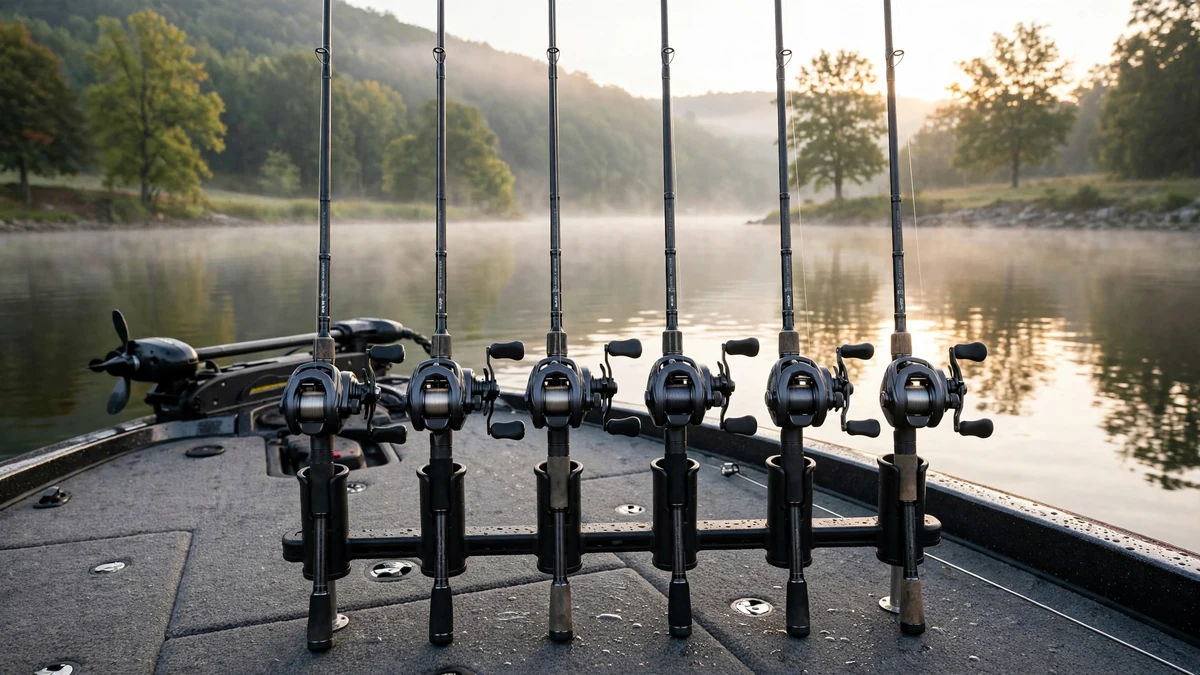
Start with the fishing job: not the reel brand
Reel shopping goes wrong when it starts with “which brand is best.” Start with the technique: flipping jigs into cover, frogging mats, deep cranking, throwing swimbaits, or fishing inshore saltwater. Each job points to a size, a gear ratio and a braking style; and once those are set, brand choice becomes a matter of budget, warranty and feel rather than guesswork. Write down your top two techniques before reading further; every section below maps back to them.
Choose the right profile and size
100/150 size
The everyday bass range
Low-profile reels in 100/150 sizes fit most freshwater bass techniques: worms, jigs, spinnerbaits, chatterbaits, topwater and moderate swimbaits. They palm comfortably for all-day casting and balance well on medium-heavy rods. This is the best place to begin if you want one general-purpose reel.
200 size
The workhorse step up
200-size reels add line capacity and cranking power for bigger plugs, heavier cover and longer casts. A good choice as a second reel, or as the primary reel for anglers who throw 3/4 oz and up regularly.
300/400 size
When capacity and power matter more
Large low-profile and round reels (300/400) serve big swimbaits and glide baits, musky bucktails, catfish rigs and inshore saltwater, anywhere long runs and heavy line demand capacity. The Shimano Tranx and Penn Fathom families live here. They are specialists, not all-rounders.
Low-profile versus round is mostly about ergonomics versus capacity: low-profile palms better for high-volume casting; round holds more line and muscles bigger fish. Most bass anglers live in low-profile 100–200 sizes.
Choose a gear ratio for the retrieve you need
Gear ratio is spool rotations per handle turn, but the number that truly matters is IPT (inches per turn): the line actually picked up per crank. Two reels with the same ratio can have different IPT on different spool diameters, so compare IPT when retrieve speed really counts.
| Technique | Ideal ratio | Why |
|---|---|---|
| Deep cranking | 5.x:1 | Maximum winching power for big plugs all day |
| Jigs, Texas rigs, spinnerbaits | 6–7:1 | The all-around range, power plus reasonable speed |
| Topwater, jerkbaits | 7.x:1 | Quick pickup without sacrificing control |
| Frogging, flipping, pitching | 8–10:1 | Instant slack pickup for hooksets in cover |
| Burning spinnerbaits/buzzbaits | 8–10:1 | Sustained high-speed retrieves without frantic cranking |
If you are buying one reel, 6–7:1 is the all-around answer. If you are buying your second or third, specialise: slow for cranking, fast for cover techniques. Our baitcasting reel parts explained guide details how the gear train creates these ratios.
Choose brakes you can tune with confidence
The braking system is the most important feature for beginners and the most misunderstood by everyone. Magnetic brakes (external dial, steady control through the cast) are the easiest to learn and adjust mid-session, the best choice for a first baitcaster. Centrifugal brakes (internal pins, strongest at cast start) reward anglers comfortable opening the side plate to tune. Dual systems combine both for maximum fine-tuning. Digital/DC brakes automate the job with a microprocessor, near backlash-free, at a premium price that makes sense for anglers who value fishing time over tuning time. Whatever system you choose, confirm you understand its adjustment method before buying; the best brake is the one you will actually adjust. Full tuning method in how to adjust your baitcasting reel.
Match line capacity to your line and cover
- Read the manufacturer’s mono and braid capacity (lb/yd), not just the reel size name.
- Match it to the line you actually use, not the heaviest line you might someday try.
- For frogs and matted grass, confirm the reel comfortably holds your braid-plus-leader setup.
- Remember the 1/8-inch rule: usable capacity is what sits below the spool rim, not the brim.
Capacity mistakes usually mean buying too small for the job, a 100-size reel loaded with 50 lb braid for punching mats runs out of room fast. When in doubt between sizes, the larger one is the safer pick for heavy-line techniques.
A line-spooling tool and fresh line make it easier to load a new reel under even tension and begin with clean, consistent line lay, the foundation every later adjustment builds on.
Evaluate frame strength, drag and bearings correctly
Frame
Prioritise rigidity where the reel works hardest
Aluminium and magnesium frames resist flex under heavy drag loads, keeping gears meshed and power transfer direct, what you want for cover fishing and big fish. Graphite and composite frames are lighter, corrosion-proof and budget-friendly, perfectly fine for open-water techniques. Designs like Shimano’s HAGANE body take rigidity further. If you fish heavy cover, frame stiffness is worth paying for.
Drag
Look for smooth, usable control
Carbon-fibre drag washers deliver smooth startup with low initial inertia, the quality that prevents pulled hooks on the strike. Maximum drag numbers matter less than smoothness through the range you actually use. Test by pulling line against the drag: it should slip evenly, not stick and jump.
Bearings
Quality beats count
A reel with 7 quality stainless bearings outlasts and outcasts one with 12 cheap ones. Look for corrosion-resistant bearings (stainless, HPCR, CRBB) and shielded or sealed designs if you fish saltwater or brackish water. The “+1” in a 7+1 count is the anti-reverse clutch bearing, the part that gives instant, no-back-play hooksets.
Choose hand retrieve and fit before checkout
Most baitcasters come in left- and right-hand retrieve. Right-handed casters commonly prefer left-hand retrieve, the dominant hand stays on the rod for casting and hooksets while the other cranks. There is no “correct” choice, only the one that feels natural; but decide before buying, because re-learning later is frustrating. Also palm the reel if possible: it should nestle into your hand with the thumb falling naturally on the spool. A reel that fights your hand on the shelf will fight it on the water too.
Every new reel deserves a break-in: a hook-free practice plug lets you learn its brake feel and spool character in a yard before the first trip, two sessions that pay for themselves in saved backlashes.
Know the price tiers
Under $100 (budget): capable reels from KastKing, Piscifun, Abu Garcia and Lew’s that fish well above their price, ideal for a first baitcaster or a backup. Expect graphite frames and simpler brakes, but plenty of fish-catching ability. $100–$250 (mid-range): the sweet spot; Shimano SLX, Daiwa Tatula, Lew’s Tournament and Abu Garcia Revo families offer aluminium frames, refined brakes and smooth drags that satisfy most anglers indefinitely. $300+ (premium): Shimano Metanium and Curado DC, Daiwa Steez and Zillion; magnesium frames, digital braking, tournament-grade refinement. Buy premium when you know exactly which technique deserves it, not as a first reel.
Final baitcaster buying checklist
- Technique defined: the reel’s size and ratio match your top two techniques.
- Brakes understood: you know how to adjust the system on this specific reel.
- Capacity confirmed: holds your line choice with room below the rim.
- Frame and drag: rigid enough for your cover, smooth through the usable range.
- Hand retrieve chosen deliberately, and the reel palms comfortably.
- Budget honest: mid-range sweet spot unless a technique justifies premium.
Read next
After buying, set it up right: how to spool a baitcasting reel, how to adjust your baitcasting reel, how to set up a baitcaster for bass fishing, and baitcaster tips for beginners. Ready to compare models? Our Best Baitcasting Reels for Beginners, Best Baitcasting Reels Under $100 and Best Baitcasting Reels for the Money roundups apply this checklist to real reels.
Frequently asked questions
What is the best gear ratio for a first baitcasting reel?
6–7:1, the all-around range that handles jigs, Texas rigs, spinnerbaits and topwater competently. Specialise into 5.x:1 (cranking power) or 8–10:1 (speed techniques) with your second reel.
Are magnetic brakes better for beginners?
Yes. Magnetic brakes adjust via an external dial and apply steady control through the whole cast, making them the easiest system to learn. Digital/DC brakes are even easier but cost significantly more.
What baitcaster size is best for bass fishing?
100/150-size low-profile reels cover most bass techniques and are the best general-purpose choice. Move to 200 for bigger plugs and heavy cover, and 300/400 (or round reels) for swimbaits, musky and saltwater.
Do more bearings make a baitcaster better?
Not necessarily, bearing quality matters more than count. Seven good stainless bearings beat twelve cheap ones. Prioritise corrosion-resistant, shielded bearings if you fish saltwater.
Should I buy a right- or left-hand baitcaster?
Choose what feels natural, but know the common setup: right-handed casters often prefer left-hand retrieve to keep the dominant hand on the rod. Decide before buying, re-learning later is frustrating.
How much should I spend on a first baitcaster?
The $100–$250 mid-range is the sweet spot for a reel you will keep for years. Under-$100 reels from reputable brands are fine for learning; go premium only when a specific technique justifies it.
© baitcastingreelz.com · Affiliate disclosure: As an Amazon Associate, baitcastingreelz.com earns from qualifying purchases. Optional supply links are provided for convenience and do not change the informational guidance. Product availability and specifications may change.