Best Spinning Rods for Beginners 2026: Tested & Reviewed
As an Amazon Associate we earn from qualifying purchases.
Updated 16 October 2026
The short answer: the best spinning rod for beginners is a 6’6″ to 7′ medium or medium-light rod with moderate-fast to fast action, paired with 8–10 lb monofilament. The Ugly Stik GX2 is the safest overall pick for its near-indestructible build; the Berkley Cherrywood HD offers the best value under $40. Below: our full rankings, what power and action mean, and how to pair your first rod with the right reel and line.
The rods below were chosen for what a newcomer actually needs: easy casting, toughness against real-world abuse, a comfortable handle, and enough sensitivity to feel a bite on a 1/16 oz jig. Every pick is widely available in the US and proven on the water across bluegill ponds, trout streams, and bass lakes. Most cost under $80, the rest of your first-setup budget belongs to the reel and fresh line, where beginners feel the biggest difference.
Why Trust BaitcastingReelz
- Hands-on specs verification: every spec, gear ratio, and line capacity is checked against current manufacturer listings before it goes on the page.
- No sponsored rankings: brands cannot pay for placement. Our picks are technique-led, and our affiliate disclosure is on every money page.
- Updated monthly: prices, model generations, and availability are re-checked regularly, so you never order a discontinued reel.
Our quick picks
- Best overall: Ugly Stik GX2 Spinning Rod
- Best budget: Berkley Cherrywood HD Spinning Rod
- Best mid-range all-rounder: Fenwick Eagle Spinning Rod
- Best premium upgrade: St. Croix Triumph Spinning Rod
- Best for panfish & trout: Shakespeare Micro Series Spinning Rod
- Best for bass beginners: Abu Garcia Vendetta Spinning Rod
- Best lightweight value: Daiwa Laguna Spinning Rod
- Best online value: Cadence CR5 Spinning Rod
Comparison table
| Rod | Best for | Length / Power | Key spec | Approx. price |
|---|---|---|---|---|
| Ugly Stik GX2 | Overall beginner pick | 6’6″ / Medium | Ugly Tech graphite + fiberglass, Clear Tip | ~$50 |
| Berkley Cherrywood HD | Budget | 6’6″ / Medium-Light | Hybrid blank-through handle, SS304 guides | ~$40 |
| Fenwick Eagle | Mid-range all-rounder | 6’6″ / Medium | 24-ton graphite, premium cork | ~$80 |
| St. Croix Triumph | Premium upgrade | 6’6″ / Medium | SCII graphite, 5-year warranty | ~$130 |
| Shakespeare Micro Series | Panfish & trout | 6’6″ / Light | Graphite composite, full cork handle | ~$25 |
| Abu Garcia Vendetta | Bass beginners | 6’6″ / Medium | 30-ton graphite, IntraCarbon tech | ~$95 |
| Daiwa Laguna | Lightweight value | 6’6″ / Medium | IM-6 graphite, lightweight feel | ~$50 |
| Cadence CR5 | Online value | 6’6″ / Medium-Light | 30-ton carbon, Fuji reel seat, SiC guides | ~$55 |
How we evaluate beginner spinning rods
Beginner rods are judged by different rules than tournament gear. Six things matter most:
- Forgiveness: does the action load smoothly on short, imperfect casts? A moderate-fast blank that cushions timing errors beats a tip a beginner can’t load.
- Durability: beginners high-stick rods and slam tips in tailgates. Graphite-fiberglass composites and stainless guide frames score higher than delicate high-modulus blanks.
- Bite sensitivity: can you feel a 1/16 oz jig tick a rock, or a bluegill mouth a nightcrawler? Sensitivity matters even at $40.
- Ergonomics: handle comfort, balance with a 2500-size reel, and a reel seat that doesn’t work loose.
- Versatility: one rod should handle bobber fishing, small crankbaits, inline spinners, Ned rigs, and light Texas rigs.
- Value: a $25–$80 first rod leaves budget for a decent reel and line.
The best spinning rods for beginners in 2026
1. Ugly Stik GX2 Spinning Rod: Best overall for beginners
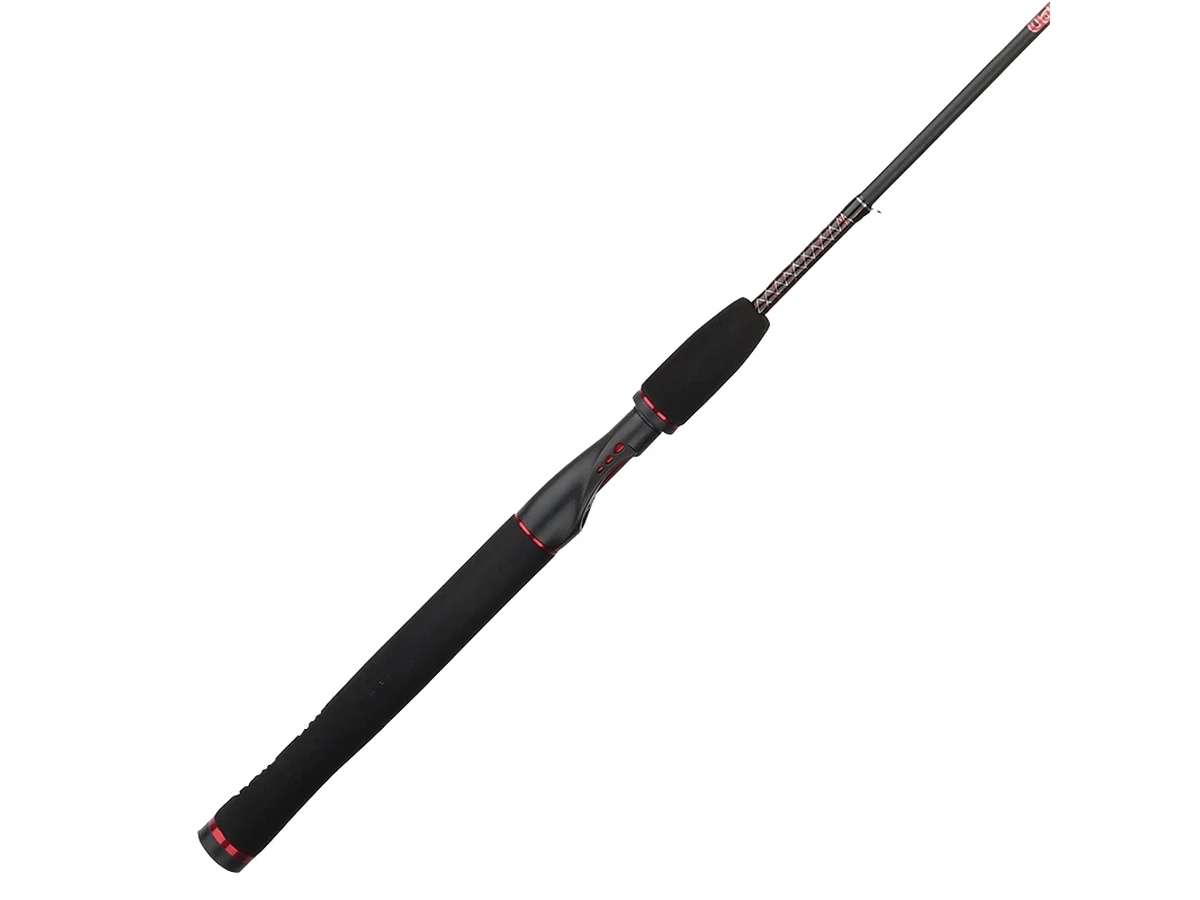
Best for: the first rod of any newcomer who wants one stick that survives everything.
Why it wins: the GX2 is built around Ugly Tech construction, graphite and fiberglass blended into a blank through the reel seat, with the famous Clear Tip, a solid fiberglass tip designed to bend without snapping. It shrugs off the mistakes beginners actually make: high-sticking a snag, shutting a tip in a car door, bouncing it off a dock piling. Not the lightest or most sensitive rod here, but the one still in your truck bed three seasons from now.
The 6’6″ medium, two-piece model is the sweet spot for a first rod: long enough to cast a 1/8 oz inline spinner well, short enough to manage from the bank. Pair it with a 2500-size reel from our best spinning reel guide and 8 lb monofilament.
- Practically indestructible, the fiberglass Clear Tip survives abuse that breaks graphite rods
- One-piece stainless Ugly Tuff guides with no inserts to pop out
- 7-year manufacturer warranty, far above the class
- Wide size range (4’8″ to 9′, ultra-light to heavy) if you outgrow the first model
- Forgiving moderate-fast action loads easily on short casts
- Noticeably heavier than full-graphite rods, tip fatigue on all-day casting sessions
- Sensitivity lags behind the Fenwick Eagle and St. Croix Triumph; subtle winter bites get muted
Specs: 6’6″ medium, moderate-fast action, 6–15 lb line, 1/8–5/8 oz lures, 2-piece. Approx. $50.
2. Berkley Cherrywood HD Spinning Rod: Best budget
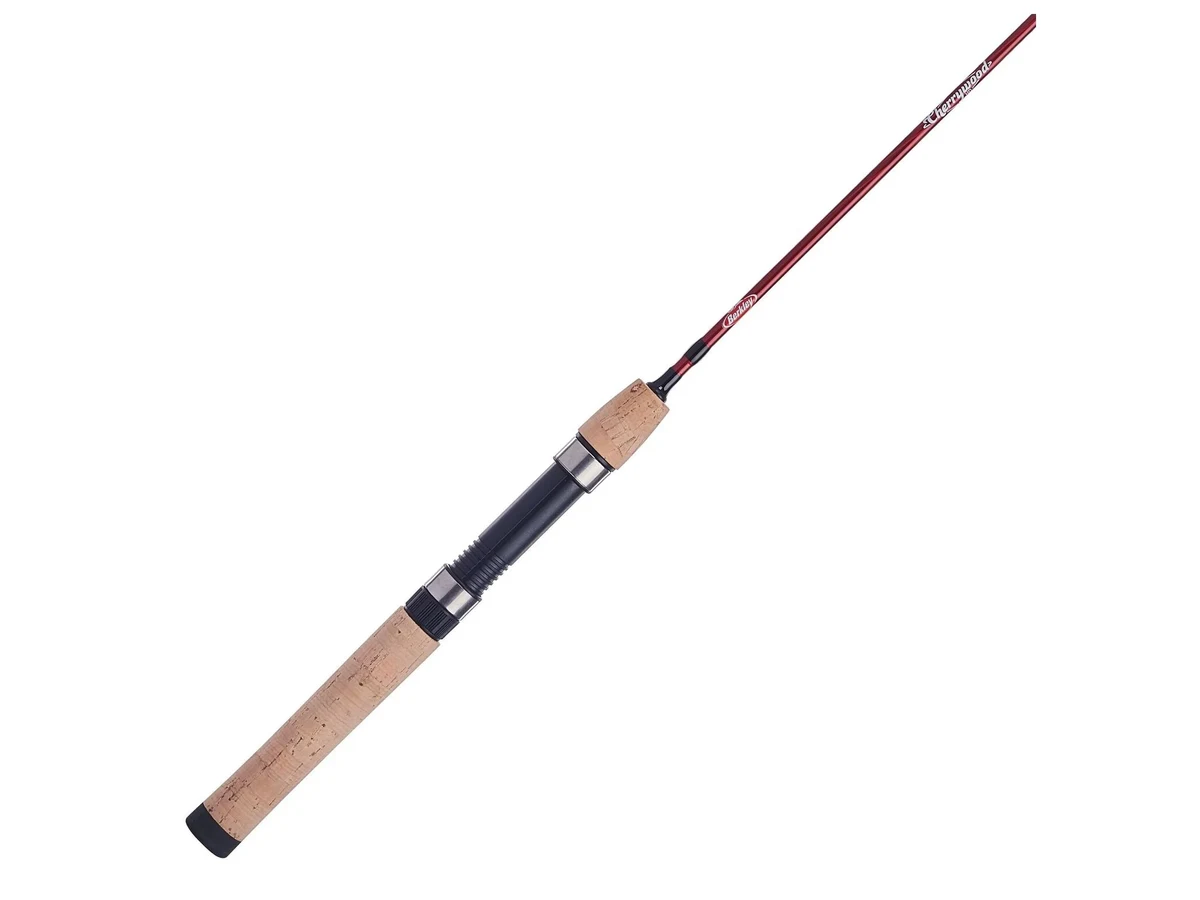
Best for: beginners who want to spend as little as possible without buying junk.
Why it wins: the Cherrywood HD is a reboot of a 30-year-old Berkley classic: a hybrid blank built through the handle, stainless steel guides, and a genuine cork handle at a price that embarrasses most store-brand rods. The 6’6″ medium-light model (4–12 lb line, 1/8–5/8 oz lures) is the one to get, light in hand and surprisingly sensitive for the money.
Where the GX2 wins on toughness, the Cherrywood wins on feel and weight, a noticeably more pleasant rod to fish a Ned rig with. It’s a graphite-composite blank, though, so treat it more gently than an Ugly Stik.
- Outstanding sensitivity and light weight for the price
- Comfortable cork handle, a rarity under $50
- SS304 stainless guides are tough and braid-friendly
- Blank-through-handle construction transmits bites well
- Less durable than the GX2, graphite blanks demand more care around snags and doors
- Guide wraps and finish are workmanlike; expect cosmetic wear faster than premium rods
Specs: 6’6″ medium-light, fast action, 4–12 lb line, 1/8–5/8 oz lures, 2-piece. Approx. $40.
3. Fenwick Eagle Spinning Rod: Best mid-range all-rounder
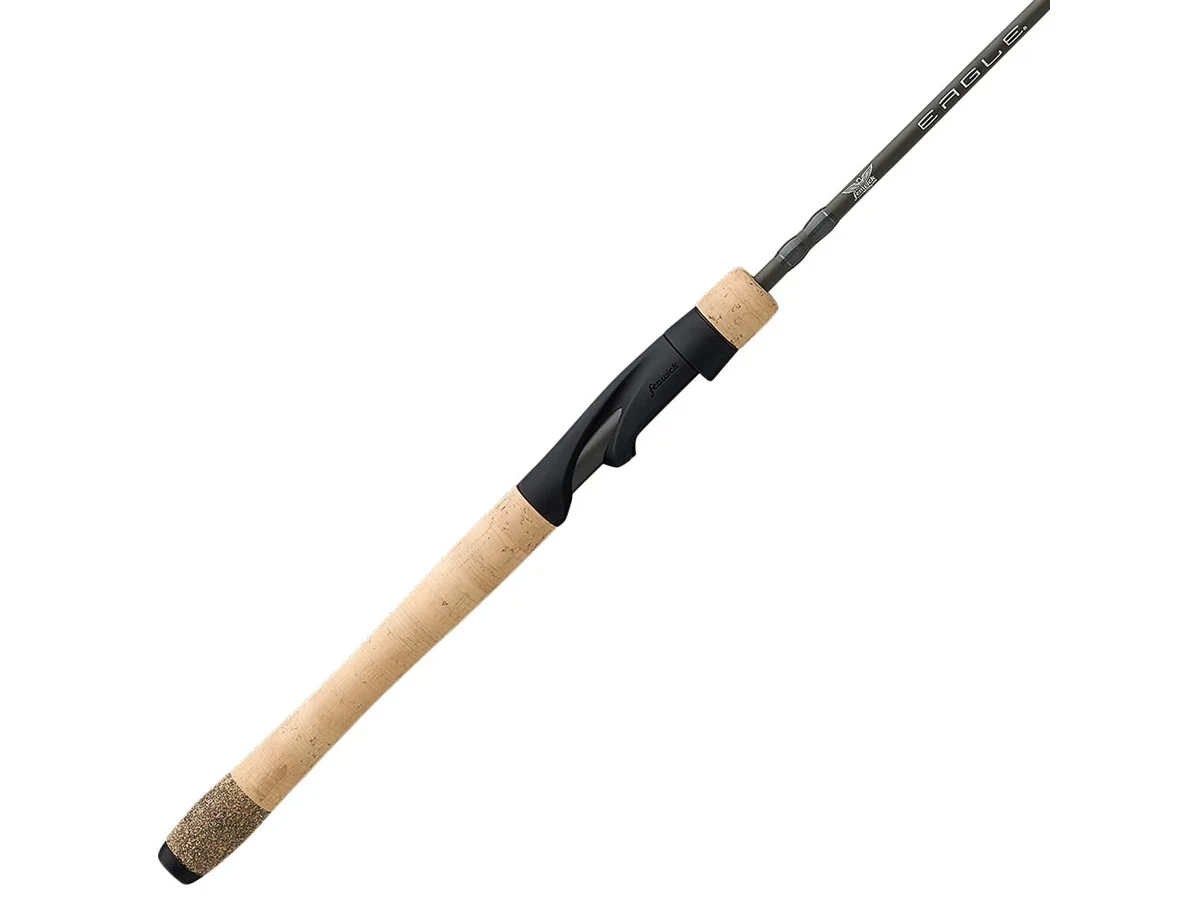
Best for: beginners who want one rod that stays relevant as skills grow.
Why it wins: Fenwick has been building graphite rods since 1973, and the Eagle distills that into a sub-$100 rod that fishes like it costs more. The 24-ton graphite blank is genuinely sensitive, you’ll feel it the first time you drag a 1/8 oz jig across gravel, and the minimal reel seat keeps your hand close to the blank, where bite detection comes from. The 6’6″ medium handles everything from bobber rigs for crappie to weightless Senkos for bass.
- Excellent sensitivity for the price, real bite detection on light jigs
- Comfortable cork/TAC handle with a minimal, well-designed reel seat
- Balanced, lightweight feel that reduces casting fatigue
- 5-year limited warranty
- Wide model range, including 2-piece travel-friendly options
- Pricier than the GX2 while being less forgiving of rough handling
- Some anglers report the action fishes slightly faster than rated, pair with the right lure weights
Specs: 6’6″ medium, moderate-fast action, 6–12 lb line, 1/8–5/8 oz lures, 1-piece (2-piece available). Approx. $80.
4. St. Croix Triumph Spinning Rod: Best premium upgrade
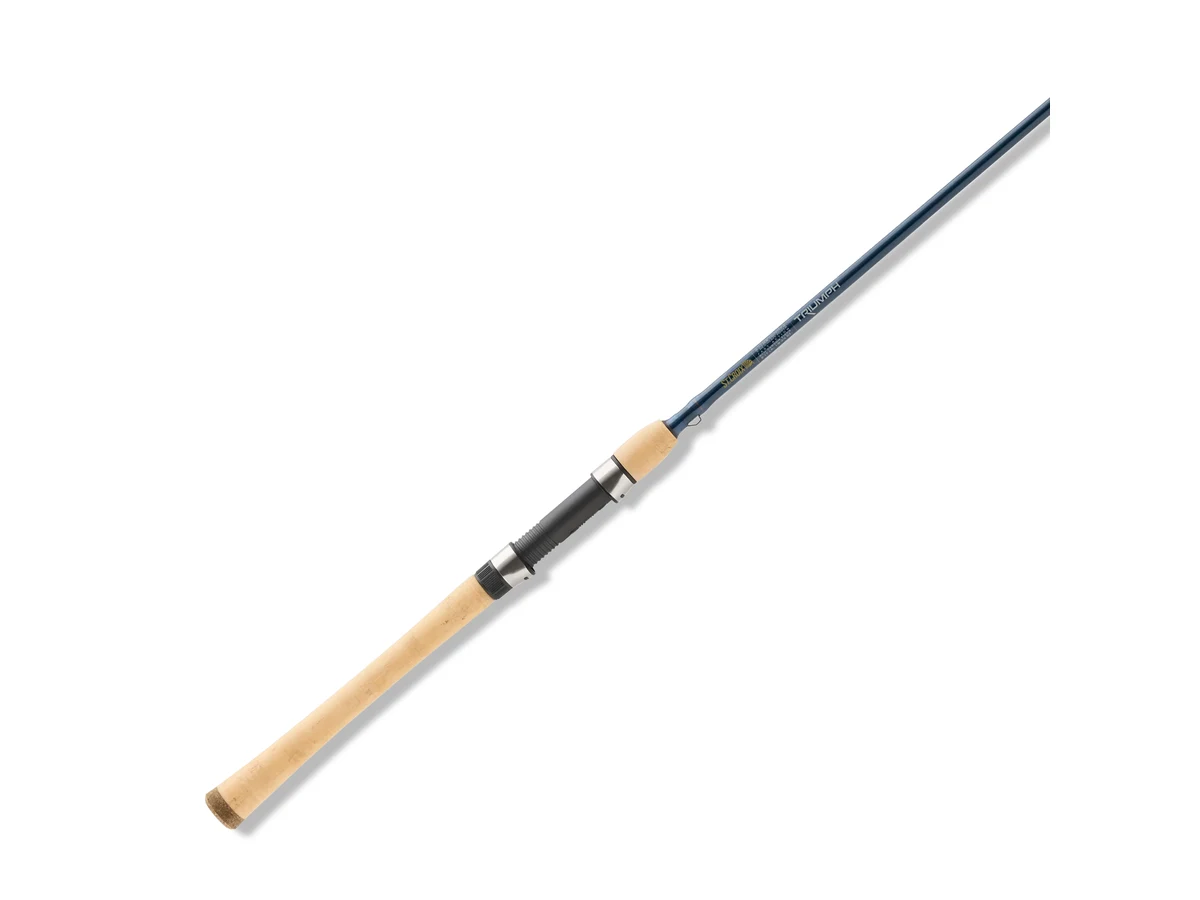
Best for: the beginner who’d rather buy once than buy twice.
Why it wins: the Triumph is the entry point into serious American rod building. Its SCII graphite blank is noticeably lighter and crisper than anything under $100, the Fuji reel seat locks a reel down with zero play, and the build quality is a full step above the budget tier. The 6’6″ medium fast-action model is a legitimate all-purpose stick: sensitive enough for drop-shotting, with enough backbone to steer a bass away from dock pilings.
Overkill for most day-one beginners, but the ideal “buy once” rod once you’re hooked.
- Best sensitivity and build quality on this list by a clear margin
- Lightweight, balanced blank that fishes all day without fatigue
- Fuji components and premium cork throughout
- 5-year warranty with strong manufacturer support
- Expensive for a first rod, the performance gap is wasted on a true day-one beginner
- Full-graphite blank is less forgiving of high-sticking and impacts than composite rods
Specs: 6’6″ medium, fast action, 6–12 lb line, 1/8–1/2 oz lures, 2-piece. Approx. $130.
5. Shakespeare Micro Series Spinning Rod: Best for panfish & trout
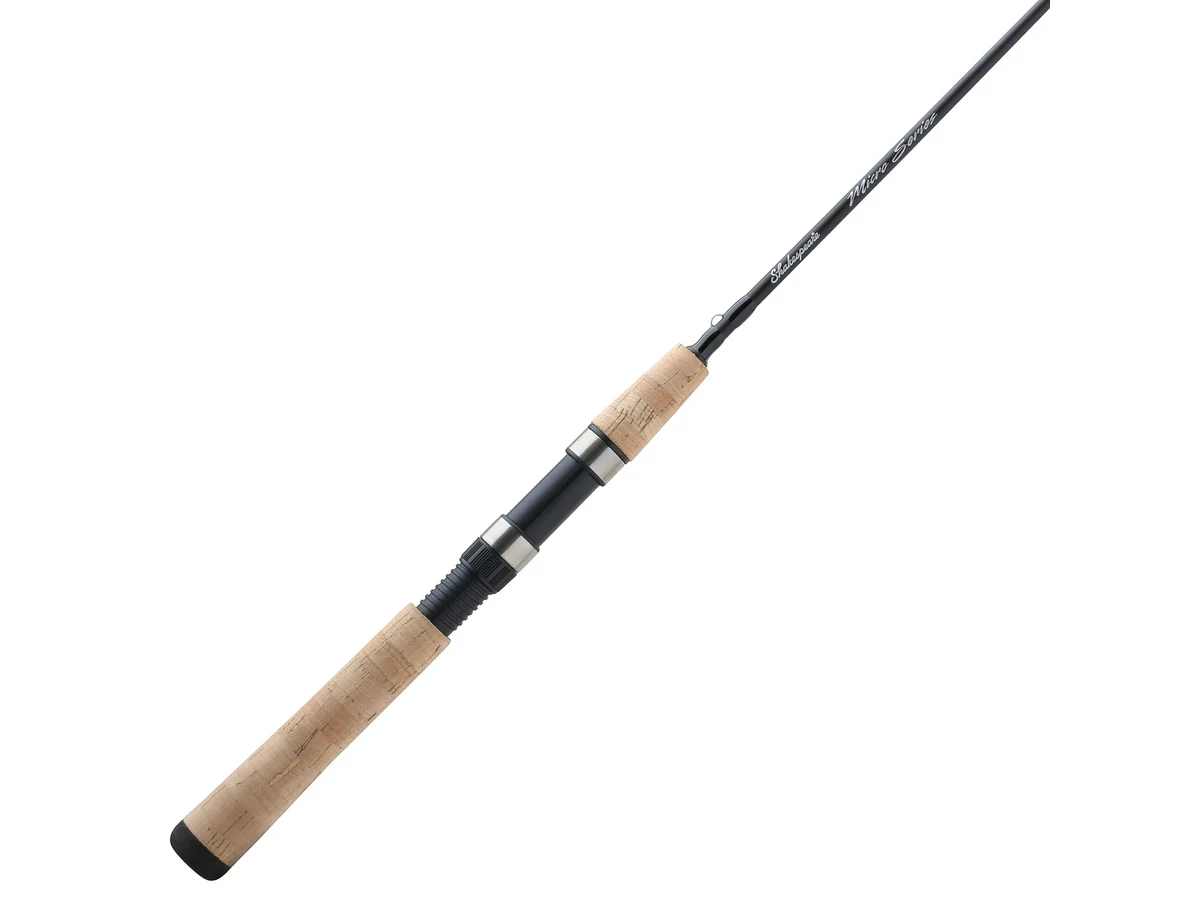
Best for: newcomers chasing bluegill, crappie, perch, and stocked trout.
Why it wins: if your fishing will mostly involve a bobber, a piece of worm, or a 1/32 oz jig, a medium-power rod is simply too much stick. The Micro Series is purpose-built for light lines and small lures: a graphite-composite blank in light and ultra-light powers, stainless guides, and a full cork handle that feels far better than the price suggests. The 6’6″ light model (4–8 lb line) turns a hand-size bluegill into a genuine fight.
At around $25 it’s also the cheapest rod here, the perfect second rod once you’ve got a medium-power all-rounder. Our ultralight fishing setup guide covers rigging it.
- Ideal actions for light lures, casts 1/32–1/8 oz jigs the medium rods can’t load
- Full cork handle at a bargain price
- Makes small fish genuinely fun, which matters for new anglers
- Extremely affordable, easy second-rod purchase
- Too light for bass over ~2 lb or lures over 1/4 oz, strictly a finesse tool
- Fit and finish are basic; check guide alignment on arrival
Specs: 6’6″ light, moderate-fast action, 4–8 lb line, graphite composite, 2-piece. Approx. $25.
6. Abu Garcia Vendetta Spinning Rod: Best for bass beginners
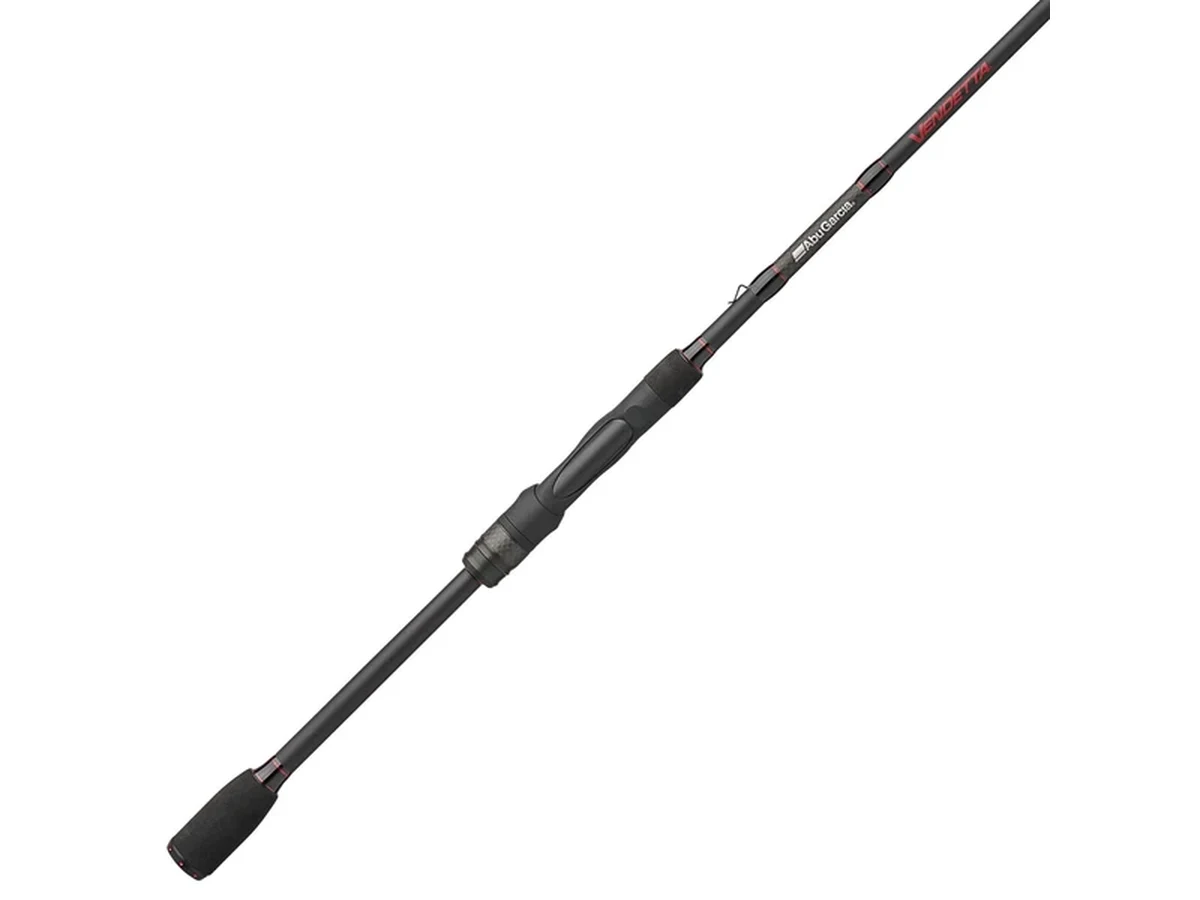
Best for: beginners who know they want to chase bass.
Why it wins: the Vendetta sits a half-step above the budget tier in both price and performance. Its 30-ton graphite blank with Abu’s IntraCarbon reinforcement is light, crisp, and noticeably more sensitive than the GX2, while stainless guides with zirconium inserts handle braid without grooving. The 6’6″ medium fast-action model fishes a weightless wacky-rigged Senko, a Ned rig, or a 1/4 oz shaky head with real authority. A performance blank rather than a beater, but the better long-term bass tool if fishing is already your thing. Pair it with our bass fishing tips for beginners.
- Strong sensitivity-to-price ratio, feels lures working, not just bites
- Zirconium guide inserts are smooth and braid-safe
- Light, well-balanced blank reduces fatigue on long casting days
- Ergonomic carbon reel seat with excellent reel lockup
- One-piece models are awkward to transport, get the 2-piece if you drive a small car
- Less forgiving than composite rods; not the rod to learn high-stick hooksets on
Specs: 6’6″ medium, fast action, 6–12 lb line, 30-ton graphite, 1- or 2-piece. Approx. $95.
7. Daiwa Laguna Spinning Rod: Best lightweight value
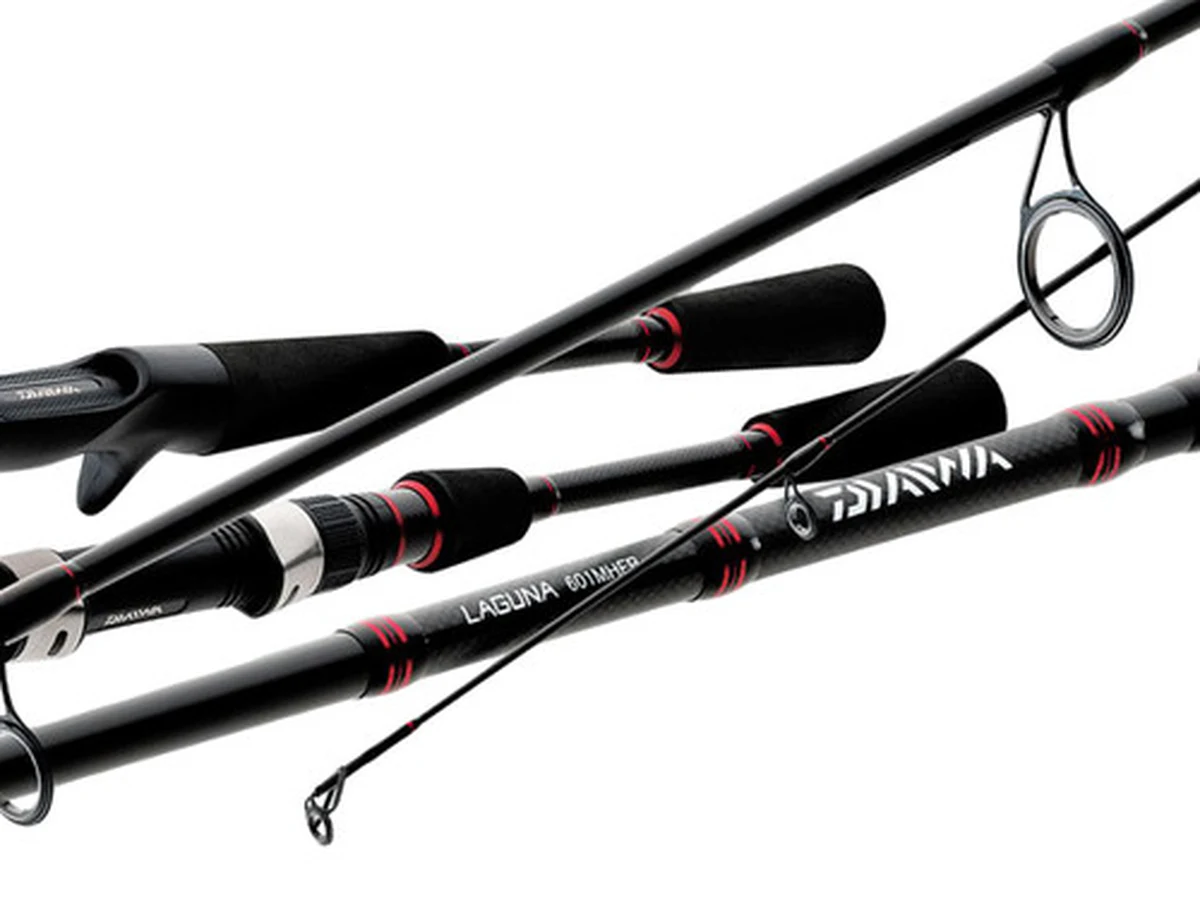
Best for: beginners who notice, and dislike, a heavy rod.
Why it wins: the Laguna is Daiwa’s quiet achiever in the budget space: an IM-6 graphite blank that’s genuinely light in hand, with a comfortable EVA handle and clean cosmetics. The 6’6″ medium fast-action model fishes 1/4–5/8 oz lures comfortably and balances nicely with a 2500-size reel.
- Light in hand, one of the least fatiguing rods at this price
- Clean, comfortable EVA grip that stays tacky when wet
- Honest medium-fast action that’s easy to cast for newcomers
- Daiwa build quality and parts support behind it
- Harder to find in big-box stores than Ugly Stik or Berkley, often an online purchase
- Modest sensitivity; the Fenwick Eagle detects subtle bites better for not much more money
Specs: 6’6″ medium, fast action, 8–17 lb line, IM-6 graphite, 2-piece. Approx. $50.
8. Cadence CR5 Spinning Rod: Best online value
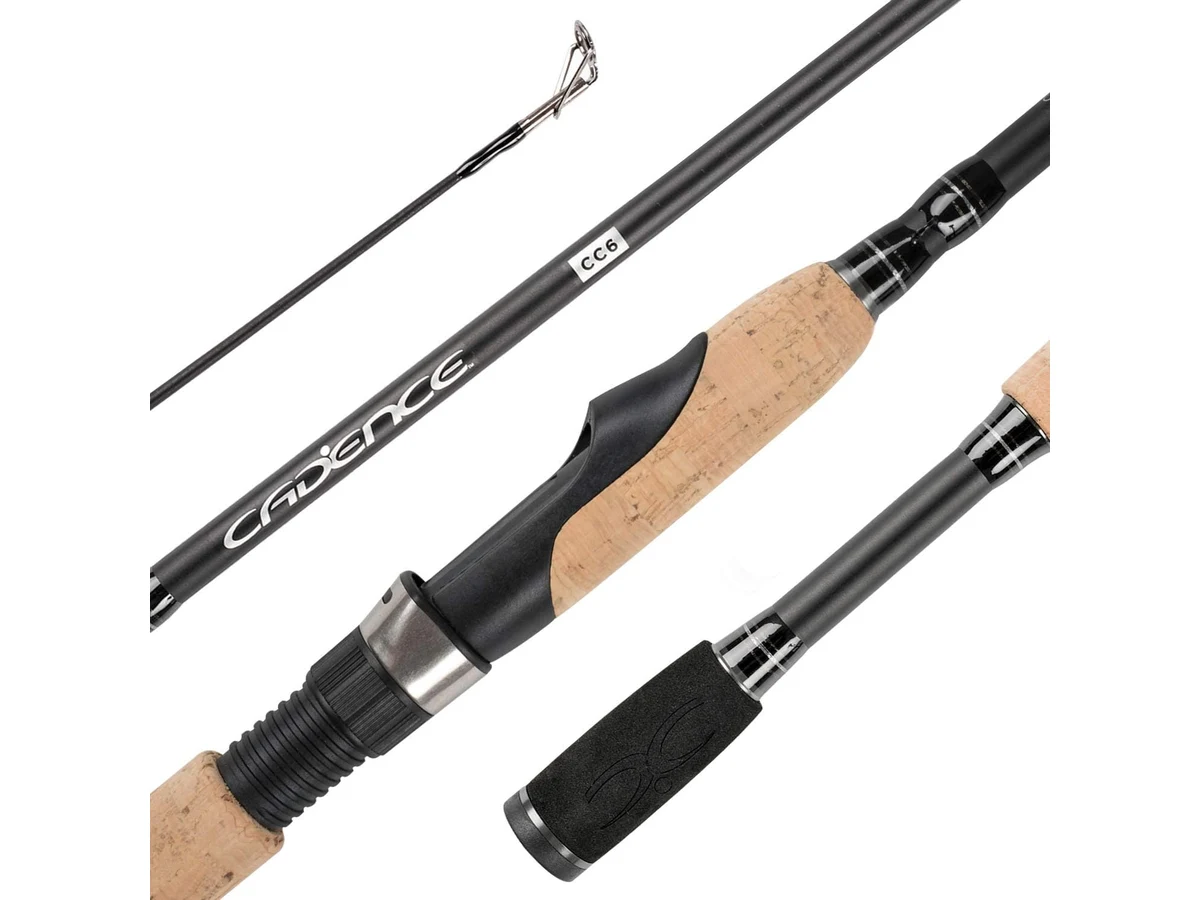
Best for: bargain hunters comfortable buying a rod online.
Why it wins: Cadence built its name selling direct, and the CR5 packs a spec sheet that reads like a $120 rod: 30-ton carbon blank, genuine Fuji reel seat, and stainless guides with SiC inserts. The 6’6″ medium-light moderate-fast model is the beginner-friendly choice, the softer action loads light lures easily and cushions aggressive hooksets. Check the guides and ferrule fit on arrival.
- Premium components (Fuji seat, SiC guides) at a budget price
- Light, sensitive 30-ton blank that punches above its cost
- Forgiving moderate-fast action suits developing casting strokes
- Two-piece design travels and stores easily
- Online-only for most buyers, no in-store inspection before purchase
- Brand support and warranty process are thinner than legacy manufacturers’
Specs: 6’6″ medium-light, moderate-fast action, 6–12 lb line, 30-ton carbon, 2-piece. Approx. $55.
Beginner spinning rod buying guide
What do power and action actually mean?
Power is how much force it takes to bend the rod, its lifting strength. Action is where it bends: fast-action rods bend near the tip (quicker hooksets, more sensitivity), moderate actions bend deeper (more forgiving). For a first rod, medium power with moderate-fast to fast action covers the most techniques with the fewest compromises.
What length should a beginner get?
Buy a 6’6″ to 7′ rod. Shorter rods are easier in tight creeks but give up casting distance; longer rods cast farther but are clumsier to control. A 6’6″ two-piece medium-power rod is the default recommendation of nearly every fishing instructor: it casts a 1/4 oz lure plenty far from shore and breaks down for the trunk.
How to pair your first rod: reel and line
A rod is only half the setup. For any 6’6″–7′ medium rod on this list, spool a 2500-size spinning reel, the standard match for balance and line capacity (our spinning reel sizes guide explains why). For line, start with 8–10 lb monofilament, not braid: mono is cheaper, knots easier, forgives drag mistakes, and is far less punishing when you tangle (you will). Once your casting is consistent, consider 10–15 lb braid with a fluorocarbon leader. New to reels? Our spinning reel parts breakdown names every component you’ll touch.
Should a beginner buy a rod-and-reel combo instead?
Combos are tempting, one box, one price, ready to fish. The honest answer: most budget combos pair a decent rod with a reel you’d replace within a season. A better move is buying a rod from this list and a proven budget reel separately, see our best spinning reel for the money picks. You’ll spend about the same and end up with gear that lasts years instead of months. The one exception: if the goal is getting a kid on the water this weekend, a combo’s convenience wins.
What NOT to buy as a first rod
A few common beginner mistakes are worth naming. Don’t buy an ultra-light rod as your only rod unless you fish exclusively for panfish, it can’t cast a 3/8 oz lure or control a 3 lb bass. Don’t buy a heavy-power rod “for bigger fish”, you’ll feel nothing and learn nothing. Don’t buy the most expensive rod in the shop thinking price equals fish; a $130 rod in untrained hands catches exactly as many fish as a $40 one. And don’t buy a 7’6″+ one-piece if you drive a sedan, if the rod doesn’t fit your life, it won’t get used.
Price tiers: what your money buys
- Under $40: perfectly fishable, you give up sensitivity and refinement, not fish-catching ability.
- $40–$80: the sweet spot. Better blanks and components; rods you’ll keep as backups after upgrading.
- $80–$140: buy-once territory. Lighter and more sensitive; worth it once you know you’ll stick with the sport.
Whatever tier you choose, leave room in the budget for a decent reel and fresh line, beginners feel line and drag quality far more than blank modulus. Our general fishing tips collection covers the rest of the learning curve.
Frequently asked questions
What size rod is best for beginners?
A 6’6″ to 7′ medium-power spinning rod with moderate-fast to fast action. It casts 1/8–5/8 oz lures well from shore, is easy to control, and handles everything from panfish to bass. Pair it with a 2500-size reel and 8–10 lb monofilament.
Should beginners use monofilament or braided line?
Start with monofilament in 8–10 lb test. It’s cheaper, knots easier, and stretches enough to forgive drag and hookset mistakes. Graduate to 10–15 lb braid with a fluorocarbon leader after a season of consistent casting.
Do I need an expensive rod to start fishing?
No. A $30–$70 rod catches just as many fish as a $130 rod in a beginner’s hands, because technique matters far more than blank modulus at this stage. Spend the savings on a decent reel and fresh line, and upgrade once your skills can feel the difference.
What size spinning reel goes on a beginner rod?
A 2500-size reel is the standard match for a 6’6″–7′ medium-power rod. Use a 1000-size reel for ultra-light rods like the Shakespeare Micro Series. When you are ready to add a casting setup, our complete baitcaster guide is the natural next step.
Is a 2-piece rod okay for beginners, or should I get a 1-piece?
A 2-piece is completely fine. Modern ferrules transmit feel nearly as well as 1-piece blanks, and the difference is invisible to a beginner. A 2-piece 6’6″ rod fits in any car trunk, a major practical advantage.
Can I use a beginner spinning rod in saltwater?
Occasionally. Rods with stainless guides tolerate salt better, but none of these are true inshore rods. Rinse with freshwater afterward, salt kills budget gear fast. For regular saltwater use, buy a dedicated inshore rod.
Final verdict: which beginner spinning rod should you buy?
Most beginners should buy the Ugly Stik GX2; affordable, nearly indestructible, forgiving to cast, and versatile enough to stay useful for years.
On the tightest budget, get the Berkley Cherrywood HD. Lighter and more sensitive than the GX2 for less money; just treat it a little more gently.
If you know you’ll stick with fishing, get the Fenwick Eagle. The best rod here under $100, and one you won’t outgrow in a season.
Chasing bass specifically? Get the Abu Garcia Vendetta, its crisper blank is tuned for Ned rigs, shaky heads, and weightless plastics.
Panfish and trout only? Get the Shakespeare Micro Series and spend the savings on jigs and bobbers.
Whichever you choose, time on the water, a sharp hook, and fresh line will put more fish in your hands than any blank ever will.