Crankbait rigging · US guide
Why You Should Use Snaps for Crankbaits
Snaps for crankbaits are one of the simplest time-savers in bass fishing: a tiny piece of hardware that lets you swap a 1/2 oz medium diver for a lipless bait in seconds without retying. But a snap is not an automatic upgrade for every crankbait. The right call depends on the snap’s shape and weight, the lure’s size and dive curve, and whether you’ve watched the bait run before it reaches the fish.
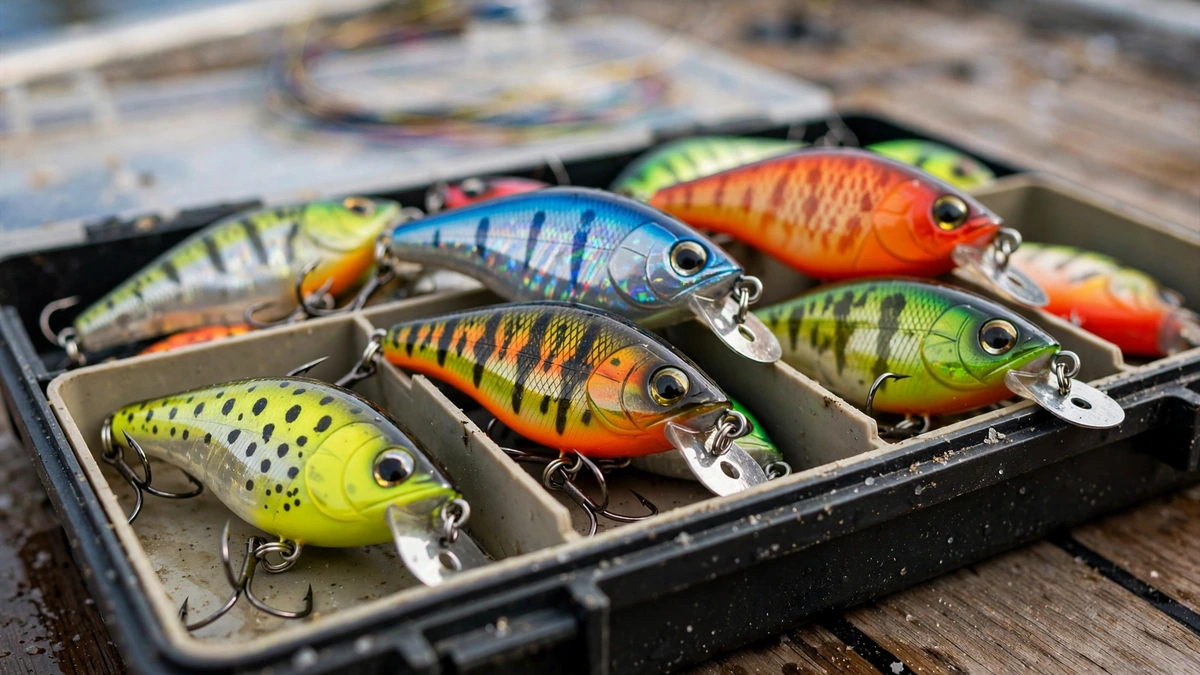
By baitcastingreelz.com · Updated 15 October 2026 · 10-minute read
The quick answer
If you’re still sorting out where crankbaits fit among your lures, our overview of different types of fishing baits puts them in context before you start fine-tuning hardware.
Why a snap earns its place on crankbaits
Seconds instead of retying
Crankbait fishing is pattern fishing: shallow runner, then a 6–8 foot diver, then a lipless bait through the same stretch. A snap turns each swap into a five-second clip instead of a full re-tie — and you stop losing six inches of line every change.
A freer connection at the line tie
A cinched-down knot can lock against the lure’s eye and restrict the wobble. A rounded snap lets the bait pivot naturally, which is exactly what you want from a lure whose whole job is vibration.
Consistent testing
When every lure clips onto the same snap, you’re comparing lures, not knots. That matters when you’re deciding whether the fish wanted a tighter wobble or a wider one.
Less line wasted
Constant retying shortens leaders and eats into your spool. One snap, inspected regularly, can last a full day of swapping baits.
Choose the snap by type and size
Not all snaps behave the same at the business end of a crankbait. You want the lightest snap that opens reliably and closes with a positive click — bulk is the enemy of lure action.
| Snap type | Why anglers use it | Watch out for |
|---|---|---|
| Duo-lock (round bend) | The standard crankbait snap. The rounded bend lets the lure swing freely, and the double-lock closure rarely pops open on a surging fish. | Buy the right size — an oversized duo-lock adds noticeable weight to a 1/4 oz bait. |
| Coastlock | Very secure interlocking closure; good when toothy fish or heavy cover are in play. | Slightly bulkier than a duo-lock of the same rating. Keep it to bigger crankbaits. |
| Speed clips | Fastest lure changes of all — slide the lure eye on and off. | Less secure than a locking snap and easier to bend out of shape. Check them constantly. |
On sizing: a size 1 duo-lock handles most 1/4–1/2 oz crankbaits — squarebills, medium divers, lipless baits. Step up to size 2 for 3/4 oz and heavier plugs. The rule is simple: the smallest snap that clips on and off the lure’s line tie without a fight. If the snap dwarfs the lure’s eye, it’s too big.
Optional supply: light duo-lock lure snaps
Carry sizes 1 and 2 so the snap matches the crankbait instead of forcing one oversized option onto every lure.
When a snap hurts and you should tie direct
A snap is hardware, and hardware has weight. That weight matters most in three situations.
- Deep-diving crankbaits. A 3/4 oz plug grinding down to 12–15 feet pulls hard, and extra weight at the line tie can flatten its dive curve and mute the hunting action that makes deep divers special. Tie direct here.
- Suspending jerkbaits and finely tuned baits. These lures are balanced to hang motionless on the pause. Even a light snap can tip a suspender nose-down or make it sink, which defeats the presentation. Test in clear shallow water and you’ll see it.
- When the maker says so. Some crankbaits are tuned at the factory around a direct tie. Respect that — the designer tested the action you’re trying to reproduce.
A snap swivel deserves its own warning: crankbaits don’t spin, so the swivel solves a line-twist problem that doesn’t exist while adding exactly the kind of weight that deadens action. Use a plain snap, never a snap swivel, on a crankbait.
The loop knot: the best of both worlds
If you want a direct tie that still lets the lure move, learn the non-slip loop knot (often called the Rapala knot). You tie a small loop at the lure’s eye instead of cinching tight, so the crankbait swings freely — much of the action benefit of a snap with zero added hardware. It takes a little practice, but it’s the standard connection for jerkbaits and deep divers among experienced anglers.
For everything else — jigs, Texas rigs, spinnerbaits — a snug Palomar or improved clinch is fine. The loop knot is a crankbait-and-jerkbait specialty. If your crankbait fishing usually happens from a baitcaster, our guide to setting up a baitcaster for bass covers the rod, line, and drag setup that keeps treble hooks pinned.
Test every snap-and-lure combo before it matters
This is the non-negotiable step. After clipping on a new snap — or a new lure on an old snap — run the bait beside the boat or along the bank for ten feet. It should track straight, wobble evenly, and dive to its depth without rolling or blowing out to one side. If it veers, check three things in order: the snap is fully closed, the snap isn’t oversized for the bait, and the lure’s line tie isn’t bent. A crankbait that runs crooked in front of you will run crooked in front of the fish.
Crankbaits find fish fast, but they don’t finish every job. When a moving bait locates bass in wood or grass, slowing down with a jig often catches the followers — see how to jig fish. And for connecting crankbait location to a full bass game plan, how to catch bass ties it together.
Frequently asked questions
Should you use snaps with crankbaits?
Yes for most shallow and medium-diving crankbaits, especially while you’re swapping baits to find a pattern — a light duo-lock snap speeds changes and gives the lure a free-moving connection. Tie direct with a loop knot for deep divers, suspending jerkbaits, and any lure whose maker recommends a direct tie.
What size snap should you use for crankbaits?
Size 1 duo-lock for most 1/4–1/2 oz crankbaits; size 2 for 3/4 oz and heavier plugs. Choose the smallest snap that clips onto the lure’s line tie easily — if the snap dwarfs the lure’s eye, it’s too big and can deaden the action.
Should you use a snap swivel with a crankbait?
Usually no. A crankbait doesn’t spin, so the swivel cures no line-twist problem — it just adds weight that can flatten the lure’s wobble. Use a plain snap instead of a snap swivel.
Do snaps change crankbait action?
They can. Added weight at the line tie may slow the wobble of light baits, alter a suspender’s balance, or change a deep diver’s running depth. Test each snap-and-lure combination beside the boat before fishing it in a productive spot.
Should you tie direct or use a snap on deep-diving crankbaits?
Tie direct with a loop knot. Deep divers pull hard and their dive curve is sensitive to weight at the line tie; a minimal direct connection runs truest and reaches depth most efficiently.
Affiliate disclosure: baitcastingreelz.com participates in the Amazon Associates Program and may earn from qualifying purchases. The optional link is for convenience and does not affect editorial guidance.