Destination guide · United States
The 10 Best Places to Fish in Georgia
Finding the best places to fish in Georgia comes down to one decision most anglers skip: choosing the water for the fish, not the fish for the water. This guide ranks ten standout Georgia waters — reservoirs, trout streams, rivers and coastal marshes — with the seasons, presentations and access notes that shape a real trip.
By Natalia · Updated 15 October 2026 · 12-minute read
Start with the species, not the pin on the map
Georgia’s best fishing spots reward anglers who narrow the plan before leaving home. Pick one target species, learn the water type it lives in, then identify two or three likely areas — a creek arm, a shoal, a marsh flat. Our guide to best fishing times helps with light and weather windows — but the conditions you see that morning always outrank a calendar prediction.
The 10 best places to fish in Georgia
1. Lake Lanier
North Georgia · reservoir
Lanier is spotted bass country — the lake’s national reputation rests on big, deep-water spots that fight hard and school aggressively. Fish rocky points and clay banks with finesse plastics in spring, chase topwater busts over bait balls in fall, and work deep open water for striped bass in summer with live shad or heavy spoons. Largemouth and crappie round out the options. Access is easy — ramps and parks ring the lake — but summer weekends bring serious boat traffic, so fish weekdays or early. Clear water means light line and natural colors.
2. Lake Seminole
Southwest Georgia · reservoir
Bass country, plain and simple. Hydrilla, lily pads, and standing timber give largemouth endless ambush cover, and the March–April spawn is the headliner — flip and pitch creature baits into grass edges and bedding areas. Summer brings frogs and buzzbaits over matted vegetation, while shellcracker and crappie offer panfish days when bass slow down. The lake forms where the Flint and Chattahoochee rivers meet, so stump fields demand careful navigation. Multiple ramps make it an easy day trip in the south.
3. Toccoa River and Blue Ridge area
North Georgia · trout
Rainbow, brown, and brook trout in a classic Appalachian setting. The tailwater below Blue Ridge Dam and the delayed-harvest stretch offer stocked fish with a wild-fish attitude — nymphs under an indicator and dry flies on cool evenings are the core game. Prime months run fall through spring; summer water warms enough to push fish deep or make catch-and-release risky. Wading and bank access are straightforward, and the mountain scenery is a bonus. Check dam release schedules before planning a float or wade trip.
4. Flint River
Central and southwest Georgia · river
The Flint is shoal bass water — bronze, current-loving bass that pull like fish twice their size. Target rocky shoals with topwater walkers, crawfish crankbaits, and football jigs; spring brings spawning fish into the shallows around the rocks. It’s the closest thing to a smallmouth experience in a state without smallmouth. Access points are fewer than on the big reservoirs, and shoals turn genuinely dangerous at high water, so check river levels before launching and float with a partner when possible.
5. Lake Oconee
Central Georgia · reservoir
A versatile reservoir for anglers who like to adapt through the day. Largemouth hold around docks, seawalls, and bridge pilings; hybrid and striped bass school in the creek arms in fall — follow the diving birds; crappie stack on brush piles in spring. It’s the kind of lake where a three-rod deck covers everything. Ramps and marinas are plentiful along the I-20 corridor, making Oconee one of the simplest weekend trips in central Georgia, especially for families mixing species.
6. Golden Isles and Georgia coast
Coastal Georgia · saltwater
Marsh edges, oyster rakes, and tidal creeks hold redfish, spotted seatrout, and flounder — a completely different fishery from the inland lakes. Fish the moving tide: low water concentrates tailing reds on flats, rising water pushes them into the grass, and fall into winter is prime for bull reds. Access via piers, public ramps, and wadeable flats around Jekyll Island, St. Simons, and Brunswick. Here the tide chart matters more than lure selection, and saltwater license rules apply.
7. Chattahoochee River tailwater
Metro Atlanta · trout
A stocked trout fishery inside the metro — rainbows, with some browns, from Buford Dam down past Jones Bridge, including a delayed-harvest section for winter catch-and-release. Nymphs, small inline spinners, and prepared trout baits all produce, with mornings fishing best. The catch is the flow: dam releases swing water levels fast, and wading gets dangerous during generation. Check the release schedule, wear cleated boots, and treat every step like the river is one surge away from changing.
8. Lake Hartwell
Northeast Georgia · border reservoir
Big, clear, and shared with South Carolina, Hartwell runs on blueback herring. Largemouth, spotted bass, and stripers chase the baitfish, and summer mornings can erupt in topwater schooling action; fall pushes the bait shallow again for a second window. Between those events, work creek mouths and deep structure. The lake rewards focus — pick one creek arm and fish it thoroughly rather than running forty miles. Border-water license rules apply, so know which state’s regulations cover the ramp you launch from.
9. Lake Eufaula / Walter F. George Reservoir
Georgia–Alabama border · reservoir
Once billed as the bass capital of the world, Eufaula still earns the reputation. Ledge bass, grass flats, and creek-channel swings hold largemouth all year, and the March–April spawn is the famous window — sight-fishing and flipping both shine. Crappie stack on brush piles in spring, too. It’s a long, riverine reservoir, so learn one pool or creek instead of trying to cover the whole lake. Reciprocal border-water agreements cover much of it, but confirm the current rules before you fish across the line.
10. Okefenokee area
Southeast Georgia · blackwater
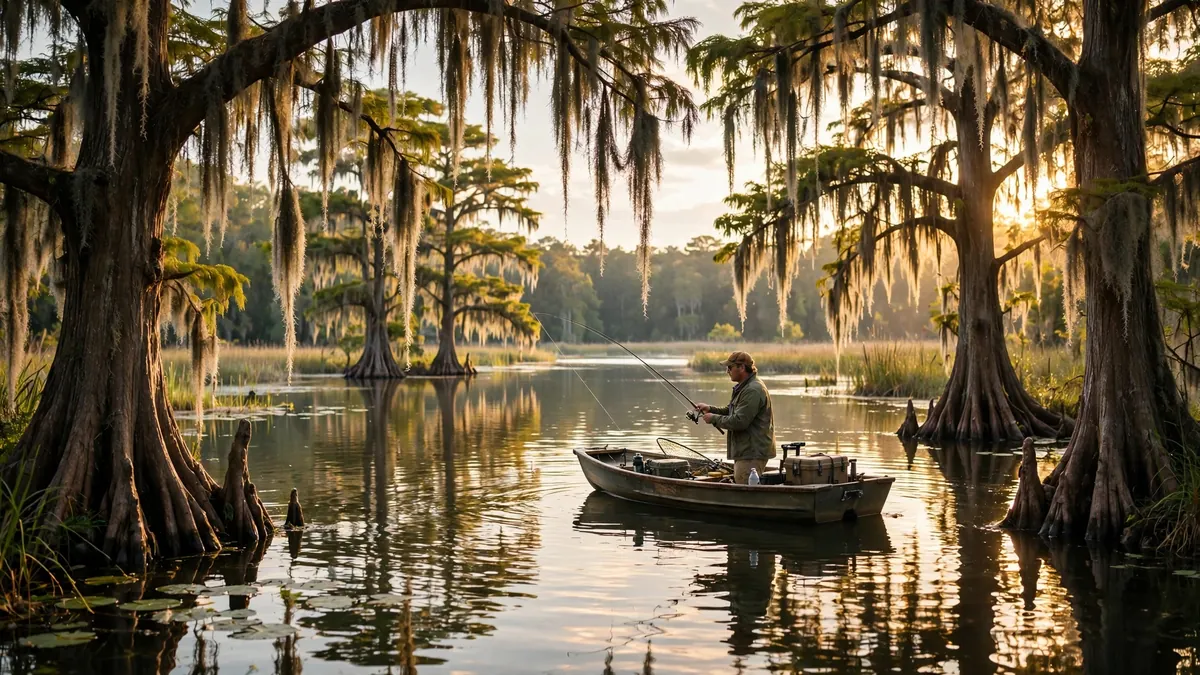
Fishing the Okefenokee is a wilderness trip first and a fishing trip second: tannin-stained water, cypress, prairies, and real solitude. Bowfin, warmouth, chain pickerel, and redbreast sunfish attack small jigs and inline spinners; bass exist, but the setting is the draw. Access is strictly permitted through the main park entrances, alligators demand genuine caution, and navigation skills matter once you’re off the main channels. Bring water, a plan, and a partner — this is no place to improvise.
How to plan a better first trip
New water beats most anglers with options, not difficulty. Arrive with one target species, two or three areas that fit it, and presentations you trust. If the first pattern fails, change one variable at a time — depth, position, retrieve, or bait profile. A short pre-trip check of ramp access, water level, and weather removes most bad surprises.
Anglers new to bass can build confidence with these practical bass fishing tips for beginners and the broader fishing tips collection. They sharpen the on-water decisions — when to move, when to slow down — that destination lists alone can’t teach.
Match your setup to the water
Small jigs, trout presentations, and crappie work call for a light spinning outfit; heavy grass at Seminole or Eufaula — or big stripers at Lanier — justify a baitcasting setup with backbone. Start from the method, not the price tag. Our spinning reel sizes guide keeps a spinning combo balanced, and the best baitcasting rods guide covers the heavier bass side.
Trout anglers should see the trout spinning reels guide for light-line setups, and if a reservoir trip turns into a crappie day around brush, our crappie fishing guide details the vertical presentations that produce.
Optional supply: Georgia freshwater tackle kit
A compact kit with jigs, terminal tackle and a few baitfish-profile soft plastics helps cover common freshwater situations. Match it to your target species and local rules.
Check regulations, access, and conditions before every trip
License requirements, seasons, creel limits, size restrictions, trout regulations, saltwater rules, and border-water agreements all change — and they differ between the waters on this list. Check the current official Georgia regulations and any site-specific rules before you go. Respect private property, posted closures, and launch requirements, pack out line and tackle, and handle released fish with wet hands and minimal air time.
Frequently asked questions
Where is the best bass fishing in Georgia?
For largemouth, Lake Seminole and Lake Eufaula are the headline waters, especially during the spring spawn. For spotted bass, Lake Lanier is the state’s best-known fishery. The right choice depends on species, season, and whether you prefer grass, deep structure, or river shoals — check current access and fisheries information before planning.
Do you need a fishing license in Georgia?
Yes, in most cases. Requirements vary with age, residency, species, and location — trout and saltwater fishing carry additional requirements, and border waters have their own agreements. Confirm the current rules directly with Georgia wildlife authorities before you fish.
What fish can you catch in Georgia?
Georgia fisheries include largemouth, spotted, and shoal bass, crappie, catfish, rainbow/brown/brook trout, bream, striped and hybrid bass, plus coastal redfish, spotted seatrout, and flounder. Availability varies by water body and season.
When is the best time to fish in Georgia?
Spring is the prime all-around window — bass spawn, crappie stack on cover, and trout water is at its best. Fall brings schooling bass and cooling water; summer favors early mornings and deep or tidal patterns. Match the trip to the species and check conditions for the specific water.
Affiliate disclosure: baitcastingreelz.com participates in the Amazon Associates Program and may earn from qualifying purchases. The optional link is for convenience and does not affect editorial guidance.