Reel Anatomy · US Guide
Baitcasting Reel Parts Explained: 10 Parts and What Each One Does
Every baitcasting reel is built from the same core baitcasting reel parts: a spool, a braking system, a spool-tension knob, a star drag, gears, bearings and a frame holding it all together. Learn what each baitcasting reel part does and you will tune casts faster, diagnose problems accurately, and buy reels for the right reasons instead of marketing copy. This guide focuses on baitcasters; for the bigger picture, our breakdown of the main types of fishing reels shows how baitcasting, spinning, and spincast reels differ. Spinning reels arrange several of these same parts differently, so our spinning reel parts guide is the companion read if you fish both styles.
By Natalia · Updated 7 November 2026 · 13-minute read
Spool: holds line and spins during the cast, its weight and design set casting character.
Braking system: controls spool speed in flight (magnetic, centrifugal, dual or digital).
Spool-tension knob: sets shaft pressure at cast launch.
Star drag: controls resistance during a fish’s run, not casting.
Levelwind: lays line evenly across the spool on retrieve.
10 baitcasting reel parts and what they do
Parts at a glance
The short version of the ten sections below: each part, its job, and the one thing you actually do with it.
| Part | What it does | What you adjust or clean |
|---|---|---|
| Spool | Holds your line and spins at high speed during the cast | Nothing to tune; match the spool style to your lures, light or shallow for finesse and deep for big baits, and fill to about 1/8 inch below the rim |
| Thumb bar / clutch | Press it to free the spool for the cast; a turn of the handle re-engages it | Not a setting; your thumb feathers the spool in flight and stops it before the lure lands |
| Spool-tension knob | Sets how freely the spool starts to turn at launch | Tune it with the drop test, and re-check every time you change lures |
| Braking system | Controls spool speed through the cast, where most backlashes are born | The magnetic dial, centrifugal pins or DC mode, set for the lure weight and the wind |
| Star drag | Sets the friction that lets a fighting fish pull line without breaking it | Roughly a quarter to a third of line strength, adjusted for cover; back it off for storage |
| Handle and knobs | Transfers your cranking into spool rotation | Nothing to adjust; longer handles winch better, and grip material matters in rain and cold |
| Main gear and pinion gear | Multiply handle turns into spool rotations; the mechanical basis of gear ratio | Grease lightly; a crunchy feel under load usually means grit got in |
| Levelwind and worm gear | Travels across the reel face, laying line evenly on the retrieve | Wipe the levelwind track clean after any trip where the reel got dunked or gritty |
| Frame and sideplates | The chassis everything mounts to; rigidity keeps the gears meshed under load | Nothing to adjust; the side plate is your door for brake pins and servicing |
| Bearings and drag washers | Bearings keep everything spinning freely; the washers are the stack the star drag squeezes | One small drop of oil per bearing; store the reel with the drag backed off so the washers do not take a set |
1. Spool
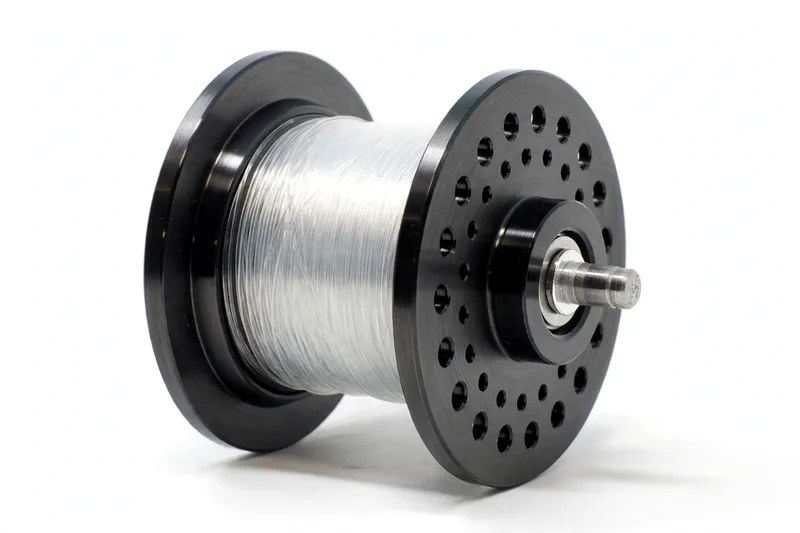
The heart of the reel. The spool holds your line and spins at high speed during the cast, which is why its design defines how a reel fishes. Lightweight drilled or MGL-style spools start faster for lighter lures; shallow BFS (bait finesse) spools specialise in ultralight presentations; deep spools hold more line for big baits and long runs. Daiwa’s T-Wing system widens the line guide opening to reduce friction on the cast; Shimano’s Super Free Spool disengages the pinion for freer rotation. Fill level matters: about 1/8 inch below the rim is the sweet spot. The SV spool concept is explained in practice in our Daiwa Tatula SV TW review.
2. Thumb bar / clutch
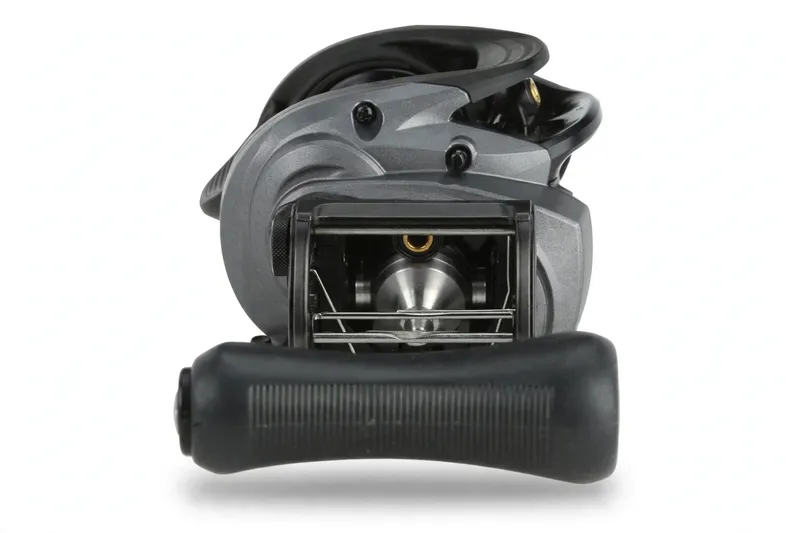
Press it to disengage the spool for casting; turn the handle to re-engage. Your thumb lives here during every cast, resting on the spool before release, feathering in flight, and stopping the spool before the lure lands. The entire art of baitcasting runs through this one bar.
3. Spool-tension knob
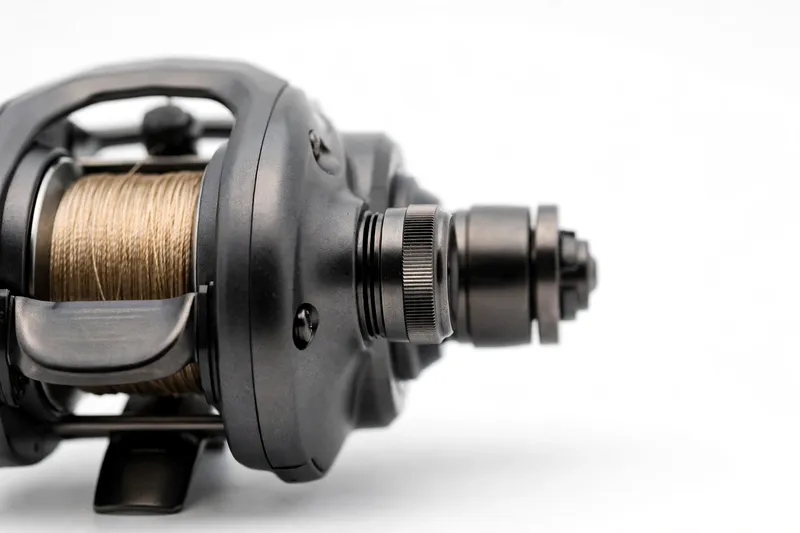
The small dial (usually on the handle side) that presses against the spool shaft. It sets how freely the spool begins to turn, the launch phase of the cast. Tune it with the drop test: lure tied on, clutch disengaged, the lure should fall slowly and the spool should stop when it hits the ground. Re-check every time you change lures.
4. Braking system
Controls spool speed through the cast, where most backlashes are born. Magnetic brakes use an external dial for steady, beginner-friendly control. Centrifugal brakes use internal pins that bite hardest at high RPM (cast start). Dual systems combine both. Digital/DC brakes use a microprocessor to adjust braking thousands of times per second, the closest thing to backlash-proof casting, at a premium. Digital braking is the high tech end of this story, as our Shimano Curado DC review shows in detail.
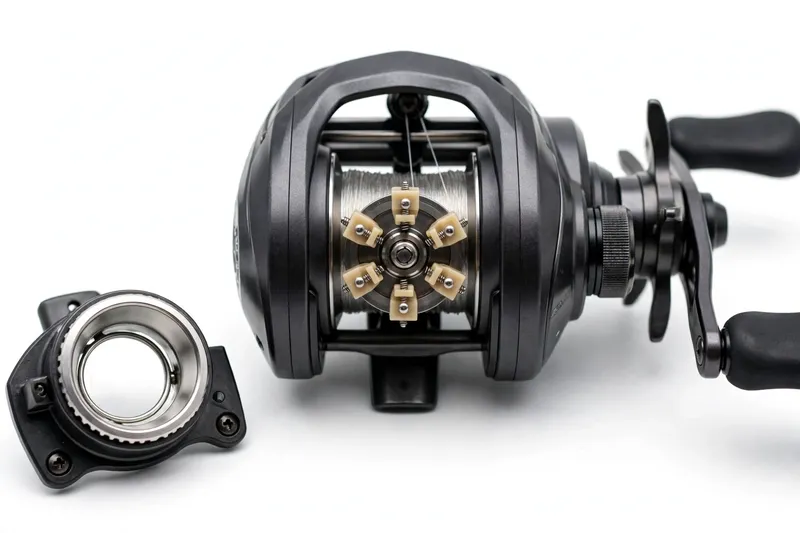
5. Star drag
The star-shaped wheel behind the handle. It sets the friction that lets a fighting fish pull line without breaking it, roughly a quarter to a third of line strength, adjusted for cover. Carbon-fibre drag washers deliver the smooth startup modern anglers expect; jerky drags pull hooks. Remember: drag fights fish, it does not prevent backlash.
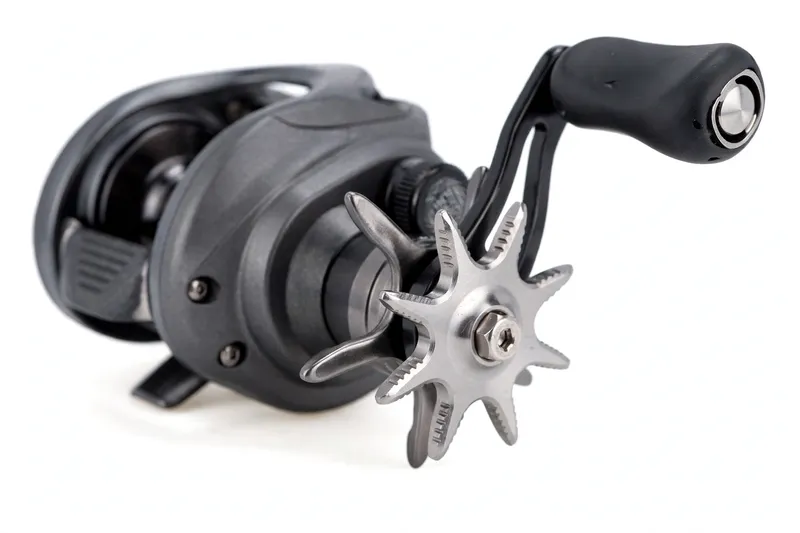
6. Handle and knobs
Transfers your cranking into spool rotation. Longer handles (90–110 mm) give more winching power for deep cranks and big baits; standard handles balance speed and comfort. Knob materials, EVA, cork, rubberised or Winn grips, matter in rain and cold when grip security decides hooksets.
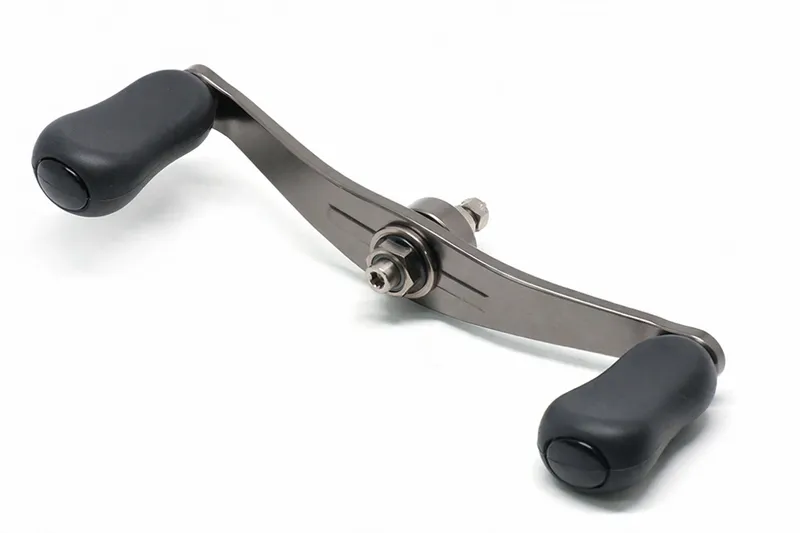
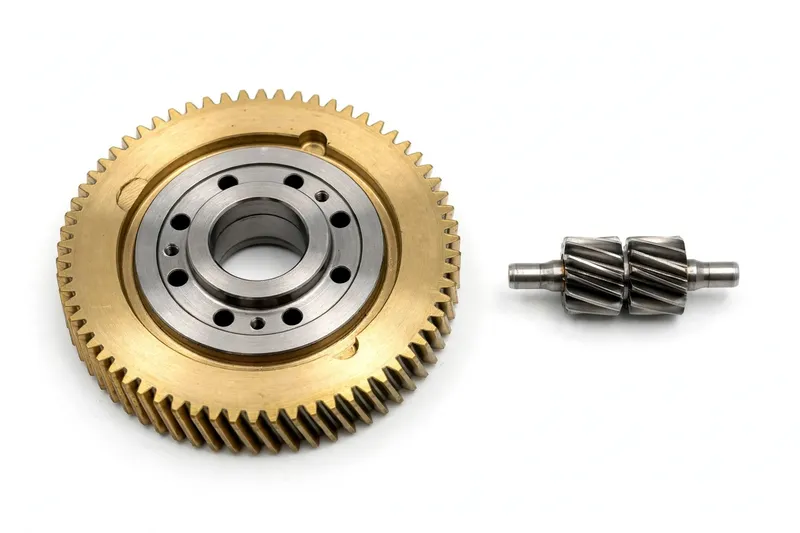
7. Main gear and pinion gear
The gear train that multiplies handle turns into spool rotations, the mechanical basis of gear ratio. Supported designs like Shimano’s X-Ship keep the pinion aligned under load, which is why quality reels stay smooth when a big bass surges. This is also where most “gears feeling crunchy” complaints originate after grit intrusion.
8. Levelwind, line guide and worm gear
The levelwind travels back and forth across the reel face, laying line evenly on the retrieve via the worm gear beneath it. Even line lay prevents the digging and uneven spooling that cause casting problems later. Titanium-coated or hardened line guides reduce friction where braid passes, a small detail that pays off over thousands of casts.
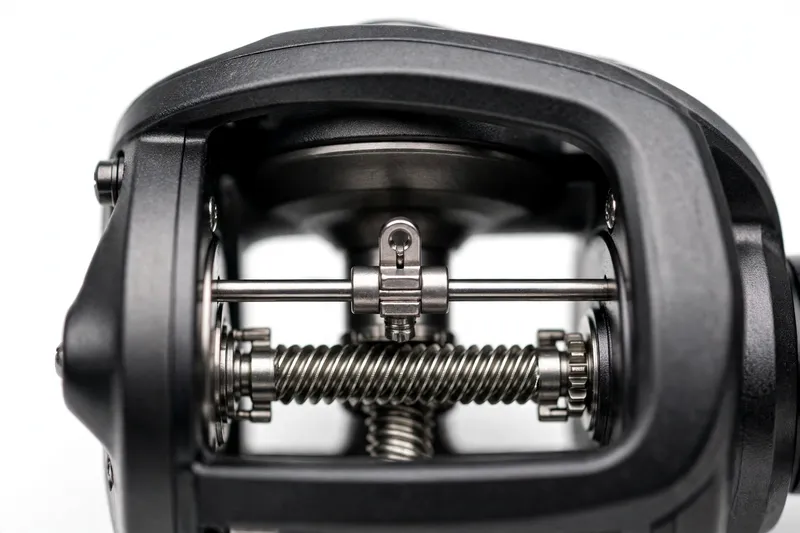
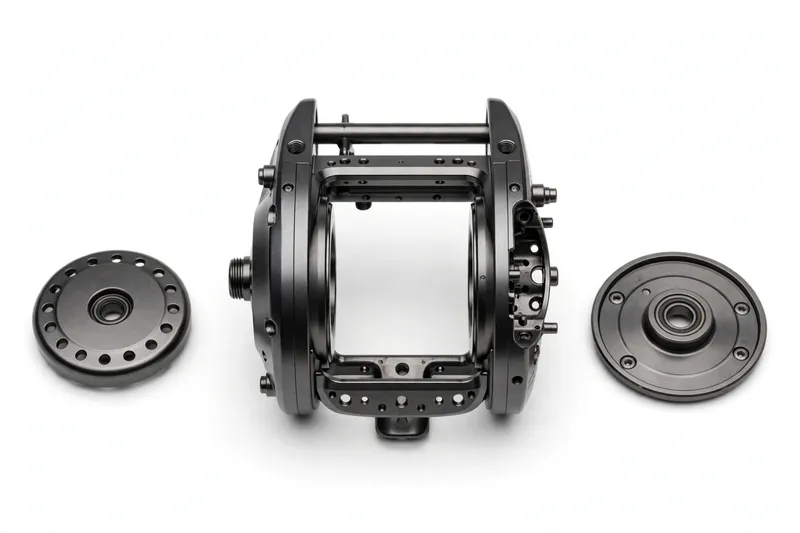
9. Frame and sideplates
The chassis everything mounts to. Rigid aluminium or magnesium frames resist flex under heavy drag loads, keeping gears meshed and casts consistent; graphite and composite frames are lighter, corrosion-proof and budget-friendly. Premium designs like Shimano’s HAGANE body machine the frame for maximum rigidity. A flexing frame is a reel that loses power exactly when you need it.
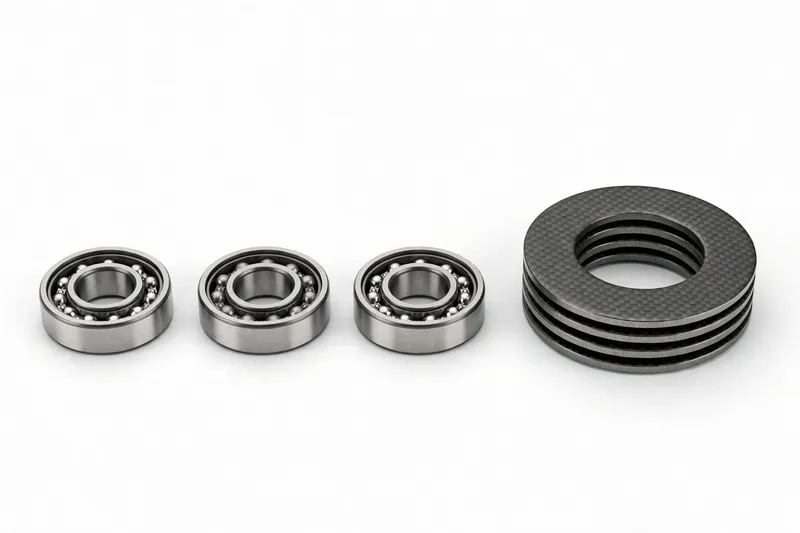
10. Bearings and drag washers
Bearings (quoted as e.g. 7+1 or 10+1, the “+1” being the anti-reverse clutch) keep everything spinning freely; stainless, HPCR and CRBB variants resist corrosion. Shielded or sealed bearings matter for saltwater. The anti-reverse one-way clutch gives instant hooksets with no back-play. Drag washers, preferably carbon, live in the stack the star drag squeezes. Together, bearings and washers decide whether a reel feels refined or agricultural.
Keep the parts working: maintenance kit
A basic reel maintenance kit, oil, grease, swabs and small tools, lets you service bearings and gears before grit becomes damage. Regular light care beats rare deep overhauls.
Find and name each part on your own reel
You do not need to open the reel for this. Pick yours up and work through the list in order; by the last item you will have touched or located every part in this guide.
- Start with the spool: the barrel your line sits on, inside the frame. That is the part that spins on every cast.
- Press the thumb bar. The spool now turns freely; turn the handle and the drive clicks back in. That bar is where your thumb works during every cast.
- Find the spool-tension knob, the small dial on the handle side, pressing on the end of the spool shaft.
- Sort out your brakes: an external dial if yours is magnetic or DC, or pins inside the side plate if it is centrifugal.
- Move to the star drag, the star-shaped wheel just behind the handle.
- Run the handle through a turn and note its length and what the knobs are made of; both matter more in rain and cold than on the shelf.
- The main gear and pinion are hidden inside the handle-side housing, but every turn of that handle ran through them to reach the spool.
- Watch the front of the reel as you retrieve: the line guide sliding left and right is the levelwind, driven by the worm gear beneath it.
- The frame and sideplates are the body everything bolts to. One of those plates is the door you open for brake pins and servicing.
- Last, the bearings and drag washers: the bearing count is quoted on the box (7+1, 10+1, the +1 being the anti-reverse clutch), and the washers sit in a hidden stack that the star drag squeezes.
Use part knowledge to improve casting
Parts knowledge pays off fastest in three situations. First, tuning: knowing that brakes manage flight and tension manages launch tells you which dial to touch when a backlash starts mid-cast versus at the launch, see our backlash-location diagnostic in our guide to setting baitcaster brakes. Second, lure matching: a light lure on a heavy standard spool will always struggle; that is a spool-design mismatch, not a skill failure; the fix is a lighter-spool or BFS-style reel, not more practice. Third, buying: when you understand that frame rigidity, bearing quality and drag smoothness decide real-world performance, spec sheets get much easier to read and marketing fluff gets much easier to ignore. Our guide to how to choose the best baitcasting reel applies exactly this parts-first thinking to shopping.
Care without creating a new problem
Knowing the parts also prevents the classic maintenance mistakes. Never blast a reel with high-pressure water, it drives grit and salt past seals into the bearings and gears you just learned about. Oil bearings sparingly (one small drop) and grease gears lightly; excess lubricant attracts debris. Back the star drag off for storage so the drag washers do not take a permanent set. And respect the manual’s exploded diagram before opening anything: modern reels hide springs and tiny parts that love to launch across the room. Full routine in how to clean and maintain a baitcaster reel. One more parts-driven habit: after any trip where the reel got dunked or gritty, back the drag off, wipe the levelwind track clean, and let the reel air-dry fully before storage; trapped moisture is the quiet killer of bearings and drag washers.
How this guide is put together: the part names and roles here follow the reels covered in our own reviews and the manufacturer’s exploded diagram the care section above tells you to respect, and the care notes follow the same routine set out on our how we test gear page.
Read next
Put parts knowledge to work: how to spool a baitcaster reel, adjusting brakes and spool tension, beginner tips, removing a backlash, and baitcaster vs spinning. Shopping next? Our Best Baitcasting Reels Under $100 roundup shows which parts matter most at budget prices.
Frequently asked questions
What are the main parts of a baitcasting reel?
The essential parts are the spool, thumb bar/clutch, spool-tension knob, braking system, star drag, handle and knobs, main and pinion gears, levelwind and line guide, frame and sideplates, and the bearings and drag washers. Together they manage casting, retrieving and fighting fish.
What is the difference between baitcaster brakes, tension and drag?
Brakes control spool speed during the cast (backlash prevention). Spool tension sets shaft pressure at the launch of the cast. The star drag controls resistance during a fish’s run. Three dials, three jobs, confusing them is the most common tuning mistake.
When should you service a baitcaster reel?
Rinse and wipe down after every trip (especially saltwater), oil bearings lightly once or twice a season, and deep-clean annually or after heavy use. Send it to a technician if it grinds, the drag goes irregular, or corrosion appears, see our maintenance guide for the full schedule.
Do more bearings make a baitcaster better?
Up to a point. Bearing quality matters more than count, a reel with 7 quality stainless bearings outlasts and outcasts one with 12 cheap ones. Corrosion-resistant and shielded bearings matter most for saltwater use.
What is a levelwind and does it affect casting?
The levelwind is the travelling guide that lays line evenly across the spool on retrieve. Even line lay prevents digging and uneven spooling that hurt later casts. Modern designs like Daiwa’s T-Wing minimise its friction during the cast itself.
Why does my baitcaster feel rough when cranking?
Usually grit in the gears or dry bearings, the parts that take the most load. A light clean and proper lubrication fixes most cases; persistent grinding after cleaning means worn gears or bearings and a trip to a service technician.
Affiliate disclosure: baitcastingreelz.com participates in the Amazon Associates Program and may earn from qualifying purchases. The optional link is for convenience and does not affect editorial guidance.