How-To Guide
How to Prevent Backlash on a Baitcaster: 9 Settings and Habits That Work
Backlash happens when the spool spins faster than line is leaving the rod tip. Preventing it comes down to three things: spool tension set with the drop test for every lure, brakes matched to lure weight and wind, and a thumb that feathers the spool as the lure lands. Do those three and backlashes drop from every-trip to rare.
Affiliate disclosure: As an Amazon Associate, baitcastingreelz.com earns from qualifying purchases made through links on this page, at no extra cost to you.
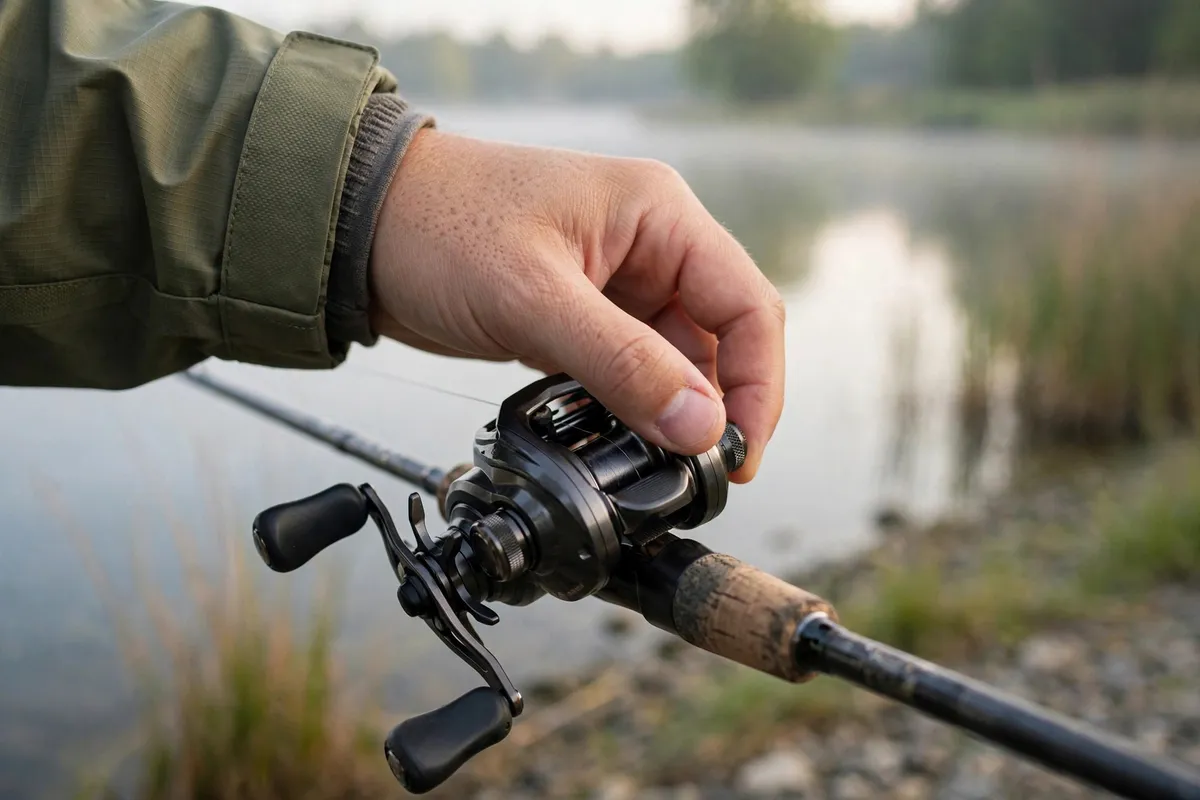
I get this question more than any other about baitcasters. A backlash, the bird’s nest of tangled line on the spool, feels like the reel betraying you mid-cast. It is not. A backlash is a timing mismatch between spool speed and line speed, and it is the most diagnosable problem in fishing tackle. You can prevent it before it happens with settings.
This guide is about prevention, not recovery. If you already have a nest on your spool, read our backlash-removal guide first, then come back. Starting from zero? Pair this with our baitcaster setup guide and our step-by-step guide to casting a baitcaster.
The 9 settings and habits that prevent backlash
1. Run the spool tension drop test with every lure
Tie on the lure, hold the rod at about 45 degrees, and press the thumb bar. Tighten the tension knob until the lure drops slowly on its own. If the spool overruns when the lure lands, tension is too loose. If the lure barely falls, it is too tight. You want a slow fall and a spool that stops when the lure stops. Redo this test every time you tie on a different lure. Quotable takeaway: change lures, re-run the drop test, no exceptions.
2. Set brakes to match lure weight
Brakes must follow the lure. Light lures need more braking because they cannot keep line tension high enough to keep the spool honest, so the spool outruns them. Heavy lures need less because their momentum keeps spool and line matched.
For magnetic brakes, start with the dial around 70 percent and back it off one notch per session as your thumb control improves. For centrifugal reels, Shimano’s own guidance is the standard: start with every brake weight on, then switch them off one at a time until you get enough distance with no backlashes. When torn between two settings, choose the higher one.
3. Use the prevention settings matrix
Almost every article on this topic says “adjust for lure weight and wind” and leaves you to guess what that means. Here are concrete starting points instead: find your lure weight column and your wind row, set these numbers, then fine-tune.
| Lure weight | Calm | Light breeze | Headwind 10+ mph |
|---|---|---|---|
| Light: 1/8 to 1/4 oz | Magnetic dial 7 of 10; centrifugal 4 of 6 pins on; tension: slow drop | Magnetic dial 8 of 10; centrifugal 6 of 6 on; tension: slightly tight | Magnetic dial 9 of 10; centrifugal 6 of 6 on; tension: slightly tight; shorten casts |
| Medium: 3/8 to 1/2 oz | Magnetic dial 5 of 10; centrifugal 3 of 6 pins on; tension: normal drop | Magnetic dial 6 of 10; centrifugal 4 of 6 pins on; tension: normal drop | Magnetic dial 8 of 10; centrifugal 6 of 6 on; tension: slightly tight |
| Heavy: 3/4 oz and up | Magnetic dial 4 of 10; centrifugal 2 of 6 pins on; tension: normal drop | Magnetic dial 5 of 10; centrifugal 3 of 6 pins on; tension: normal drop | Magnetic dial 6 of 10; centrifugal 4 of 6 pins on; tension: normal drop |
4. Keep your thumb over the spool
Brakes handle the start and middle of the cast. The end of the cast belongs to your thumb. The classic end-of-cast backlash happens when the lure slows near the target, or hits the water, while the spool keeps spinning. No brake setting fixes this because brakes are tuned for the cast, not the landing. Only your thumb can.
Build the habit: hover your thumb just above the spool for the entire cast, feather it as the lure descends, and stop the spool firmly the instant the lure lands. Anglers who backlash “only sometimes” almost always thumb “only sometimes”. Our casting guide breaks the motion down phase by phase.
5. Stop overfilling the spool
An overfilled spool is a backlash machine. When line is packed to the spool lip, it peels off aggressively at cast start and the spool accelerates faster than the brakes can handle. Leave about one-eighth inch of clearance. You give up a trivial amount of capacity and gain a more controllable cast.
6. Learn on forgiving line
Line choice matters more than most reel reviews admit. Twelve to fourteen pound monofilament is the most forgiving line to learn on: thicker, stretches, and resists digging into the spool, so overruns nest shallow and pick out easily. Braid nests deep and fast when it overruns. Fluorocarbon is the stiffest and least forgiving. Learn on mono, switch once your thumb is trained; our braid vs fluorocarbon on a baitcaster breakdown covers which line fits which technique after that. One more factor: old line backlashes more than fresh line, whatever the type. Respool before you blame the reel.
7. Cast smooth, not hard
Muscling a cast creates a violent spool-speed spike at the start, exactly when the spool is most likely to outrun the lure. A smooth, fluid motion lets the rod load and the brakes work in their designed range. The rod does the work. Let it.
8. Adjust for wind before it adjusts you
Wind is the great equalizer of baitcaster settings. A headwind slows the lure in flight but does nothing to the spool: a mid-cast nest by pure physics, not user error. Add braking before you cast into wind, not after your first backlash. One extra click on the magnetic dial is usually enough in a light breeze; the matrix above covers real headwinds. A shorter, safer cast always beats a long one that nests halfway out.
9. Know your brake system
Three families, three principles. Magnetic brakes are easiest to learn on, centrifugal brakes handle the risky start of the cast best, and digital DC systems are the most forgiving of all. Tune the system you own the way it was designed.
Brake systems explained: centrifugal vs magnetic vs DC
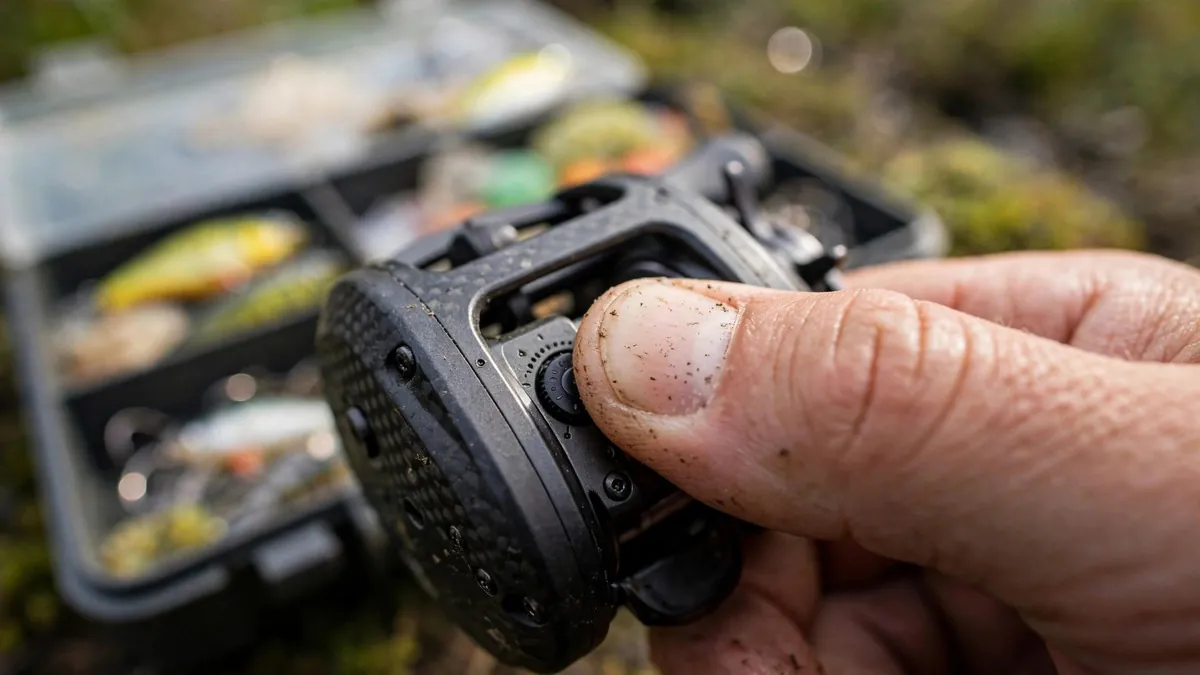
Knowing which system your reel uses tells you where to adjust.
Centrifugal brakes use small weights inside the side plate that fling outward as spool RPM rises, slowing the spool with friction. The force scales with spool speed, so they bite hardest at the very start of the cast, precisely when overruns happen. Shimano’s VBS is the textbook example: weights engage at cast start and ease off as the spool slows. Tuning means opening the side plate and clicking weights on or off in symmetric pairs. Shimano’s own FAQ advises beginners to start with all weights on and the dial at 6, then remove them one at a time. Quotable takeaway: centrifugal brakes are strongest where backlashes start.
Magnetic brakes use an external dial to move magnets closer to or farther from the spool, applying steady braking through the whole cast. Every adjustment happens outside the reel, even mid-session when the wind picks up, which makes them the most beginner-friendly system. No side plate to open, no friction pads to wear. Quotable takeaway: magnetic brakes give you the same control on cast one and cast one hundred.
Digital DC brakes are the premium answer. Shimano’s Digital Control reads spool rotation thousands of times per second and adjusts braking automatically, powered by the spinning spool itself, so there are no batteries. The result is near backlash-free casting in conditions that would nest a lesser reel, at a premium price. To see Shimano braking in a real reel, our Shimano SLX A 150 review breaks down the system.
When prevention fails: read where the backlash starts
A backlash at cast start means tension is too loose. One in mid-flight means not enough brake for the lure or wind. One at landing means thumb timing, which no setting fixes. One that only appears with a new lure means you skipped the drop test. Our reel tuning guide covers this diagnostic in depth, and our backlash-removal guide picks out an existing nest without cutting line.
What the top-ranking articles miss
The ranking articles share three weaknesses. First, none give numbers. The top result, fishingtoolreviewer.com, tells you to set brakes to 75 percent for beginners but never connects a brake setting to a lure weight or a wind condition. Others give beginner-versus-pro tables but stop short of telling you what to dial in. The matrix above exists because nobody else published one.
Second, the rankers treat all brakes as interchangeable. One pescador.com.pt result lists magnetic and centrifugal systems and moves on, as if the two tune the same way. They do not: centrifugal brakes bite hardest at cast start, magnetic brakes apply steady pressure through the whole cast. That difference decides which control you reach for when a specific backlash pattern appears, and no ranker explains it.
Third, the rankers skip the spool-fill factor and lean on generic advice like “practice more.” Practice matters, but it is not a prevention method. Prevention is settings, line, and habits you execute before your first cast. That is what this guide gives you, and it is what the SERP is missing.
Frequently asked questions about preventing backlash
Why is my baitcaster backlashing?
The spool is spinning faster than line is leaving the rod tip. The usual causes: tension too loose, brakes too low for the lure weight, casting too hard, an overfilled spool, or a headwind the settings were not adjusted for.
How do I get no backlash on a baitcaster?
No single setting eliminates every backlash, but this routine gets close: drop-test tension with each lure, set brakes high and lower them gradually, never overfill the spool, feather the spool at the end of every cast, and add braking in wind. Our reel tuning guide is the companion read.
What is the best line for a baitcaster to avoid backlash?
Twelve to fourteen pound monofilament: thicker, stretches, and resists digging into the spool. Braid casts well but nests deeper when it overruns. Fluorocarbon is the stiffest and least forgiving.
Should I use magnetic or centrifugal brakes to prevent backlash?
Both work, but they tune differently. Magnetic brakes apply steady braking and are easiest for beginners because every adjustment is an external dial. Centrifugal brakes bite hardest at high spool RPM, right when overrun risk peaks. Digital DC systems auto-adjust and are the most forgiving of all.
How do I know if my baitcaster brake is set too tight or too loose?
Too tight: casts die early and distance falls off. Too loose: the spool overruns, especially at cast start or into wind. The sweet spot gives nearly full distance with the spool stopping the instant the lure lands.
Can I cast a baitcaster with the brakes turned all the way off?
Yes, experienced anglers do it for distance, but your thumb becomes the only brake. For prevention, keep at least some braking engaged until your thumb control is automatic.
What causes backlash even when the brake is set correctly?
Three culprits: you changed lures without redoing the drop test, a headwind picked up mid-session, or the backlash happened at the end of the cast, which is a thumb-timing problem no brake can fix. Also see our beginner baitcaster mistakes rundown.
The bottom line
Backlash is not a skill problem. It is a settings problem with a mechanical answer: tension set by the drop test, brakes matched to lure weight and wind, a spool that is not overfilled, forgiving line, and a thumb that finishes every cast. If you are still learning, our beginner baitcaster reel roundup ranks the most forgiving reels to learn on, and our best baitcasters hub covers the full range. On a budget, start with the best baitcasting reels under $50.
Shimano’s own tuning guidance and its Digital Control documentation informed the brake sections. The source FAQ is at fishshop.shimano.com.
Affiliate disclosure: As an Amazon Associate, baitcastingreelz.com earns from qualifying purchases made through links on this page, at no extra cost to you. Rankings are technique-led and independent of commissions.