Tackle Basics · 2026
How to Cast a Baitcaster: Step-by-Step for Beginners
To cast a baitcaster, set the spool tension and brakes before your first cast, use a smooth compact casting motion with your thumb riding the spool, and stop the spool with your thumb the instant the lure lands. Expect a few backlashes while you learn. Everyone gets them, including the people who pretend they don’t. Here is the full step-by-step method that gets beginners casting cleanly in a single practice session.
Affiliate disclosure: As an Amazon Associate, baitcastingreelz.com earns from qualifying purchases made through links on this page, at no extra cost to you.
My first baitcaster humbled me in about four casts. I had fished spinning reels for years, I figured a baitcaster was just a different handle position, and the resulting bird’s nest took me twenty minutes and most of a spool of line to remove. The reel was not the problem. Nobody had told me that a baitcasting spool spins freely and that my thumb is the brake. Once someone explained the mechanics, I was casting cleanly within the hour.
That is what this guide does. It explains the mechanics first, because casting a baitcaster makes no sense until you understand what the spool is doing, then walks through the exact steps in order. Follow it with a practice weight in the yard and you will be the person at the boat ramp who makes it look easy. If overruns are already your nemesis, my guide to preventing backlash on a baitcaster breaks spool control down even further.
Step zero: the 5-minute setup (do this before your first cast)
Most casting trouble is setup trouble. A baitcaster has two controls that exist specifically to prevent backlashes, and beginners routinely leave both of them wrong. Get these right and the actual cast becomes dramatically easier.
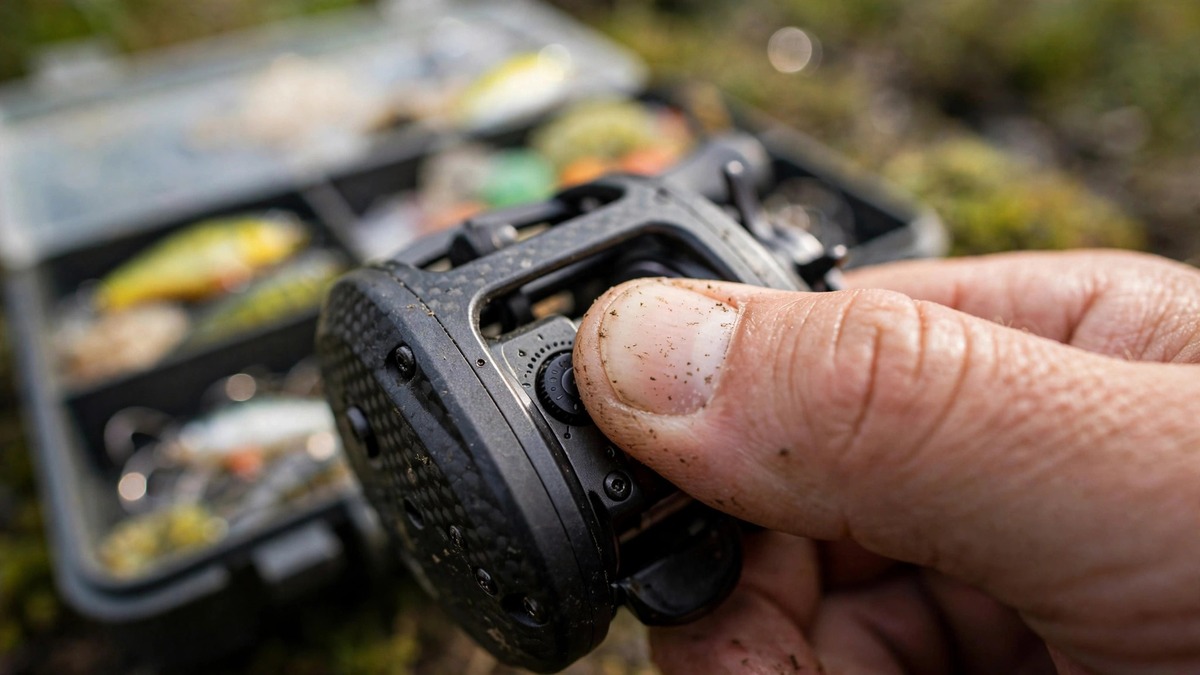
Spool tension. Find the small round knob on the handle side of the reel, right next to the star drag. This is the spool tension knob, and it controls how freely the spool spins at the start of the cast. Set it with the free-fall test: tie on your lure or practice weight, hold the rod tip up at about 10 o’clock, press the thumb bar to free the spool, and watch the lure fall. You want it to drop slowly and steadily. When the lure hits the ground, the spool should stop on its own without continuing to spin and pile up line. If the lure plummets, tighten the knob. If it barely moves, loosen it. This test takes thirty seconds and you should repeat it every time you change lure weight.
Brakes. Baitcasters slow the spool mid-cast with either magnetic brakes (an external dial, like Daiwa’s Magforce-Z or Abu Garcia’s MagTrax) or centrifugal brakes (pins under the side plate, like Shimano’s SVS Infinity). For learning, set them high: 7 or 8 out of 10 on a magnetic dial, or half the pins engaged on a centrifugal system. High brakes cost you some distance, which is a trade worth making. You are buying forgiveness. As your thumb gets educated, you will back the brakes off click by click and the distance will come.
The day-one settings chart
No top-ranking article gives you this, so here is my starting chart. Find your lure weight, set the tension with the free-fall test, dial the brakes to the number shown, and back the brakes off one click for every ten clean casts.
| Lure weight | Spool tension | Magnetic brakes | Centrifugal brakes |
|---|---|---|---|
| 3/8 oz | Slow steady fall; spool stops on landing | 8 of 10 | Half the pins engaged |
| 1/2 oz | Slow steady fall; spool stops on landing | 7 of 10 | Half the pins engaged |
| 3/4 oz | Slow steady fall; spool stops on landing | 6 of 10 | One-third of the pins |
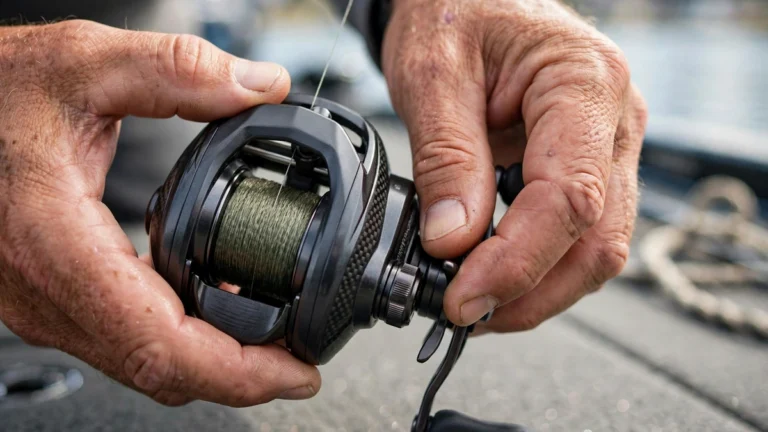
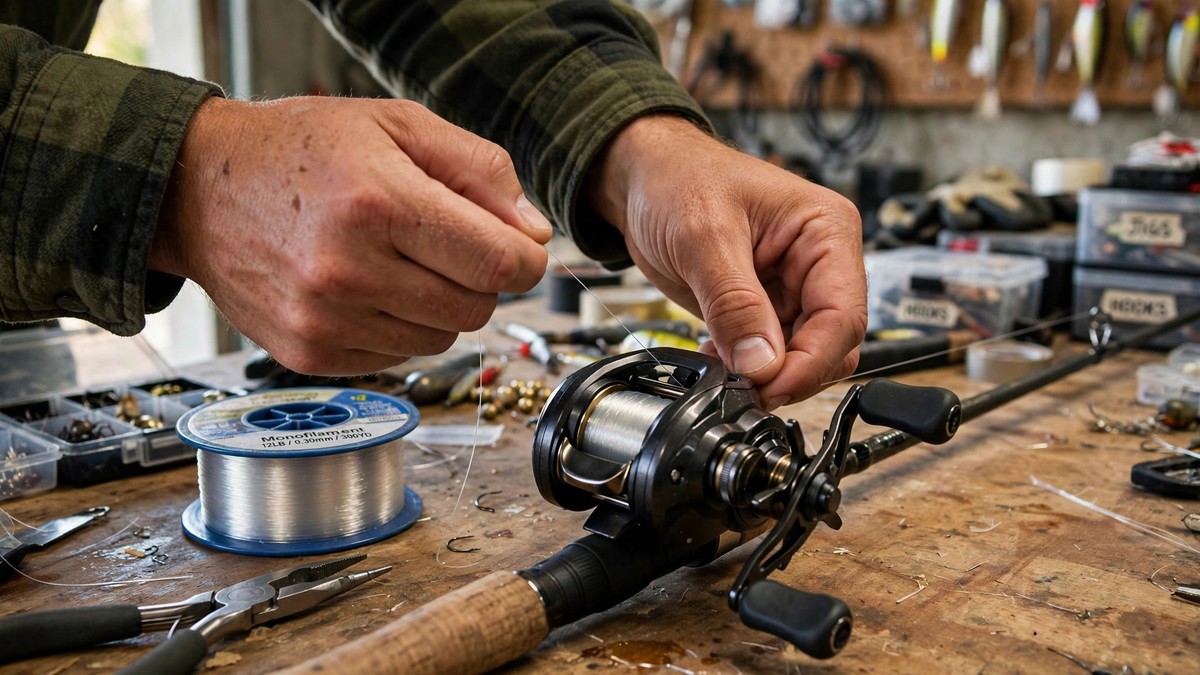
Line and spool fill. Learn on 12-pound monofilament. It is cheap, its stretch forgives sloppy timing, and backlashes pick out of mono far more easily than braid, which digs into itself and locks up. My braid vs fluorocarbon on a baitcaster comparison breaks down exactly when each line type earns its place. Fill the spool to about 1/8 inch below the spool lip. An underfilled spool casts poorly and an overfilled one invites trouble on the first cast. If you have never spooled a baitcaster, my how to spool a baitcaster guide walks through the whole process.
Takeaway: Clean casting starts before the first cast. Tension set, brakes high, 12 lb mono, spool filled right. Skip the setup and your thumb pays for it.
The 8 steps to a clean cast
Here is the full sequence, in order. Read it once, then go outside with a practice weight and work through it cast by cast. If you want a second reference for the fundamentals, Take Me Fishing’ official casting guide walks the same core motions.
Step 1: Set the spool tension with the free-fall test
Tie on a 3/8 to 1/2 oz practice weight or lure. Hold the rod tip up, press the thumb bar, and adjust the tension knob until the weight falls slowly and the spool stops dead when it lands. This is your baseline for this lure weight. Change lures, repeat the test. It becomes a ten-second habit, and it prevents more backlashes than any other single thing.
Step 2: Crank the brakes up high
Set magnetic brakes to 70 or 80 percent of maximum, or engage half your centrifugal pins. Yes, this shortens your casts. A 40-foot controlled cast beats a 60-foot bird’s nest every time. You will dial the brakes back as your thumb learns its job, which it will do faster than you expect.
Step 3: Grip the rod with your thumb on the spool
Hold the rod with the reel sitting on top and your thumb resting lightly across the line on the spool. Your index finger goes in front of the trigger grip underneath. The thumb stays in contact with the spool through the entire cast except the brief moment of release. Think of it as a dimmer switch you never fully let go of, not an on-off button.
Step 4: Load the rod with a smooth, compact motion
Let the lure hang 6 to 12 inches below the rod tip. Bring the rod back smoothly to about 1 o’clock, then accelerate forward in one fluid motion. This is the step spinning-reel anglers get wrong: a baitcaster wants a smooth push, not a violent whip. The rod’s flex does the work. If your shoulder is involved, you are muscling it. Shorten the motion until it feels almost lazy.
Step 5: Release your thumb at 10 to 11 o’clock
Lift your thumb off the spool as the rod passes roughly 10 to 11 o’clock on the forward stroke, and follow through with the rod tip pointing at your target. Release too late and the lure plops down at your feet. Release too early and it sails skyward. The window is generous once the motion is smooth, and your brain calibrates it within a dozen casts.
Step 6: Feather the spool during the flight
The instant the lure is airborne, drop your thumb back to hover just above the spinning spool, brushing it lightly against the line. This is called feathering, and it is the core skill of baitcasting. You are bleeding off just enough spool speed to keep the line tight. Pay special attention when the lure starts to slow down or a gust hits it. That deceleration moment is when most mid-flight backlashes are born.
Step 7: Stop the spool the instant the lure lands
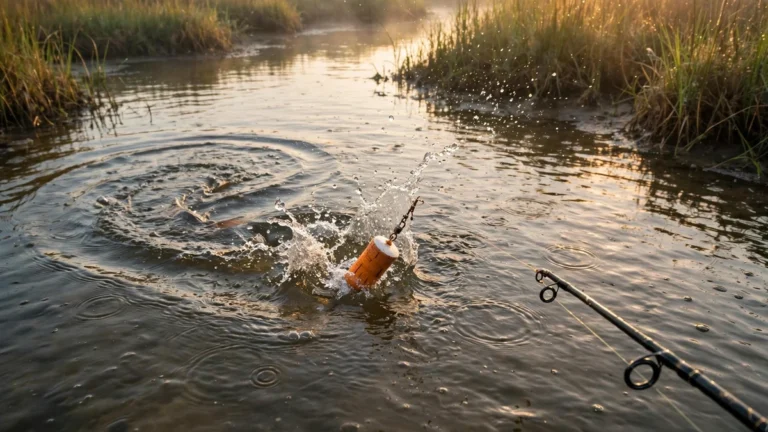
Press your thumb down firmly on the spool the moment the lure touches water or grass. Not a half-second later. Now. A late thumb is the single most common cause of backlashes, because the lure stops but the spool keeps spinning, dumping loose line. Make this a reflex and half your backlash problems disappear permanently.
Step 8: Pick out backlashes calmly when they happen
You will still get the occasional overrun, especially in wind. Do not yank the line. Pull gently to find where the loops are buried, work them loose with your fingers or a small pick, and rewind. A calm two-minute fix beats a frustrated twenty-minute one, and every backlash you pick out teaches your thumb something. If a tangle is truly hopeless, cut the loss, strip the damaged section, and retie. Line is cheap. Afternoons are not.
Takeaway: The whole cast is one smooth motion with the thumb riding the spool. If it feels violent, slow down until it feels almost lazy.
The backyard drill: casting cleanly in one hour
Do not learn on the water. Learn in the yard, where a backlash costs you nothing and nobody is watching. All you need is a 1/2 oz casting weight or a hookless practice plug and three targets. Paper plates work perfectly.
Set the plates at 20, 30, and 40 feet. Start with the brakes at 8 out of 10 and the tension set by the free-fall test. Your only goal for the first twenty casts is thumb timing: smooth motion, release at 10 o’clock, thumb down at splashdown. Do not aim yet. Just feel the spool under your thumb and learn what a controlled cast feels like versus one that is getting away from you.
Once twenty casts go out without incident, start aiming at the 20-foot plate. When you can hit it more often than not, move to 30, then 40. Every ten clean casts, back the brakes off one click. You will feel the exact moment the reel starts needing more thumb, which is the lesson the drill is teaching. By the end of the hour you will have a working cast, educated thumbs, and a realistic sense of your current distance. Take that to the water and the first trip feels like fishing instead of fumbling.
Takeaway: Twenty clean casts at 20 feet beat two hundred wild ones at 60. Accuracy first. Distance follows on its own.
5 mistakes every beginner makes (and the fix for each)
These are the five casting mistakes I see most often at the water. The wider beginner baitcaster mistakes roundup covers setup and gear errors beyond the cast itself.
1. Whipping the rod like a spinning rod. Spinning reels reward a hard snap. Baitcasters punish it, because a violent rod stop sends the lure one way while the spool keeps feeding line the other way. Fix: slow the whole motion down until it feels too easy. The cast should look relaxed from ten feet away.
2. Releasing at the wrong moment. Late release dumps the lure at your feet, early release launches it toward the clouds. Fix: think “10 o’clock” and follow through at the target. Film yourself with a phone once. You will spot the timing error in one viewing.
3. Lifting the thumb completely off the spool. Beginners treat the thumb like a trigger: off at release, back on at landing. The spool is fastest mid-flight, which is exactly when it is unguarded. Fix: the thumb hovers and feathers the whole flight. It only leaves the line for the split second of release.
4. Casting into the wind on day one. A headwind slows the lure while the spool keeps spinning, which is a guaranteed overrun for a beginner. Fix: practice downwind or crosswind first. Into-the-wind casting is an intermediate skill that needs heavy thumb and high brakes.
5. Starting with a light lure. A 1/8 oz finesse bait does not pull line off the spool with enough authority, so the spool outruns it immediately. Fix: learn on 3/8 to 1/2 oz. Heavy lures are honest. They tell you exactly what the spool is doing.
Takeaway: Every beginner backlash traces back to one of five causes: a whipped rod, bad release timing, a lifted thumb, wind, or too light a lure.
The easiest reel and line to learn on
You do not need an expensive reel to learn, but you do need a decent one. Ultra-cheap baitcasters have crude braking and rough spools that make learning measurably harder. The sweet spot for a learner reel is roughly $70 to $120, and two reels stand out.
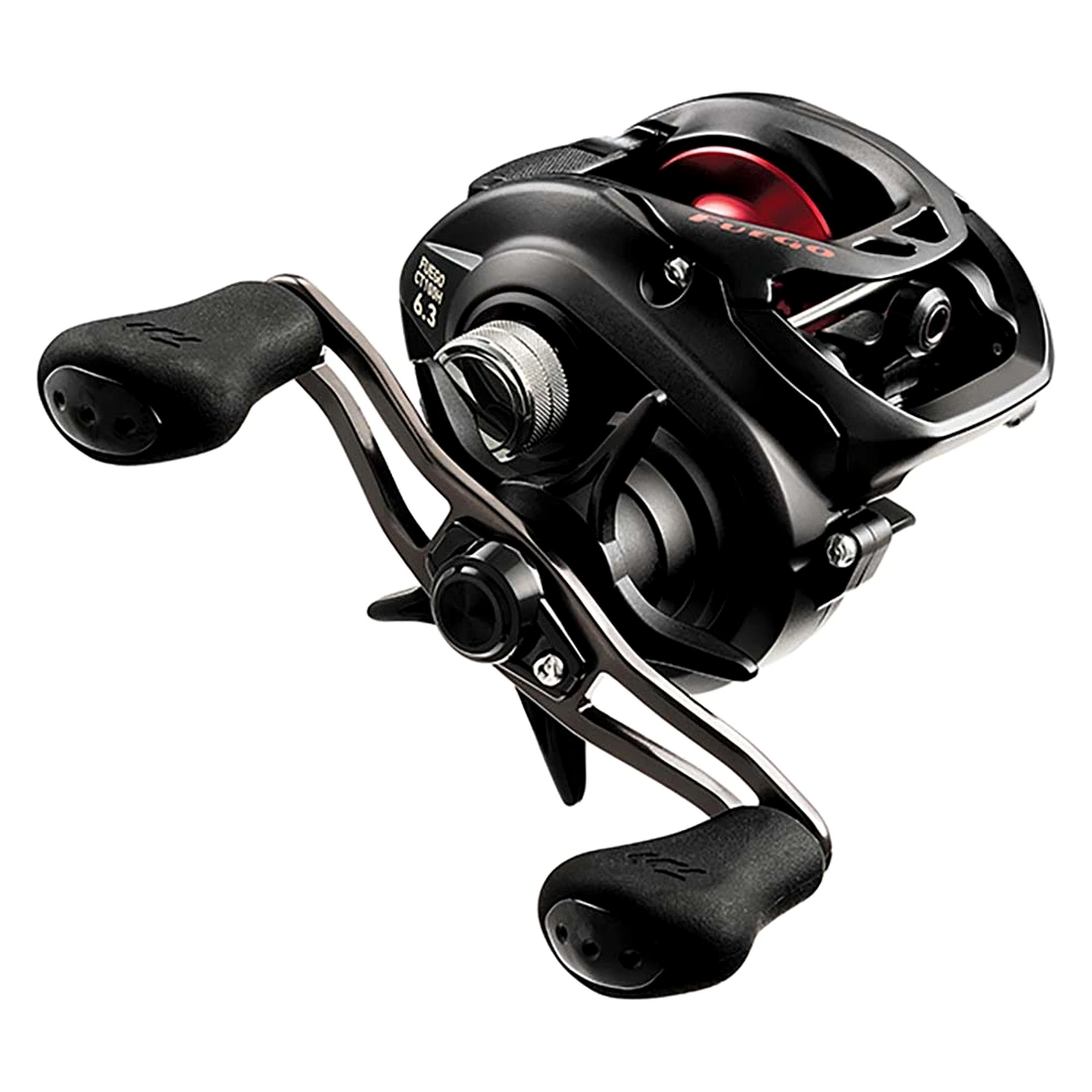
The Shimano SLX A is the reel I hand to beginners most. Its SVS Infinity centrifugal braking is smooth and predictable, it comes in 6.3:1, 7.2:1, and 8.2:1 gear ratios, and it forgives sloppy thumbs better than anything near its price. My full breakdown is in the best baitcasting reels for beginners roundup. Buy From Amazon
The Abu Garcia Revo X is the other easy recommendation. Its MagTrax magnetic brake adjusts with an external dial, which means you can change braking mid-session without opening the side plate. That matters when you are doing the backyard drill and backing brakes off click by click. Buy From Amazon
For line, spool 12-pound monofilament and replace it after your first few learning sessions. Mono is cheap enough to treat as disposable while you learn, and fresh line casts better than line that has survived a dozen picked-out backlashes. Once your thumb is reliable, switch to whatever your fishing demands. And if backlashes keep defeating you despite good technique, the best anti-backlash baitcasters roundup covers reels with digital braking that practically cast themselves.
Takeaway: A mid-priced reel with smooth brakes shortens the learning curve more than any single tip in this guide.
What the top-ranking articles miss
I read the top results for this keyword before writing this guide. Most of them get the basic steps right and stop there. Here is what they leave out, and why each gap matters to you.
None of them give you a practice drill. Every article says some version of “practice in open space” and moves on. None tells you what to practice, at what distance, or how you know when you are done. The plate drill above exists because “go practice” is not instruction.
None explain the spool physics. They list steps without the why: a backlash is simply the spool outrunning the line. Once you understand that one sentence, you can diagnose your own casts instead of memorizing rules.
Line advice is vague or contradictory. One popular result recommends 30 lb braid for beginners. Braid has no stretch and digs into itself under pressure, which turns a small overrun into a locked knot. Twelve-pound mono is the learner line for a mechanical reason, not a preference, and the top articles never say so.
None calibrate the release moment. “Release at the right time” is not teachable advice. The 10 o’clock window plus filming yourself with a phone is. You will spot your timing error in one viewing.
Backlash recovery gets one sentence. “Pick it out gently” is where they stop. The calm two-minute method in Step 8, plus knowing when to cut your losses and strip the damaged section, is what keeps one bad cast from ruining an afternoon.
Takeaway: The top articles teach the steps. This guide teaches the feel. Your thumb can learn everything the spool is doing if you give it structured reps.
How to cast a baitcaster: FAQs
Why do I keep getting backlashes when I cast a baitcaster?
A backlash means the spool is spinning faster than line is leaving it, so loose line piles up on the spool. The usual causes are brakes set too low, the thumb coming off the spool mid-flight, or stopping the rod abruptly. Tighten the spool tension with the free-fall test, raise the brakes to 70 or 80 percent, and keep your thumb feathering the spool through the entire cast.
Should I use the brakes or my thumb to control the spool?
Both, because they cover different parts of the cast. The brakes manage the middle of the flight, where the spool spins fastest. Your thumb manages the launch and the landing: the initial surge off the release and the hard stop when the lure touches down. Start with high brakes and a busy thumb, then reduce the brakes as your thumb control improves.
What is the easiest baitcaster to learn on?
A mid-priced reel with an external brake dial. The Shimano SLX A and Abu Garcia Revo X are the two standouts for beginners: smooth braking, forgiving spools, and priced where a learning curve does not feel expensive. Avoid the cheapest reels on the shelf. Crude brakes make an already tricky skill noticeably harder.
Can you cast light lures on a baitcaster?
With the right reel, yes. A standard baitcaster handles 3/8 oz and heavier comfortably. Lures under 1/4 oz need a BFS reel with a shallow, lightweight spool designed for finesse casting. Learn the motion on 3/8 to 1/2 oz first. Light-lure casting is an advanced application of the same thumb skills.
How long does it take to learn to cast a baitcaster?
About one focused hour of backyard practice for the basic motion and thumb timing, and 3 to 5 fishing trips before it feels natural. Casting into wind, skipping lures, and pitching take a full season of regular use. The curve is front-loaded: the first hour teaches you most of what the first month will.
Is monofilament or braid better for learning to cast a baitcaster?
Monofilament, specifically 12 lb test. It is inexpensive, its stretch forgives timing errors, and backlashes pick out of mono far more easily. Braid has no stretch and digs into itself under pressure, which turns a small overrun into a hard knot. Learn on mono, switch to braid once your thumb is trained.
Why does my baitcaster backlash at the end of the cast?
End-of-cast backlashes happen because the lure decelerates or lands while the spool is still spinning at full flight speed, so loose line piles up on the spool. Feather the spool harder through the last third of the flight and clamp your thumb down a beat before splashdown instead of right at it. This one habit fixes more late-flight overruns than any brake adjustment.
Are magnetic brakes better than centrifugal brakes for beginners?
For most beginners, yes. Magnetic brakes adjust with an external dial you can turn mid-session, which matters when you are backing the brakes off click by click during practice. Centrifugal brakes usually require opening the side plate to add or remove pins. Either system works once it is set, but the dial is why I steer new anglers toward magnetic first.
© baitcastingreelz.com · Affiliate disclosure: As an Amazon Associate, baitcastingreelz.com earns from qualifying purchases. This does not change the editorial selection criteria.