Gear Guide · 2026
Baitcasting Reel Gear Ratios Explained: Chart, Speeds, and What to Pick
A 6.3:1 gear ratio means the spool turns 6.3 times for every turn of the handle, and IPT (inches per turn) tells you how many inches of line that actually retrieves. They are not the same thing, and the difference is why one angler’s “fast” reel can be slower than another’s “medium” reel. This guide explains both, gives you real IPT numbers straight from manufacturer spec sheets, and maps every major bass technique to the ratio it wants.
I have read more thin gear-ratio explainers than I can count, and nearly all of them do the same thing: list slow, medium, fast, print rounded IPT guesses, and nudge you toward the fastest reel you can afford. The numbers are often made up, the technique advice is generic, and nobody tells you the one number that actually decides how fast your lure moves: IPT.
So this is the page I wish existed when I was learning. Every IPT number below comes from a manufacturer’s spec sheet, not a competitor’s chart. You get the ratio-to-IPT master chart, the technique mapping real bass anglers use, and the mistakes most guides make.

What does a gear ratio like 6.3:1 actually mean?
The number on the box is simple. A 6.3:1 gear ratio means the spool rotates 6.3 times for every single rotation of the handle. A 7.4:1 ratio spins the spool 7.4 times per crank. More rotations per crank means more line comes in per crank, everything else being equal.
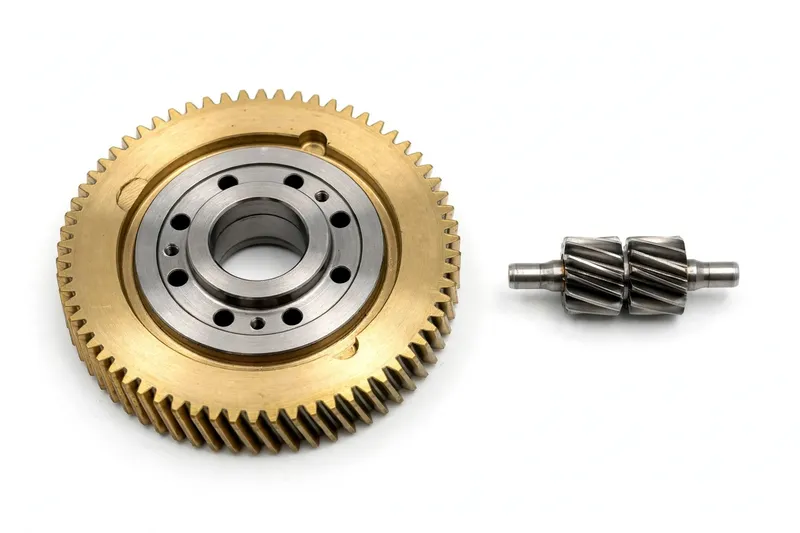
Think of it like bicycle gears. A low gear is easy to pedal uphill but slow; a high gear is fast on flat ground but brutal on a climb. Reels work the same way. A low ratio like 5.1:1 gives you torque, so cranking a deep-diving crankbait that fights you the whole retrieve stays manageable. A high ratio like 8.5:1 picks up line fast but gives up leverage, so winching that same deep diver home on it will wear your arm out by noon.
The takeaway: speed and power trade against each other. Every ratio is a compromise between how fast you recover line and how much muscle you have against resistance. There is no universally best ratio, only the right one for the job in front of you.
Why IPT matters more than gear ratio
Here is the thing most explainers skip, and it is the single most useful concept on this page. Gear ratio is only half the speed equation. The spool’s size is the other half. IPT, inches per turn, is the real number: how many inches of line the reel collects with one full handle turn. The formula is IPT equals gear ratio times spool circumference (pi times spool diameter).
Here is a real example from the chart below. A Daiwa Tatula 100 at 6.3:1 retrieves 26.3 inches per turn, while a Shimano SLX A at 6.3:1 retrieves 25. Same ratio, different speed, because the spools differ. A 6.2:1 Shimano Curado 200M pulls 27 inches, beating them both. The ratio says the SLX should be faster. IPT says it is not. IPT wins.
Two rules follow. First, compare reels by IPT when speed matters, not by ratio. Second, fill your spool completely. Manufacturers quote IPT on a full spool, and an underfilled spool has a smaller circumference, so it picks up less line per turn than the spec promises. IPT also drops as the lure comes in on a long cast, which is normal on every reel. If you want the mechanics of the cast itself covered, see my how to cast a baitcaster guide and my beginner baitcaster tips.
The master chart: real IPT numbers from manufacturer spec sheets
No aggregated guesses here. These are the published specs for five of the most popular baitcasters on the market, which lets you see how ratio and IPT actually relate across brands and spool sizes.
| Reel | Ratio options | IPT per ratio | Speed class |
|---|---|---|---|
| Shimano SLX A 150 | 6.3:1, 7.2:1, 8.2:1 | 25, 28, 32 | Mid to fast |
| Shimano Curado 200M | 6.2:1, 7.4:1, 8.5:1 | 27, 32, 37 | Mid to extra fast |
| Daiwa Tatula 100 | 6.3:1, 7.1:1, 8.1:1 | 26.3, 29.8, 33.9 | Mid to fast |
| Abu Garcia Revo X | 7.3:1 | 29 | Mid-fast |
| Abu Garcia Black Max | 6.4:1 | 28 | Mid |
Sources: Shimano specs for the SLX A and Curado 200M, Daiwa specs for the Tatula 100, Abu Garcia specs for the Revo X and Black Max. Caution: Shimano’s SLX DC 150 is a different reel with different IPT (26, 30, 35), so do not mix those numbers into the SLX A. Sibling model pages look similar but the numbers differ.
The quotable line from this chart: the ratio is the spec, IPT is the truth. If speed matters to you, shop by IPT.
The SLX A at 6.3:1 is the most common mid-speed recommendation for a reason. See my full review of the SLX A 150.
Which gear ratio for which technique?
This is the chart I actually use when buying. It maps the technique to the ratio range, the IPT target, and the reason, so you can check any reel’s spec sheet against it.
| Technique | Ratio range | Target IPT | Why |
|---|---|---|---|
| Deep-diving crankbaits | 5.1:1 to 5.6:1 | 20 to 24 | Torque keeps the bait at depth without exhausting you; slow speed holds the dive |
| Big swimbaits and glide baits | 5.4:1 to 6.2:1 | 22 to 27 | High-resistance lures need leverage, not speed |
| Spinnerbaits and chatterbaits | 6.3:1 to 7.1:1 | 26 to 30 | Steady retrieve at speed; enough pickup to keep blades turning |
| Shallow and mid-depth crankbaits | 6.2:1 to 6.8:1 | 26 to 29 | Controlled speed with contact on the bait; torque still available |
| Texas rigs and Carolina rigs | 6.4:1 to 7.4:1 | 28 to 32 | Pick up slack after the hop, feel the bite, drive the hook |
| Jigs (football jigs, casting jigs) | 6.8:1 to 7.5:1 | 29 to 33 | Fast slack recovery on the fall; power for the hookset |
| Topwater (poppers, walkers, buzzbaits) | 7.1:1 to 8.1:1 | 30 to 34 | Quick pickup to work the cadence and set the hook on a boil |
| Frogging in heavy cover | 7.5:1 to 8.5:1 | 32 to 37 | Take up slack instantly and drag fish out of vegetation before they wrap you |
| Flipping and pitching | 7.5:1 to 8.5:1 | 32 to 37 | Catch up to a fish running at you; get the bait back and re-deploy fast |
A note on the crankbait numbers: deep cranking is the one technique where tournament pros think in IPT instead of ratio. In a well-known interview, Bassmaster Classic champion David Fritts said his cranking reel needs to take in exactly 21 inches per turn, which he fished on a 5.1:1 reel. If you crank deep divers, build around that 20 to 24 IPT window and read my full guide on the best gear ratio for crankbaits.
For the fast end of the chart, I have dedicated roundups: the best baitcasting reels for frog fishing, the best baitcasting reels for flipping and pitching, and the best baitcasting reels for jigs.
Which gear ratio should I buy first?
For your first baitcaster, get a mid-speed reel in the 6.3:1 to 7.3:1 range, around 26 to 30 IPT. That window handles spinnerbaits, chatterbaits, Texas rigs, shallow crankbaits, and jigs, which is most of what a beginner actually throws. The Abu Garcia Black Max (6.4:1, 28 IPT) and Revo X (7.3:1, 29 IPT) both live here and cost very little.
Your second reel should be a fast one: 7.5:1 and up, 32 IPT or more. That covers frogging, flipping, pitching, and any moment a fish charges the boat and you need to catch up. Two reels, one mid and one fast, cover everything except dedicated deep cranking, which gets a slow 5.x:1 reel only if you are a real deep-diving specialist.
If the two-reel plan sounds like where you are headed, the best baitcasting reels roundup is the next page to read, since it groups picks by technique instead of price.
What the thin ranking explainers get wrong or skip
This is the section that makes this page worth bookmarking. I audited the current ranking explainers for this topic, and they repeat the same five mistakes.
They treat ratio as speed and ignore the spool. The most important point on this page, that IPT is ratio times spool circumference, is missing from nearly every thin guide. One ranking page even labels a 6.6:1 reel as “slow” and prescribes it for frogging, which is backwards: frogging needs fast slack pickup, and 6.6:1 is a mid ratio. If a guide never mentions spool diameter, it is guessing.
They round or invent IPT numbers. Thin charts print tidy numbers like 30 or 33 without saying which reel or spec sheet they came from. Real manufacturer numbers are specific, like 26.3, 29.8, and 33.9 on the Tatula 100. If a chart has no sources, assume the numbers are decorative.
They skip the spool-fill effect. IPT is measured on a full spool. An underfilled spool retrieves less line per turn, and IPT falls as the lure comes in on every cast. Your lure action changes near the boat on every reel, and no thin guide mentions it. Line choice and fill level matter too, so read braid vs fluorocarbon on a baitcaster before spooling.
They skip the torque tradeoff. Fast ratios give up cranking power. That is why nobody slow-rolls a deep diver on an 8.5:1 on purpose, and why your arm gives out trying. A guide that tells you “faster is better” without the bicycle-gear tradeoff is writing ad copy, not advice.
They never tell you how many reels to own. “7.1:1 does everything” is technically survivable but practically mediocre. The honest answer is the two-reel system above, plus a slow reel only if you are a deep-cranking specialist. Nobody gets there from a three-tier chart.
How this chart was compiled
Every ratio and IPT figure in the master chart is the manufacturer’s published number for that exact reel, taken from its spec sheet rather than calculated from the ratio. One of those spec sheets, Shimano’s official Curado 200M sheet, is linked in the references at the bottom of this page, so you can check the figures yourself. Where a reel is sold in more than one ratio, each version is listed with its own published IPT, because the number on the box does not tell the whole story: two reels that share a ratio can still take up different amounts of line per handle turn. Manufacturers revise specs when a model is refreshed, so if the box your reel came in shows a different figure, trust the box and choose your speed from the technique table by IPT, not by ratio alone.
Gear ratio FAQs
What gear ratio is best for a beginner baitcaster?
A mid-speed ratio between 6.3:1 and 7.2:1. That range handles spinnerbaits, Texas rigs, jigs, and shallow crankbaits without feeling slow or overpowered. If you are still learning the mechanics, pair this with my guides on how to prevent backlash and the common beginner baitcaster mistakes to avoid, since gear ratio is the least of a new caster’s problems.
Is a higher gear ratio always better?
No. Higher ratio means faster line pickup but less cranking torque, just like a high gear on a bicycle. Fast reels are harder to crank against resistance, which is why deep-diving crankbaits and big swimbaits are fished on slow 5.x:1 reels on purpose. Match the ratio to the technique, not to the biggest number.
What does IPT mean on a fishing reel?
Inches per turn: how many inches of line the reel picks up with one full handle turn. It equals gear ratio times spool circumference, so two reels with the same ratio can have different IPT on different spool sizes. IPT is the true measure of retrieve speed, and it is the number to compare when speed matters.
What gear ratio do I need for crankbaits?
Use a slow ratio (5.1:1 to 5.6:1, about 20 to 24 IPT) for deep-diving crankbaits, where torque keeps the bait at depth without exhausting you, and a mid ratio (6.2:1 to 6.8:1) for shallow and mid-depth crankbaits. My dedicated guide covers the best gear ratio for crankbaits in detail, including the Fritts 21-IPT rule.
Do I need different reels for different gear ratios?
Two reels cover nearly everything: one mid-speed (6.3:1 to 7.3:1, about 26 to 30 IPT) for moving baits and bottom contact, and one high-speed (7.5:1 and up, 32 IPT or more) for frogging, flipping, and pitching. Add a slow 5.x:1 reel later only if you fish deep crankbaits or big swimbaits often. The best baitcasting reels roundup groups picks by technique if you are shopping.
Does gear ratio affect casting distance?
Not directly. Casting distance is controlled by the braking system, spool design, line, and rod. The ratio only governs the retrieve after the cast. If you are getting backlashes, the fix is in your brakes and your thumb, not in a different ratio.