Jig Fishing Gear Guide
Best Baitcasting Reels for Jigs (2026): From Finesse Jigs to Football Heads
The Shimano Curado 200 M is the best baitcasting reel for jigs for most bass anglers in 2026. Its 6.2:1 ratio pulls 27 inches of line per crank with real cranking torque for slow-rolling football heads, a 13-pound Cross Carbon drag handles hooksets on heavy line, and the MGL III spool still casts light finesse jigs cleanly.
Our Quick Picks
Why Gear Ratio Is the Whole Game for Jig Reels
Jig fishing is a slow, contact-driven game: you drag, hop, or slow-roll lead and skirt along the bottom while the reel turns a heavy load with zero strain. That is why experienced jig anglers overwhelmingly fish lower ratios. A low gear gives the handle more mechanical advantage, so cranking a half-ounce football head out of deep water feels easy instead of like pedaling uphill in the wrong gear. The one exception is flipping at close range, where a fast reel picks up slack for the hookset. So the ideal ratio depends on the jig you throw most, and the chart below matches jig style to ratio range. For the technique side, our complete guide to jig fishing covers presentations rod-first.
Jig-Weight to Gear-Ratio Matching Chart
| Jig style | Typical weight | Ideal ratio | Why |
|---|---|---|---|
| Finesse / shaky-head jigs | 1/8 to 1/4 oz | 6.3:1 to 7.1:1 | Low-inertia spool and steady bottom contact |
| Swim jigs | 1/4 to 3/8 oz | 6.2:1 to 6.8:1 | Steady speed holds the trailer swimming; torque beats speed |
| Casting / arky jigs | 3/8 to 1/2 oz | 6.2:1 to 7.1:1 | Enough torque to drag bottom, enough speed for slack pickup |
| Football heads (deep) | 1/2 to 1 oz | 6.2:1 or lower | Maximum torque for heavy lead on deep structure |
| Flipping / pitching jigs | 3/8 to 1 oz | 7.1:1 to 8.1:1 | Fast slack pickup for hooksets; see our flipping and pitching reel roundup |
Our gear ratio explainer covers inches per turn and torque per technique, and Wired2Fish’s guide to choosing the right gear ratio gives an independent take on the same mechanics.
Best overall
Shimano Curado 200 M
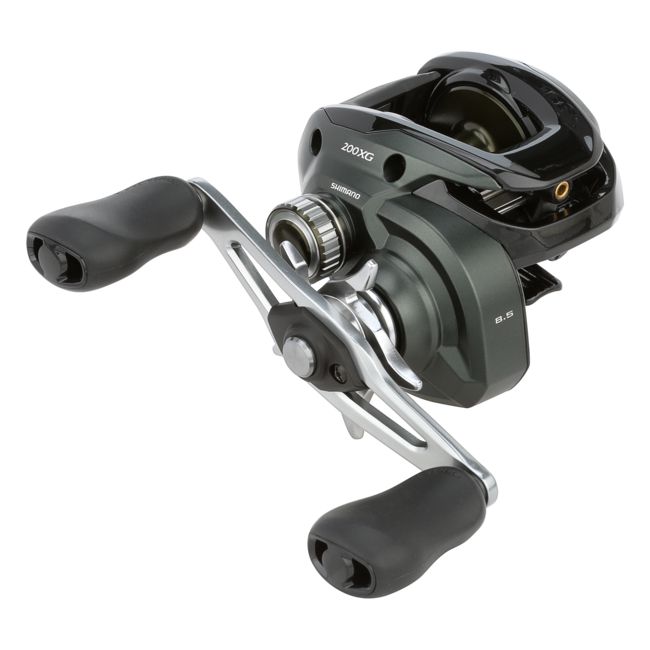
The Curado 200 M is the reel I hand to someone who wants one baitcaster for everything jig-related for the next decade. The base CU200M runs 6.2:1, the most jig-friendly number on the market: 27 inches per crank with the torque to slow-roll a half-ounce football head across deep rock, while the MGL III spool still starts up on a 1/4-ounce finesse jig without ballooning into a backlash.
The Hagane aluminum body keeps gears aligned when a heavy fish surges, and the 13-pound Cross Carbon drag is more headroom than jig fishing needs. SVS Infinity brakes adjust externally for pitching pockets or bombing flats. It also appears in our best reels for the money and under $200 picks.
Best for: one premium jig reel covering finesse to football heads.
Pros: 6.2:1 is purpose-built jig torque; MGL III spool casts light jigs; rigid Hagane frame; 13 lb Cross Carbon drag.
Cons: costs more than entry reels; buy the plain M, not the faster HG/XG, for jig work.
Specs: 6.2:1 · 27 in/crank · 13 lb drag · 7.4 oz · 6+1 bearings.
Buy From Amazon
Best value
Shimano SLX A 150
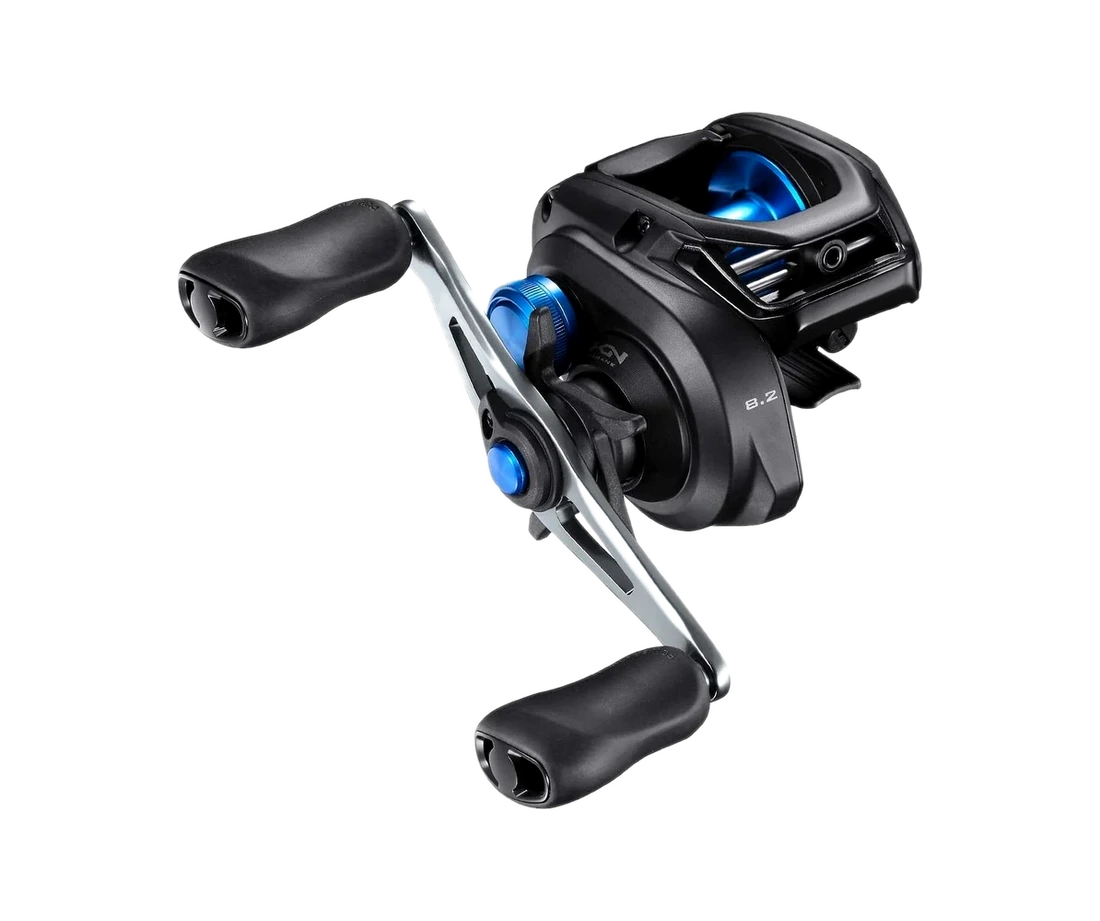
If the Curado is the one-reel dream, the SLX A 150 is the one-reel reality for most of us. The base SLX150A runs the same jig-friendly 6.3:1 ratio (25 inches per crank), the Hagane body concept, and a 12-pound max drag, at a price that leaves room for a quality rod in the same budget. I have fished this platform for years: smooth retrieve, none of the gear-grind cheap reels develop after one season of heavy jig dragging.
The SVS Infinity brake adjusts externally without tools, which matters because jigs span 1/8-ounce finesse to 1-ounce football heads. Our full Shimano SLX A 150 review covers the whole lineup.
Best for: 90% of the Curado experience with $100+ left over for line and jigs.
Pros: 6.3:1 is ideal jig torque; Hagane frame at a budget price; externally adjustable brakes; proven platform.
Cons: 3+1 bearings feel less silky; no MGL spool for the lightest finesse jigs; confirm you are buying the 6.3:1, not the HG.
Specs: 6.3:1 · 25 in/crank · 12 lb drag · 6.9 oz · 3+1 bearings.
Buy From Amazon
Best for finesse jigs
Daiwa Tatula 100
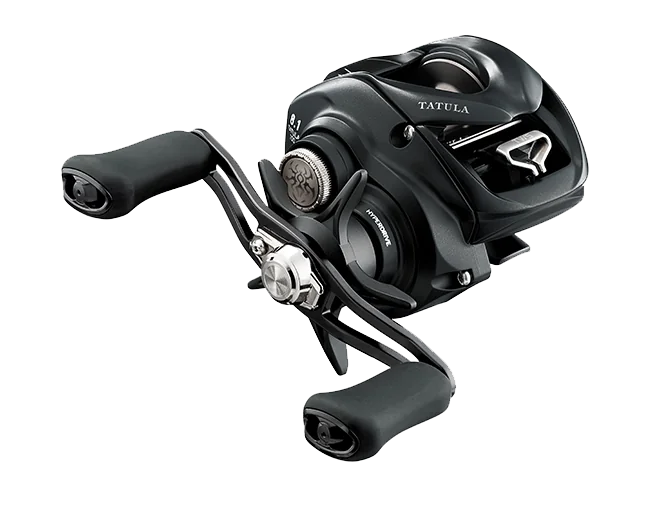
When the jig gets small, the reel matters more. The Tatula 100 is the best finesse-jig baitcaster here: a low-inertia spool, a T-Wing line guide that flattens the line angle so light jigs carry farther, and a Magforce Z brake that ramps up at the start of the cast and backs off at the end, exactly when finesse jigs usually blow up. The base TATU100 runs 6.3:1 with 26.3 inches per crank.
At 6.8 ounces it skips a 1/4-ounce jig under docks with less thumb babysitting than anything near its price. The 11-pound drag is the lowest max here, so this is the reel for open-water finesse, not flooded timber. Our Tatula vs Curado head-to-head settles the debate spec by spec.
Best for: finesse jigs, shaky heads, and skipping under cover.
Pros: casts light jigs better than anything near its price; T-Wing reduces friction; compact 6.8 oz aluminum frame; 6.3/7.1/8.1 ratios available.
Cons: 11 lb drag is the lightest here; not for heavy flipping in thick cover; confirm the TATU100 model code on the listing.
Specs: 6.3:1 · 26.3 in/crank · 11 lb drag · 6.8 oz · 8 bearings.
Buy From Amazon
Best torque for the money
Abu Garcia Revo X
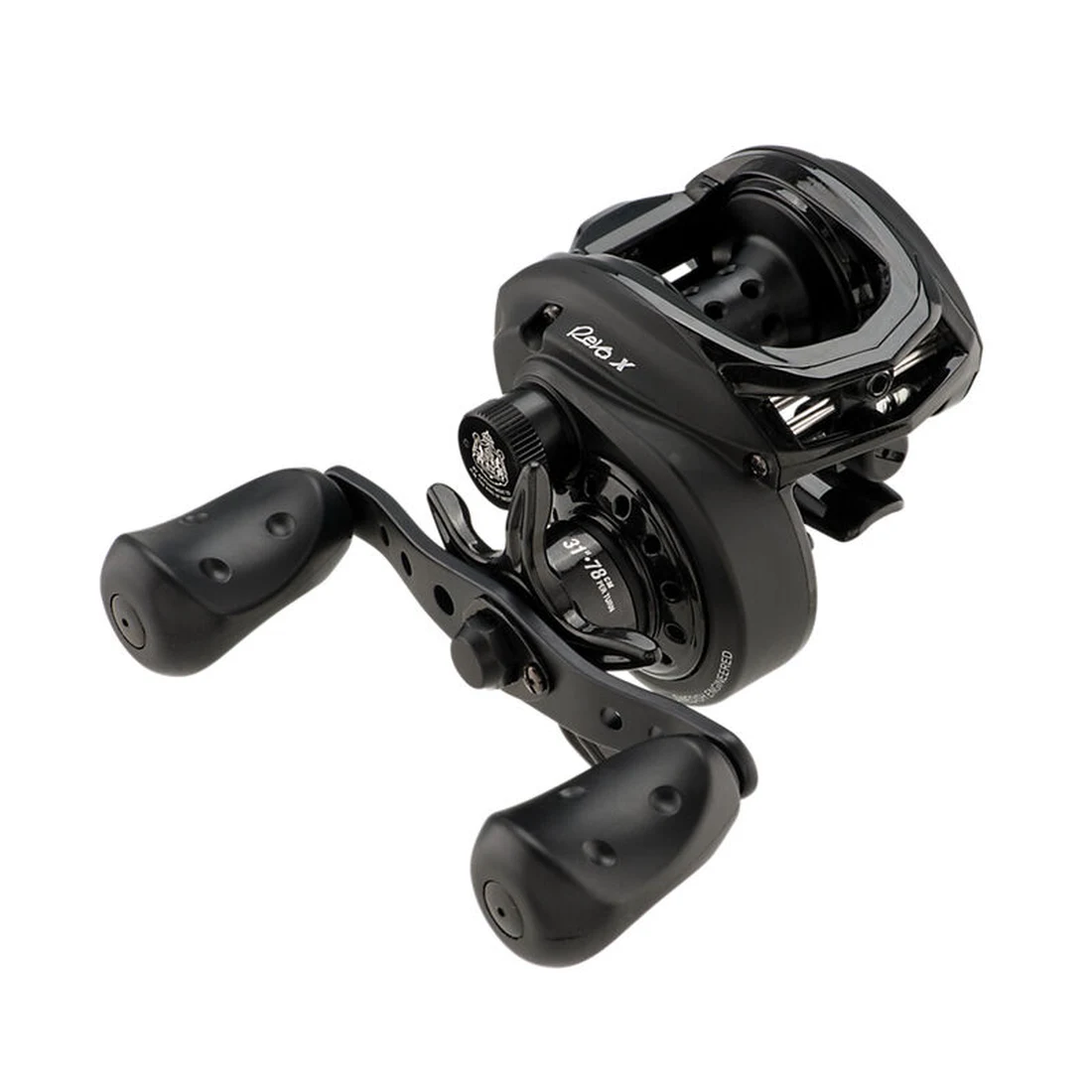
Jig fishing in heavy cover asks one question: when you set the hook into a big bass buried in grass, does the reel winch it out? The Revo X answers with the most drag per dollar here: a 20-pound Carbon Matrix drag in a Gen 5 frame running a jig-friendly 6.7:1 ratio with 27 inches per crank, exactly what dragging football heads and flipping jigs around wood demands.
The 7+1 bearings stay smooth all day and the MagTrax brake is set-it-once simple. The spool is tuned for workhorse duty, so finesse specialists should take the Tatula 100, but for jigs from 3/8 ounce up, torque and stopping power are the story.
Best for: heavy jigs, flipping, and cover fishing where drag muscle beats finesse.
Pros: 20 lb drag is the strongest value here; 6.7:1 suits heavy-jig cranking; dead-simple MagTrax brake; durable C6 carbon frame.
Cons: not tuned for very light finesse jigs; magnetic-only brake is less refined than premium systems.
Specs: 6.7:1 · 27 in/crank · 20 lb drag · 7+1 bearings.
Buy From Amazon
Best anti-backlash tech
Abu Garcia Revo SX VoltIQ
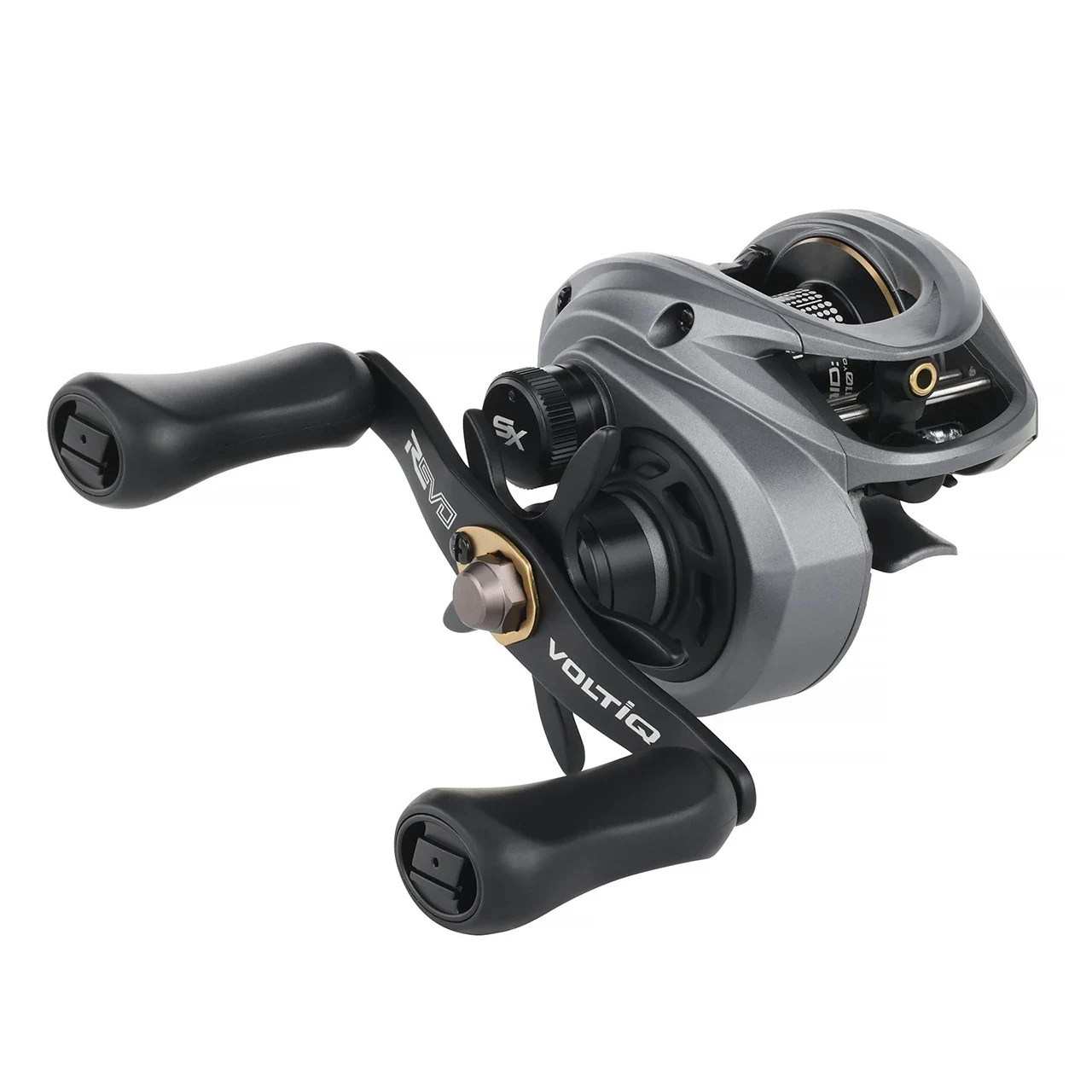
Pitching a jig into a two-foot pocket between lily pads is where the VoltIQ earns its price. The electronic braking samples the spool thousands of times per second and brakes only when a backlash is forming, so you can pitch tight cover at settings that would bird’s-nest a normal reel. No battery; the cast powers the system.
Underneath it is a serious jig reel: 25-pound Power Stack drag (highest max here), 9+1 bearings, 6.7:1 pulling 29 inches per crank, and an X2-Craftic alloy frame that does not flex under that drag. Outdoor Life’s head-to-head test against the Shimano Curado DC found the VoltIQ’s drag notably stronger. The trade-off is 7.8 ounces and a premium price, but if pitching accuracy is your whole game, the backlash insurance is real.
Best for: pitching jigs into tight cover; electronic backlash insurance.
Pros: braking prevents backlashes on tight pitches; 25 lb drag is the strongest here; no battery needed; 10-setting external dial.
Cons: 7.8 oz is the heaviest here; premium price; modest line capacity for the size.
Specs: 6.7:1 (7.3:1 HS also available) · 29 in/crank · 25 lb drag · 7.8 oz · 9+1 bearings.
Buy From Amazon
Most comfortable in hand
Lew’s Speed Spool LFS
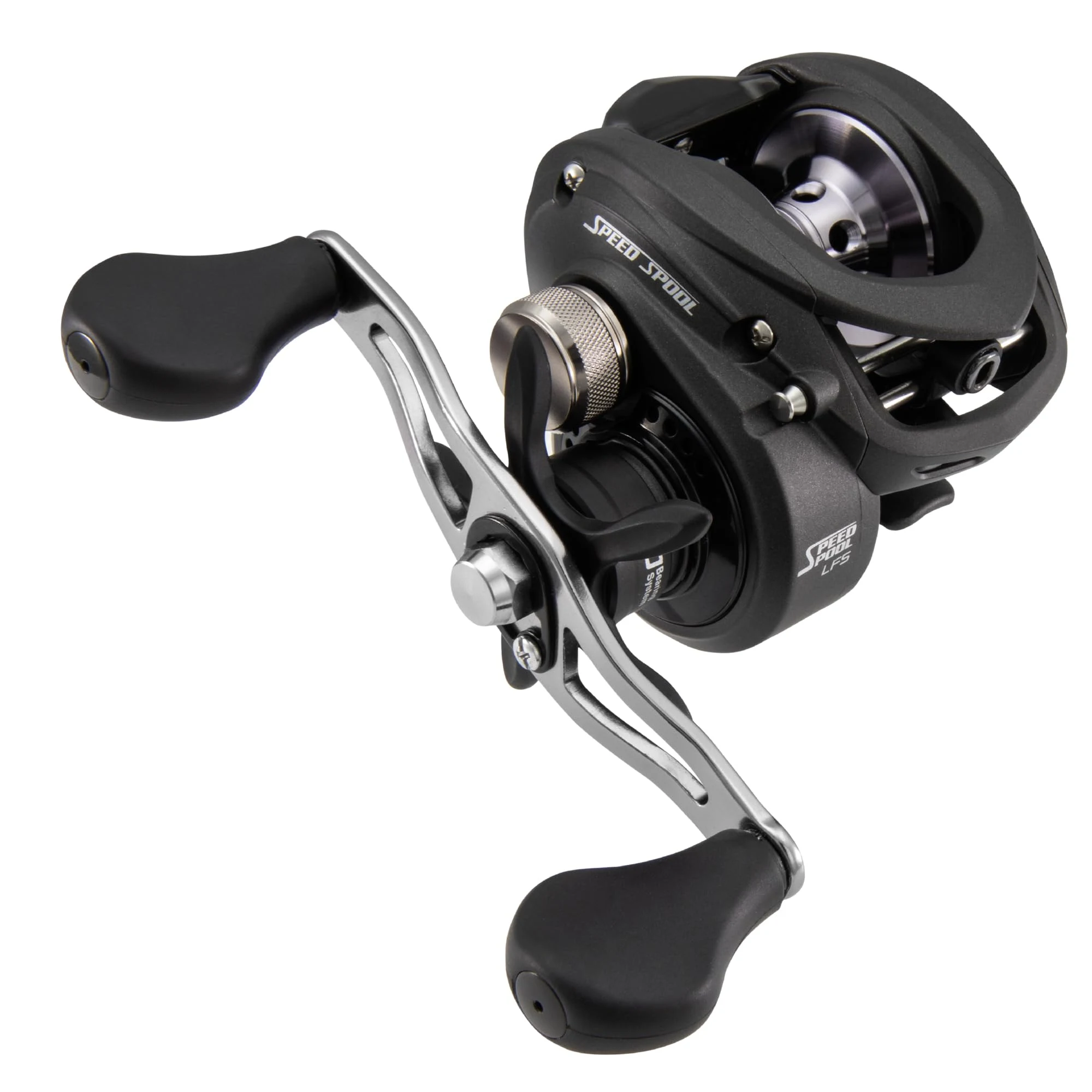
Jig fishing is a thousand casts of palming the reel, so ergonomics is the difference between fishing hard all day and quitting at noon. The Speed Spool LFS is the most palmable reel: a low-profile aluminum frame at roughly 7 ounces. The base 6.8:1 ratio gives about 31 inches per crank, quick enough for casting jigs without sacrificing torque.
The Gen 3 menu spans 5.6, 6.8, 7.5, and 8.3, and the 5.6:1 is a genuine slow-rolling specialist for deep football heads. The Multi-Setting Brake adjusts externally and the 15-pound click drag handles everything a jig will ask. Caveat: 1/8-ounce finesse jigs cast sweeter on the Tatula 100.
Best for: all-day jig casting where comfort matters; slow-rollers should grab the 5.6:1.
Pros: best ergonomics here; 5.6:1 option for deep slow-rolling; external MSB brake adjustment; 15 lb click drag.
Cons: not a finesse specialist at the light end; MSB brake less tunable than SVS or VoltIQ.
Specs: 6.8:1 (5.6/7.5/8.3 available) · ~31 in/crank · 15 lb drag · ~7.0 oz · 9+1 bearings.
Buy From Amazon
The 6 Jig Reels Compared
| Reel | Best for | Ratio | Max drag | Weight | In/crank |
|---|---|---|---|---|---|
| Shimano Curado 200 M | Best overall | 6.2:1 | 13 lb | 7.4 oz | 27 in |
| Shimano SLX A 150 | Best value | 6.3:1 | 12 lb | 6.9 oz | 25 in |
| Daiwa Tatula 100 | Finesse jigs | 6.3:1 | 11 lb | 6.8 oz | 26.3 in |
| Abu Garcia Revo X | Torque for the money | 6.7:1 | 20 lb | ~7.4 oz | 27 in |
| Abu Garcia Revo SX VoltIQ | Anti-backlash tech | 6.7:1 | 25 lb | 7.8 oz | 29 in |
| Lew’s Speed Spool LFS | Comfort | 6.8:1 | 15 lb | ~7.0 oz | ~31 in |
How to Choose a Baitcasting Reel for Jigs
Start with the jig you throw most
The chart at the top is the whole buying decision. Full of 1/2-ounce football heads? Buy the lowest ratio with the most torque: the Curado 200 M at 6.2:1 or the Lew’s LFS in 5.6:1. On the flip stick? 7.1:1 or faster picks up slack for the hookset. In between, any 6.3 to 6.8 ratio here works.
Size: 150 vs 200
A 150-size reel holds plenty of line and palms easier; a 200-size pulls more inches per crank at the same ratio. Deep jigging: lean 200. Skipping and finesse: lean 150 or 100. Our best baitcasting reels pillar covers sizing across all techniques.
Drag: 11 lb is enough, but headroom is nice
Every pick here exceeds what jig fishing requires (11 to 25 pounds), which you will fish at a fraction of max. The 20 and 25-pound Abu ratings matter most in heavy cover, where the fish must stop before reaching the grass. Smooth startup matters more than the number: a jerky drag breaks light line, so demand carbon washers.
Brakes and spool for your jig weight
Switching between a 1/4-ounce finesse jig and a 1-ounce football head in one day demands a brake you can adjust on the water. Externally adjustable (SVS Infinity, MSB dial) or adaptive (Magforce Z, VoltIQ) systems qualify; fixed or tools-only brakes do not belong on a jig reel. Our gear ratio explainer breaks down inches per turn versus raw ratio.
Why These Picks Beat What the Ranking Pages Recommend
No exact-match commercial page for bass jig reels ranks on page one. What ranks falls into two camps. First, the saltwater jigging lists: Outdoor Life names the Penn Fathom its “best for jigging” pick and Perfect Captain’s inshore list covers jigging too, but that means vertical saltwater jigging for tuna, not pitching a football head to a smallmouth. Second, the generic roundups: Fishing Tool Reviewer and GearJunkie both nod at the Curado for jigs, but they rank do-everything reels with no jig-weight-to-ratio guidance and no 150-vs-200 or ratio-code buying details to keep a reader from ordering the wrong variant.
That is the gap this page fills: six reels picked for the jigs bass anglers actually throw, matched to jig weight with a ratio chart, with exact model codes verified against current manufacturer spec charts. Our jig fishing how-to is the technique companion.
Jig Reel FAQs
What gear ratio is best for jig fishing?
For most jig fishing, 6.2:1 to 6.8:1 is the sweet spot: lower ratios give more cranking torque for slow-rolling heavy jigs. Football heads fished deep are best on 6.2:1 or lower. Flipping and pitching is the exception, where 7.1:1 or faster picks up slack for close-range hooksets.
What size baitcasting reel is best for jigs?
A 150-size reel covers most jig fishing and palms easily. A 200-size holds more line and pulls more inches per crank, better for deep jigging.
Can you jig fish with a baitcasting reel instead of spinning?
Yes. A baitcaster gives better thumb control for pitching into pockets, more cranking power on a heavy jig, and no line twist from dragging bottom. Spinning still wins for true finesse jigs under 1/8 ounce.
How much drag do I need for jig fishing?
You will rarely use more than a third of the max rating, so anything from 11 pounds up works, but headroom matters in cover. Smoothness matters more than the number: a carbon drag that starts without a jerk protects your line on the hookset.
What line should I put on a baitcasting reel for jigs?
15 to 20-pound fluorocarbon is the standard jig line: low stretch, sensitive, nearly invisible. For heavy cover, 30 to 50-pound braid with a fluoro leader gives maximum hook-setting power and zero stretch; our braid vs fluorocarbon guide covers the trade-offs. Spool braid directly only if your spool is braid-ready or you add mono backing first.
Specs verified against current manufacturer listings, October 2026. Confirm the exact ratio code (e.g., CU200M for the 6.2:1 Curado) before ordering.