Why Does Braid Dig Into the Spool? 5 Causes and the Fixes That Work
Braid digs into the spool for one main reason: it was wound on too loose. Braided line is thin and has almost no stretch, so when a hard load comes on, a hookset, a good fish, or a snag, the tight top wrap acts like a wedge and cuts down between the soft wraps under it. The buried wrap then hides in the spool until your next cast slams into it and stops dead. The good news is that dig-in is a setup problem, not a braid problem. Pack the line on correctly and it all but disappears.
I have spooled braid every wrong way there is over the years, and every dig-in problem I have ever had traced back to one of the five causes below. They are listed in the order they usually strike, and each one has a simple fix beside it.
What dig-in actually is
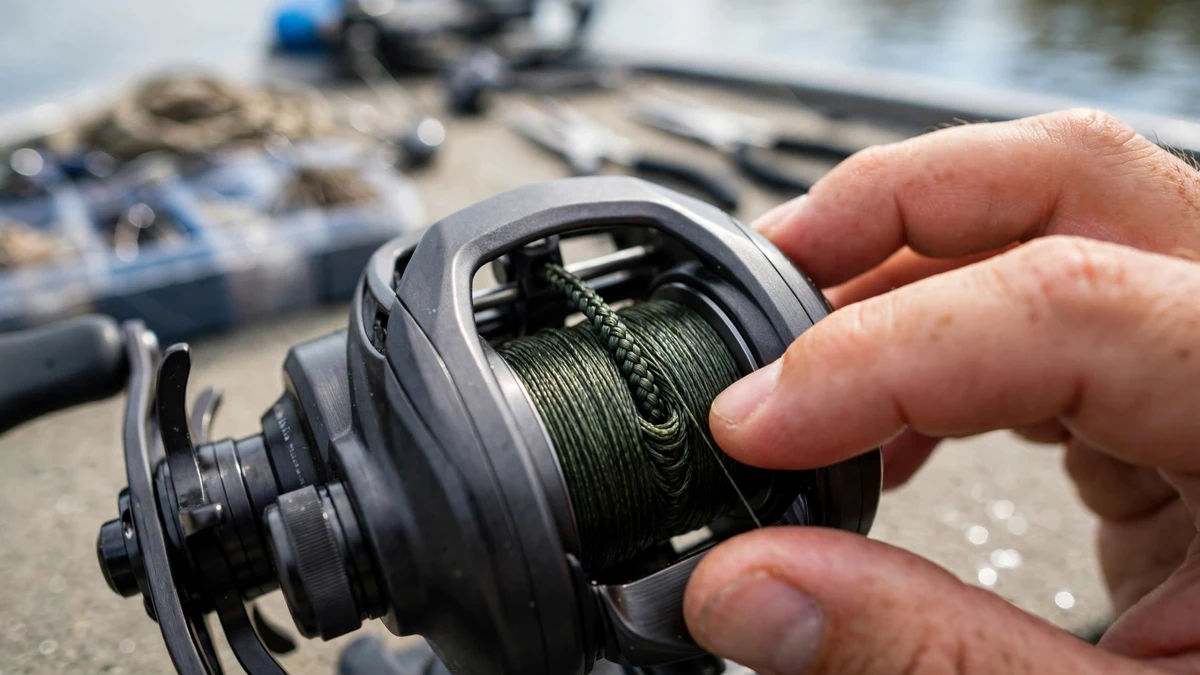
Picture the wraps on your spool as a stack of soft rope. Mono and fluorocarbon have round, springy bodies, so a loaded wrap mostly presses against its neighbors and stays put. Braid is different. It is made of thin woven fibers, it is far thinner than mono of the same strength, and it does not stretch to absorb a shock load. That combination is exactly why it fishes so well, and you can feel the difference in our braid vs fluorocarbon breakdown. It is also why a loaded braid wrap can slice down into a loose pack like a wire through cheese.
Two things have to meet for dig-in to happen. First, the wraps underneath must be soft enough to let a wrap pass between them. Second, a hard load has to drive the top wrap down. Remove either one and the problem goes away, which is why almost every fix below is about packing the spool tight and keeping it that way.
The 5 causes of braid dig-in, in order
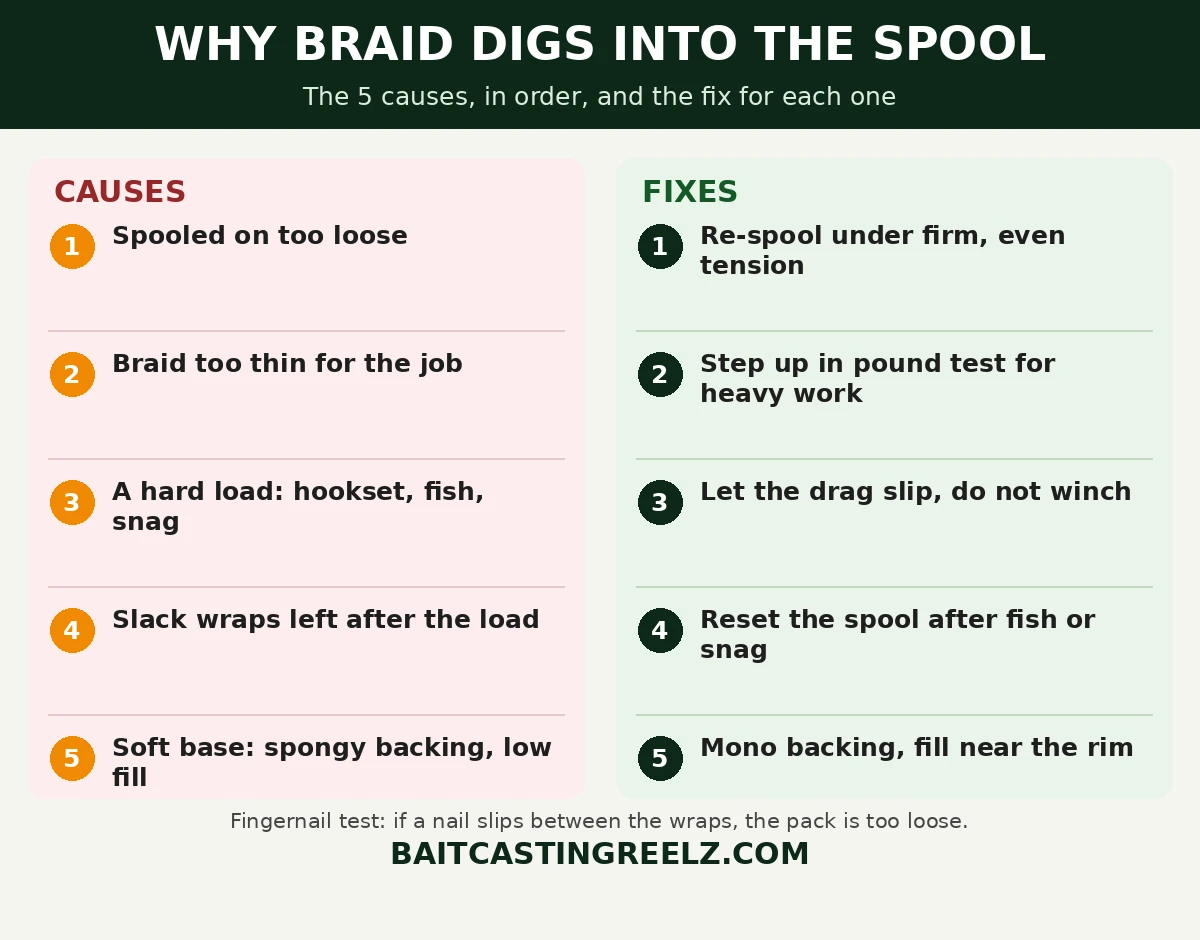
1. The braid went on too loose
This is the root cause behind most dig-in, and it happens on the day you spool up, long before you reach the water. If you wind braid on with light finger pressure, the wraps look neat but the pack is soft all the way through. There is nothing for the top wraps to lock against, so the first real load pushes them straight in. Braid gives you almost no warning while you spool, either. It lays down flat and pretty even when it is going on far too loose.
The fix is to re-spool under firm, even tension, the same day you notice the problem. Our full spooling guide walks through it, but the heart of it is simple: pinch the line through a glove or a folded rag, keep steady pressure for the whole fill, and never let the line go slack mid-spool. A pack done right feels hard when you press it with a thumb.
2. The braid is too thin for the job
Thin braid digs far more easily than thick braid, because a narrow wrap wedges between its neighbors with much less force. Light braid in the 10 to 20 lb range on a standard baitcaster is the classic offender. It casts beautifully, then one solid hookset buries it. Heavier braid in the 40 to 65 lb range, the stuff used for frogging and flipping, sits in wider wraps and resists digging much better. Diameter matters more than the number on the box, and two braids with the same pound test can be noticeably different in thickness.
If you keep digging in with light braid, step up a size before you blame the reel. Our pound test chart matches line weight to technique, and our braided line picks picks are all thick enough to behave on a casting spool.
3. A hard load drives the top wrap down
Dig-in needs a trigger, and the trigger is almost always a sudden, heavy load: a hard hookset on a locked-down drag, a strong fish surging against the reel, or a lure snagged solid while you pull to free it. With no stretch in the line, all of that force lands on one wrap of braid, and if the pack below is soft, that wrap sinks. A drag set too tight makes it worse, because the line cannot slip, so it digs instead.
Let the drag do its job. Set it so a hard pull takes line before anything buries, and when you are snagged, point the rod at the snag and pull straight with the spool locked by your thumb, or wrap the line around a cleat or your pliers. Never winch against a snag with the reel. A short mono or fluoro leader also adds a little cushion to a hookset, which is one more reason the setup in our guide to fishing braid with a leader is worth using.
4. Slack wraps get left behind after the load
Here is the cause almost nobody talks about. After you land a fish or pull free from a snag, the last stretch of line comes back onto the spool while you are distracted, and it comes back loose. Those soft wraps now sit on top of your good pack, waiting. On the next cast the line peels off fine until it reaches the slack section, then the cast stutters or stops and the wrap you just laid digs into the wraps below.
This is why dig-in so often seems to happen on the cast right after a fish. The damage was done during the fight, and the cast only reveals it. The 60-second reset further down this page is the cure, and once it becomes a habit, this cause mostly disappears.
5. The base under the braid is soft or the spool is underfilled
Braid needs a firm foundation. A thick bed of spongy mono backing, wound on loosely, compresses under pressure and lets the braid wraps settle and shift. The same thing happens when the spool is badly underfilled, because the level wind stacks the line in a narrower band and the wraps pile and cross at odd angles. And if braid goes straight onto a bare, smooth spool with nothing to grip, the whole pack can slip, which is a different fault covered in our guide to braid with no backing.
Wind the backing on tight and keep it modest, join it well, and fill the spool to about 1/8 inch below the rim. Fill level matters more than most anglers think, and our guide to filling the spool right shows the right level for each line type.
The next-cast trap
The nastiest thing about dig-in is the delay. The wrap buries itself during a hookset or a fight, deep in the pack where you cannot see it. You finish the retrieve, everything looks normal, and you fire the next cast. Halfway out, the flying line reaches the buried wrap, cannot pull it free, and the lure stops as if it hit a wall. That sudden stop can cost you the lure, and it is the reason so many anglers blame their brakes or their casting when the real fault was set up one fish earlier.
Once you understand the trap, the pattern becomes easy to spot. If a cast dies mid-flight for no obvious reason, especially right after a fish or a snag, suspect a buried wrap before you touch a single dial.
How to fix a buried spool right now
If it happens on the water, do not yank on the line. Pulling hard only seats the buried wrap deeper. Work through these steps instead.
- Open the spool and pull line off by hand, slowly, until you pass the buried section. You will feel the wrap pop free as it comes out.
- If the buried spot is close to the top of the pack, make the longest easy cast you can instead, then wind the line back under firm thumb pressure.
- Check the freed section for flat spots or fraying. Braid that has been crushed hard can be weakened, so cut back past any damage.
- Wind everything back on tight before your next real cast, keeping pressure on the line the whole way.
If the line buries again within a few casts, the pack itself is too soft and no on-the-water trick will save it. Strip the reel and re-spool it properly that evening.
How to re-spool braid so it never digs
A good re-spool takes ten quiet minutes and ends the problem at the source. This is the short version; the complete walkthrough with photos is in our spooling walkthrough.
- Start with backing. Wind on a modest layer of mono backing under real tension, or use a braid-ready spool, so the braid has a firm, grippy base.
- Join it cleanly. Tie braid to backing with a double uni or FG knot and trim it close, so the knot does not make a lump in the pack.
- Wet the braid. Run the braid through a bowl of water or spool up with a wet rag in your line hand. Wet braid packs down tighter and more evenly than dry braid.
- Hold firm tension the whole way. Pinch the line through a leather glove or folded rag. Braid under tension can cut bare skin, so never use naked fingers for a full fill.
- Wind at a steady pace. Let the level wind lay each wrap beside the last. Do not rush, and do not pause with the line slack.
- Fill to 1/8 inch below the rim. A full spool spreads load across more wraps and casts better.
- Run the fingernail test. Try to slip a fingernail between the top wraps. If it slides in easily, the pack is too soft. If the wraps feel like a solid surface, you are done.
The 60-second spool reset
This is the habit that finally ended dig-in for me, and I have never seen it written down anywhere else. Every time you land a fish, pull free from a snag, or pick out a backlash, assume the top wraps on your spool are now loose. Before you cast again, strip off a cast’s worth of line by hand, or make one long, easy cast, and wind it back under firm tension. It takes under a minute. What it does is erase the slack section that would otherwise become the next buried wrap, and it turns dig-in from a recurring mystery into something that simply stops happening.
Prevention checklist
- Spool braid under firm, even tension, every time, with a glove or rag.
- Wet the braid or use a wet rag while spooling so it packs tighter.
- Use mono backing wound tight, and fill to 1/8 inch below the rim.
- Match braid diameter to the job, and step up a size for heavy cover work.
- Set the drag to slip on a hard pull instead of locking the spool solid.
- Reset the spool after every fish, snag, or backlash before casting again.
- Keep the level wind clean and moving freely, since a sticky level wind stacks wraps unevenly. Our cleaning and maintenance routine covers the worm gear and pawl.
- Run the fingernail test whenever a spool feels suspect.
The bottom line
Braid digs into the spool because a thin, zero-stretch line under load will always cut into a soft pack. Spool it on wet, tight, and over a firm base, let your drag slip when a load spikes, and reset the top wraps after every fish or snag. Do those four things and dig-in stops being a braid tax and becomes what it should have been all along: a problem other anglers have.
Frequently asked questions
Does thicker braid dig in less?
Yes. A thicker wrap cannot wedge between the wraps below as easily, so heavier braid in the 40 to 65 lb range digs far less than 10 to 20 lb braid on a standard baitcaster. Diameter is what matters, so compare thickness, not just the pound test printed on the box.
Can dig-in damage my braid?
It can. A wrap that has been driven hard into the pack can come out flattened or frayed, and that section is weaker than the rest of the line. Whenever you free a buried wrap, check it and cut back past any flat or fuzzy spots before you fish it again.
Do I need backing to stop braid digging in?
Backing is not the whole fix, but a firm base helps. A modest layer of mono backing wound on tight gives braid a stable foundation and stops the whole pack slipping on a bare spool. Loose, spongy backing does the opposite, so wind it on under tension.
Why does dig-in happen right after I catch a fish?
Because the fight buries a wrap or leaves slack line on top of the spool, and the problem only shows itself on the next cast, when the line reaches that section and stops dead. Resetting the spool under tension after each fish prevents it.
Does wetting braid before spooling really help?
Yes. Wet braid is more supple and packs down tighter and more evenly than dry braid, which is why many anglers run it through a wet rag or a bowl of water while spooling. It is a small step that makes the whole pack harder.
Does braid dig in on spinning reels too?
It can, but it is less common and usually milder. A spinning reel lays line in wide crossing wraps, which resist digging better than the tight parallel wraps of a baitcaster. Loose spooling will still cause it on either reel, so the same tight, wet pack applies.