Technique
Can You Use Braid on a Baitcaster Without Backing?
Short answer: you can, but only if the spool gives the braid something to grip. On a smooth spool, braid will slip, and no knot fixes that. Here is when it is safe, when it is not, and the three methods that actually work.
Affiliate disclosure: As an Amazon Associate, baitcastingreelz.com earns from qualifying purchases made through links on this page, at no extra cost to you. Rankings are technique-led and independent of commissions.
Why braid slips and mono does not
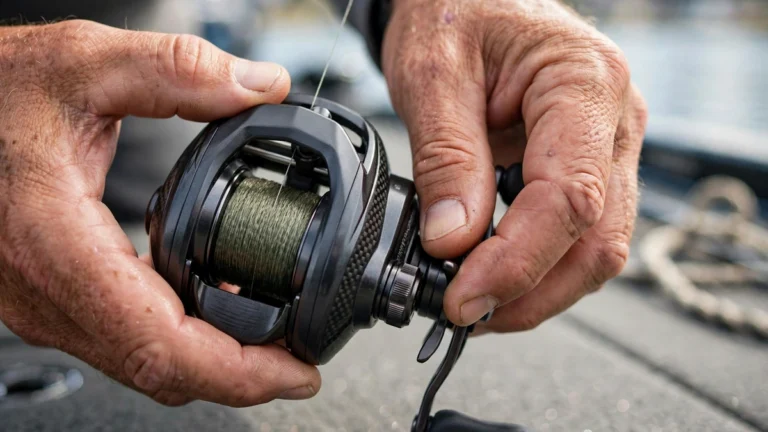
I learned this lesson the hard way years ago, spooling a baitcaster with straight braid and tying it off with a standard arbor knot. First decent fish, the drag started screaming, and then the whole bed of line began rotating on the spool while the spool itself sat still. The knot had slipped. The fish was gone, and I had a spool of expensive braid with zero connection to the reel.
Here is the physics. Monofilament and fluorocarbon stretch. When you tie an arbor knot and start winding, the line stretches slightly and bites down on the spool arbor, cinching tighter as you add wraps. Braid does not stretch. It is also slick by design. An arbor knot in braid around a smooth aluminum spool has almost nothing to hold onto, so under load it slides, and once it slides, the entire spool of line can rotate freely.
This is not a knot problem. No knot solves it, because the issue is friction between the line and the spool, not the knot itself. You have to change what the braid sits on.
When you can use braid without backing
There are exactly three situations where skipping mono backing is fine:
1. Your spool is braid-ready
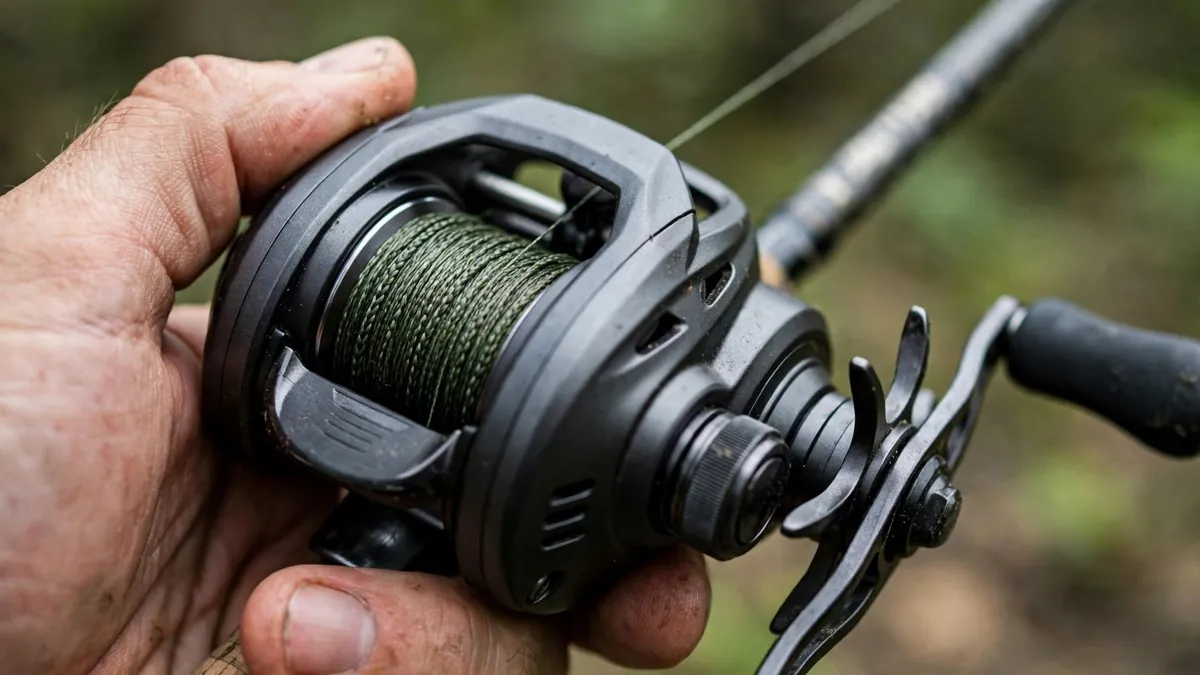
Many modern baitcasters have tie-through holes or slots in the spool arbor, sometimes with a rubber band or textured ring. Thread the braid through a hole and tie off, and the mechanical connection stops all slipping. Check your reel’s manual or look at the spool: if you see holes, you are set.
2. You use the tape method
A wrap or two of electrical tape over the arbor knot gives braid a textured surface to dig into. This is the most popular no-backing method, and it works. Details below.
3. You never hook anything big
I am half joking, but there is truth in it: slip happens under load. Light tackle, small fish and gentle pressure may never expose the problem. But the first strong run will, and you do not get to choose when that happens.
If none of the first two apply, use backing. It is cheap insurance.
Method 1: mono backing (the standard)
This is what I do on every braid setup, and what most experienced anglers recommend. It solves the slip problem completely and saves money, because braid is expensive and the bottom half of a full spool never sees daylight.
Steps
1. Tie mono to the spool. Use cheap monofilament in a similar diameter to your braid. An arbor knot is fine; mono grips on its own.
2. Wind on 50 to 75 yards. On a standard low-profile baitcaster, that covers the arbor and builds a base. On big round reels, use more. You want the finished spool filled to about 1/8 inch below the lip once the braid is on.
3. Join the braid with a double uni knot. The double uni is slim, strong and easy to tie. Trim the tags close so the knot passes through the guides cleanly.
4. Fill with braid under tension. Keep steady thumb pressure as you wind so the line packs tightly. A loosely spooled reel digs and backlashes more.
The double uni knot will sit buried in the spool and never touch a guide during normal fishing, so its slight bulk does not matter.
Method 2: electrical tape (the shortcut)
If you want a full spool of braid, or you just do not want to mess with joining knots, tape is the answer.
Steps
1. Tie the braid to the spool with an arbor knot and pull it snug.
2. Wrap electrical tape around the spool once or twice, directly over the knot. Wrap it in the same direction the line will wind, so winding tightens the tape instead of peeling it.
3. Start spooling braid over the tape under firm tension.
The braid digs into the tape instead of sliding on bare metal. One caution: use plain electrical tape, not duct tape or masking tape, which leave residue. And replace the tape each time you respool; old tape gets gummy.
I have fished the tape method for entire seasons without a hint of slip. It is simple, it works, and it costs pennies.
Method 3: tie through the spool holes
If your spool has holes or slots in the arbor, thread the tag end of the braid through one and tie your knot. The line is now mechanically locked to the spool and cannot slip, period.
One word of caution I have picked up from other anglers: on some spools the holes have sharp, unpolished edges inside that can abrade braid over time. After tying through, give the line a firm pull and inspect it. If you see fraying, add a wrap of tape over the hole area as insurance.
What happens if you skip all of this
Three things, in order of likelihood:
The spool spins under load
This is the classic failure. A strong fish pulls, the drag engages, and instead of line peeling off the spool, the whole line bed rotates around a stationary spool. You lose the fish and often end up with a tangled mess.
Braid digs into itself
Loosely spooled braid, which is what you get when the base layer never cinched down, digs into itself on hard pulls. The next cast buries the line deeper, and eventually you are picking out a backlash that feels welded together.
You waste expensive line
A full spool of braid that cannot be trusted is worse than a half spool done right. Backing lets you use half as much braid per fill, which means twice as many fresh spools from one filler spool.
The fix takes five minutes. There is no good reason to skip it. Our full walkthrough on how to spool a baitcasting reel covers the whole process, and if things do go wrong, here is how to remove backlash from a baitcaster without losing your mind.
Frequently asked questions about braid and backing
Can you put braid directly on a baitcaster spool?
You can, but braid slips on a smooth spool because it has almost no stretch and does not bite into the arbor. Without backing or tape, the whole spool of line can spin when a fish pulls. Use mono backing, electrical tape or a braid-ready spool instead.
Why does braid slip on a baitcaster?
Braid is slick and does not stretch, so an arbor knot tied directly to a smooth metal spool cannot grip. Under load the knot slides and the line bed rotates around the spool. Mono and fluorocarbon grip the spool because they stretch and bite down.
Is electrical tape as good as mono backing for braid?
For preventing slip, yes. A wrap or two of electrical tape over the arbor knot gives braid something to dig into and stops rotation. Mono backing has one extra benefit: it fills the spool cheaply so you use less expensive braid.
How much mono backing should I use under braid?
Enough to cover the spool arbor plus a little more, typically 50 to 75 yards on a standard baitcaster, more on big round reels. The goal is a full spool when the braid goes on: fill to about 1/8 inch below the spool lip for best casting.
What is a braid-ready spool?
A braid-ready spool has holes, slots or a textured rubber arbor band that braid can grip directly. If your spool has tie-through holes, you can tie braid through a hole and skip backing, though many anglers still add tape for insurance.
Can I use braid without a leader on a baitcaster?
Yes, for heavy cover and muddy water. In clear water, a mono or fluorocarbon leader helps because braid is highly visible. A leader also adds a little stretch and abrasion resistance near the lure.
Keep learning
More line and reel setup guides:
Affiliate disclosure: As an Amazon Associate, baitcastingreelz.com earns from qualifying purchases. This does not change the editorial selection criteria. “Buy From Amazon” buttons take you to Amazon; product availability and pricing can change.