How to Skip a Lure with a Baitcaster: The Cast, the Settings and the Drills
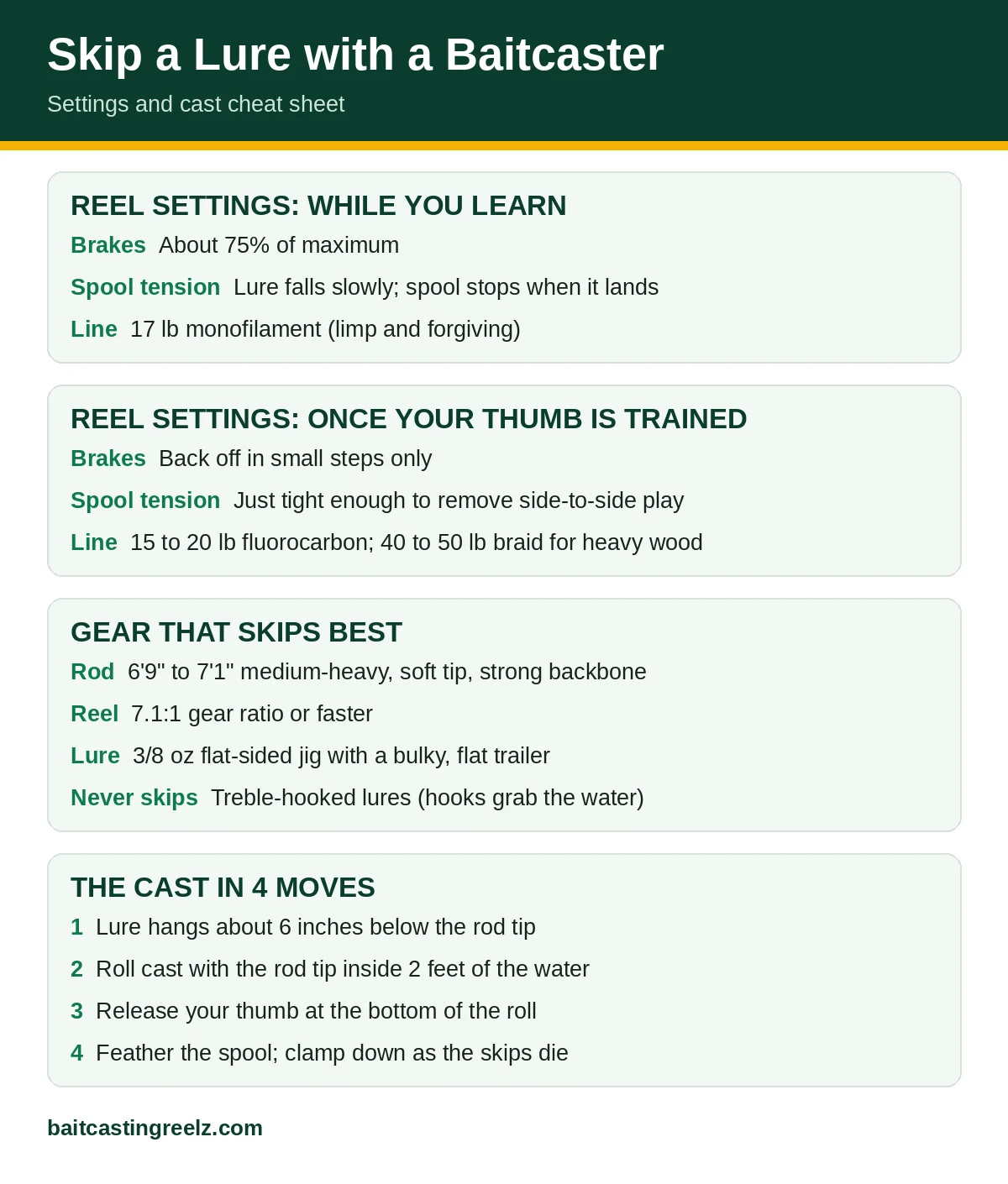
To skip a lure with a baitcaster, make a low, flat roll cast instead of a normal cast. Reel the lure up to about 6 inches below the rod tip, keep the rod tip within 2 feet of the water, and roll your wrist so the lure swings in a low circle. Release your thumb at the bottom of the roll, so the lure leaves flat and fast, then feather the spool with your thumb while it skips and clamp down the moment the skips die. Start with your brakes around 75 percent, and your spool tension set so the lure falls slowly. That is the cast. The rest of this guide makes it repeatable.
Skipping looks like a trick shot, and I treated it that way for years. Then I watched an older angler slide a jig deep under a dock I had been casting at all morning, and hook the best fish of the day. Skipping is not a trick. It is how you reach bass that live where a normal cast cannot go.
Why Skipping Works So Well
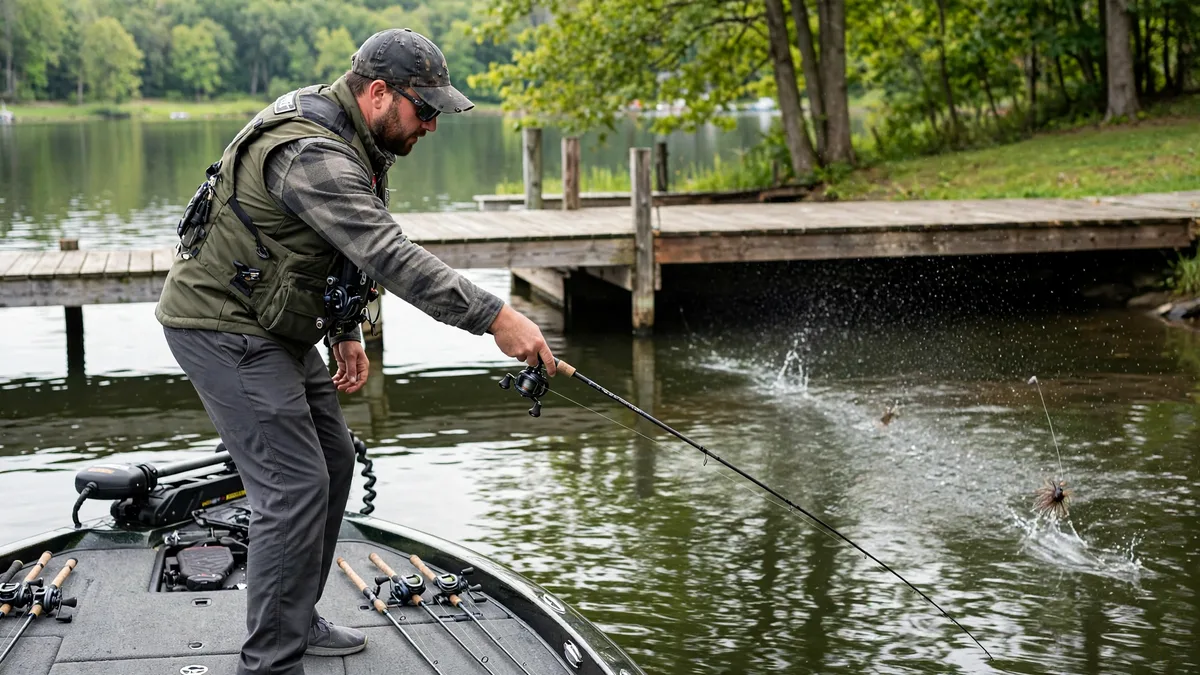
A normal cast lands in front of a dock, a pontoon boat or an overhanging tree. The fish holding in the shade behind those front posts never see it. A skipped lure travels on, sliding into the dark water underneath. Boat docks, floating platforms, boat lifts, low bridges and overhanging limbs all hold bass that get very little pressure, because most anglers cannot put a bait in front of them.
Spinning gear can skip light, weightless plastics, but not the heavy jigs and strong line dock fishing demands, and it cannot winch a hooked fish out of the posts as quickly. A baitcaster can, which is why this cast is worth learning. New to baitcasters? Start with our guide on getting your baitcaster set up, first, then come back to the skip.
Gear and Reel Settings for Skipping
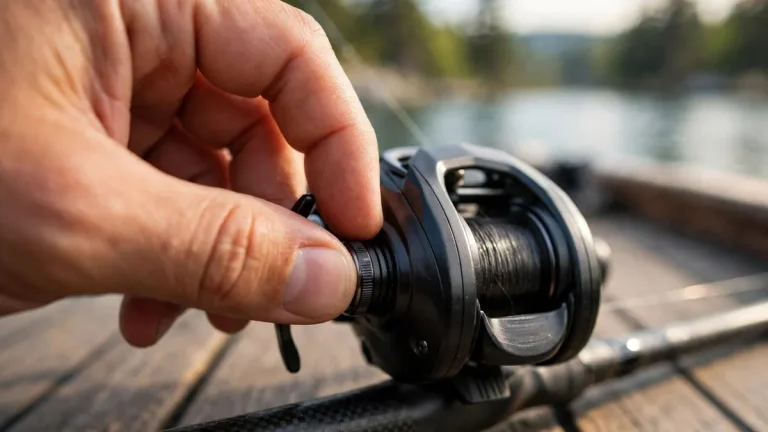
You do not need a special skipping reel. Almost any modern baitcaster will skip well once it is set up for the job. Think of it as two stages: the brakes act as training wheels first, then your thumb takes over. Experienced skippers end up fishing with brakes low or off. If you have never set brakes and spool tension from scratch, our walkthrough on adjusting brakes and spool tension covers the basics first.
| Setting | While you learn | Once your thumb is trained |
|---|---|---|
| Brakes | About 75 percent of maximum | Back off in small steps, only while casts stay clean |
| Spool tension | Lure falls slowly, and the spool stops when the lure lands | Just tight enough to remove side to side play in the spool |
Rod. Use a medium-heavy casting rod from 6 feet 9 inches to 7 feet 1 inch, with a soft, forgiving tip and a strong backbone. The soft tip loads on a short, low roll and starts the lure flat, while the backbone sets the hook and moves fish away from posts. A rod that is too long for your height forces a wide sidearm swing and ruins the trajectory, so shorter anglers should stay at the short end of that range. Our rod guide guide explains power and action ratings.
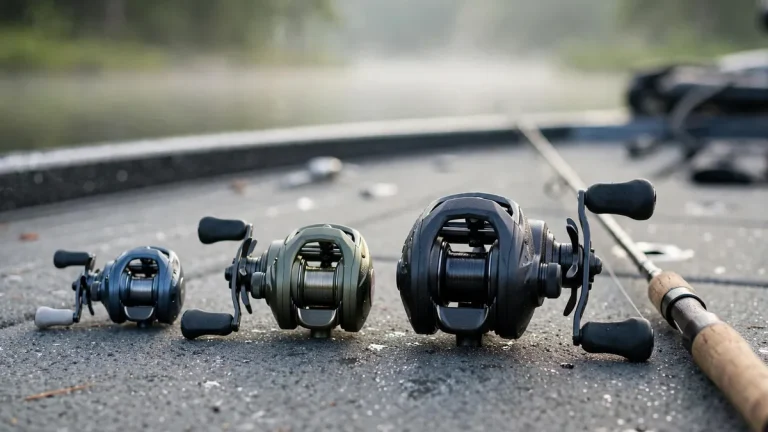
Reel. Pick a gear ratio of 7.1:1 or faster. A fast reel picks up slack quickly and keeps a hooked bass coming toward you instead of wrapping around a post.
Line. Learn on 17 pound monofilament: it is limp and forgiving, and learning backlashes pick out of it easier than out of fluorocarbon. Once the cast feels natural, fish docks on 15 to 20 pound fluorocarbon for its abrasion resistance around posts and metal. Around heavy wood cover, go to 40 to 50 pound braid. Our chart on which line for each technique breaks down line choice by technique.
Lure. Flat is everything. The classic teacher is a 3/8 ounce flat-sided jig with a bulky, flat trailer: it planes across the surface like a flat stone. Flat soft plastics on a pegged Texas rig skip well, as do hollow body frogs. Leave treble hooked lures behind. Swinging treble hooks grab the water and kill the skip dead. Heavier is not better: 3/8 ounce is all anglers need, and it is easier to keep flat. The models in our roundup of the the jig reels we recommend pair well with these baits.
The Skip Cast, Step by Step
If your normal cast is not solid yet, work through our guide on casting basics first. The skip cast is a short, low roll cast, and it breaks down into six moves.
- Shorten up. Reel the lure until it hangs about 6 inches below the rod tip. A short drop gives you control and stops the lure swinging wide.
- Pick the entry spot, not the target. Aim at the flat water just in front of the dock opening, and keep your eyes locked on it. The lure travels to where your eyes are.
- Start the roll. Hold the rod out to your casting side, tip low, elbow tucked in. Roll your wrist so the lure swings in a low circle under the rod tip, the underhand motion of a submarine pitcher, or of a kid skipping stones.
- Release at the bottom. Let your thumb off the spool at the bottom of the roll, before the rod tip starts to rise. The lure should leave almost parallel to the water, fast and flat. Casting harder pushes the lure down and steepens the angle, and a steep lure digs in instead of skipping.
- Feather the spool. Your thumb never leaves the spool. It rides the spool through the skip, matching spool speed to lure speed, and your rod tip lifts slightly as the lure travels to keep the line off the water. This thumb work is the heart of the cast; our guide on keeping backlashes at bay goes deeper on training it.
- Stop the spool and start fishing. The moment the skips die out and the lure settles, clamp your thumb down, engage the reel and take up the slack. A lure sitting still on a slack line under a dock is a lure a bass can inspect and refuse.
The close range option: the pitch skip. For low cover almost on top of you, let out line until the lure hangs about level with your reel, lower the rod tip, and sweep the rod in a low backhand motion instead of upward. Release at the bottom of the sweep, and the jig slides under low limbs and walkways where a roll cast has no room to form.
Skipping from a kayak or the bank. Most skipping photos show an angler standing on a bass boat deck, but the cast works from low down too. Sit or stand as tall as you safely can, keep the roll compact, and start with shorter skips. Your lower release point helps the flat trajectory; you just have less room for error, so stay on the learning settings longer.
Three Drills That Build the Cast
Do these in order. Skipping ahead is how anglers end up picking out backlashes under a dock in the wind.
Drill 1: Open Water, Taped Spool
Start on calm, open water with nothing to hit. Tie on an old jig, set the learning settings from the table, make one short cast, then press a small strip of electrical tape across the line on the spool and reel the line back over it. Now every backlash you tie stops at the tape, and picking it out takes seconds. Work through a few dozen relaxed casts, focused only on the release.
Drill 2: Count Your Skips
Once the motion feels smooth, aim at a point about halfway to where you want the lure to end up, and count the skips. Two skips means your entry angle is still too steep. Three or more skips means the lure is leaving flat. Stay until three plus skips is your normal cast. Distance arrives later on its own.
Drill 3: Shrink the Window
Move to a real dock, but start easy: skip under the widest, tallest opening you can find. Then work one post deeper, and one opening narrower, session by session. On days you cannot get to the water, rehearse the roll at home: stand on a chair or a sturdy bucket on a driveway and skip an old jig across the concrete. If it glides and skips, your motion is right. If it slams down and bounces twice, it will do the same on the water.
What Is Going Wrong: Skipping Errors and Fixes
Almost every failed skip fails in one of these ways. Diagnose yours before you change anything else.
- The lure digs in and stops dead. Your entry angle is too steep: you are releasing too late or holding the tip too high. Lower the tip, release earlier, and think flat, fast and smooth.
- The lure sails into the dock face or over the target. You are throwing too hard or releasing too high. A long, fluid sweep skips farther than a muscled throw.
- Backlash the instant the lure touches the water. The lure slows suddenly at first contact, but your spool is still spinning at full speed. Your thumb must be back on the spool, feathering it, at first contact. If it still overruns, add a touch more spool tension.
- Backlash halfway through the skip. Your thumb came completely off the spool, or you backed the brakes down too far, too soon. Raise the brakes one step and keep feathering through the whole skip. Most classic beginner mistakes show up in this cast first.
- One bounce, then nothing. The lure is not flat enough. Check the bait: a round headed jig or a treble hooked lure will never skip well. Switch to the flat sided jig and bulky trailer.
After the Skip: Fishing the Lure Under the Dock
The skip is only the delivery. What you do in the next ten seconds decides whether it catches anything. Let the jig fall on a tight line, then start it moving. Under most docks, strikes come early, on the fall or in the first couple of movements, because the fish heard the bait come in. A short hop or a slow drag both work; leaving the bait sitting still rarely does. This is where the fast reel pays for itself: the moment a bass eats, you have to move it away from the posts before it wraps you, so reel fast and steer the fish into open water.
One tactical warning from my own early dock fishing: do not make two hopeful skips at the front of a dock and then leave. That is the most common dock mistake of all. Work the whole structure, the walkway, the slips, the shaded corners and both sides, from more than one angle. The back corners are where the unpressured fish live, and reaching them is the entire point of learning this cast.
Frequently Asked Questions
Can a beginner learn to skip with a baitcaster?
Yes. The cast looks advanced, but the motion is a low roll cast. Start with brakes at about 75 percent, learn on forgiving 17 pound monofilament, tape your spool, and practise in open water before you aim at a dock. Expect backlashes early; they are part of the tuition. Our beginner tips cover the rest.
What is the best lure for learning to skip?
A 3/8 ounce flat-sided jig with a bulky, flat trailer. It planes across the surface like a flat stone and is heavy enough to control. Flat soft plastics on a pegged Texas rig and hollow body frogs also skip well. Avoid treble hooked lures, because the swinging hooks grab the water and stop the bait.
Should the brakes be on or off when skipping?
Start with them on. Set the brakes to about 75 percent of maximum and the spool tension so your lure falls slowly. Experienced skippers run their brakes low or off because their thumbs do all the work. Back the brakes off in small steps as your casts stay clean.
Why do I backlash every time my lure hits the water?
Because the lure slows the instant it touches the surface, while your spool keeps spinning at full speed. Line piles up faster than the lure can pull it away, and that pile is the backlash. The fix is thumb timing: be back on the spool, feathering it, at first contact, and clamp down as the skips die.
What line should I use for skipping under docks?
Learn on 17 pound monofilament, because it is limp and forgiving. For dock fishing, 15 to 20 pound fluorocarbon handles dock posts and metal edges well. Around heavy wood cover, 40 to 50 pound braid gives you the strength to pull fish out.
How far under a dock should a skip go?
As far as the shade reaches. Even finishing a few feet past the front posts puts you in water most anglers never fish, and skilled dock anglers work jigs 15 to 20 feet back under large docks. Distance comes from a flat entry angle and a smooth roll, not from throwing harder.
The Bottom Line
Skipping a lure with a baitcaster comes down to three habits: a low, flat roll cast, a thumb that never leaves the spool, and settings that forgive you while you learn. Set the brakes high, tie on a flat jig, count your skips in open water, and shrink the window each trip. The fish at the back of the dock have watched a thousand lures land in front of them. Be the angler whose lure arrives from inside the shade.