Tackle Fundamentals · US Guide
Understanding the Different Types of Fishing Reels
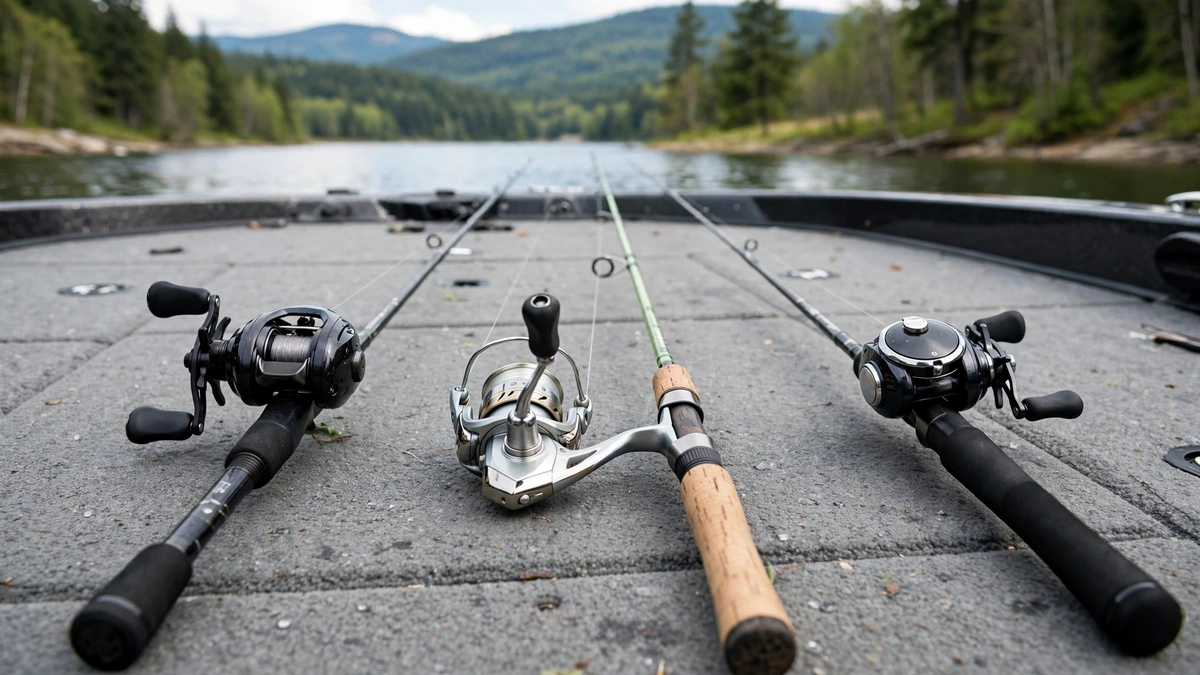
The different types of fishing reels, spincast, spinning, baitcasting, fly and conventional; each exist because they solve a different casting problem. Match the reel type to the lure weight, line and technique you actually fish, and tackle shopping gets simple. This guide compares all six major types so you can buy once and buy right.
By Natalia · Updated 31 October 2026 · 15-minute read
Spincast: push-button simplicity; best for kids and absolute beginners.
Spinning: easiest versatile casting; best for light lures and finesse.
Low-profile baitcasting: precise power casting; best for bass techniques.
Round baitcasting: high line capacity; best for big baits, musky and saltwater.
Fly: line-weight casting; best for fly presentations.
Conventional/trolling: winch-like strength; best for trolling and deep dropping.
Quick choice: start with the technique
Reel shopping goes wrong when it starts with brand or price. Start with these two questions instead: how heavy are the lures you throw most, and how much casting control do you want? Light lures and easy casting point to spinning. Medium-to-heavy lures, precise placement and power around cover point to baitcasting. Everything else is refinement.
Six major types of fishing reels
1. Spincast reels
Easiest to use
The line sits inside a closed cone; you press a button, swing, and release. There is almost no learning curve, which makes spincast the classic first reel for kids and casual anglers. The trade-offs are real, though: limited casting distance, modest drag quality, and less durability under heavy use. Fine for bobber fishing off the dock, not a tool for serious lure fishing.
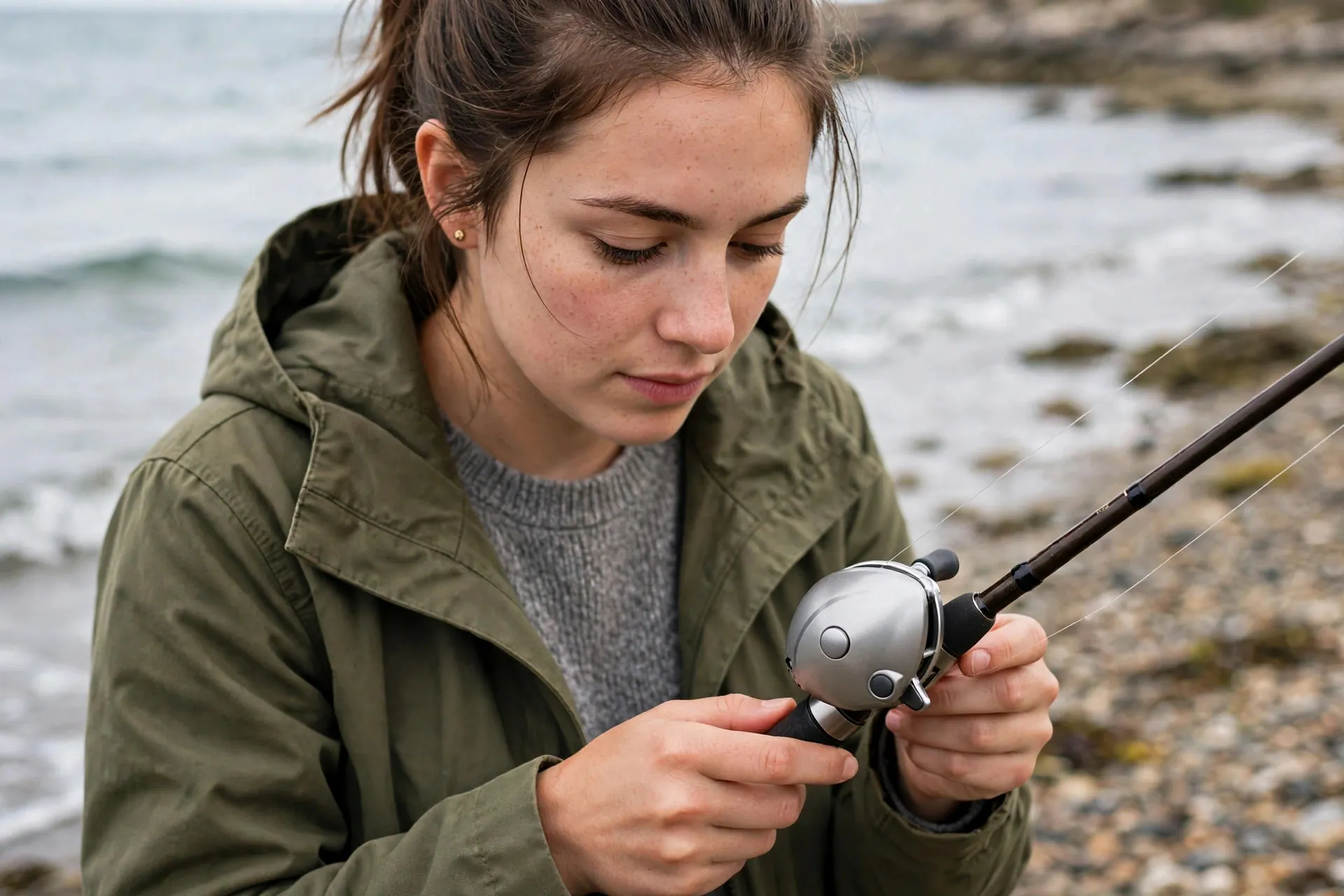
Strengths: push-button casting, almost no tangles and low cost.
Weaknesses: short casting distance, modest drag and limited line capacity.
Best use: bobber fishing from a dock, panfish and first outings for kids.
Typical price: about $20 to $60 for a basic reel.
2. Spinning reels
Most versatile
Line hangs below the rod on a fixed spool, peeling off freely during the cast, which is why spinning reels cast light lures farther and with fewer tangles than any other type. They dominate finesse presentations: drop-shotting, shaky heads, light jigs, trout spinners. Sizes run from tiny 500-series ultralights to 8000-series surf and saltwater models (see our spinning reel sizes guide). The main limitation is line management with heavy line and less direct casting control than a baitcaster. When you are ready to buy, our roundup of the best spinning reels compares the current top models by size and budget.
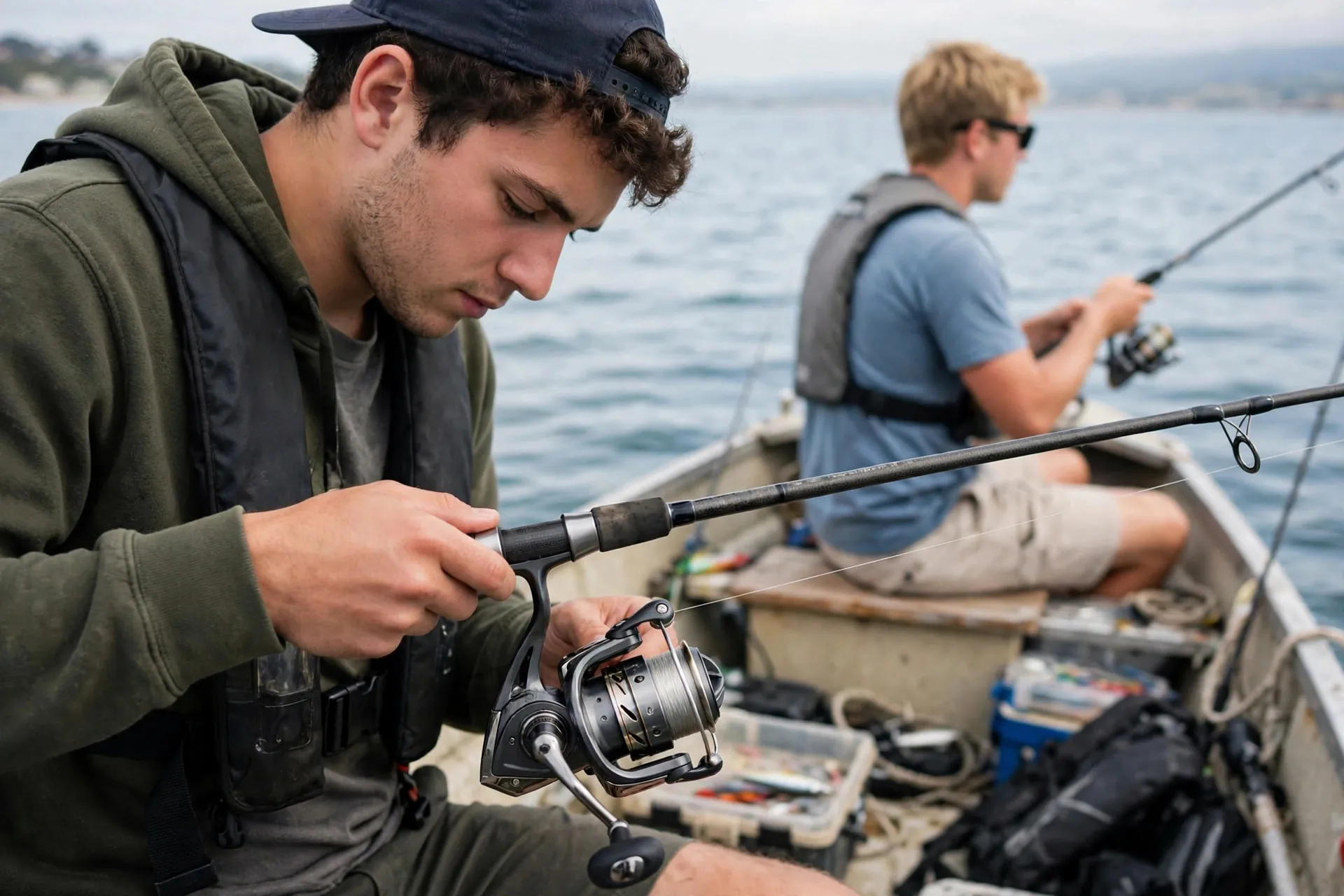
Strengths: casts light lures far, handles finesse presentations well and is easy to learn.
Weaknesses: line twist with light line, less direct thumb control than a baitcaster and heavy line is harder to manage.
Best use: trout, panfish, finesse bass, light inshore saltwater and surf fishing with larger sizes.
Typical price: about $30 to $150 for most freshwater reels, with saltwater models often higher.
3. Low-profile baitcasting reels
Precision power
The spool sits on top of the rod and turns during the cast, giving your thumb direct control over every inch of line, the source of both the baitcaster’s precision and its infamous backlash. Low-profile (palmable) baitcasters are the standard for bass fishing: flipping, pitching, frogging, cranking and skipping docks. They handle heavier line beautifully and come in gear ratios from power-oriented 5.x:1 to blazing 8-10:1. The cost is a real learning curve. Our baitcasting reel vs spinning reel comparison breaks down exactly when each wins.

Strengths: precise casting, strong drag and direct thumb control, handles heavy line and cover.
Weaknesses: backlash while learning, needs brake and spool tension setup and is poor for very light lures except BFS models.
Best use: bass fishing with jigs, frogs, flipping, pitching and crankbaits.
Typical price: about $60 to $200 for a solid midrange reel.
4. Round baitcasting reels
Capacity & muscle
The original baitcaster shape: a round frame holding a wide, deep spool. Round reels carry far more line than low-profile models, which makes them the choice for big swimbaits, musky bucktails, catfish rigs and inshore saltwater work where long runs are possible. The Shimano Tranx and Penn Fathom families live here. They cast well but palm less comfortably than low-profile reels for all-day use.
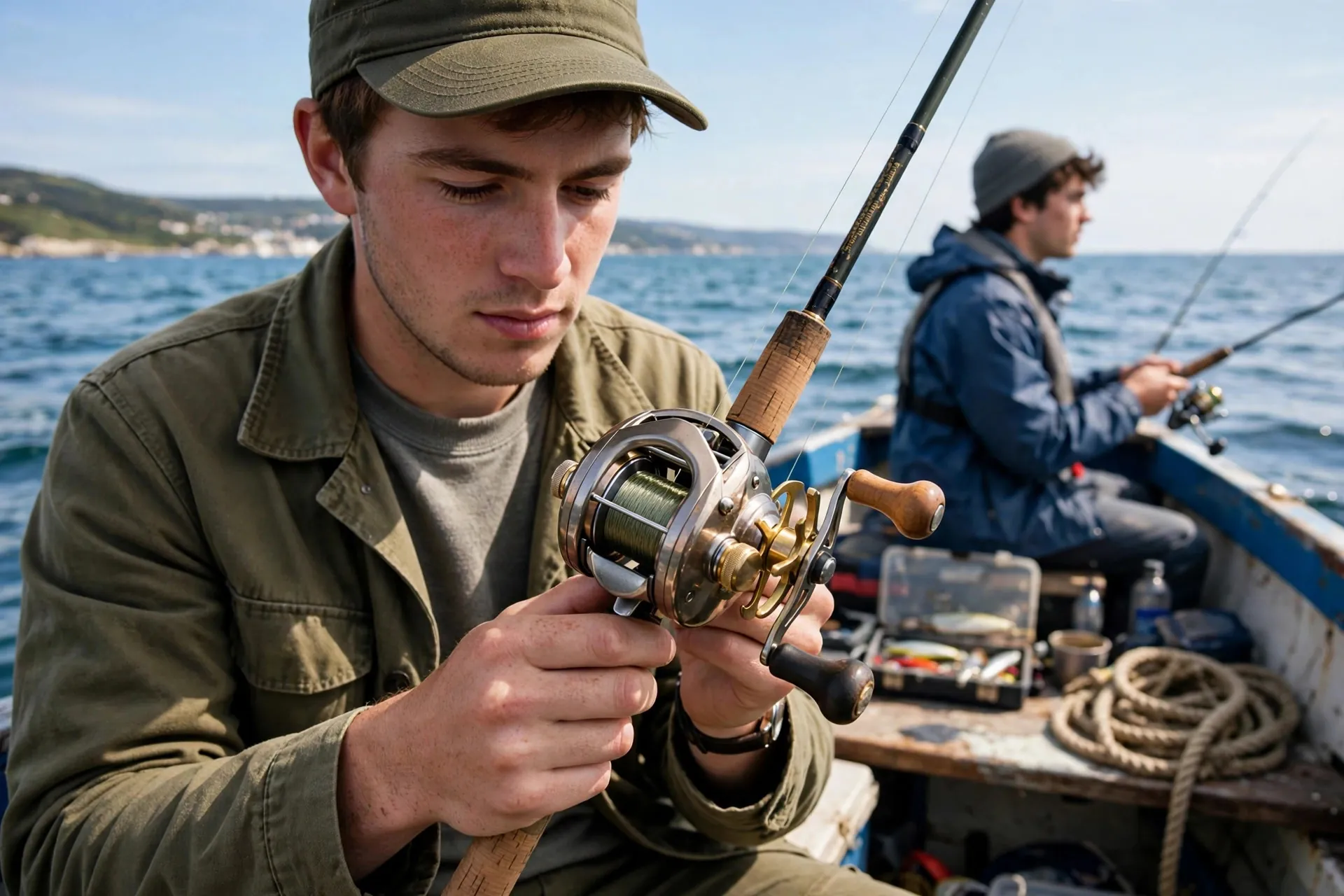
Strengths: high line capacity, strong cranking power and durable frames.
Weaknesses: larger and less comfortable to palm all day and heavier than low-profile models.
Best use: big swimbaits, musky, catfish and inshore saltwater.
Typical price: about $80 to $250, with larger saltwater models higher.
5. Fly reels
Fly presentations
A different discipline entirely: the weight of the fly line (not the lure) loads the rod, and the reel mostly stores line and fights fish. Fly reels are simple single-action drums sized to the rod weight. If your fishing is dry flies, nymphs and streamers, this is your world, but it is a separate skill set from conventional casting. Fly anglers who also fish conventional tackle for trout can compare our picks for the best trout spinning reels.
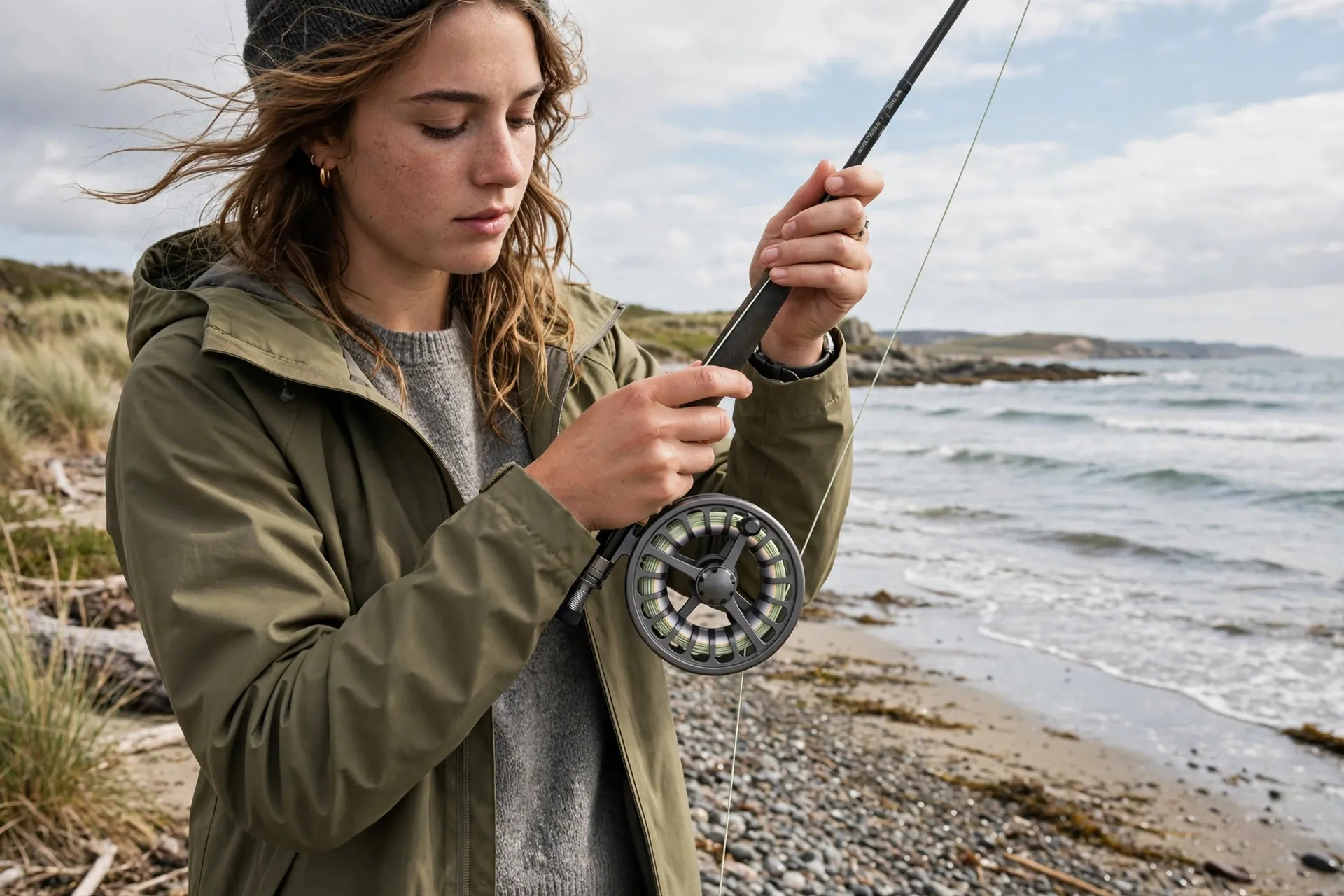
Strengths: presents light flies delicately, simple drag and line storage and is matched to fly rod weights.
Weaknesses: needs a separate casting skill, is not made for lure casting and has limited drag power on light models.
Best use: trout, panfish and other species taken on dry flies, nymphs and streamers.
Typical price: about $50 to $200 for a starter to midrange reel, with premium reels higher.
6. Conventional / trolling reels
Deep & heavy duty
Built like winches for trolling, bottom fishing and deep dropping: star or lever drags, huge line capacity, frames that do not flex under serious load. Levelwind versions manage line lay automatically. Overkill for casting lures, essential when the fish weighs more than your tackle bag. For heavy saltwater work with casting gear, see our picks for the best saltwater baitcasting reels.
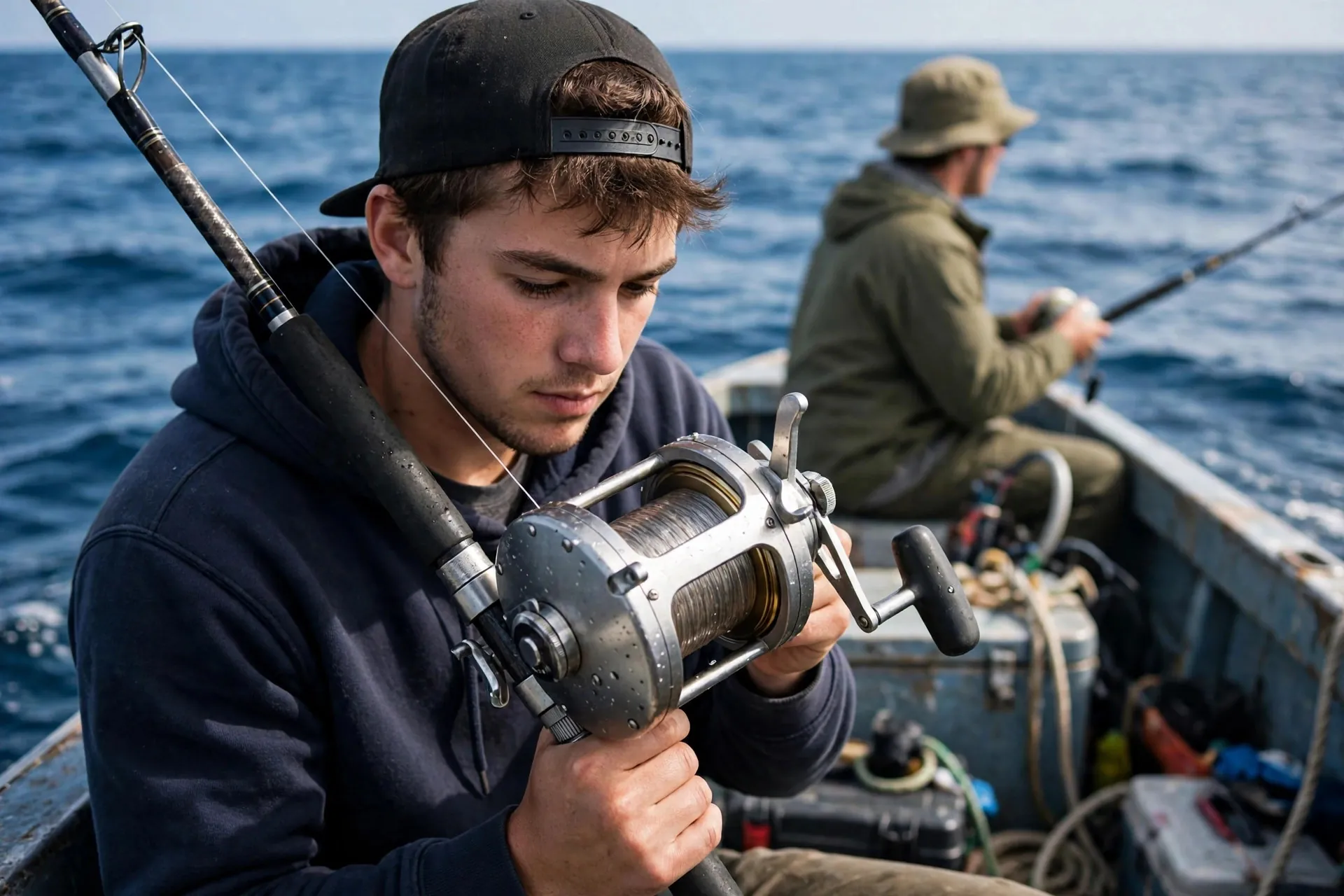
Strengths: maximum line capacity and winching power, strong lever or star drags and frames built for heavy loads.
Weaknesses: not made for casting lures, heavy and bulky and overkill for most freshwater fishing.
Best use: trolling, bottom fishing, deep dropping and big game saltwater.
Typical price: about $80 to $300, with large big game reels higher.
New to baitcasting?
A starter kit with a forgiving rod, reel and line takes the guesswork out of your first baitcasting setup, matched components behave far better than random parts.
Compare fishing reel types
| Reel type | Learning curve | Best line types | Lure weight range | Casting distance | Best species/use |
|---|---|---|---|---|---|
| Spincast | Easiest | Monofilament | Light, up to about 1/4 oz | Short | Kids, panfish, dock bobber fishing |
| Spinning | Easy | Monofilament, fluorocarbon, braid | Ultralight to medium, about 1/32 to 3/4 oz | Long, especially with light lures | Trout, panfish, finesse bass, light saltwater |
| Low-profile baitcaster | Moderate to steep | Fluorocarbon, braid, monofilament | Medium to heavy, about 1/4 to 2 oz | Long with medium to heavy lures | Bass, cover fishing |
| Round baitcaster | Moderate to steep | Braid, monofilament, heavy fluorocarbon | Medium to heavy, about 1/2 oz and up | Long with heavy baits | Musky, catfish, big baits, inshore saltwater |
| Fly | Separate skill | Fly line, with monofilament or fluorocarbon leader | Flies, not lure weight | Short to medium, by fly line weight | Trout, panfish, fly presentations |
| Conventional/trolling | Not a casting reel | Monofilament, braid | Heavy rigs and trolled baits | Not rated for casting | Trolling, deep dropping, big game |
Which type should you buy?
Use your situation, not a brand list, to pick a starting point.
- Total beginner: Start with a spinning reel. It casts light lures with little practice and is forgiving when you are learning. For a young child, a spincast reel is even simpler. See our best spinning reels roundup to compare models by size and budget.
- Bass angler: Choose a low-profile baitcasting reel for jigs, frogs, flipping and pitching around cover, where thumb control and heavier line matter. See our best baitcasters roundup.
- Trout and panfish: Choose a spinning reel for light lures, trout spinners and finesse presentations. Check spinning reel sizes to match the reel size to your rod and line.
- Saltwater: Choose a sealed spinning reel for light inshore casting, a round baitcasting reel for bigger baits, or a conventional reel for trolling and deep dropping. Buy a salt-rated model and rinse it after every trip.
- Budget: Start with a spincast reel for the lowest cost, or a mid-priced spinning reel for the best value across techniques. Spend on a solid midrange reel rather than the cheapest model in a type.
Once you choose a type, spool it correctly before your first trip. Our guides show how to spool a spinning reel and how to spool a baitcaster reel.
How to choose without overbuying
- Name your primary technique. “Bass fishing with jigs and Texas rigs” is a better brief than “fishing.” Technique dictates reel type more than anything else.
- Match lure weight to the reel’s strength. Consistently throwing 1/8 oz and under? Spinning (or a BFS baitcaster later). Mostly 3/8 oz and up? A low-profile baitcaster earns its keep.
- Be honest about the learning curve. If you want to fish effectively this weekend with zero practice, spinning wins. If you will invest a few practice sessions, a baitcaster’s control is worth it, see our baitcaster tips for beginners.
- Consider a two-reel kit. A medium spinning combo plus a medium-heavy baitcasting combo covers roughly 90% of freshwater lure fishing. Most serious anglers end up here anyway.
- Do not overspend on your first reel of a type. A mid-priced reel from an established brand (Shimano, Daiwa, Abu Garcia, Lew’s, Penn) outperforms a cheap no-name reel and resells better if you switch styles.
Three reel terms worth understanding
Gear ratio
Spool rotations per handle turn. Low ratios (5.x:1) winch with power for deep cranking; mid ratios (6-7:1) are the all-around choice; high ratios (8-10:1) pick up line fast for frogs, flipping and burning baits. Also check IPT, inches per turn, which tells you the actual line pickup speed.
Drag
The friction system that lets a fighting fish pull line without breaking it. Quality matters more than the maximum number: smooth carbon washers with low startup inertia protect light lines and prevent pulled hooks. Set it to roughly a quarter to a third of your line strength.
Line capacity
How much line the spool holds, quoted as lb-test/yards (e.g., 12/110). You need enough for your longest casts plus break-offs and re-ties. Round and conventional reels carry far more than low-profile baitcasters; match capacity to the species and water you fish.
Freshwater vs saltwater: does the reel type change?
Saltwater punishes tackle with corrosion, so salt-rated reels add sealed or shielded bearings, corrosion-resistant frame coatings and stronger drags, at higher prices. A freshwater baitcaster rinsed after every salt trip survives occasional inshore use, but regular saltwater anglers should buy reels designed for it: sealed low-profile models, round reels like the Penn Fathom, or dedicated inshore baitcasters. Whatever you fish, rinse with fresh water after salt exposure and never blast a reel with high-pressure spray, which drives salt past seals.
Read next
Going deeper on baitcasters specifically: baitcasting reel vs spinning reel, baitcasting reel parts explained, how to adjust your baitcasting reel, and how to cast a spinning reel. When you are ready to buy, our Best Baitcasting Reels for Beginners and Best Baitcasting Reels Under $100 roundups match reels to budgets and skill levels.
Frequently asked questions
What are the 4 main types of fishing reels?
The four main types are spincast, spinning, baitcasting and fly reels. Conventional and trolling reels are a fifth heavy duty group, and baitcasting is often split into low-profile and round models, which is why this guide covers six types in total.
What type of fishing reel is best for beginners?
A spinning reel is the best all-around beginner choice, easy casting, forgiving with light lures, and versatile across species. Spincast is simpler still for young kids. Choose a baitcaster when you are ready to invest practice time for its precision and power advantages.
What is the difference between a spinning reel and a baitcasting reel?
A spinning reel hangs below the rod and line peels off a fixed spool, so it casts light lures easily with little practice. A baitcasting reel sits on top of the rod and its spool turns during the cast, so your thumb controls the line for precise placement and heavier line, but it needs practice to avoid backlash.
Is a baitcaster better than a spinning reel?
Neither is universally better. Baitcasters win for casting accuracy, heavier line, and power techniques like flipping and frogging. Spinning reels win for light lures, finesse presentations, ease of use, and casting into wind. Most experienced anglers own both.
What type of fishing reel is best for bass fishing?
A low-profile baitcasting reel is the usual bass choice for jigs, Texas rigs, frogs and flipping around cover, because it gives precise placement and handles heavier line. A spinning reel is still the better pick for finesse bass techniques with light lures, such as drop-shotting.
What type of fishing reel is best for saltwater fishing?
Choose a salt-rated reel in the type that matches the technique: a sealed spinning reel for light inshore casting, a round or sealed baitcasting reel for bigger baits and inshore power, and a conventional reel for trolling and deep dropping. Rinse any reel with fresh water after salt exposure.
What does gear ratio mean on a fishing reel?
Gear ratio is how many times the spool rotates per single turn of the handle. A 7.1:1 ratio turns the spool 7.1 times per crank. Lower ratios give cranking power; higher ratios retrieve line faster. Check IPT (inches per turn) for the true line-pickup speed.
What is the difference between a low-profile and round baitcaster?
Low-profile baitcasters sit low on the rod and palm comfortably for all-day casting, the bass-fishing standard. Round baitcasters hold much more line and muscle through bigger fish and baits, suiting musky, catfish, big swimbaits and saltwater use.
Can one reel do everything?
Not well. A 2500-3000 size spinning reel or a 6.4:1 low-profile baitcaster each cover a wide middle ground, but extremes; ultralight trout lures, deep trolling, fly presentations; need purpose-built tackle. Two mid-priced combos beat one expensive compromise.
Affiliate disclosure: baitcastingreelz.com participates in the Amazon Associates Program and may earn from qualifying purchases. The optional link is for convenience and does not affect editorial guidance.