Reel Comparison · 2026
Shimano SLX DC vs Curado DC: Same Brakes, Different Reel
The Shimano SLX DC and Curado DC run the exact same I-DC4 digital braking system, so the Curado DC does not cast meaningfully farther, and it does not protect you from backlash any better. What the extra money buys is the retrieve: MicroModule gears, X-Ship, two more bearings, a CI4+ side plate, and a 200 size the SLX DC does not offer. If casting control is why you want a DC reel, the SLX DC gives you all of it for less. If you fish several days a week and feel every turn of the handle, the Curado DC earns its premium. Everything below is the spec-by-spec proof.

Specs head to head
Every number here is from Shimano’s published specifications and US retailer spec tables, checked in October 2026. Read the braking row first, because it decides most of this comparison before it starts.
| Spec | Shimano SLX DC 150 | Shimano Curado DC 150 |
|---|---|---|
| Braking system | I-DC4 digital, 4 external settings | I-DC4 digital, 4 external settings |
| Gear ratios (IPT) | 6.3:1 (26 in), 7.2:1 (30 in), 8.2:1 (35 in) | 6.2:1 (26 in), 7.4:1 (31 in), 8.5:1 (36 in) |
| Gearing | Brass main gear | MicroModule gear + X-Ship |
| Bearings | 4+1 S A-RB | 6+1 S A-RB |
| Body | Hagane aluminum frame, composite side plate | Hagane aluminum frame, CI4+ side plate |
| Spool | S3D aluminum, Super Free Spool | S3D aluminum, Super Free Spool |
| Weight | 7.6 oz, all ratios | 7.8 oz (7.9 oz XG) |
| Max drag | 12 lb (6.3:1), 11 lb (HG, XG) | 11 lb, Cross Carbon Drag |
| Mono capacity | 10/120, 12/110, 14/90 | 10/120, 12/110, 14/90 |
| Braid capacity (PowerPro) | 20/150, 30/135, 40/105 | 20/150, 30/135, 40/105 |
| Sizes | 150 only (right 150, left 151) | 150 and 200 (right and left) |
| US price (Oct 2026) | $224.99 | About $259.99 |
Three takeaways. First, the casting hardware is shared: same brake computer, same spool design family, identical line capacity. Second, the retrieve hardware is not shared at all: gears, bearing count, and pinion support all step up on the Curado. Third, the paper specs contain two small surprises in the SLX DC’s favor: it is lighter, and its 6.3:1 model is rated for a pound more drag. Neither surprise decides the comparison, but both are worth knowing before you assume the expensive reel wins every row. If ratios and IPT are still fuzzy, my gear ratios explained guide covers how to read them.
The two reels, one at a time
Shimano SLX DC 150
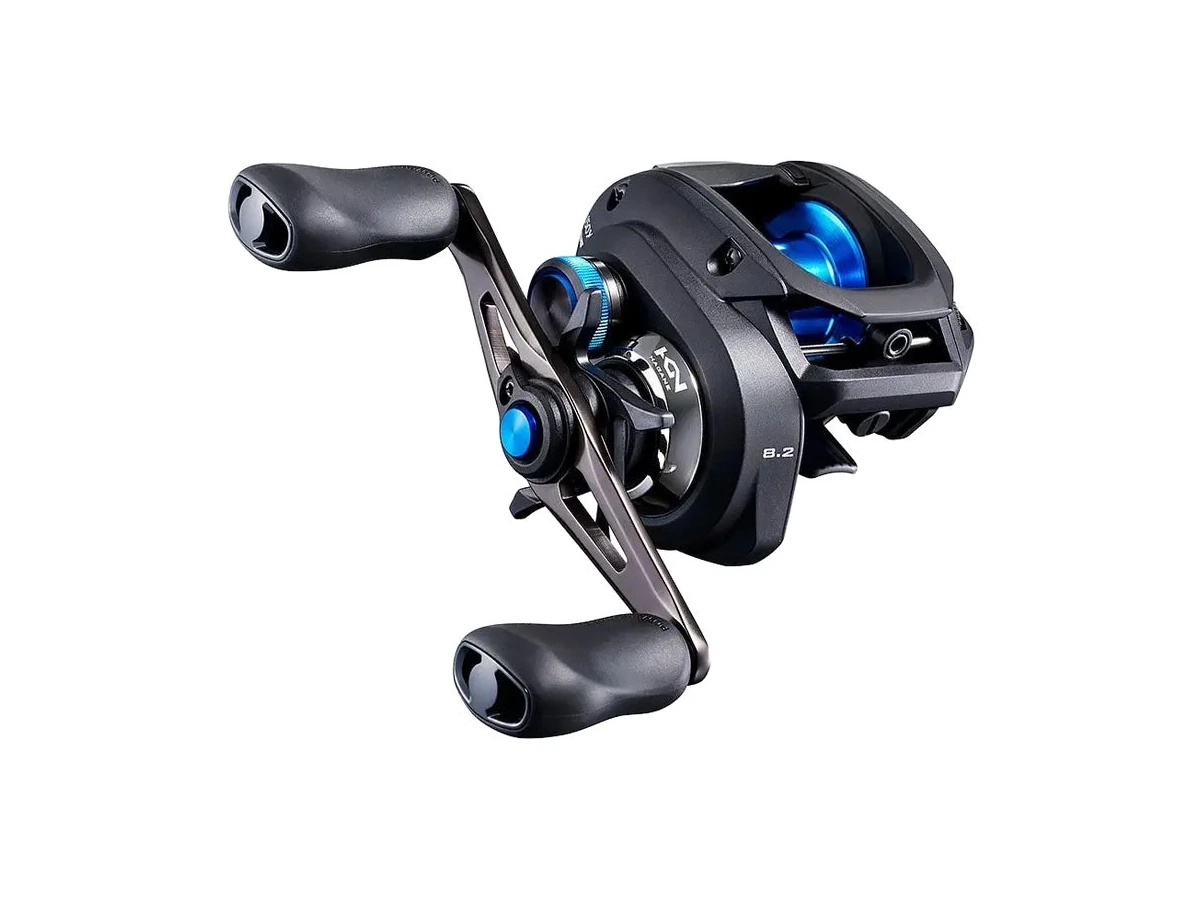
The SLX DC exists for one reason: it puts Shimano’s digital braking in a reel that costs what a good conventional reel used to cost. The frame is the same rigid Hagane aluminum design as the standard SLX, the spool is the balanced S3D design, and the brake is not a detuned version of the Curado’s system; it is the same I-DC4 with the same four settings. Shimano’s own retailer copy says it plainly: the SLX DC uses the same I-DC4 digital brake control system as the popular Curado DC reels.
Where the money was saved is the drivetrain. The main gear is brass, the bearing count is 4+1, and the side plate is composite rather than CI4+. None of that affects the cast. It affects how the reel feels on the retrieve and how tight it stays after seasons of use. For an angler fishing weekends, that trade is easy to accept, especially since the SLX DC is also the lighter reel at 7.6 ounces and its base model carries the higher drag rating.
The honest cons: the retrieve has more gear feel than the Curado DC, the lineup stops at the 150 size, so there is no big-capacity option for heavy line or swimbaits, and if you fish four or five days a week, you are exactly the user who will notice the simpler drivetrain. It also appears in my best baitcasting reels under $200 roundup from when it sold below that line; US retail has since moved to $224.99, which tells you how the whole DC market has shifted.
Shimano Curado DC 150
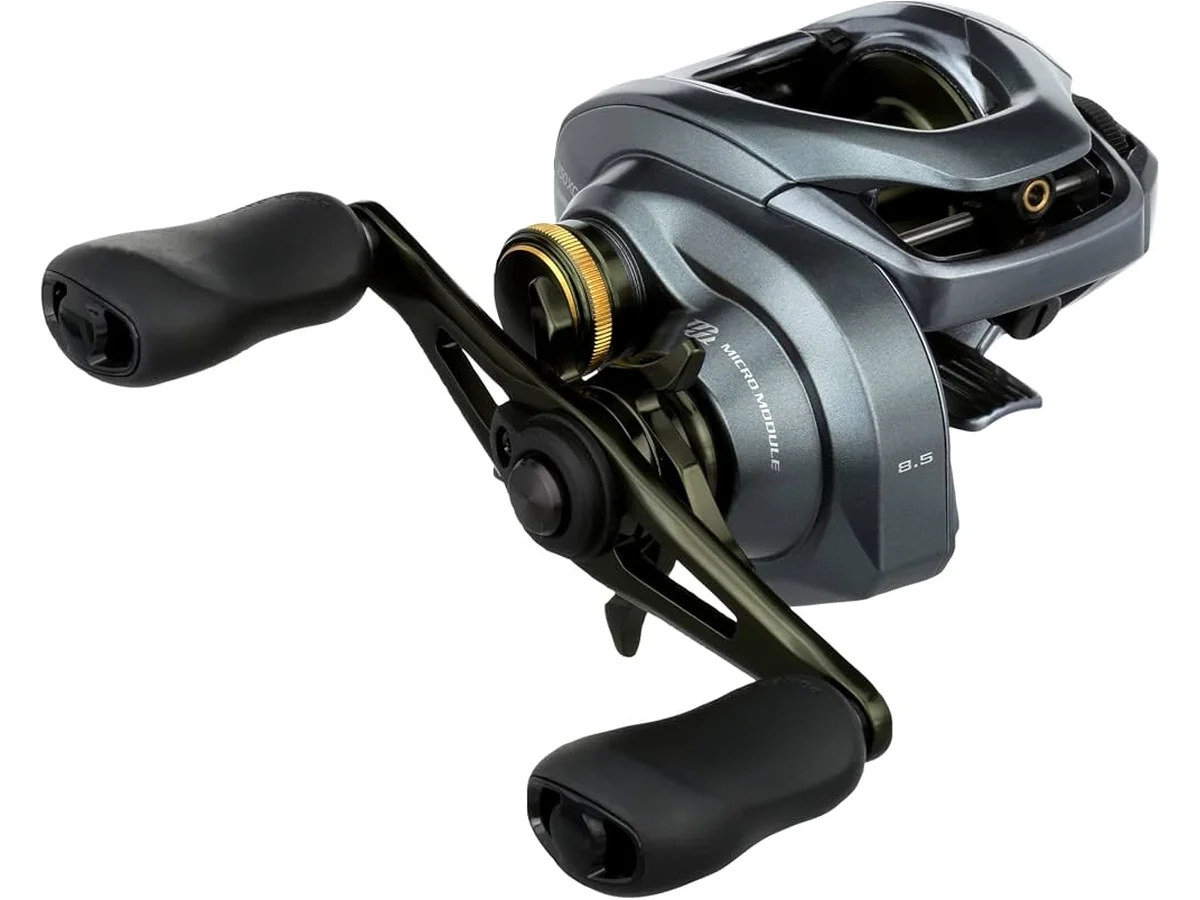
The Curado DC is the SLX DC’s braking system wrapped around a substantially better drivetrain. MicroModule gearing uses smaller gear teeth and more of them, so more teeth are in contact at any moment, which is where its smoother, quieter retrieve comes from. X-Ship supports the pinion gear with bearings at both ends, keeping it aligned with the drive gear under load, which is where its cranking power comes from. Add the Cross Carbon drag, six plus one shielded bearings, and the lighter, stiffer CI4+ side plate, and you have a reel built to feel new for longer.
It is also the only one of the two with a 200 size, which matters if you want more line capacity for bigger baits, heavier fluorocarbon, or inshore work. My full Shimano Curado DC review goes deeper on the reel on its own terms, including who should skip DC entirely.
The honest cons: it costs about $35 more than the SLX DC at current US retail and delivers nothing extra on the cast, it is slightly heavier, and its 11 lb drag rating is, on paper, a pound under the SLX DC base model. You are paying for refinement and longevity, and if your thumb is already educated, a conventional Curado costs less and gives you the same drivetrain without the electronics; my SLX A 150 review covers the budget end of that same argument.
The brakes are identical, and that is the story
I-DC4 works like this: a microcomputer in the side plate reads spool speed 1,000 times per second and applies exactly enough electromagnetic brake force to keep the spool from outrunning the lure. The system powers itself from the spool’s rotation, so there are no batteries to charge or replace. You choose one of four settings on an external dial: setting 1 for maximum distance, setting 2 as the general-purpose braid setting, setting 3 for fluorocarbon and stiffer lines, and setting 4 for maximum control in wind, with light lures, or when skipping.
That paragraph describes both reels, word for word, because Shimano sells one I-DC4 system, not a good one and a cheap one. This is why DC comparisons that score the two reels differently on “casting control” should be read with suspicion. The computer, the dial, and the settings are the same. If digital braking is the feature you are shopping for, and for most buyers of these two reels it is, the SLX DC delivers 100 percent of it. Both reels also sit at the top of my anti-backlash baitcasters roundup for exactly this reason, and if you want the underlying tech compared, my magnetic vs centrifugal brakes guide explains what DC replaced.
Casting: call it a tie, because the spec sheet does
Distance comes from the brake, the spool, the rod, the line, and the caster. The brake is identical. The spools are both S3D thin-wall aluminum designs with Super Free Spool, which supports the pinion on a bearing during the cast to cut spool-shaft friction. Line capacity is identical, so the same line sits at the same diameter on both. On paper there is simply nothing left to separate them.
The one genuine technical difference is X-Ship on the Curado DC. Shimano’s own description credits X-Ship with eliminating friction between the spool shaft and the gear, which it says improves casting performance with lighter lures. That is a plausible small edge at startup with light baits, and it is fair to give the Curado DC that point, attributed to the manufacturer. What it is not is a license to claim the Curado DC bombs lures far past the SLX DC. One comparison currently ranking for this matchup reports a five to eight foot Curado advantage from its own field testing; even taken completely at face value, that is a few percent on a typical bass cast, bought for the price difference between the reels. Most anglers should not pay for distance by the foot. Pay for the retrieve instead, because that difference is real.
Retrieve: where the Curado DC actually pulls away
Turn both handles and the comparison flips. The Curado DC’s MicroModule gears mesh with more, smaller teeth in contact, which spreads load and quiets the gear train; you feel it as smoothness, and you also feel more of what the lure is doing, because gear noise and vibration are what mask bottom contact and light bites on the retrieve. X-Ship keeps the pinion gear aligned when you are winching a crankbait or a hooked fish, so the power you put into the handle comes out at the spool instead of twisting into the frame. Two extra bearings support the moving parts the SLX DC leaves on simpler support.
None of this makes the SLX DC a bad reel. Its retrieve is perfectly serviceable, and for moving baits at moderate speeds, spinnerbaits, chatterbaits, topwater, you will not feel short-changed. The gap opens with hours and load: deep crankbaits that pull hard all the way back, bottom-contact baits where sensitivity is the point, and seasons of use that gradually loosen a simpler drivetrain. That is the honest shape of the difference. It is about refinement under load over time, not about one reel working and the other failing. Technique picks for each style live in my best Shimano baitcasting reels roundup.
Which one should you buy?
Buy the SLX DC if this is your first DC reel or your first baitcaster, you fish weekends rather than weekdays, you want the lightest and cheapest way into digital braking, or the reel will live on a kayak or bank rod where gear takes knocks. You give up nothing on the cast, which is the reason DC exists.
Buy the Curado DC if you fish several days a week, you crank deep divers or fish bottom contact where retrieve feel is information, you keep reels for years and want the drivetrain that stays tight, or you need the 200 size for capacity. You are paying for the best retrieve Shimano sells at this level, with DC thrown in.
Buy neither if your thumb already does what the computer does. Digital braking charges a premium on both reels, and my how to cast a baitcaster guide plus an afternoon of practice is the free version of the same skill.
FAQs
Is the Curado DC worth the extra money over the SLX DC?
Only if you fish a lot. Both reels use the identical I-DC4 braking system, so casting control and backlash protection are the same. The Curado DC premium buys the retrieve: MicroModule gears, X-Ship pinion support, six plus one bearings instead of four plus one, a CI4+ side plate, and a 200 size option. Anglers who fish several days a week and keep reels for years get their money back in smoothness and durability. Occasional anglers do not.
Does the Curado DC cast farther than the SLX DC?
There is no spec-sheet reason it should. Both reels run the same I-DC4 digital brake, an S3D spool, and Super Free Spool, and line capacity is identical. Shimano credits X-Ship on the Curado DC with reducing spool shaft friction, which can help startup with light lures, but for typical bass lures and typical anglers, casting distance between the two is effectively a tie decided by the rod, the line, and the caster.
Do the SLX DC and Curado DC have the same braking system?
Yes. Both use Shimano’s I-DC4 Intelligent Digital Control: a microcomputer that reads spool speed 1,000 times per second and applies brake force electronically, powered by the spool’s own rotation, with four settings on an external dial. It is the same system in both reels, which is the whole point of the SLX DC’s value.
Which is better for a beginner, SLX DC or Curado DC?
The SLX DC. A beginner is buying the DC braking system, and it is identical in both reels, so the cheaper reel delivers the full benefit: fewer backlashes, easy skipping, and casting into wind without an educated thumb. The Curado DC’s advantages are in retrieve refinement, which a new angler will not feel yet. The money saved buys a better rod or a season of line and lures.
Are the SLX DC and Curado DC good for saltwater?
Both are fine for inshore use with a rinse after each trip. Both use shielded S A-RB bearings, and the Curado DC adds a 200 size that inshore anglers like for redfish and speckled trout. Neither is a sealed surf reel, so rinse, dry, and oil on schedule whichever one you choose.
Does the SLX DC come in left hand?
Yes. The SLX DC comes in right-hand 150 models and left-hand 151 models across all three gear ratios, 6.3:1, 7.2:1, and 8.2:1. The Curado DC likewise comes in right-hand 150 and left-hand 151, plus the larger right and left 200 size.
Keep reading
Go deeper on either reel: my Curado DC review and SLX A 150 review cover the solo cases, the anti-backlash roundup places both among their DC and non-DC rivals, and the best Shimano baitcasting reels roundup shows where each sits in the full lineup.
Prices checked at US retailers in October 2026 and change often; the buy buttons show the current price. This site is reader-supported: purchases through those links may earn a commission at no extra cost to you.