Line Buyer’s Guide
Best Monofilament Line for Baitcaster: 5 Lines That Actually Cast Well
The best monofilament line for a baitcaster is Berkley Trilene XL: it is limp, casts smoothly, resists kinks, and comes in every pound test from 2 to 30 lb. For heavy shock strength pick Trilene Big Game, for a proven classic pick Stren Original, for abrasion resistance pick Sufix Siege, and for a budget spool pick KastKing Mono. Mono remains the most forgiving line you can put on a baitcasting reel, and the right one makes backlashes rarer and easier to fix.
Mono still earns its place on a baitcaster
Braid gets the headlines and fluorocarbon gets the tournament talk, but monofilament quietly does a huge share of the work on baitcasting reels. It is the line I recommend first to anyone learning a baitcaster, and the one I still reach for whenever a treble-hooked moving bait is tied on. Stretch gets criticized online, but on a crankbait or topwater plug it is a feature: it keeps hooks pinned when a fish surges and forgives the aggressive hookset that would pull a treble out on zero-stretch braid.
Mono is also the easiest line to live with on a casting reel. It is thicker and stiffer than braid, so it does not bury into itself under load, and its backlashes come out with patience instead of scissors. It ties simple, strong knots, and replacing a chewed-up spool costs a fraction of what braid or fluoro runs.
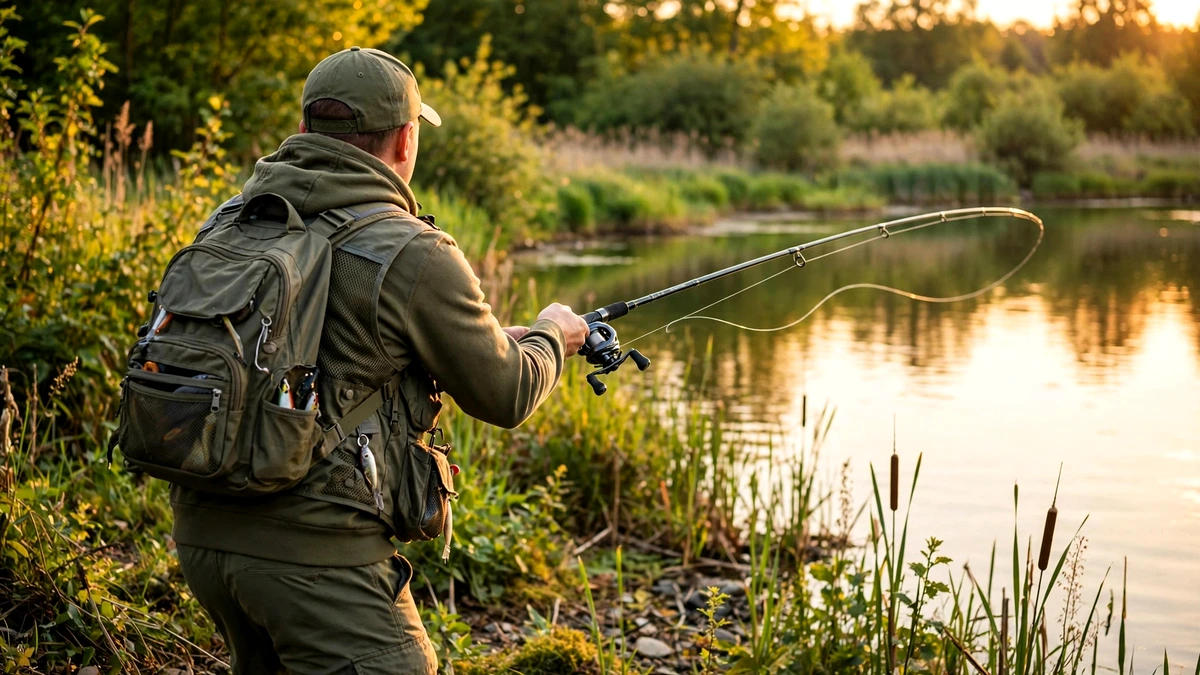
The catch is that not all mono is equal, and the differences show up fast on a baitcaster. A limp, low-memory mono lays down evenly and flies off the spool. A wiry, high-memory mono coils, springs off the spool between casts, and turns every windy day into a chore. The five lines below are worth your money, each with a clear reason to pick it and honest weaknesses spelled out.
Quick picks
Head-to-head comparison
Diameter is measured at 12 lb test, the most common all-round choice. Stretch and memory are relative ratings across these five lines.
| Line | Pound-test range | Diameter at 12 lb | Stretch | Memory | Best technique |
|---|---|---|---|---|---|
| Berkley Trilene XL | 2–30 lb | 0.013 in (0.33 mm) | Moderate | Low | Crankbaits, topwater, all-round casting |
| Berkley Trilene Big Game | 10–80 lb | 0.014 in (0.36 mm) | Moderate-high | Moderate | Heavy cover, big baits, shock absorption |
| Stren Original | 4–30 lb | 0.013 in (0.33 mm) | Higher | Moderate | Topwater, spinnerbaits, general bass fishing |
| Sufix Siege | 4–30 lb | 0.014 in (0.356 mm) | Lower | Low | Spinnerbaits, jigs, abrasive cover |
| KastKing Mono | 4–30 lb | ~0.014 in | Moderate-high | Higher | Budget setups, backup spools, beginners |
Match the mono to the technique
This is the table the generic “best line” articles never give you. Pound test matters more than brand for most techniques, so start here.
| If you are throwing… | Use this mono | Why it works |
|---|---|---|
| Shallow and medium crankbaits | 10–12 lb Trilene XL | Stretch cushions the strike so trebles stay pinned; limp line casts light plugs well. |
| Topwater plugs and poppers | 12–14 lb Stren Original or XL | Mono floats, keeping the lure on the surface; stretch forgives explosive surface strikes. |
| Spinnerbaits and chatterbaits | 14–17 lb Sufix Siege | Lower stretch drives the hook home; abrasion resistance survives wood and rock. |
| Jigs around light cover | 14–17 lb Sufix Siege | Toughest mono here against abrasion; enough body to turn a fish from brush. |
| Weightless soft plastics | 10–12 lb Trilene XL | Thin diameter and low memory let light baits fly without coiling off the spool. |
| Big swimbaits and heavy baits | 20–25 lb Big Game | Shock strength absorbs the load of heavy lures and hard-running fish. |
| Learning to cast a baitcaster | 12–14 lb KastKing Mono or XL | Cheap to replace while you learn; XL’s low memory makes early casts easier. |
Notice the pattern: lighter, limper mono for moving baits and casting distance; tougher, heavier mono for cover and power. If you only buy one spool, 12 lb Trilene XL covers the most ground.
All 5 monofilament lines reviewed
Best overall monofilament for baitcasters
Berkley Trilene XL
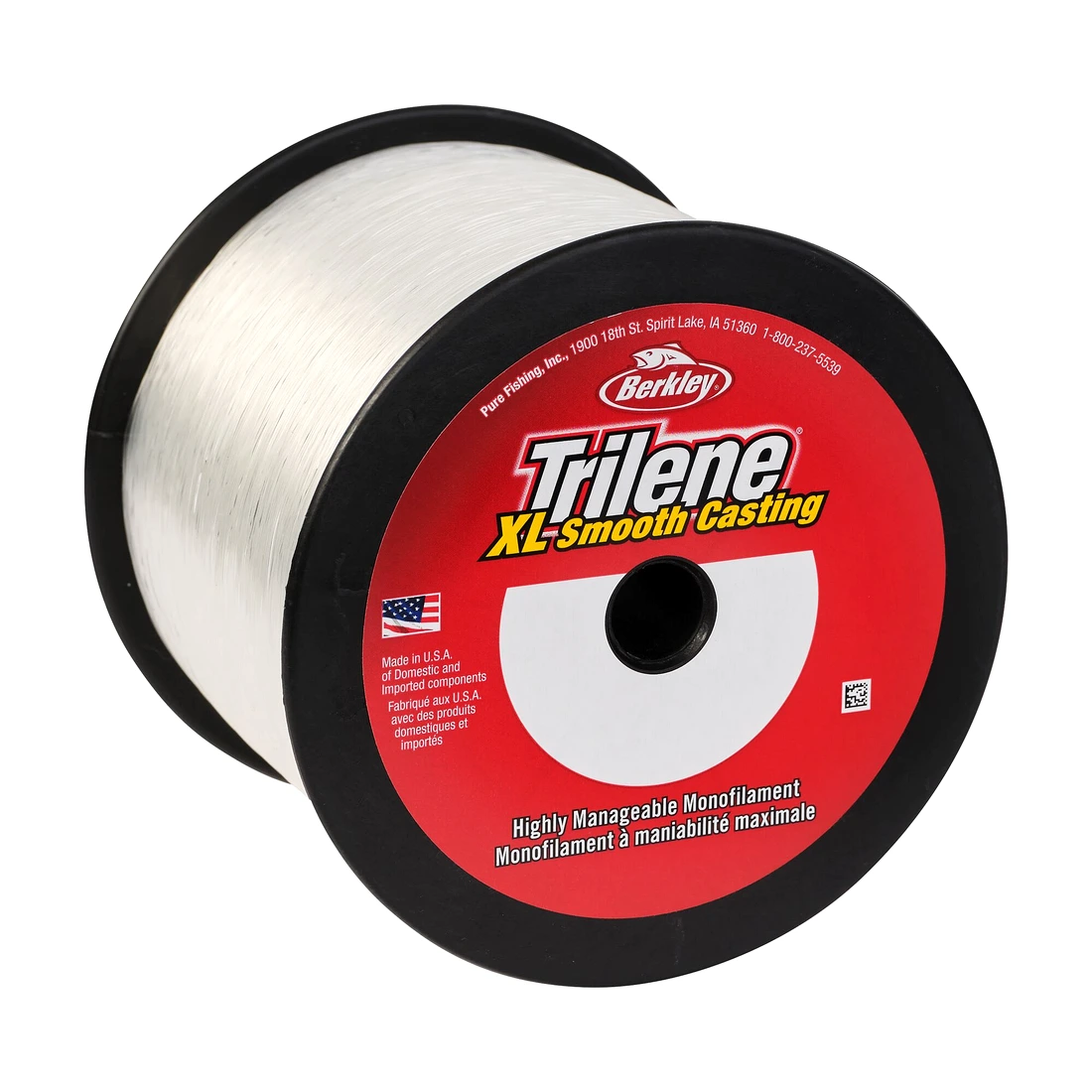
Trilene XL has been the default answer to “what mono should I buy” for decades, and on a baitcaster it is easy to see why. XL stands for extra limp, and that is exactly how it behaves: it lays down flat on the spool, peels off cleanly on the cast, and resists the coils and kinks that make stiffer monos miserable. For crankbaits and topwater, where you want the line to get out of the lure’s way, it is hard to beat.
What I like most is how it handles for beginners and experienced anglers alike. A backlash in XL picks out with far less swearing than one in a wiry mono, and the line’s smooth finish runs quietly through the guides. Berkley’s diameter specs are honest too: 12 lb measures 0.013 inch, right in line with the package claim, and the line runs from 2 lb all the way to 30 lb.
The honest weaknesses: XL is not the toughest mono here. Around rock, dock pilings, and heavy brush it nicks faster than Sufix Siege or Big Game, so check your line often in abrasive cover. It also stretches more than Siege, which costs some bite transmission on bottom-contact presentations. Fair tradeoffs for a line this manageable, and the reason XL is my crankbait and topwater line rather than my jig line.
Best monofilament for shock strength
Berkley Trilene Big Game
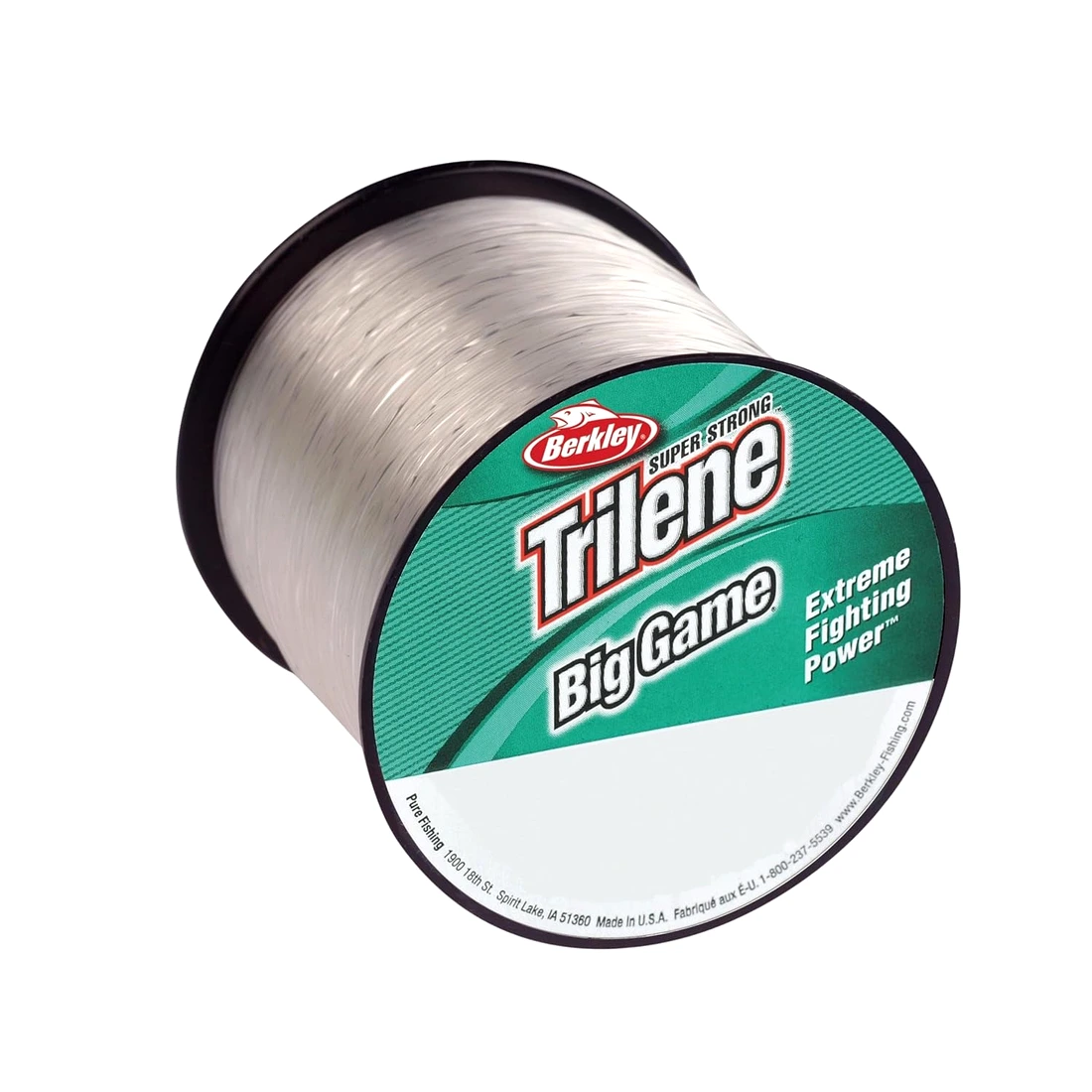
Big Game is the line you spool when something is going to hit hard. It is a tougher, beefier nylon than XL, built around controlled stretch and impact strength rather than finesse casting. On a baitcaster set up for big swimbaits, heavy jigs, or catfish, that shock absorption does real work: it cushions violent strikes and sudden runs instead of transferring every jolt straight to the knot.
It is also one of the best values in fishing line, period. Big Game is sold in large bulk spools that bring the per-yard cost down to almost nothing, which matters when you are spooling several reels or respooling often. The 12 lb diameter runs 0.014 inch, slightly thicker than XL, and the line goes all the way up to 80 lb.
Fair warning on the cons: Big Game is noticeably stiffer than XL, with more memory. On a baitcaster that means it needs a bit more attention during spooling, and it will not cast light lures as sweetly. It is also overkill for finesse presentations. Buy it for power applications and heavy cover, not for skipping weightless worms. Spool it with firm, even tension as shown in our baitcaster spooling guide and it behaves well.
Best classic all-round monofilament
Stren Original
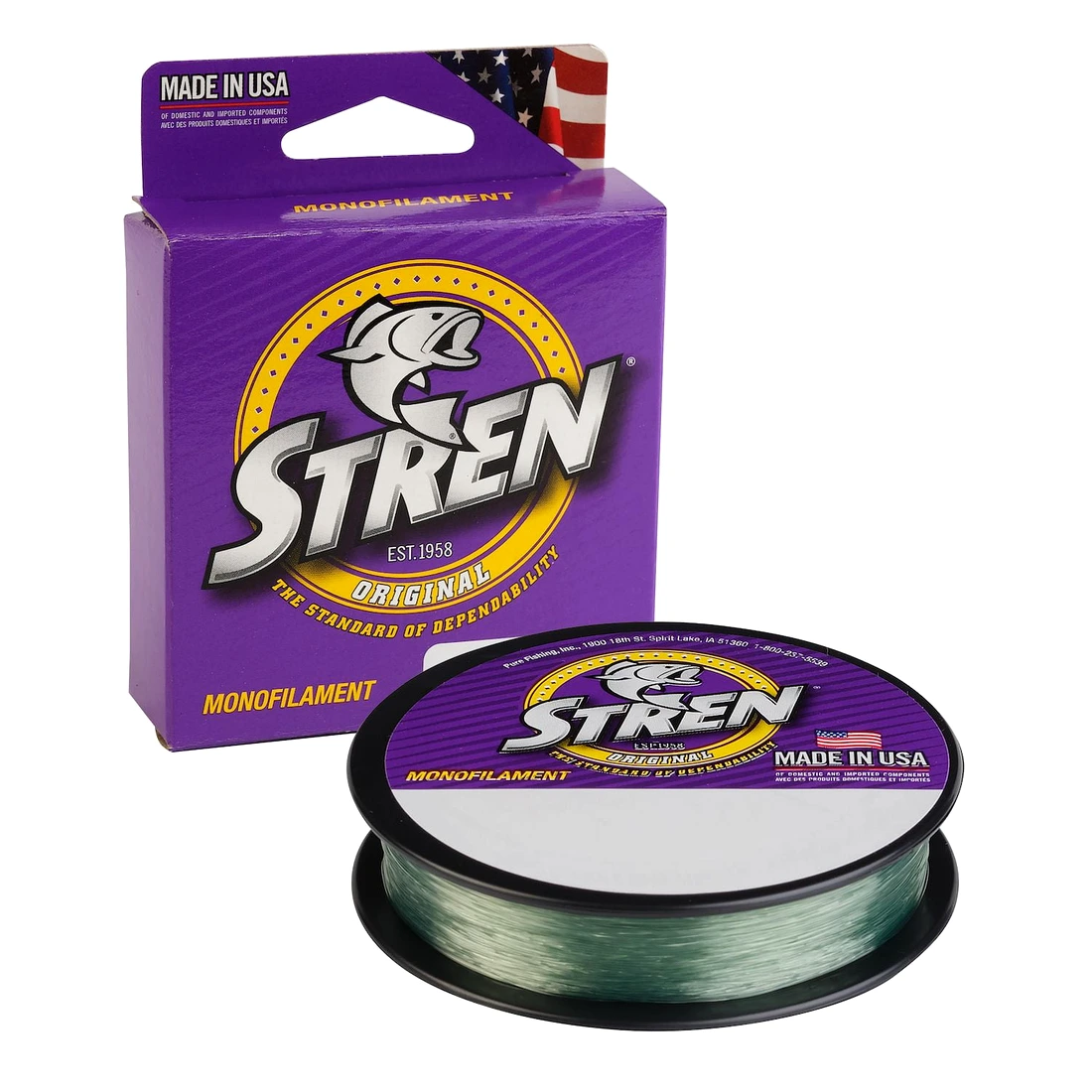
Stren Original has been around since 1958, and there is a reason it never went away. It is a straightforward, honest monofilament: consistent diameter, reliable knots, and a feel that generations of bass anglers learned to cast on.
On the water it sits between XL and Big Game in character. It is not as limp as XL, but it handles better than Big Game and ties excellent knots with standard patterns like the improved clinch and Palomar. I like it most for topwater and spinnerbaits, where its buoyancy and moderate stretch are exactly right. The 4 to 30 lb range covers everything from light spinning applications to standard baitcaster work.
The honest con is stretch. Independent stretch testing has consistently shown Stren Original stretching more than most competing monos, which costs you some sensitivity and hook-driving power on bottom-contact baits. It also develops memory faster than XL if left on the reel for months. For moving baits those traits barely matter. For jigs and Texas rigs, I would pick Siege instead.
Best monofilament for abrasion resistance
Sufix Siege
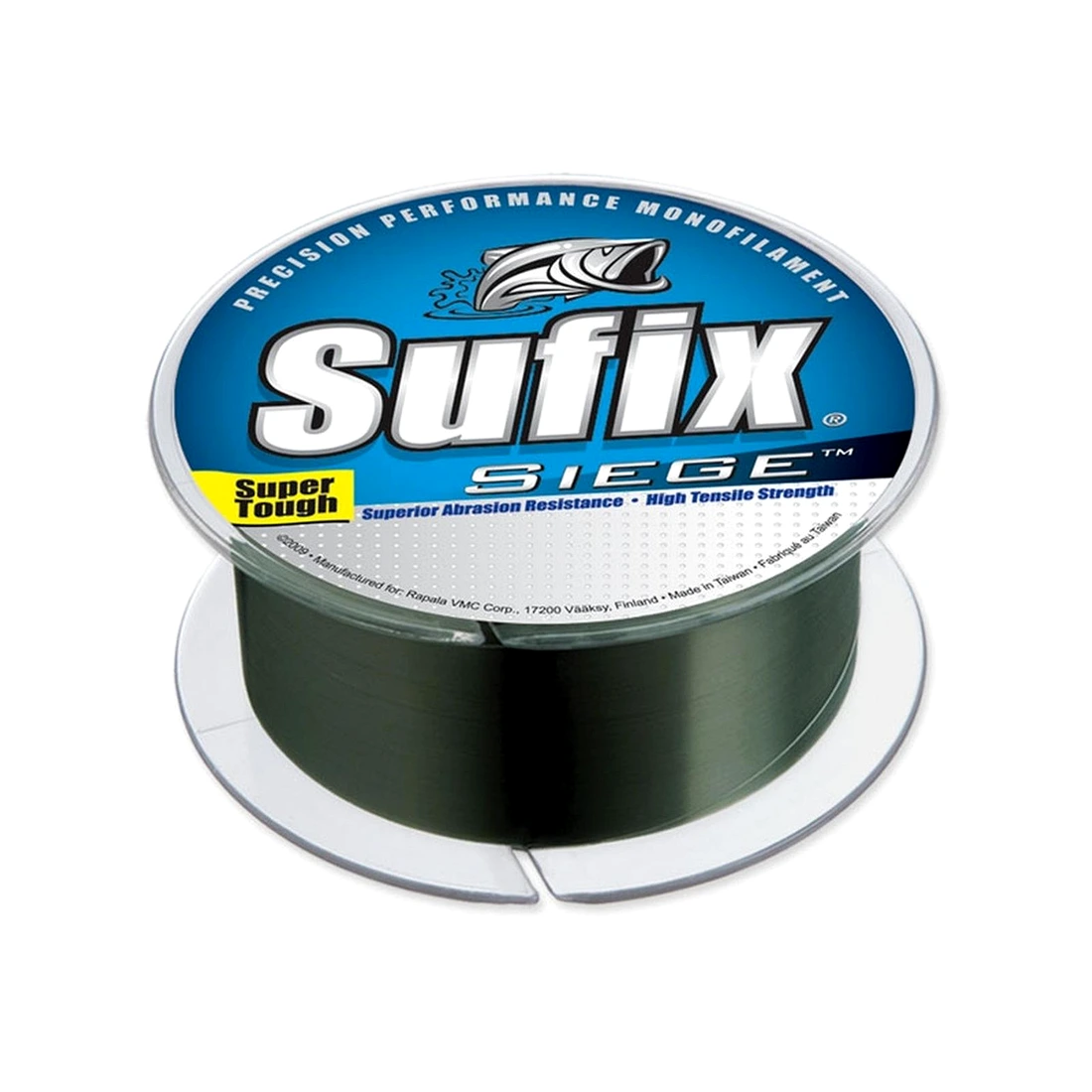
Siege is the mono you choose when the cover is going to fight back. Sufix built it around abrasion resistance, and in practical terms it is the hardest-wearing monofilament in this roundup. Dragging jigs across riprap, working spinnerbaits through laydowns, fishing boat docks: this is where Siege earns its keep.
It also stretches less than the Berkley and Stren lines here, which gives it a firmer feel and better bite transmission on a baitcaster. That lower stretch is noticeable the first time you set the hook on a jig. At 12 lb it measures 0.014 inch in diameter, and it comes in clear, camo, smoke green, and a hi-vis neon tangerine that is genuinely useful for watching your line on slack-line presentations.
The tradeoffs are real. Siege costs a few dollars more per spool than the Berkley lines, and that slightly thicker diameter means marginally less line capacity. It is also a bit stiffer than XL, so it is not the line I would hand a first-timer. For anglers who fish around hard cover regularly, though, the extra durability pays for itself in fewer lost fish and fewer reties.
Best budget monofilament
KastKing Monofilament
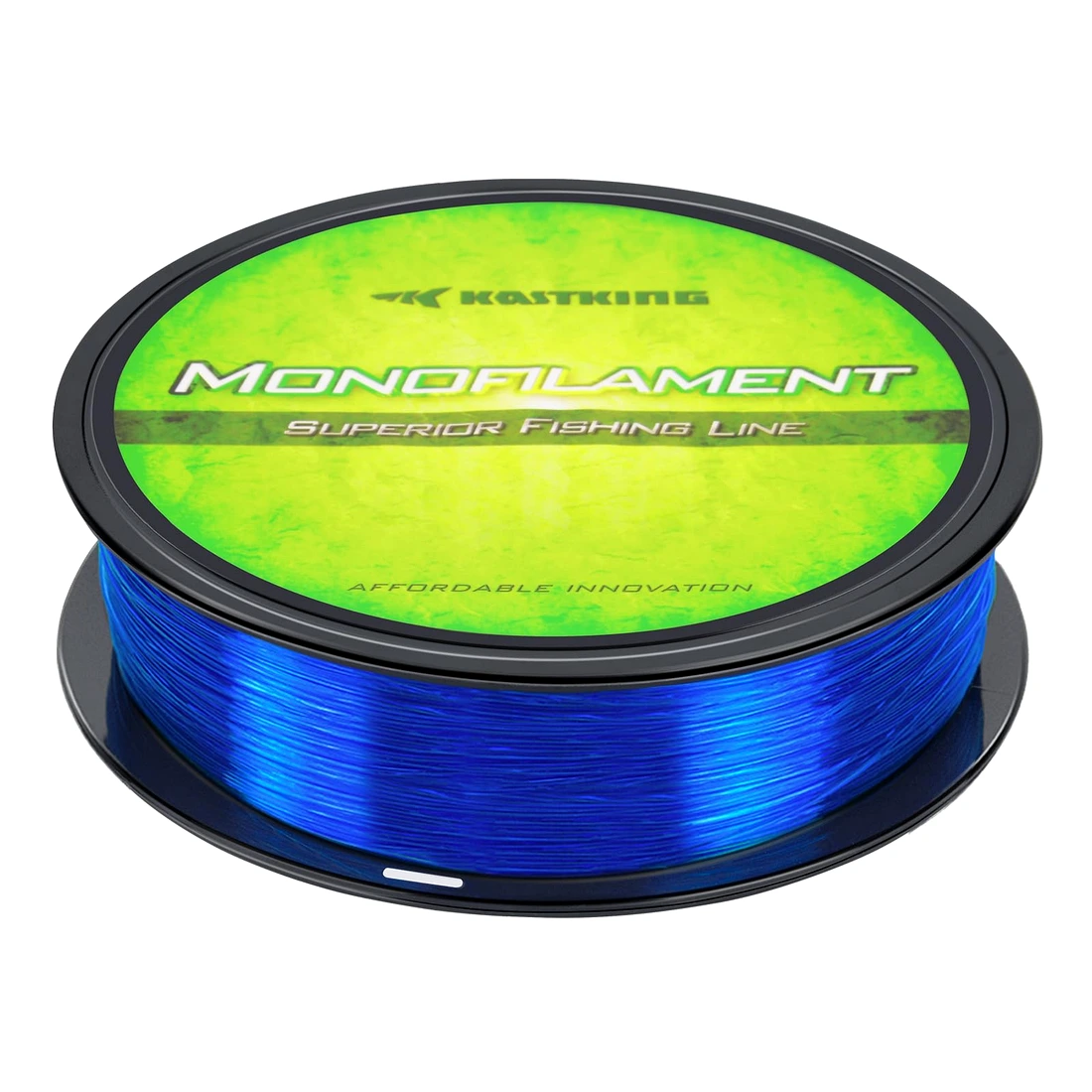
There is a legitimate role for cheap line, and KastKing’s monofilament fills it. When you are learning to cast a baitcaster and expect to cut out a few birdnests, or when you need to fill three backup reels without thinking about the receipt, this is typically the cheapest usable mono on the shelf.
For a beginner’s first spool it makes sense: functional line at a price where replacing the whole spool after a bad backlash does not sting. It comes in the standard 4 to 30 lb range and is perfectly serviceable for casual weekend fishing, panfish, and stocked trout.
Now the honest part, because the price gap has to come from somewhere. KastKing mono has noticeably more memory than the premium lines here: leave it on the reel for a few weeks and it comes off in coils. Diameter consistency is not at Berkley’s level either, and it loses strength faster with UV and water exposure, so it needs replacing more often. I would not spool it on my primary bass reels, but as a learning line or a backup-spool line it is fairly priced for what it is.
How to choose the right pound test
Pound test is the single biggest decision, and it matters more than brand for most anglers. On a standard 150-size baitcaster:
10–12 lb: the sweet spot for most casting
This is where most baitcaster fishing lives. Twelve-pound mono casts light to medium lures beautifully and stays thin enough that the spool does not feel overloaded. If you are unsure, start here.
14–17 lb: cover and bigger baits
Step up when the cover gets serious or the baits get heavy. Seventeen-pound mono is my default for spinnerbaits around wood and for medium jigs. The thicker diameter costs a little casting distance, but the extra strength is worth it when a fish has somewhere to go.
20 lb and up: power applications
Twenty to twenty-five pound mono belongs on swimbaits, big topwaters, and heavy-cover flipping sticks. It is also the right call for catfish and other hard-fighting species. Just know that heavy mono is stiff: it needs a reel with good line management and a firm spooling job, or memory becomes a real nuisance.
A note on backlashes and line choice
Thicker mono is genuinely more forgiving to learn on than thin mono or braid: it does not dig into itself, and the resulting backlashes pick out instead of welding into a solid mass.
When not to use monofilament
An honest line guide should say where mono loses. There are three situations where I switch off mono every time: heavy vegetation and matted grass (braid’s zero stretch cuts through salad that would saw through mono), deep jigging in clear water (fluorocarbon’s sensitivity and near-invisibility are meaningfully better), and finesse presentations on light line (below 8 lb, mono’s stretch and memory become liabilities).
For everything else, mono holds its own. And mono makes an excellent backing under braid: it grips the spool so slick braid cannot slip, and it saves you from filling the whole spool with expensive superline.
Making mono last on a baitcaster
Monofilament is a consumable. UV light, water absorption, and plain use all weaken it over time. A few habits keep it fishing like new:
- Respool at least once a season if you fish regularly. Heavy anglers respool two or three times a year.
- Check the first few feet before every trip. Run it through your fingers feeling for nicks and rough spots, and cut back past any damage.
- Store reels out of direct sunlight. UV is mono’s worst enemy; a hot car trunk in summer ages line fast.
- Stretch out memory coils by pulling off a cast’s worth of line and giving it a firm, even pull before you start fishing.
- Keep the reel itself clean. Grit on the line guide and levelwind abrades mono on every cast. Our reel cleaning guide walks through the full routine.
For more on setting up the whole system around your line choice, see how to choose a baitcasting reel and our beginner baitcaster tips. The Take Me Fishing beginner resources are a solid neutral starting point, and Berkley’s official Trilene XL page lists the full test and diameter range.
Frequently asked questions about monofilament on baitcasters
What pound test monofilament should I use on a baitcaster?
For most bass fishing, 12 to 17 lb mono covers the job. Use 12 lb for crankbaits, topwater, and general casting; 14 to 17 lb for spinnerbaits, jigs, and heavier cover. Below 10 lb, most standard baitcasters become fussy, and above 20 lb the line gets stiff enough to need careful management.
Is monofilament or fluorocarbon better for a baitcaster?
Neither wins everywhere. Mono is more forgiving, easier to cast, floats for topwater, and costs less. Fluorocarbon is nearly invisible, sinks, and transmits bottom contact better, but it is stiffer, pricier, and punishes sloppy spooling. A lot of experienced anglers fish mono for moving baits and fluorocarbon for jigs and worms.
Does monofilament backlash less than braid on a baitcaster?
In practice, yes. Mono is thicker and stiffer than braid, so it does not dig into itself on the spool, and a mono backlash picks out with patience instead of scissors. That forgiveness is why most experienced anglers recommend learning on monofilament before moving to braid.
How often should I replace monofilament line on my baitcaster?
Respool at least once per season with regular use. Mono absorbs water, develops memory, and weakens under UV exposure. Weekly anglers should check the first few feet for nicks before every trip and cut back past any damage they find.
Can I use monofilament as backing for braid on a baitcaster?
Yes, and you should. Braid is slick and can slip on a bare spool under heavy load. A layer of mono backing grips the spool and gives the braid something to bite into, while also saving money since you need less of the expensive braid to fill the spool.
What is the best monofilament line for crankbaits?
A medium-stretch mono in 10 to 12 lb test is the classic crankbait setup. The stretch acts as a shock absorber when a fish hits a moving bait, keeping treble hooks pinned instead of tearing out. Berkley Trilene XL in 10 or 12 lb is one of the most widely used crankbait lines for exactly this reason.
Keep learning
Dial in the rest of your line system:
Affiliate disclosure: As an Amazon Associate, baitcastingreelz.com earns from qualifying purchases made through links on this page, at no extra cost to you. Rankings are technique-led and independent of commissions. © baitcastingreelz.com · Product availability, specifications and prices can change; check the product page for current details.