Reel Troubleshooting · 2026
Baitcaster Level Wind Not Moving? Why Line Piles Up on One Side (and How to Fix It)
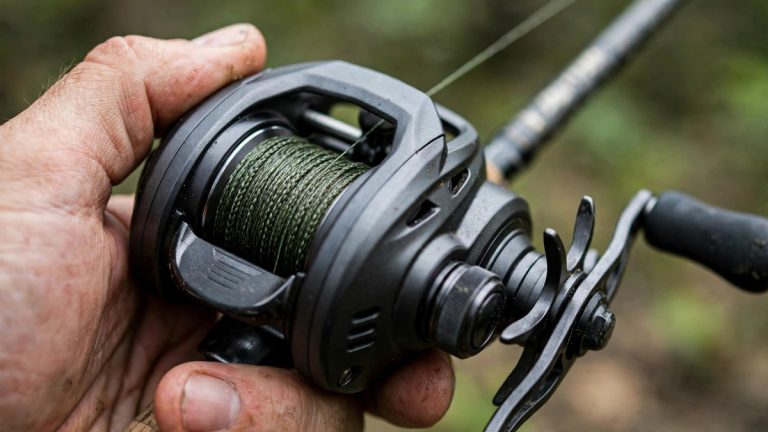
If your baitcaster’s level wind has stopped moving and line is piling up on one side of the spool, the problem is almost never the spool. It is the pawl: the small claw under the line guide that rides back and forth in the grooves of the worm gear. When that pawl wears down, packs with dirt, works loose under its cap, or jumps out of the groove, the guide stops travelling and the line stacks wherever the guide stopped. The fix takes 15 to 30 minutes with a screwdriver, and the part involved is one of the cheapest on the reel.
How the level wind actually works
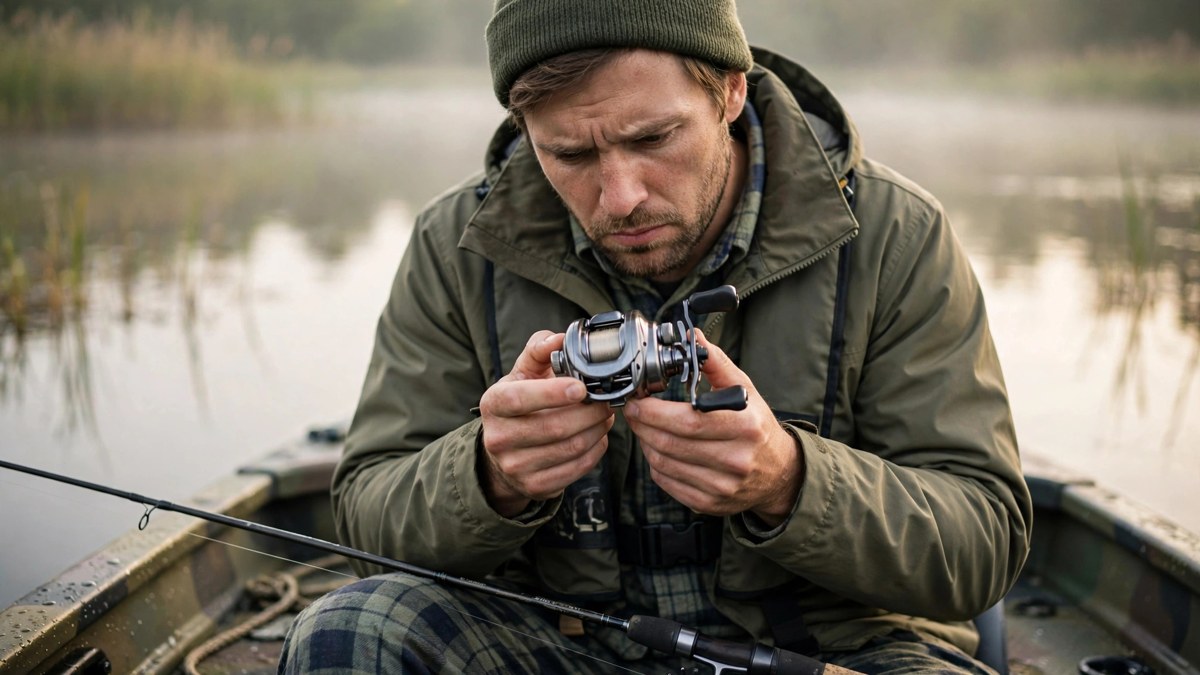
The level wind is a simple system with only three moving parts, which is why it is quick to diagnose. A grooved shaft called the worm gear runs across the front of the reel, below the spool. Sitting on top of it is the line guide, the part with the eyelet your line passes through. Hidden underneath the guide is the pawl, a small metal claw held in place by a round cap. The tip of the pawl sits down inside the worm gear’s spiral groove.
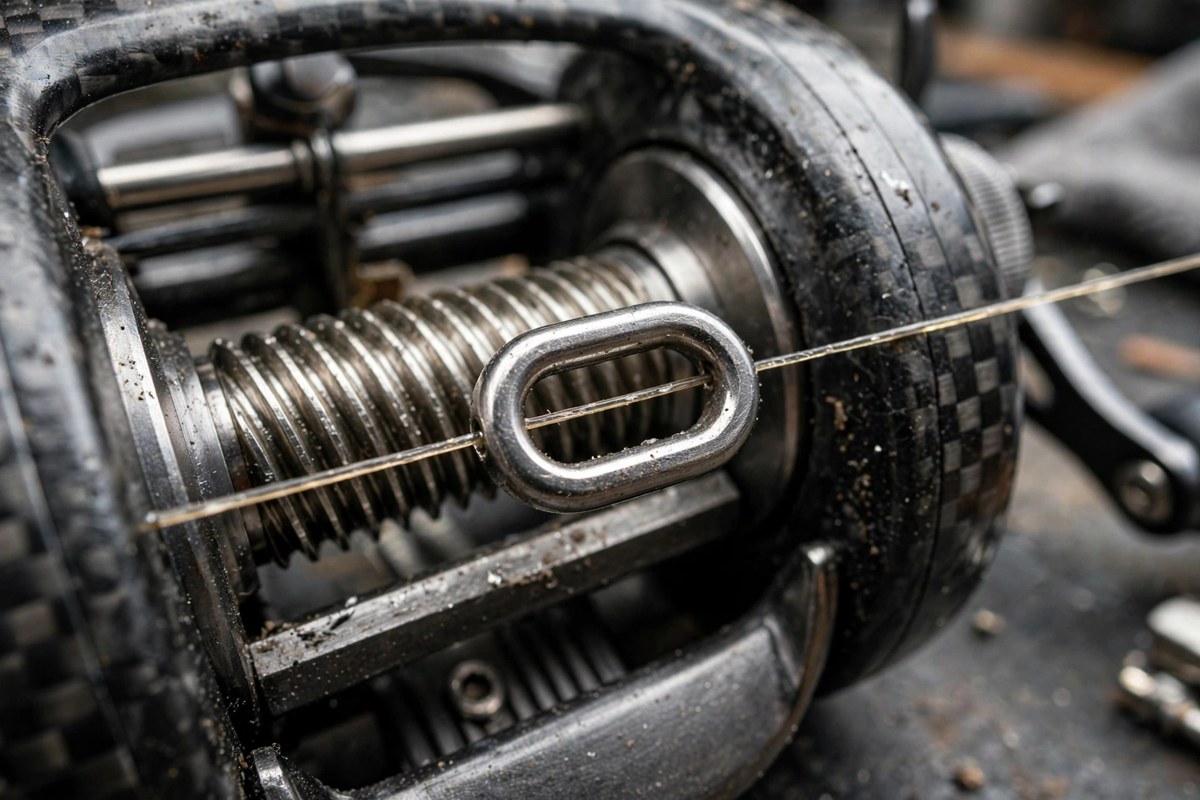
When you turn the handle, the drive train spins the worm gear. The groove pushes the pawl, the pawl drags the guide, and the guide carries your line evenly from one side of the spool to the other. At each end of the shaft the groove crosses back on itself and sends the pawl in the opposite direction, which is what makes the guide reverse. If you want the full anatomy with every other part named, see my baitcasting reel parts guide.
So when the guide stops, one of three things has failed: the pawl is no longer engaging the groove, the groove can no longer carry the pawl, or the guide itself is worn and binding. The symptom tells you which one before you touch a screwdriver.
Read your symptom first: a two-minute diagnosis
Before you open anything, do the slow-crank test. Take the lure or hook off, hold the reel level, and turn the handle slowly while you watch the guide. You are answering one question: does the guide travel the full width of the spool, part of it, or none of it? Match what you see to the table.
| What you see | Most likely cause | Fix difficulty |
|---|---|---|
| Guide does not move at all. Line stacks at one spot. | Pawl jumped out of the groove, pawl tip broken or worn flat, or the pawl cap has backed off loose. | Easy: cap, clean, or pawl swap |
| Guide stalls, clicks, or jerks at the same spot on every pass. | Worm gear groove bent or damaged at that spot, often by sand or grit, or debris packed hard into the groove. | Easy to moderate: clean first, worm gear if bent |
| Guide travels but stops short of one or both edges. | Pawl tip partly worn, slipping out near the ends of travel where the groove reverses. | Easy: pawl swap |
| Guide travels fully, but line still favors one side. | Spool sitting slightly off center, a worn guide rocking side to side, or line spooled on without tension. | Easy to moderate: see the section below |
| Guide moves with a rough, grinding feel as it crosses. | Worm gear running dry or dirty, old grease mixed with grit. | Easy: clean and oil |
The pattern is the diagnosis. A guide that stops everywhere points at the pawl. A guide that stops at one repeatable spot points at the groove at that spot. A guide that travels fine while the line still leans points away from the level wind entirely.
The fix, step by step
You need a small screwdriver that fits your reel’s screws, an old toothbrush, isopropyl alcohol or a mild degreaser, a wooden toothpick, light reel oil, and a clean cloth to work on. One warning before you start: skip the cotton swabs. Reel techs have pulled cotton fibers out of worm gear grooves for years, because swabs shed, and a fiber packed into a groove causes exactly the hang-up you are trying to fix. A toothbrush does not shed.
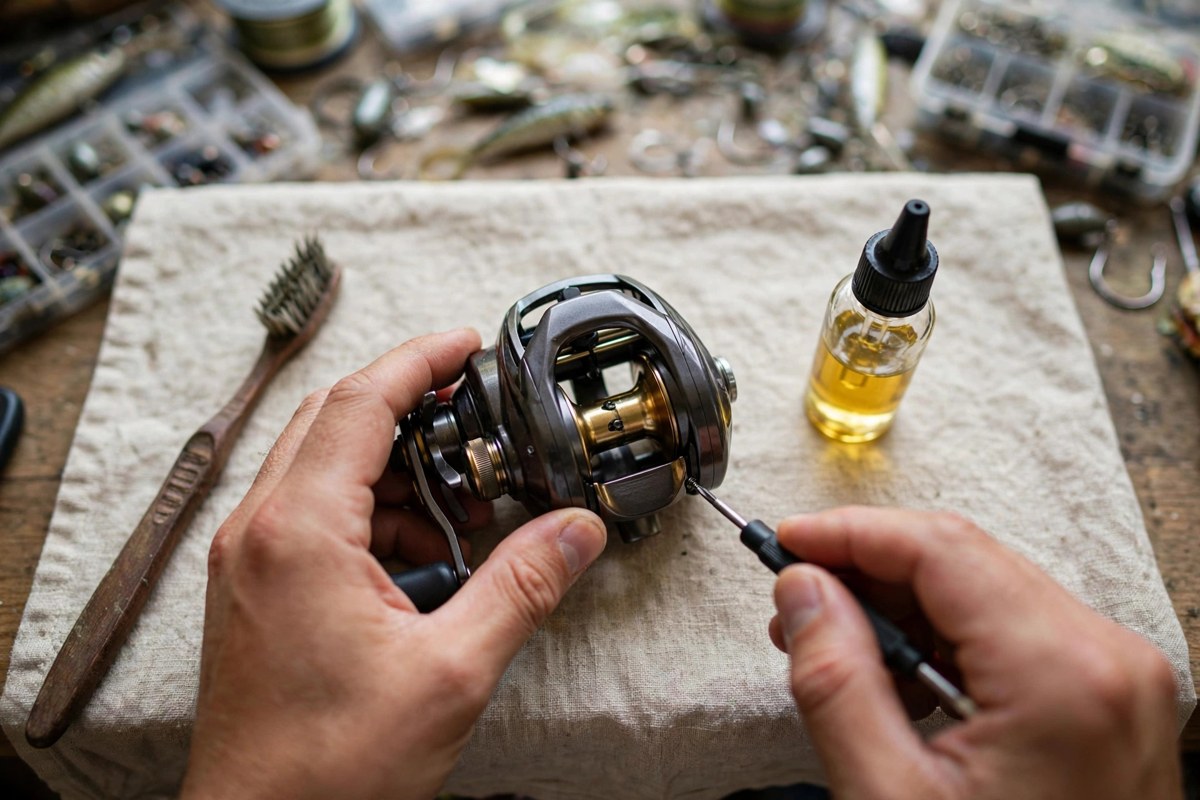
Step 1: Tighten the pawl cap and test. The round cap sits at the front of the line guide, on top of the pawl. Caps vibrate loose over a season of casting, and when one backs off, the pawl drops out of full engagement and the guide quits. Snug the cap down finger tight, then a small touch more with the screwdriver. Do not lean on it; the cap and its threads are small. Crank the handle. A surprising number of dead level winds end right here.
Step 2: Take the pawl out. If the cap was already tight, unscrew it fully and lay the parts on your cloth in the order they came off: cap first, then a spring or washer if your reel has one, then the pawl. The pawl lifts straight out of the guide. A toothpick or a fingernail under its edge is all the prying it needs. Take a phone photo before you start if your reel stacks several small pieces; it makes reassembly foolproof.
Step 3: Read the pawl tip. This is the moment of truth. A healthy pawl tip is crisp and shaped to sit down in the groove. A worn one is rounded over, flattened, or chipped, and it will look polished where it has been skidding across the groove tops instead of riding inside them. Rounded or chipped means replace it. There is no sharpening fix worth doing on a part this small and this cheap.
Step 4: Clean the worm gear. With the pawl out, scrub along the worm gear grooves with the toothbrush and a little alcohol while you slowly rotate the shaft with the handle. Work the ends of the shaft, where grit packs hardest. Use the toothpick to pick out anything the brush leaves behind. While you clean, look at the groove itself: you are hunting for a bent, flattened, or burred section. Sand is the usual culprit. One grain wedged in the wrong place can dent a groove enough to stop the guide cold, every pass, at the same spot.
Step 5: Decide: pawl only, or pawl and worm gear. If the grooves came clean and look unbent, a fresh pawl is the whole repair. If you found groove damage, be honest with yourself: a new pawl will stall at the same damaged spot, so the worm gear goes too. Do not treat that as bad news. Reel repair counters replace pawl and worm gear together all the time, the job only adds a side plate removal to what you have already done, and owners who have done it at the kitchen table consistently rate it an under-30-minute fix with basic screwdrivers.
Step 6: Refit, oil, and test before you spool. Drop the pawl back in with its tip in the groove, replace the spring or washer in your photo’s order, and snug the cap. Put one drop of light reel oil on the worm gear, no more; excess oil just collects the grit you removed. My guide to oiling a baitcasting reel covers the other points that want the same drop. Now crank slowly through two full trips of the guide in each direction and watch it reverse cleanly at both ends. Only then respool, and respool under steady tension, following the method in my how to spool a baitcaster guide and the fill level from how much line to put on a baitcaster. Fresh line wound on loose will lean to one side even with a healthy level wind, and you will think the repair failed when it did not.
When the guide travels fine but the line still leans
If your slow-crank test showed the guide travelling the full width and reversing cleanly, the level wind is innocent. Look at these three instead.
The spool sits off center. Look at the spool flanges where they meet the frame. If one side shows more flange than the other, the spool is shifted, and the line builds toward the wider side. Spool position is set by thin shims and spacers at the ends of the spool shaft. Moving a shim from one side to the other nudges the spool over. It is a small job, but the stack order is model-specific, so work from your reel’s schematic, and if you are not comfortable, this is the one fault on this page worth handing to a reel tech.
The line guide is worn and rocking. Grip the guide gently and try to rock it side to side. A worn guide leans as it travels, and the line lays heavier on whichever side it leans toward. No adjustment fixes a worn guide body; it is a replacement part, ordered by schematic number like the pawl.
You respooled badly. Line put on without running it through the level wind guide, or wound on with no tension, leans and lumps no matter how healthy the reel is. Strip it off and redo it under tension before you condemn any parts. And while you are in fault-finding mode, if the reel also misbehaves on the cast, my backlash removal guide and baitcaster adjustment guide cover the casting side of the same reel.
One more non-fault: some round reels and saltwater models are built without a level wind at all, on purpose. On those, your thumb lays the line on the retrieve. If your reel never had a moving guide, nothing is broken.
Repair it, or put the money toward a new reel?
Repair, almost every time. The pawl is one of the cheapest parts on a baitcaster, the whole job is under 30 minutes, and a mid-range reel with a fresh pawl and a cleaned worm gear fishes like itself again. The worm gear costs more than the pawl but is still a modest part, and replacing the pair restores the system completely.
The exception is arithmetic, not mechanics. If the worm gear is damaged on an old budget reel that also grinds, has a tired drag, and needs bearings, the parts list can creep toward the price of a fresh budget reel, and my best baitcasting reels under $100 roundup is the honest comparison to make before you order. One fault on a healthy reel: fix it. Three faults on a worn-out reel: replace it.
What you should not do is keep fishing a jumping pawl while you decide. Every trip, the skidding tip works on the edges of the worm gear groove, and line piled hard against one flange can slip off the spool edge and tangle mid-cast. A one-part fix left alone becomes the two-part fix, plus a respool.
Keep it from coming back
The pawl and worm gear are the highest wear pair on the reel, and most failures are just wear plus grit, so prevention is housekeeping. Rinse the reel after sandy bank days and saltwater trips, because grit in the groove is what bends grooves and grinds pawl tips. Put one drop of light oil on the worm gear whenever you do your routine service; my clean and maintain guide sets out a schedule that covers it. Check the pawl cap is snug at the same time, the way you would check a loose screw on anything else you own. That is the whole program: clean, one drop of oil, snug cap.
FAQs
Why does line pile up on one side of my baitcaster?
Because the level wind guide is not travelling the full width of the spool. The usual cause is the pawl under the guide: worn at the tip, loose under its cap, packed with dirt, or jumped out of the worm gear groove. Less often, the spool sits slightly off center or the guide itself is worn and rocks side to side.
Can I still fish with a level wind that does not move?
You can limp through a day by guiding the line with a finger on the retrieve, but the line stacks unevenly, casting distance and line capacity suffer, and a jumping pawl keeps chewing at the worm gear groove, turning a one-part fix into a two-part fix. It is a 15 to 30 minute repair, so fix it before the next trip.
How long does it take to replace a level wind pawl?
About 15 to 30 minutes with a small screwdriver, and most of that time is cleaning the worm gear. The pawl sits under a cap at the front of the line guide and lifts out without taking the reel apart. Replacing the worm gear as well adds a side plate removal and a few more minutes.
Do all baitcasting reels have a level wind?
No. Most low profile bass reels have one, but some round reels and saltwater models are built without a level wind on purpose, and on those you lay the line evenly with your thumb as you retrieve. If your reel never had a moving guide, uneven line lay is a technique issue, not a fault.
How often should I oil the worm gear on a baitcaster?
Put one drop of light reel oil on the worm gear whenever you do your routine reel cleaning, and more often if you fish sandy banks or saltwater. The worm gear and pawl are the highest wear pair on the reel, and running them dry is what wears the pawl tip down.
Should I replace the pawl and the worm gear together?
Only if the worm gear groove is damaged. If the grooves are clean and unbent and only the pawl tip is rounded or chipped, a pawl alone fixes it. If the guide stalls at the same spot on every pass, the groove is damaged at that spot and a new pawl will stall there too, so replace both together.
Keep reading
Work through the rest of the reel from here: baitcasting reel parts explained for the full anatomy, how to clean and maintain a baitcaster for the service routine this fix belongs to, and how to oil a baitcasting reel for every oil point on the reel, not just the worm gear.