Daiwa Tatula SV TW Brake Settings: Starting Dial Guide
Daiwa Setup Guide
Here is the whole setup for a Daiwa Tatula SV TW: leave the Zero Adjuster spool tension knob exactly where the factory put it, set the magnetic brake dial to 10, and cast. The SV spool does the thinking mid cast, so the dial is the only control you need, and the chart below gives you the right starting number for every lure weight, wind and technique, instead of the guesswork most owners are stuck with.
The 30 second setup: 1) Check the spool has no side to side play (if it does, see the Zero Adjuster section). 2) Dial to 10. 3) Cast, and tune down two clicks at a time for distance, up for control. Done. Everything below is refinement. Fishing a different braking system as well? The general brake and tension setup routine covers the same order of steps for magnetic, centrifugal and DC reels.
In this guide
- Two controls, and only one of them is yours
- How the SV spool brakes for you
- The brake dial chart
- The five minute setup routine
- Troubleshooting: read your backlash
- The reel this guide covers
- FAQs
Two controls, and only one of them is yours
Every baitcaster has spool tension and brakes, and on most reels you set both. Daiwa’s SV reels are the exception, and this is where most Tatula SV TW owners go wrong in the first week. They arrive trained by other reels to set the tension knob with the falling lure test, then wonder why the reel feels strangled.
The Zero Adjuster (spool tension) is not yours to tune. Daiwa sets it at the factory to what it calls the perfect zero: the point where the spool shaft is held with no side to side play. Daiwa’s design intent is explicit: appropriate brake power is fully manageable with only the magnetic dial. Leave the knob alone. The only times to touch it are if the spool develops a click of side play over time, or after you remove the spool for cleaning. To reset zero: tighten the knob gently until you feel it contact, then back it off about a quarter turn.
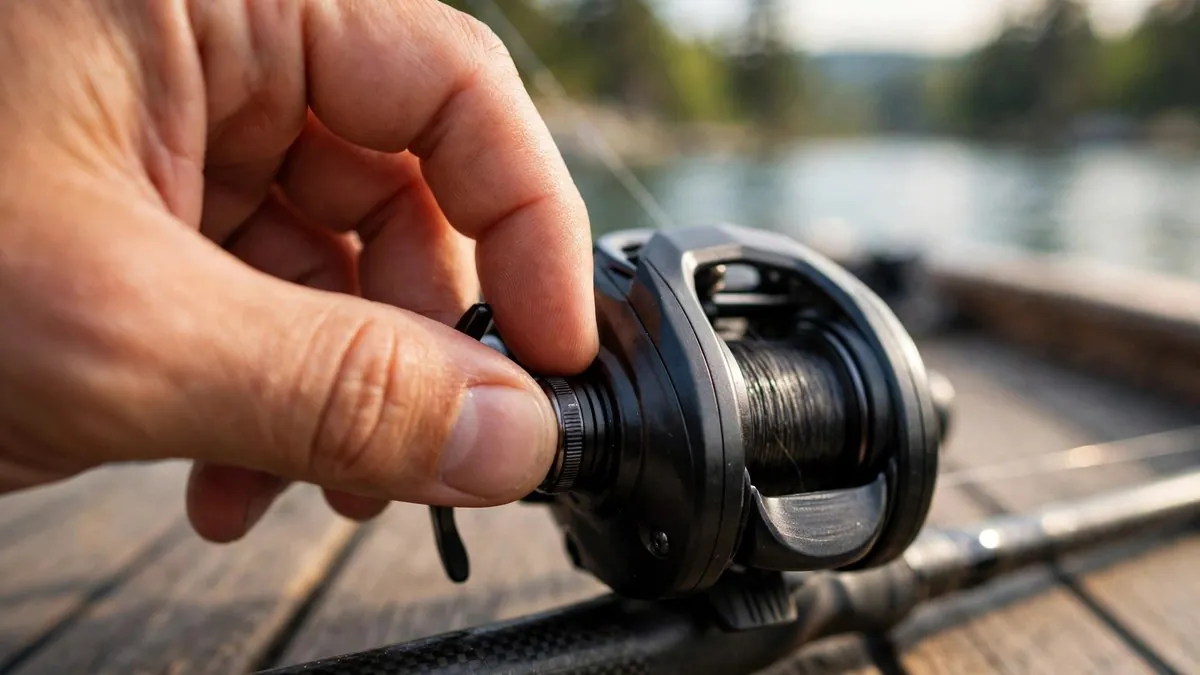
The brake dial is your one control. It sits on the palming side plate and runs from 0 to 20. Higher numbers push the magnets closer to the SV spool’s inductor and brake harder; lower numbers free the spool. Every adjustment in this guide happens on that dial. If you are coming from a centrifugal or standard magnetic reel, our baitcaster brakes guide explains how the systems compare, and our Tatula SV TW review covers the reel itself in full.
How the SV spool brakes for you
The SV spool is not a normal magnetic setup, and understanding its trick explains why the chart numbers work. Fixed to the spool is an inductor rotor, a light cup that can slide in and out of the magnets’ field. Centrifugal force drives it, and it works in three phases through every cast.
At the launch, when spool speed peaks and most backlashes are born, the inductor swings fully out into the magnetic field and braking is at its strongest. Mid cast, as the spool settles, the inductor eases back and braking relaxes, which is where the SV spool keeps the distance a fixed brake would steal. At the end of the cast, as the lure slows and line tension drops, the spool wants to overrun, and the system checks it again before splashdown. This self adjusting profile is why SV reels feel almost impossible to backlash with light lures and in wind, and why we made the SV TW103 our top pick in our guide to the best reels for jerkbaits, a technique that lives on mid-weight baits and bad wind angles. Your dial setting decides how strong the magnets are when the inductor visits them: you are setting the ceiling, and the spool decides how much of it to use, moment by moment.
The brake dial chart
These are starting points for a Tatula SV TW with the Zero Adjuster at factory zero, the way experienced SV owners fish them. Find your lure weight, start at that number, then tune. Every reel and thumb is slightly different, so treat the chart as the beginning of a two cast conversation with your reel, not a law.
| Lure weight | Starting dial (calm) | Into the wind | Notes |
|---|---|---|---|
| 1/8 to 1/4 oz (finesse plastics, small jerkbaits) | 10 to 12 | 13 to 15 | Light lures stall early; the SV spool’s home turf. Keep casts smooth. |
| 1/4 to 3/8 oz (small crankbaits, jerkbaits, tubes) | 8 to 10 | 11 to 13 | The classic SV band. Most owners live here. |
| 3/8 to 1/2 oz (standard jigs, spinnerbaits, topwater) | 6 to 8 | 9 to 11 | Sweet spot for distance with control. |
| 1/2 to 3/4 oz (spoons, heavier jigs, swimbaits) | 5 to 7 | 7 to 9 | Heavier lures carry their own momentum; less brake needed. |
| 3/4 to 1 oz (big crankbaits, glide baits) | 4 to 6 | 6 to 8 | Watch the end of the cast; heavy baits pull line fast at splashdown. |
| Skipping (any lure) | Your normal setting + 4 to 6 | Same | Each skip is a sudden deceleration. Brake for the worst bounce. |
| Learning the reel (first sessions) | 12 to 14 for standard lures | 14 to 16 | Sacrifice distance for a week. Your thumb learns faster without nests. |
Two adjustments apply across the whole chart. First, pitching and short underhand casts need less brake than the table, because spool speed never peaks: drop two clicks for close work. Second, if you fish braid, add one click in wind; braid catches air and stalls sooner than fluorocarbon or mono of the same weight lure.
The five minute setup routine
1. Check zero. Hold the reel and wiggle the spool sideways with your thumb. There should be no side to side play and no knock. If there is, reset the Zero Adjuster as described above.
2. Set the chart number for your lure and conditions.
3. Make two test casts at three quarter effort. Watch the spool, not the lure. You are looking for the line lifting off the spool in loops at any point in the flight.
4. Tune in pairs. Loops early in the cast: add two clicks. Loops only at splashdown: your thumb is late, not the dial, but one extra click forgives it. No loops and the cast feels held back: drop two clicks and repeat.
5. Stop at the edge. The right setting is the lowest number that keeps the spool clean through the whole cast, plus one click of insurance. That last click costs almost no distance and saves the first cast into a sudden gust.
If backlash is a recurring theme beyond this reel, our guide on how to prevent backlash on a baitcaster works through the casting mechanics, and how to cast a baitcaster rebuilds the motion from scratch.
Troubleshooting: read your backlash
| When it happens | What it means | The fix |
|---|---|---|
| Instantly, at the start of the cast | Spool outran the lure at peak speed. Dial too low for the lure, or a jerky cast spiked spool speed. | Add 2 clicks. Smooth the cast out: accelerate the rod, do not snap it. |
| Mid cast, lure still flying well | Usually wind catching the line, or the lure stalling (light, air resistant baits). | Add 1 to 2 clicks in wind; lower your trajectory; cast across or with the wind where you can. |
| Right at splashdown | The lure stopped and the spool did not. Classic, and mostly a thumb timing issue. | Feather the spool in the last metres. One extra click covers late thumbs. |
| Only when skipping | Each bounce is a sudden stop the spool cannot predict. | Raise the dial 4 to 6 clicks for skipping duty, per the chart. |
| After cleaning or spool removal | Zero Adjuster moved off its factory point. | Reset zero: contact, then back off a quarter turn. Then retest the dial. |
| Never, but distance feels strangled | You are over braked. The SV spool is more forgiving than you think. | Drop 2 clicks at a time until a cast just starts to feel loose, then add 1 back. |
The reel this guide covers
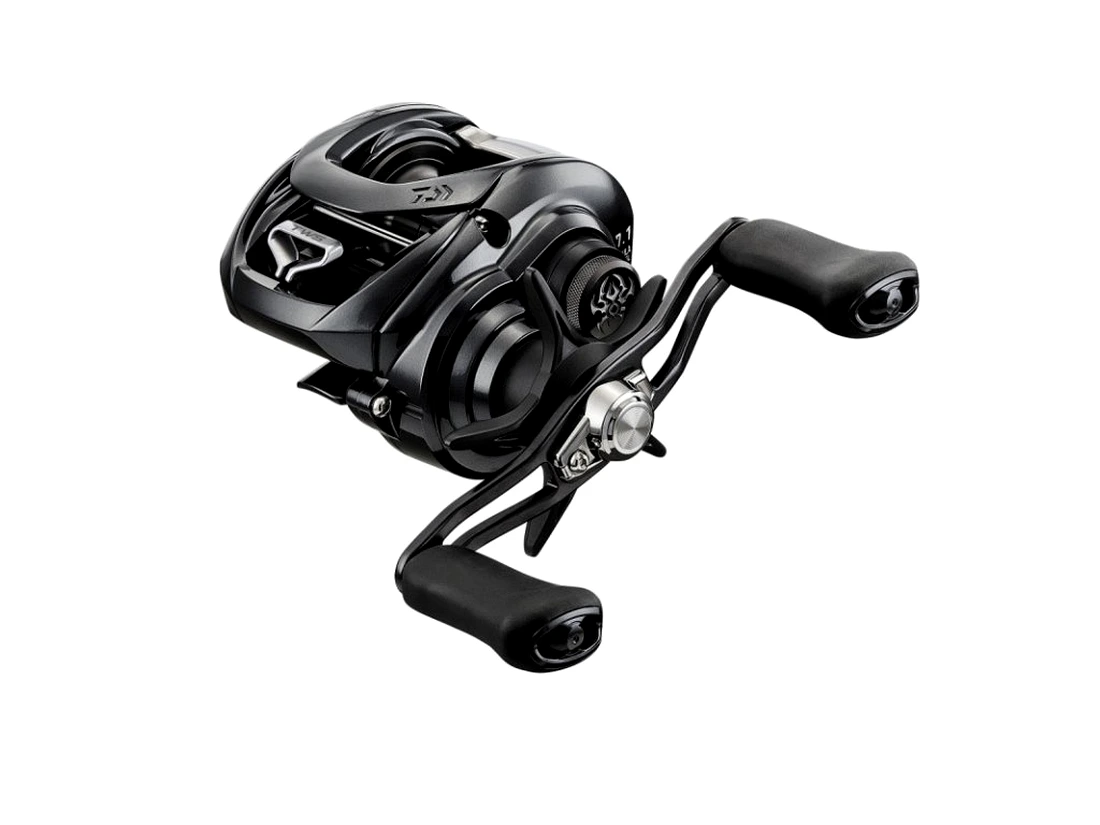
This chart is written for the Tatula SV TW103, the current 100 size SV Tatula: 6.7 oz, a 32mm SV spool, and ratios from 6.3 to 8.1. The same logic applies across Daiwa’s SV family, including the larger SV TW150 and the Steez SV models, with numbers a click or two lower on the bigger spools. Owners of the standard Magforce Z Tatulas, like the Tatula CT in our Tatula CT vs Fuego CT comparison, can use the chart as a rough guide too, but expect to run two or three clicks higher: a fixed magnetic brake has no inductor doing the thinking, and spool tension goes back to being a real adjustment on those reels. The full Daiwa lineup context is in our best Daiwa baitcasting reels roundup.
Tatula SV TW103 key specs: 6.7 oz · 7+1 bearings · 32mm SV spool · Brake dial 0 to 20 · Zero Adjuster spool tension · 11 lb UTD drag · $209.99
FAQs
What number should the brake dial be on a Tatula SV TW?
Start at 10, the middle of the 0 to 20 dial, for a typical 3/8 to 1/2 oz lure in calm conditions. From there, work down two clicks at a time until the spool just begins to feel loose at the end of the cast, then go back up one. Most experienced anglers settle between 5 and 10 for standard bass lures.
Should I adjust the Zero Adjuster on my Daiwa reel?
No, not for casting control. Daiwa sets the Zero Adjuster at the factory so the spool shaft is held without side to side play, and the reel is designed to be controlled entirely with the magnetic brake dial. Only reset it if the spool develops side play or after removing the spool for cleaning: tighten gently until it contacts, then back it off about a quarter turn.
Why does my Tatula SV TW still backlash on a high brake setting?
Usually it is not the setting but the cast. A jerky, forced cast spikes spool speed faster than the inductor can respond, and slack line from a tailwind gust or a lure that stalls mid flight will overrun any brake. Smooth acceleration, a slightly higher dial in wind, and a thumb hovering for splashdown fix nearly all of it.
What brake setting is best for skipping with a Tatula SV TW?
Skipping is the SV spool’s party trick, but help it: start 4 to 6 clicks above your normal casting setting. The higher brake controls the spool through the sudden decelerations each time the bait skips, which is where skipping backlashes are born.
What does brake dial 0 do on a Daiwa SV reel?
Zero is the minimum magnetic brake the dial can apply. The SV inductor still works, so the reel is not brakeless, but at 0 your thumb becomes the main casting control. It is a setting for maximum distance with heavy lures and an educated thumb, not a starting point.
Do braid and fluorocarbon need different brake settings?
Only slightly. Braid is lighter and catches more air, so it can stall and fluff sooner in wind; one or two extra clicks help. Fluorocarbon’s stiffness can spring off the spool at splashdown, so a soft thumb matters more than the dial. Lure weight and wind change the right setting far more than line type does.
Affiliate disclosure: baitcastingreelz.com is reader supported. When you buy through links on this page we may earn a commission from Amazon at no extra cost to you. Settings are starting points based on Daiwa’s published guidance for the SV system and standard angler practice; prices and specifications were checked in October 2026.