How to Cast a Spinning Reel: Beginner's Guide (2026)
Short answer: To cast a spinning reel, reel the lure to a foot below the rod tip, trap the line against the rod with your index finger, flip the bail open until it clicks, swing the rod forward, and release the line as the rod passes in front of you. Then close the bail. The same mechanics work for every lure and species.
Spinning gear is where most anglers start, and for good reason: the fixed spool pays line out freely, so there is no backlash to manage and the learning curve is measured in minutes rather than weeks. The cast itself is one smooth motion built from five small steps. Get each one right and the whole thing feels effortless; rush any of them and the cast collapses. This guide walks through the mechanics, then covers the adjustments that turn a basic cast into an accurate one.
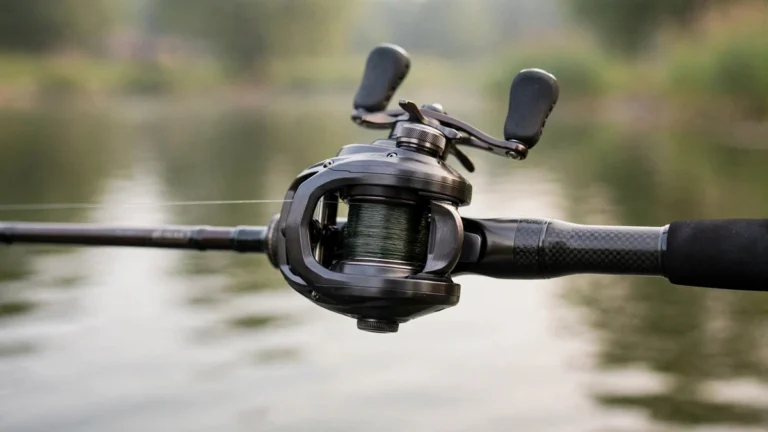
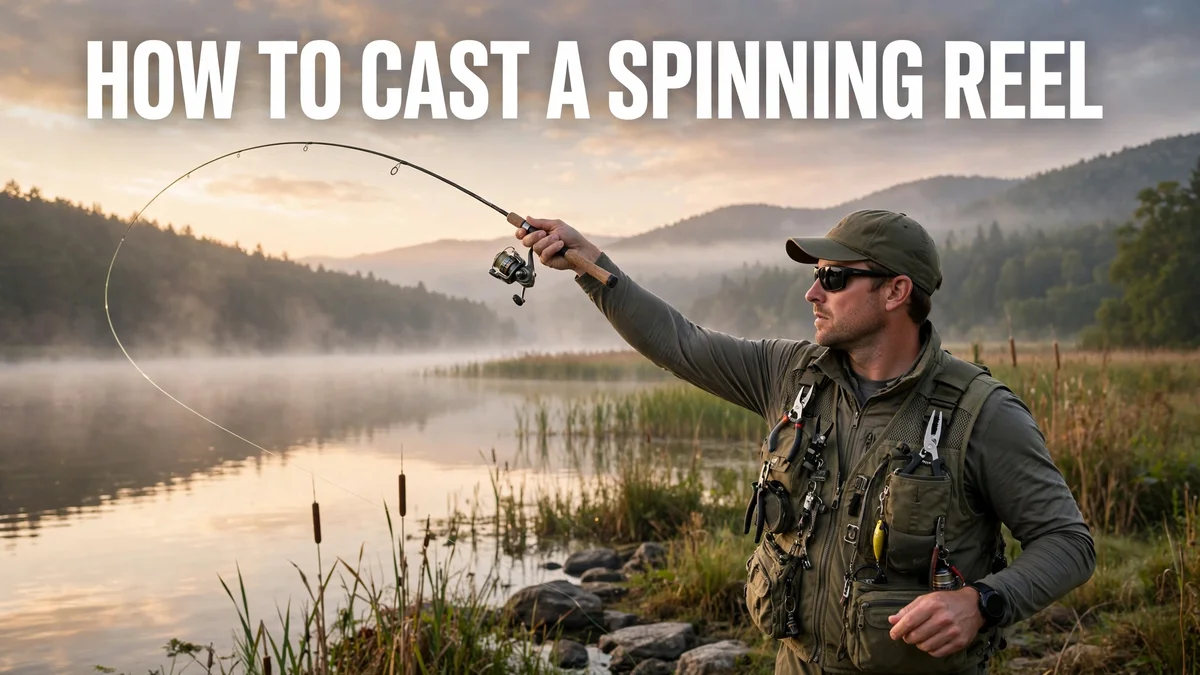 casting a spinning rod at sunrise — how to cast a spinning reel” width=”1200″ height=”675″ loading=”eager” srcset=”https://baitcastingreelz.com/wp-content/uploads/2026/10/how-to-cast-spinning-reel-featured-768×432.webp 768w, https://baitcastingreelz.com/wp-content/uploads/2026/10/how-to-cast-spinning-reel-featured-1024×576.webp 1024w, https://baitcastingreelz.com/wp-content/uploads/2026/10/how-to-cast-spinning-reel-featured-300×169.webp 300w, https://baitcastingreelz.com/wp-content/uploads/2026/10/how-to-cast-spinning-reel-featured-150×150.webp 150w, https://baitcastingreelz.com/wp-content/uploads/2026/10/how-to-cast-spinning-reel-featured.webp 1200w” sizes=”(max-width:640px) 100vw, (max-width:1024px) 50vw, 800px” fetchpriority=”high”>
Know the Parts That Matter for Casting
Only three parts of the reel are involved in the cast. The bail arm is the wire arm that wraps line onto the spool during the retrieve and swings open to free the line for casting. The line roller sits on the bail and guides line onto the spool. The spool itself is fixed — it does not rotate during the cast, which is why spinning reels don’t backlash. Understanding the bail is the whole battle: open means the line can leave, closed means it can’t.
How to Cast a Spinning Reel: Step by Step
Step 1 — Set your lure distance
Reel the lure or rig up until it hangs roughly 10 to 12 inches below the rod tip. Too much line out and the lure swings wildly during the backswing; too little and the rod can’t load properly. About a foot is the working standard for most lures between 1/8 and 1/2 oz.
Step 2 — Trap the line with your index finger
With the rod held in your dominant hand, reach the index finger of that same hand across and pin the line firmly against the rod blank, just above the reel. The grip should be secure but not a death grip — the line needs to slip off the fingertip cleanly at release. This finger is the entire braking system of the cast.
Step 3 — Open the bail
With your free hand, flip the bail arm open until it clicks and stays. Give the line a gentle tug to confirm the spool is free — if the lure drops, the bail is open. If the line is still locked, the bail wasn’t fully opened and the cast will stop dead at the rod tip.
Step 4 — Swing and release
Bring the rod back over your dominant shoulder, then drive it forward in one smooth, accelerating motion. Release the line from your index finger as the rod tip passes roughly the 10-to-2 o’clock window in front of you — earlier for distance, a touch later for accuracy. The power comes from the forearm and wrist, not the shoulder; muscling the cast is what sends lures into trees.
Step 5 — Close the bail and engage
Once the lure lands, close the bail — either by flipping it manually or by turning the reel handle one crank. Manual closing is the better habit: it lays the line on the spool evenly and avoids the twist that handle-closing can introduce over time. Take up slack until the line is taut and you’re fishing.
The Two-Handed Cast for Distance and Control
Most beginners cast one-handed and leave significant distance on the table. Placing the free hand on the rod butt during the forward stroke — pushing with the bottom hand while pulling with the top — adds rod speed with less effort and noticeably tightens accuracy. It is the same leverage principle used in surf casting, scaled down. Once the basic motion is comfortable, the two-handed cast should become the default.
Casting in Wind Without the Tangles
Wind is the spinning reel’s natural enemy because the light line it favors gets pushed around. Three adjustments keep casts productive: cast slightly lower and harder into a headwind rather than lobbing high, switch to a heavier lure (a 3/8 oz jig cuts wind far better than a 1/8 oz), and keep casts shorter and more deliberate when the wind is at your back to avoid overruns piling line loosely on the spool. Wind knots — those infuriating loops that appear mid-spool — are almost always caused by slack line being wound loosely, so keeping tension on every retrieve matters as much as the cast itself.
Overhead vs. Sidearm: Picking the Right Cast
The overhead cast described above is the default — maximum distance with a simple motion. The sidearm cast, where the rod sweeps horizontally rather than vertically, trades some distance for a lower trajectory that skips lures under docks and overhanging trees. Learn overhead first until release timing is automatic, then add sidearm for tight quarters. A third option, the underhand flip, handles short accurate pitches to visible cover within 15 feet — ideal for docks and lily pad edges where a big cast would spook everything.
Common Mistakes to Avoid
- Releasing too early: the lure sails skyward and lands twenty feet away. Release a fraction later.
- Releasing too late: the lure dives into the water at your feet. Release a fraction earlier.
- Forgetting the bail: casting with a closed bail snaps light lures clean off. Make opening the bail a pre-cast ritual.
- Overfilling the spool: line packed above the spool lip jumps off in coils. Fill to about 1/8 inch below the lip — see our guide on how to spool a spinning reel for the full procedure.
- Closing the bail with the handle every time: convenient, but it twists line over hundreds of casts. Flip it by hand when you remember.
Choosing Line That Casts Well
Line diameter affects casting more than most beginners expect. Thinner line flies farther off a spinning spool, which is why 6–8 lb monofilament is the standard starting point for bass and walleye, 4 lb for trout and panfish, and 10–15 lb braid with a fluorocarbon leader for heavier cover. Match line to the rod’s printed rating — too heavy and distance collapses; too light and breakoffs multiply. Our breakdown of spinning reel sizes pairs the right reel size to each of these line classes.
Practice Drill: The Bucket Cast
Accuracy is built, not gifted. Set a bucket or paper plate at 20 feet in an open yard, tie on a practice plug or a hookless sinker, and cast until ten in a row land inside it. Move it to 30 feet and repeat. Fifteen minutes of this, twice a week for a month, produces the kind of placement that puts lures under docks and beside stumps instead of three feet past them. Anglers working on precision presentations will also benefit from our baitcaster tips for beginners once they graduate to casting reels.
Frequently Asked Questions
Why does my spinning reel tangle when I cast?
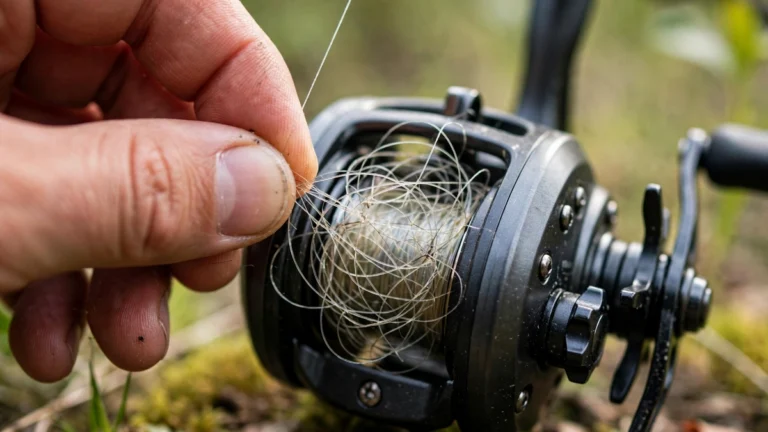
The usual causes are an overfilled spool (line above the lip jumps off in coils), slack line wound loosely on the retrieve, or line twist built up over time. Fill to 1/8 inch below the lip, keep tension while reeling, and let line twist out periodically by trailing line behind a boat or in current with nothing tied on.
Should I close the bail by hand or by turning the handle?
By hand. Handle-closing works, but it slaps line onto the spool unevenly and adds twist over hundreds of casts. Flipping the bail manually lays line down evenly and extends the time between respooling.
How far should a spinning reel cast?
With a 1/4 oz lure on 8 lb line and a 7-foot medium rod, 40–60 yards is realistic for an experienced caster. Beginners should expect half that while learning release timing — distance comes from smooth rod loading, not force.
What is the best lure weight to learn casting with?
A 3/8 oz jig or sinker. Heavy enough to load the rod and feel the release point clearly, light enough not to punish mistakes. Ultra-light lures under 1/16 oz are actually harder to learn on because they give almost no feedback.
Can you cast a spinning reel with braid?
Yes — braid casts farther than mono at the same strength because of its thin diameter. Use a monofilament backing on the spool so the slick braid doesn’t slip, and add a 2–3 foot fluorocarbon or mono leader for abrasion resistance and stealth.
Why does my line keep coming off the spool in loops?
That’s line memory and overfill combined. Line that sat on a small-diameter supply spool takes a coiled set; spooling under firm tension and filling just below the lip minimizes it. Soaking monofilament in warm water for ten minutes before spooling also relaxes memory. Once your casting feels consistent, pairing the reel with the right stick matters — see our guide to the best spinning rods for beginners.
Related Reading
- How to Spool a Spinning Reel — proper fill prevents most casting tangles
- Spinning Reel Sizes — match reel, rod, and line
- Best Spinning Reels — reels that cast smoothly
- Spinning Reel Parts — know every component