Fishing rules & trip planning · US guide
Fishing Without a License Penalty: What Happens and How to Stay Legal
If you’re wondering about the fishing without a license penalty, here’s the honest answer: there is no single national penalty. What happens depends on your state, the water, the species, and the circumstances; ranging from a warning to a citation with a fine, and in some jurisdictions a misdemeanor charge or confiscated gear. The fix is easy: verify the requirement with your state’s fish and wildlife agency before you fish.
By Natalia · Updated 15 October 2026 · 11-minute read
The quick answer, expanded
If you are unsure whether a licence is required, do not fish until you verify it. A required licence may apply even when the outing feels casual, the water looks private, or you’ve fished there for years without one. Age, residency, species, location, season, and special exemptions can all change the answer; and “I didn’t know” is not a defence that gets a citation dismissed.
Rules exist to support fisheries management, access, and conservation, and they commonly cover more than a basic licence. Species stamps, harvest limits, gear rules, closed areas, and special water regulations may all apply on the same trip. Our essential fishing tips cover conditions, gear, fish care, and on-water decisions once access is confirmed.
Why fishing licences exist in the first place
Licence systems generally fund the work that keeps fishing good: conservation officers, habitat restoration, fish stocking, access maintenance, and the surveys that set seasons and limits. The licence is the mechanism that keeps a public resource from being fished out.
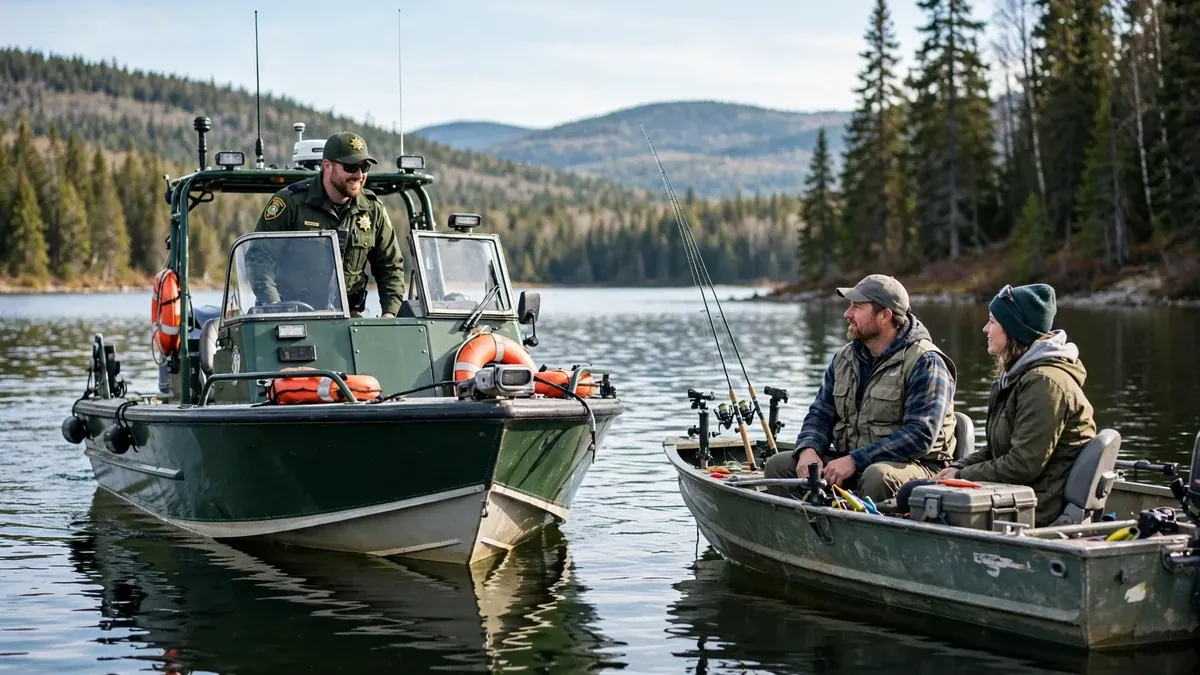
That funding link is also why enforcement is real. Wildlife officers routinely patrol ramps, banks, and popular stretches, especially on opening days and holiday weekends. Most checks take under a minute when your paperwork is in order.
Rules vary
State, tribal, and local rules can differ sharply; especially for border waters, saltwater, trout, special-management areas, and public versus private access. The rule that applied last year, or in the next state over, may not apply here.
Exemptions vary too
Age, residency, disability, military status, free-fishing events, and private-water rules may create exceptions in some places. Never assume an exception applies without checking the current official rule.
More than the licence can matter
Bag limits, size limits, seasons, methods, and species rules can still apply even when a licence exemption exists. A free-fishing day waives the licence, not the limit.
Licences are cheap insurance
An annual resident licence typically costs less than a tank of gas or a single crankbait multipack, and many states sell inexpensive 1-day or 3-day licences for visitors and occasional anglers. There is no financial logic in risking a citation to save the price of a licence. Our fishing license cost by state index lists current prices for all 50 states.
What can actually happen: the fishing without a license penalty, in general terms
Every state writes its own law, so this section describes the range of possible outcomes, not a prediction of what will happen to you.
| Possible outcome | What it generally means |
|---|---|
| Warning | An officer may use discretion, especially for an obvious first-time misunderstanding, but you cannot count on it. |
| Citation with a fine | The most common outcome. The fine amount is set by state statute or by the court, and it varies widely from state to state. |
| Misdemeanor charge | Some states classify fishing without a licence, particularly repeat violations, as a misdemeanor, which can mean a court appearance and a criminal record. |
| Gear or catch confiscation | Some jurisdictions allow officers to seize tackle, and in some cases boats or vehicles, connected to the violation, along with any fish kept. |
| Licence suspension or revocation | Serious or repeat violations can affect your ability to buy a licence in the future, in some cases across state lines through interstate wildlife-violation compacts. |
Outcomes tend to be worse with prior violations, additional violations found during the same stop (over-limit fish, illegal gear, closed season), or uncooperative behaviour. The simplest protection is buying the licence before you go.
Common myths that get anglers cited
Most citations don’t come from rebels, they come from reasonable-sounding assumptions that turn out to be wrong:
- “It’s a private pond, so no licence needed.” Sometimes true, often not. Farm-pond exemptions usually have strict conditions about the water’s connection to public waters and who owns the surrounding land. Confirm the rule rather than assuming.
- “I was only catch-and-release.” In most states, the licence requirement applies to the act of fishing, not to keeping fish. Releasing everything doesn’t waive it.
- “I’m just helping my kid fish.” Many states consider anyone holding the rod, baiting the hook, or landing the fish to be “fishing.” Know where your state draws the line, and note that kids themselves need licences past a certain age in many states.
- “I have a licence from my home state.” Fishing licences are state-specific. Your home licence doesn’t cover you across the state line, buy a non-resident or short-term licence for the state you’re fishing.
- “Nobody checks out here.” Remote doesn’t mean unpatrolled. Officers specifically work areas where they expect unlicensed fishing.
Check these five things before every trip
- Exact water body and boundary. Identify the lake, river, coast, or access area; not just the nearest town. Border waters and special-regulation stretches have their own rules.
- Current licence requirement. Check the responsible official agency’s current rules for your age, residency, and activity; including whether you need saltwater, trout, or other stamps on top of the base licence.
- Species and seasonal rules. Confirm any stamps, permits, closures, limits, or special regulations for what you plan to target.
- Access rules. Check whether the access point, private property, or local authority imposes additional requirements beyond the state licence.
- Proof and validity. Carry the licence or accepted proof in the required way; paper, app, or both, depending on the state; and confirm its dates and coverage before you launch.
Make legal preparation part of a complete trip plan. If bass are your target, use our our bass guide for beginners after you have checked the rules for the water.
If you receive a citation or notice
Stay calm, be respectful, and read the document carefully. Follow the instructions and deadlines from the issuing authority, and don’t ignore a citation, since failing to respond can escalate things on its own. Preserve the paperwork and write down what happened while it’s fresh.
This article cannot tell you what fine, court outcome, equipment consequence, or licence action applies; those outcomes depend on the governing law and the facts. For help understanding the applicable rule or a specific enforcement matter, contact the issuing agency or obtain advice from a qualified lawyer in the relevant jurisdiction.
| Before leaving | At the water | After the trip |
|---|---|---|
| Confirm licence, stamps, access, weather, and current regulations. | Follow species, limit, gear, and area rules; keep proof available as required. | Record what you learned; renew or update permissions before the next trip. |
| Choose a target and suitable setup. | Fish responsibly and handle releases carefully. | If retaining fish, follow water-specific consumption advice and safe catch care, see how long fish can stay on ice. |
Frequently asked questions
What is the penalty for fishing without a license?
There is no single national penalty, it varies by state. Typical outcomes include a citation with a fine set by state law or the court; some states treat it as a misdemeanor, and some allow confiscation of gear or catch. Check your state’s fish and wildlife agency for the exact consequences where you fish.
Do I need a fishing license on private property?
Private-water rules vary by jurisdiction and by how the water connects to public waters. Some states exempt certain farm ponds under strict conditions; others don’t. Confirm the current official requirement rather than assuming private ownership creates an exemption.
Do kids need a fishing license?
Age exemptions vary by state, many states require a licence starting in the mid-teens, and the exact age differs. Many states also run free-fishing days or weekends when no licence is required for anyone. Verify the current rule with your state’s agency.
What should I do if I receive a fishing citation?
Stay calm, read the citation carefully, and follow the instructions and deadlines from the issuing authority. Don’t ignore it. For legal advice about your specific situation, contact the issuing agency or a qualified lawyer in that jurisdiction.
Affiliate disclosure: baitcastingreelz.com participates in the Amazon Associates Program and may earn from qualifying purchases. The optional link is for convenience and does not affect editorial guidance.