Light-tackle fundamentals · US guide
Best Ultralight Fishing Setup
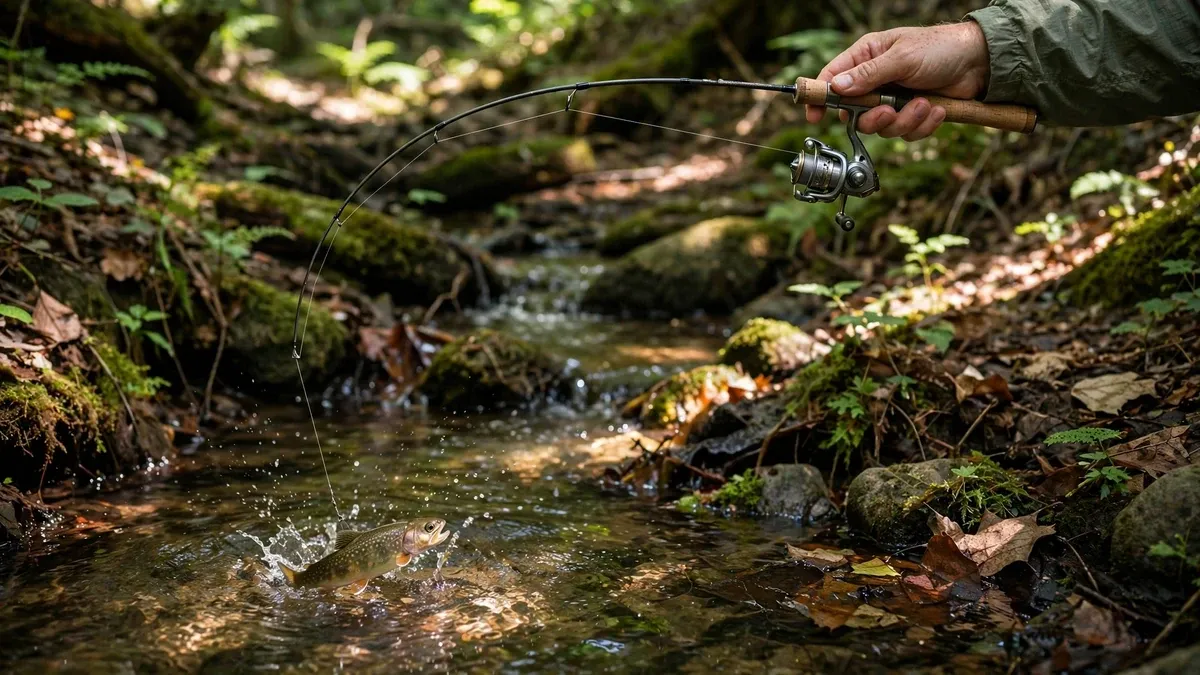
A great ultralight fishing setup is a balanced system, not just a small rod. When the rod loads properly with a 1/16 oz lure, the reel balances the blank, and the line lets the bait behave naturally, light tackle becomes the most fun way to catch trout, crappie, bluegill and perch.
By Natalia · Updated 15 October 2026 · 8-minute read
What “ultralight” means in practice
Ultralight is a rod power rating, not a length. Power describes how much force it takes to bend the blank; action describes where it bends. An ultralight rod bends deeply under light load, which is exactly what lets it cast a 1/32 oz jig head or a tiny inline spinner with any accuracy. Most ultralight blanks are printed with a 1–6 lb line rating and a 1/32–1/4 oz lure rating, and staying inside those numbers is the whole game.
The payoff of fishing light is twofold: presentations look natural because the lure is not dragging a rope behind it, and every fish feels twice as big. The trade is that you cannot muscle anything. Ultralight fishing rewards patience, a working drag and knots you trust.
Start with the rod: 5′ to 6’6″ of fast, sensitive blank
The rod is the decision that shapes everything else. Choose length by the water you fish most:
- Tight streams and brushy creeks: 5′ to 5’6″. Short rods make accurate, low sidearm casts under overhanging limbs and keep you from slapping branches on the backcast.
- Open banks, ponds and lakes: 6′ to 6’6″. Longer rods add casting distance with 1/16 oz baits, pick up slack line faster on the hookset, and give better line control when mending across current.
Look for fast or extra-fast action: the tip should flex easily while the midsection stays firm. That soft tip loads on a 1/32 oz jig; the firmer backbone sets the hook and steers the fish. Graphite blanks are the standard because they telegraph the difference between a pebble and a bite.
Check the printed ratings before you buy. A rod rated 1/32–1/4 oz is genuinely ultralight; one rated 1/8–1/2 oz is a light rod wearing an ultralight label.
Reel: a 1000-size spinner that balances the rod
The reel’s job is to balance the rod at the handle and hold enough light line. The 1000 size class is the standard match: reels in this class usually weigh 6–8 oz, carry roughly 110 yards of 4 lb monofilament, and turn 5.2:1 to 6.2:1, a comfortable retrieve speed for small spinners and jigs.
Do: mount before you commit
Set the reel on the rod in the shop. The combo should feel neutral in your hand, not tip-heavy. A reel that is too heavy kills the sensitivity that makes ultralight gear worthwhile.
Don’t: trust the size number alone
Brand sizing is inconsistent. Compare actual reel weight, spool capacity and line lay instead of assuming every “1000” is the same reel.
Two features matter more than bearings or looks: a smooth, adjustable drag with fine clicks (you will fish it light, around 1–1.5 lb of pressure on 4 lb line) and a spool that lays line evenly. A spare spool is a genuine bonus, load one with mono and one with braid-plus-leader and you can switch personalities mid-trip. For a component-by-component tour, read spinning reel parts explained, then narrow your shortlist with our spinning reel size chart and best ultralight spinning reels guide.
Line: 2–6 lb, chosen for the water
Line is where ultralight setups live or die. Diameter controls casting distance, visibility and how naturally a 1/16 oz bait falls; strength controls how much abuse you can absorb.
- 4 lb monofilament: the default. Forgiving, cheap, easy to tie, and its stretch cushions headshakes from trout and crappie. If you buy one spool, buy this.
- 6 lb monofilament: near cover. Docks, brush piles and rock give you one surging run before a break-off; the extra 2 lb is cheap insurance.
- 6–10 lb braid with a 4–6 ft fluorocarbon leader: maximum feel. Braid casts tiny lures farther and telegraphs every tick, but it has no stretch and is highly visible, so the fluoro leader is doing real work at the business end.
Fill the spool to about 1/8″ below the lip, underfilled spools choke casting distance with light lures. Tie with a Palomar or improved clinch knot, wet every knot before cinching, and retie after every snag or abrasion. If you throw inline spinners, a small snap swivel 18″ above the lure stops line twist from ruining your day. Load it right the first time with our guide on loading line the right way; loose, twisted line is the number one casting complaint on light gear.
Lures: 1/32 to 1/8 oz covers almost everything
Build around the rod rating, not the tackle-shop wall. A dozen well-chosen baits in the right weights outfish a box of random heavies.
| Category | Go-to weights | When it shines |
|---|---|---|
| Inline spinners | 1/16–1/8 oz | Searching trout streams; steady retrieve across current seams |
| Micro jigs + 1–2″ grubs or tubes | 1/32–1/16 oz heads | Crappie around brush, bluegill on beds, vertical presentations |
| Casting spoons | 1/16–1/8 oz | Perch and stocked trout when fish are chasing |
| Micro crankbaits | 1/8 oz class | Shallow flats for crappie and aggressive bluegill |
| Live-bait rigs | #8–#12 hooks, split shot | Worms or minnows under a small float for finicky biters |
For the mechanics of a small-jig presentation, see our jig guide. For crappie-specific depth and structure calls, read crappie fishing tips, and for stream trout approach, how to catch brown trout.
Three ready-made combos by water
| Water | Rod | Reel | Line | Lures |
|---|---|---|---|---|
| Tight trout stream | 5’6″ UL, fast | 1000-size | 4 lb mono | 1/16 oz inline spinners, small spoons |
| Open lake or pond | 6’6″ UL, fast | 1000-size | 6–10 lb braid + 4 lb fluoro leader | 1/16–1/8 oz jigs, micro crankbaits |
| Crappie around docks and brush | 6′ UL, extra-fast | 1000-size | 4–6 lb mono | 1/32–1/16 oz jig heads with 1–2″ plastics |
Fish ultralight gear with control
- Cast inside the rod’s comfort zone. A 6′ ultralight throws a 1/16 oz spinner 30–40 feet effortlessly; forcing 60 feet with a lob ruins accuracy. Move your feet instead.
- Watch the line, not just the rod tip. On the fall, a jig bite often shows as the line jumping, stalling or swimming sideways before you feel anything.
- Retrieve slow, then slower. A steady slow-roll keeps spinners thumping; for jigs, lift the tip a few inches, pause, and let the bait pendulum back on a semi-slack line.
- Set the drag at roughly 25–30% of line strength, about 1–1.5 lb on 4 lb mono. Then trust it: keep the tip up and let the rod’s bend absorb runs instead of pumping the fish.
- Retie constantly. Light line nicks on every rock and dock piling. A fresh knot every fish or two is the cheapest insurance in fishing.
For a broader trip-planning framework that pairs well with light tackle, see our essential fishing tips.
Five mistakes that ruin ultralight days
1. An oversized reel. A 2500-size reel on an ultralight rod feels like a doorknob on a fly rod, tip-heavy, numb and tiring. 2. Line far heavier than the water demands. 10 lb mono on an ultralight rod coils off the spool, kills lure action and halves your casting distance. 3. A locked-down drag. With 4 lb line, a drag set for bass fishing snaps on the first run; back it off until line pulls out with steady hand pressure. 4. Dry knots. Cinching a dry Palomar on light mono weakens it dramatically, always wet the knot. 5. Lures over the rod rating. A 3/8 oz bait on a 1/32–1/4 oz rod casts like a brick and overloads the tip on the hookset.
For trout-specific reel picks that pair well with these rods, see our trout spinning reel guide.
Frequently asked questions
What does ultralight mean in fishing?
Ultralight describes a power class of rod, and by extension the reel, line and lures that match it. An ultralight rod is typically rated for 2–6 lb line and 1/32–1/4 oz lures, with a soft tip that loads on very light baits. It is a finesse system built for small lures and modest-sized fish, not simply a short rod.
What size reel is best for an ultralight fishing setup?
A spinning reel in the 1000 size class is the standard match for ultralight rods, light enough to balance the blank, with enough spool capacity for 2–6 lb line. Compare actual reel weight and line capacity rather than trusting the size number alone, since sizing differs between brands.
Can you catch big fish on an ultralight fishing setup?
You can land a surprisingly large fish on ultralight gear if you play it correctly: keep the rod tip up, let the drag work, and never horse the fish. But ultralight tackle is a poor choice around heavy cover or for species that demand strong hooksets, that is where break-offs and pulled hooks happen.
What line is best for ultralight fishing?
Four-pound monofilament is the forgiving default: it casts well, ties easily and absorbs headshakes. Step up to 6 lb mono near cover, or run 6–10 lb braid with a 4–6 ft fluorocarbon leader when you want maximum sensitivity and casting distance with light lures.
Affiliate disclosure: baitcastingreelz.com participates in the Amazon Associates Program and may earn from qualifying purchases. The optional link is for convenience and does not affect editorial guidance.