Spinning reel fundamentals · US guide
Parts of a Spinning Reel Explained
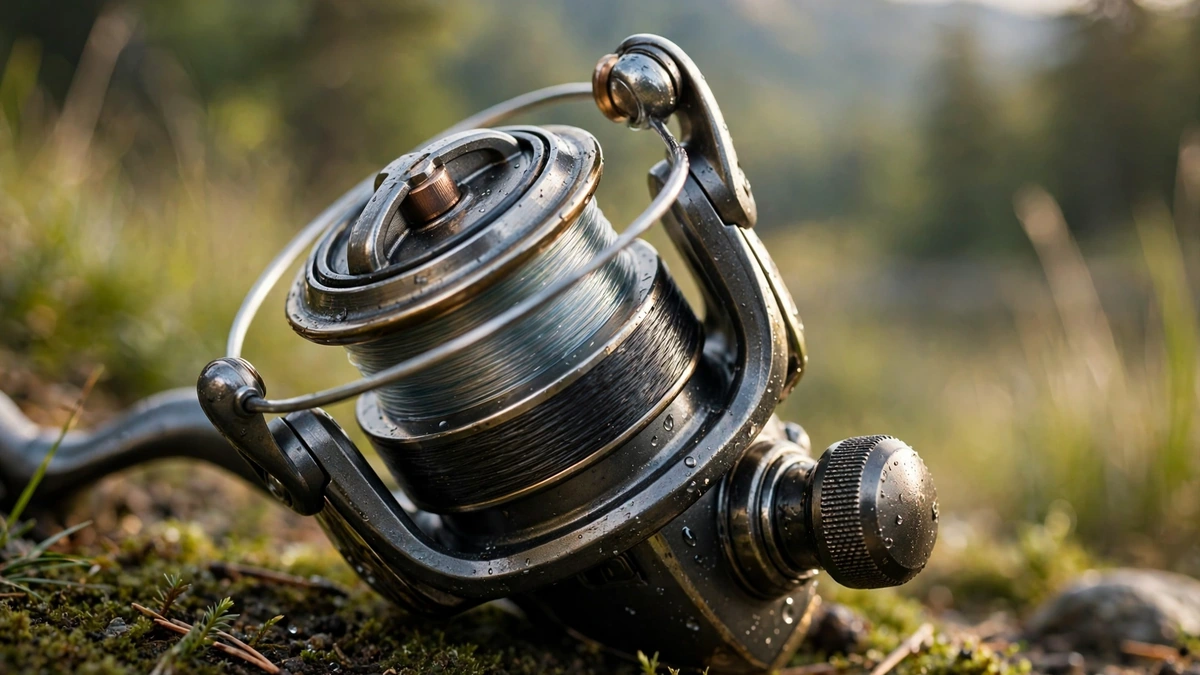
The parts of a spinning reel only look complicated until you learn what each one does for you. The spool holds your line and feeds it on the cast, the bail and rotor manage it during retrieve, the drag protects light line from strong fish, and the humble line roller quietly prevents most of the twist problems anglers blame on their knots. Learn the twelve parts below and you will diagnose tackle problems in seconds.
By baitcastingreelz.com · Updated 15 October 2026 · 14-minute read
How a spinning reel works, in one paragraph
That fixed-spool design is why spinning reels handle light lures and light line so gracefully — and why line lay and roller condition matter so much. See the full sequence in our guide on how to cast a spinning reel.
12 parts of a spinning reel and what they do for you
1. Reel foot and stem
The foot slides into the rod’s reel seat and locks the reel to the rod; the stem is the arm connecting foot to body. This is the foundation of the whole outfit — a loose foot lets the reel rock under load, which feels like a gear problem but is only a seating problem. Snug it firmly and recheck after it rattles around in the truck.
2. Body and housing
The body is the frame everything else bolts to: gears, rotor, handle and drag all depend on it staying rigid and aligned. When the reel feels solid instead of flexy under a heavy fish, that is the body doing its job. Graphite keeps weight and price down; aluminum adds rigidity you feel as crisper gears. Tight tolerances and decent sealing matter most — flex and water intrusion kill reels faster than any fish.
3. Spool
The spool is the fixed cylinder your line lives on. Because it never rotates during the cast, line leaves in free coils — which is why spinning reels cast light lures so well. Spool depth and diameter set your line capacity and casting distance. Fill to about 1/8 inch below the lip: underfill and you lose distance, overfill and you feed loops to the wind. Most modern spools are braid-ready so slick braid cannot slip under drag pressure.
4. Drag knob and drag washers
The knob on top of the spool sets how much resistance a fish feels when it pulls line; inside, a stack of washers — felt, carbon or a hybrid — creates that friction. This is your insurance policy: set the drag to roughly a quarter to a third of your line’s breaking strength, and light line survives surging fish. Set it streamside by pulling line by hand — and never use it as a casting adjustment.
5. Bail wire
The bail is the wire arm that flips open to free line for casting and snaps closed to capture it for retrieve. It is the most-handled moving part on the reel. Close it by hand after every cast instead of cranking the handle to trip it — the handle-trip slam wears the mechanism and creates the loose loop that becomes a wind knot. If the bail feels gritty or snaps shut weakly, service it before it fails streamside.
6. Line roller
The line roller is the small bearing-mounted wheel on the bail arm where line turns the corner onto the spool. Every inch of retrieved line passes over it, so when it stops spinning freely — gummed up with salt, grit or dried conditioner — it drags line across a fixed surface instead of rolling with it. The result is twist, friction and wear where you can least afford it. Flick it with a fingertip before trips — it should spin freely and silently.
7. Rotor
The rotor is the cup-shaped assembly that spins around the fixed spool during retrieve, carrying the bail arm and line roller with it. Its job is winding: each handle turn sweeps the roller around the spool to lay line on. A well-balanced rotor starts smoothly and does not wobble at speed, keeping line lay even. If the rotor wobbles or scrapes, something is bent or loose, and it will not fix itself.
8. Handle and knob
The handle is your direct connection to everything the reel does — you turn it, the gears turn the rotor. Handle length sets cranking leverage, while the knob is what your hand lives on for hours. A comfortable, properly sized knob reduces hand fatigue: slim knobs suit finesse work, oversized power knobs suit heavy cranking. Make sure the handle locks solidly with no play.
9. Main shaft and oscillation system
Hidden inside, the main shaft drives the spool up and down through its travel as you retrieve — this is the oscillation system, responsible for laying line evenly. Good oscillation stacks line in a neat cylinder that peels off cleanly; poor oscillation piles it at one end, creating the taper that sheds loops. Uneven stacking is usually fixed with a spool washer adjustment per the manufacturer’s guidance.
10. Drive gear, pinion gear and bearings
The drive gear (connected to your handle) meshes with the pinion gear (driving the rotor) to convert cranking into winding — the ratio printed on the reel, like 6.2:1, is this relationship. Bearings sit at every friction point to keep that transfer smooth. What you feel as “smoothness” is gear mesh quality plus bearing condition. Grinding or a handle that turns rough under load means contamination or wear — rinse after salt use, service on schedule, and never ignore new noises.
11. Anti-reverse system
Anti-reverse stops the handle from spinning backward, so when a fish surges, its energy goes into the drag instead of back-driving the handle into your knuckles. Modern reels use a one-way roller bearing that engages instantly — that solid, no-backplay hookset feel is anti-reverse working. Many newer reels omit the manual on/off switch to improve sealing — let the drag do its job rather than back-reeling. If the handle ever slips backward under load, get the reel serviced.
12. Side cover and seals
Side covers give access to the internals, and the seals around them — plus sealed bearings on better reels — keep water, sand and grit out of the gears. Seals decide how a reel ages: a well-sealed reel shrugs off spray and rain, while an unsealed one wants a rinse and dry after every trip. Do not open side covers out of curiosity; layouts are model-specific, and reassembly mistakes create problems you did not have.
Use part knowledge to fix line problems fast
| Symptom | Part or system to inspect | First action |
|---|---|---|
| Loose loops or wind knots | Spool fill level and line lay | Check for overfill; close the bail by hand and take up slack first. |
| Twisted or prematurely worn line | Line roller and lure setup | Flick the roller with a fingertip; check whether the lure spins on retrieve. |
| Line piled at one end of the spool | Oscillation system and spool washers | Adjust spool washers per the manufacturer’s guidance. |
| Drag surges or sticks | Drag knob and washers | Back the drag off, work it through its range, then reset; service if still inconsistent. |
| Handle wobble or grinding | Handle seating, gears, bearings | Reseat the handle; rinse and dry; seek service if it persists. |
Correct line loading makes every part on this list work better. Follow our guide on how to spool a spinning reel, then balance the outfit with our spinning reel sizes guide. Still deciding between platforms? See baitcasting reel vs spinning reel.
Maintain the reel without over-servicing it
- Rinse gently after use. Wash off salt, sand and dirt with a light spray — never a hard jet at the body seams.
- Dry and inspect. Wipe the reel down, then check the bail action, line roller spin and line condition before it goes back in storage.
- Lubricate sparingly and correctly. A drop of oil on the line roller and handle knob bearings; grease only where the manufacturer specifies.
- Do not open the body on a whim. Model-specific service instructions beat curiosity — misplaced washers and springs are a classic self-inflicted repair bill.
- Know when to hand it off. Grinding gears, corrosion, a slipping anti-reverse or a rough drag deserve qualified service, not another season of hope.
A small maintenance kit matched to the reel maker’s instructions covers most of this routine.
For light-line finesse work where every part above matters more, our ultralight fishing setup guide shows how reel, rod, line and lure work as one system — and our spinning reel value guide helps you judge when a tired reel is worth servicing versus replacing.
Frequently asked questions
What are the main parts of a spinning reel?
The main parts are the reel foot, body, spool, drag knob and washers, bail wire, line roller, rotor, handle, main shaft and oscillation system, gears, bearings, and the anti-reverse system.
What is the difference between the bail and the rotor?
The bail is the wire arm that opens for casting and captures line for retrieve. The rotor is the larger assembly that spins around the fixed spool during retrieve, carrying the bail and line roller with it.
Why does my spinning reel create line twist?
Line twist usually comes from a spinning lure, poorly loaded line, a seized line roller, or reeling against a slipping drag. Fix the source — check the roller first — rather than spooling fresh line over the problem.
How often should a spinning reel be serviced?
For regular freshwater use, a clean-and-lube once a season plus rinsing after each trip keeps most reels healthy for years. Saltwater reels want a freshwater rinse after every outing and professional service at least annually.
Affiliate disclosure: As an Amazon Associate, baitcastingreelz.com may earn from qualifying purchases made through links on this page. Recommendations are based on on-water experience, not commissions.