Inshore fundamentals · US guide
Popping Cork Fishing: The Complete Inshore Rigging and Retrieve Guide
Popping cork fishing is the great equalizer of the inshore world. One simple rig — a cork, a leader, and a bait — calls speckled trout and redfish in from a distance, suspends your offering at the exact depth they’re feeding, and shows you the strike as it happens. Here’s how to rig it, work it, and read the water so the pop-and-pause does the heavy lifting for you.
By Natalia · Updated 15 October 2026 · 10-minute read
Why a popping cork works (and when it doesn’t)
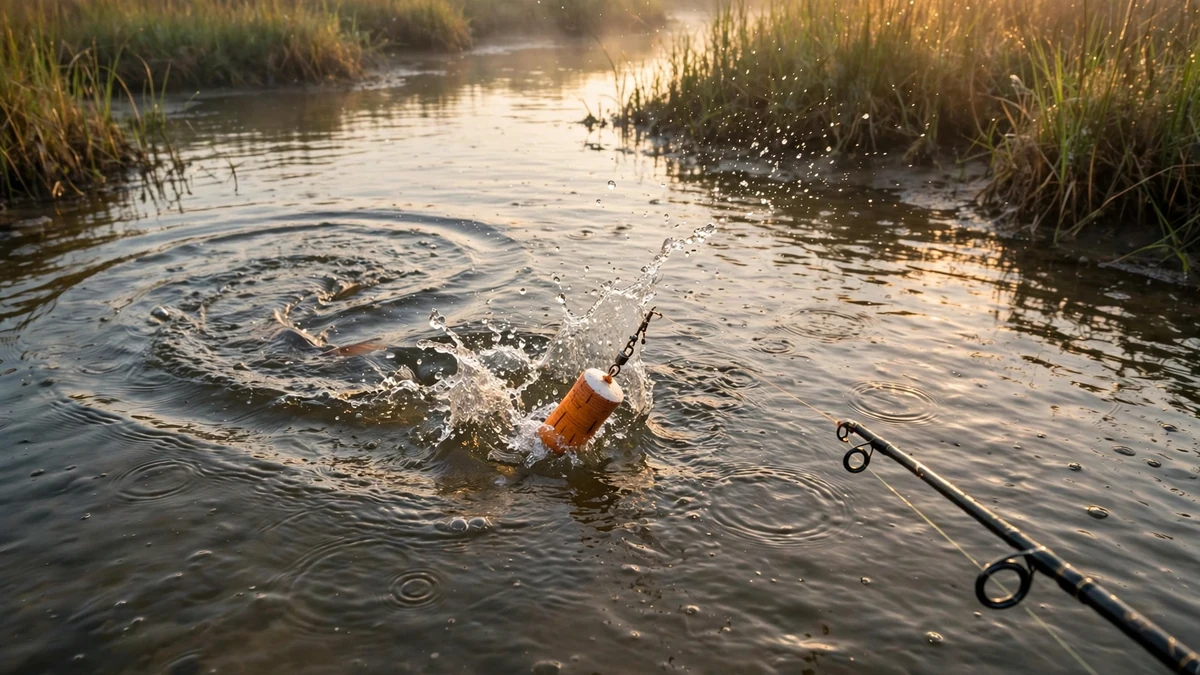
A popping cork does two jobs at once: it makes a surface disturbance that imitates feeding activity, and it suspends your bait at a fixed depth below it. Trout and redfish are curious and competitive — the splash of a fleeing shrimp draws them in, and the bait hanging motionless underneath is exactly what they’d find at a real commotion.
The rig shines in shallow, grassy flats and murky water where fish can’t see your bait from far off. It struggles in two situations: dead-calm water where a loud pop spooks everything within casting range, and fast-draining current that drags the cork through the zone before the bait ever gets a look. In those cases, quiet down or switch to a free-lined presentation.
Cork types: weighted, unweighted, and the hardware between them
Not all popping corks are built the same. The differences come down to weight, shape, and the noise-making hardware inside.
| Cork type | Design | When to reach for it |
|---|---|---|
| Weighted popping cork | Internal weight (often brass or lead) for distance and a louder chug | Wind, longer casts to potholes, and stained water where you need presence |
| Unweighted popping cork | Light body with minimal or no added weight | Skinny, clear water where a heavy splash would push fish off the flat |
| Oval / cupped-face cork | Concave face that displaces water on the snap | Everyday trout and redfish work — the classic Gulf Coast sound |
| Cigar / slip-style cork | Slim profile, quieter entry | Short-range work around docks, mangroves, or finicky fish |
| Bead-and-clicker cork | Glass or plastic beads that clack against the body | Murky water or night fishing, where the extra rattle helps fish home in |
Match the cork to the day, not the other way around. A heavy weighted cork slapped into 2 feet of glassy water is one of the fastest ways to clear a flat.
How to rig a popping cork, step by step
- Tie your main line to the top connection of the cork. Check the knot and the wire hardware before every trip — a rig that spins or tangles on the cast is usually a worn connection.
- Tie a leader to the lower connection. Start with 2 to 3 feet of 20- to 30-pound fluorocarbon. The bait should ride above the grass in a typical 3- to 4-foot flat; adjust from there.
- Add your hook or jighead. A circle hook for live shrimp under a float works for most inshore species; a 1/8 oz jighead with a soft plastic gives you an artificial option with the same rig.
- Test it at the boat, bank, or shoreline. Pull it through a few feet of water. The bait should trail naturally, the cork should recover upright, and nothing should foul or twist.
Optional supply: popping cork rig components
Pre-rigged popping corks get you on the water fast, while separate corks and leader material make it easier to tune leader length and cork style to the depth and conditions you’re fishing.
Hook and bait pairings by target species
Speckled trout
Live shrimp hooked through the horn on a circle hook is the gold standard. For artificials, a scented shrimp-profile soft plastic on a 1/8 oz jighead gets crushed over grass flats and around bait schools.
Redfish
Cut mullet, live finger mullet, or a live shrimp will all draw reds. Reds often take on the pause rather than the pop, so lengthen your dead time — 20 seconds or more — over potholes and along marsh drains.
Flounder
A mud minnow or small finger mullet suspended just off the bottom along sandy drop-offs and creek mouths. Flounder bites are usually a slow, deliberate pull of the cork rather than a splashy strike.
Snook (where in season)
Live pilchards or shrimp fished tight to mangrove edges and dock pilings. Use a slightly heavier leader — snook have raspy mouths and love to run you straight into structure.
Whatever the species, hook size follows bait size: a 1/0 or 2/0 circle hook covers most live shrimp, while a 3/0 handles bigger finger mullet. Keep hooks sharp — a popping cork rig sets the hook through several feet of leader and water, and a dull point wastes that advantage.
Casting technique and the pop-and-pause cadence
Cast past the zone you want to work — over the pothole, beyond the grass edge, upstream of the drain — and bring the rig through the lane. The pop itself comes from a short, sharp snap of the rod tip, not a long sweep: you want the cork to chug and splash in place, then immediately settle back upright.
Watch the cork, not just your line — it is your strike indicator. A disappearance, a sideways skate, or a slow steady pull all deserve the same response: reel until the line comes tight, then lift firmly into the fish. With circle hooks, skip the hard hookset; just reel into the pressure.
Reading tide and wind for popping cork fishing
Tide moves bait, and bait moves inshore fish — so your cork strategy should move with it.
- Rising tide: Fish push up onto flooded grass and marsh edges. Shorten your leader to keep the bait above the new growth and cast tight to the bank line.
- Falling tide: Bait drains off the flats through cuts, creek mouths, and potholes. Position yourself to work the rig down-current through these funnels, where trout stack up to intercept.
- Slack tide: The pause-heavy version of your cadence earns its keep here. Fish roam slower and inspect longer, so give them time.
- Wind at your back: A weighted cork earns its place — you’ll reach potholes and edges you can’t touch with an unweighted rig. Keep contact by pointing the rod at the cork and reeling out the bow.
- Wind in your face: Shorten up. Cast lower with a sidearm motion, switch to the unweighted cork if accuracy matters more than distance, and work the water you can actually reach.
A drifting cork is still a fishing cork. Let wind or current carry the rig through a lane rather than fighting it — just keep enough contact to see the cork when a fish takes.
Four popping cork mistakes that cost fish
1. Popping nonstop
Noise draws attention; a pause gives the bait time to work. Constant jerking turns the rig into a surface distraction with no suspended presentation underneath.
2. One leader length for every spot
Depth changes across a flat, an edge, and a drain. Check the bottom and the grass, then set the leader so the bait hangs in clean water just above the cover.
3. Too much weight under the cork
Extra jighead weight helps casting and current control, but it can make the bait plunge unnaturally on every pop. Use only what the depth and current actually require.
4. Looking away during the pause
Most strikes are visual — the cork sliding away, tipping, or vanishing. Keep it in sight through the whole pause, or you’ll miss the fish you worked to attract.
Frequently asked questions
What fish can you catch with a popping cork?
Popping corks are most associated with speckled trout and redfish along the Gulf and Atlantic coasts, but the rig also catches flounder, snook, and other inshore feeders. Match your bait, leader, and hook to the local species and regulations.
How long should a popping cork leader be?
Start around 2 to 3 feet so the bait rides above the grass in typical 3- to 4-foot flats. Shorten it if the bait fouls on vegetation; lengthen it gradually over deeper edges or when fish hold higher in the water column.
Should you use a weighted or unweighted popping cork?
Use a weighted cork when you need casting distance or a louder pop, especially in wind. Choose an unweighted cork for short, quiet presentations in shallow clear water where a heavy splash would push fish away.
How often should you pop a cork?
Begin with one short pop followed by a pause of 10 seconds or more. Lengthen the pause in calm water or when fish are finicky; pop a little more often when trout are visibly chasing bait.
Can you use artificial bait under a popping cork?
Yes. A 1/8 oz jighead with a shrimp- or baitfish-profile soft plastic is a proven combo — scented baits like Gulp-style shrimp are especially effective for trout. Use just enough weight to track correctly without making the fall unnaturally fast.
Affiliate disclosure: baitcastingreelz.com participates in the Amazon Associates Program and may earn from qualifying purchases. The optional link is for convenience and does not affect editorial guidance.