Baitcaster Fundamentals · 2026
When to Use a Baitcaster: How to Know Your Reel Is Ready to Fish
Knowing when to use a baitcaster — and when your reel is actually ready — comes down to a simple check: line, lure, drag, brakes and spool tension all set for the conditions in front of you. A baitcaster is “good to go” when short test casts are clean, the spool stops on command, and the settings match the lure you tied on. This guide gives you the full readiness sequence.
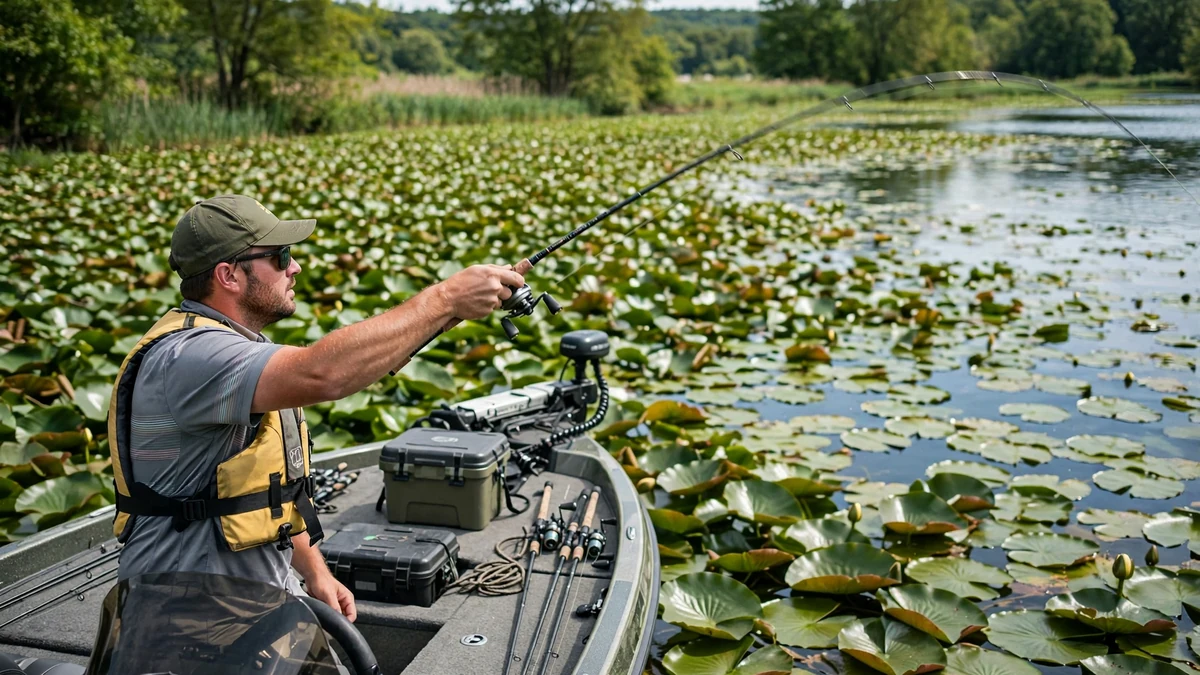
What “good to go” actually means
Fishing-ready does not mean the reel is set for maximum casting distance. It means you can make controlled casts, place the lure where you intend, and avoid creating loose line that causes trouble later. The key principle: a baitcaster is never permanently “dialled in.” A reel that was perfect for a 1/2 oz spinnerbait needs different settings for a weightless worm, a bulky frog or a windy shoreline. Readiness is always relative to the lure and conditions in front of you — which is exactly when to use a baitcaster with confidence, and when to pause and re-tune.
1. Check the line before touching the settings
Line readiness check
Look, feel and rewind
Look for loose loops, buried braid, flat spots or abrasion. Pull a short length through your fingers to feel for nicks — fluorocarbon and mono both weaken invisibly after abrasion. If a fish or snag pulled line hard last trip, strip off enough to reach clean wraps and wind it back on under steady tension. This small reset prevents a remarkable number of next-cast problems, including the mysterious mid-session backlashes that have nothing to do with your settings.
Also confirm fill level: line should sit about 1/8 inch below the spool rim. Overfilled spools overrun; underfilled spools cast poorly and dig. If the line lay looks uneven or the spool is low, re-spool properly before tuning anything — our how to spool a baitcasting reel guide covers tension winding and fill level in detail.
2. Tie on the lure before you tune the reel
Every brake and tension setting depends on lure weight, so tuning with no lure — or the wrong lure — is wasted effort. Tie on the actual lure you plan to fish first. This is also the moment to sanity-check the pairing: a 1/8 oz finesse bait on a standard deep-spool reel will fight you all day regardless of settings, while a 3/8–3/4 oz lure in the rod’s rated range gives the reel a fair chance. When in doubt about whether the reel suits the technique at all, our baitcasting reel vs spinning reel guide helps you decide.
3. Set the drag for the line and cover
The star drag manages the fish, not the cast — but a reel is not ready if the drag is wrong. Set roughly one-quarter to one-third of your line’s breaking strength as a baseline, then adjust for cover: heavier cover and braid justify a firmer drag to keep fish out of the junk; open water and light line call for a lighter setting that protects against break-offs. Pull line against the drag by hand to confirm it slips smoothly instead of sticking — a sticky drag costs fish. For bass-specific drag logic around cover, see how to set up a baitcaster for bass fishing.
4. Start brakes and spool tension conservatively
- Use the actual lure you plan to fish — settings are lure-weight specific.
- Start magnetic or digital brakes toward the higher side of their usable range.
- For centrifugal systems, use the manufacturer’s conservative starting configuration.
- Run the spool-tension drop test: lure should fall slowly; the spool should stop when it hits the ground.
- Add control for wind, light lures, bulky lures and accuracy-focused casts.
The full reasoning behind this order — tension first, brakes second, drag independent — is in how to adjust your baitcasting reel. If the part names are unfamiliar, baitcasting reel parts explained names every dial before you turn it.
5. Pass the short-cast test
The readiness test
Cast, feather and stop
Make three short sidearm casts at half effort. Feather the spool lightly in flight and stop it firmly with your thumb before the lure lands. You are watching for clean line release, no overrun at launch, and a spool that stops dead on your thumb’s command.
Pass criteria
Three clean casts in a row
Three consecutive clean short casts means the reel is good to go — now you can lengthen casts and, if you want more distance, back the brakes off one click at a time. Any backlash during the test means something is off: diagnose by where it starts (launch = tension, mid-flight = brakes, landing = thumb timing) rather than changing everything at once.
A compact practice plug is useful for quick, hook-free warm-up casts before fishing around people, boats or heavy cover — two minutes of warm-up reveals tuning problems before they cost you a fishing spot.
6. Recheck when conditions change
Readiness expires when conditions change. Switch lures? Re-run tension and brakes — a 1/2 oz jig to a weightless worm is a full re-tune, not a tweak. Wind picks up? Add brake. Move from open water to heavy cover? Firm up the drag. Switch from mono to braid? Expect different spool behaviour and re-verify. The anglers who re-check most often are the anglers who backlash least. Strong wind deserves special respect: more brake, shorter casts, smoother motion — and if lures get very light or the headwind gets brutal, a spinning setup may simply be the more efficient tool that day.
When a baitcaster is the wrong tool
Part of knowing when to use a baitcaster is knowing when not to. Reach for spinning gear instead when you are throwing under 1/4 oz most of the day (finesse bass, trout, panfish), when a beginner or young angler needs to catch fish immediately, when casting into a brutal headwind with light baits, or when you simply have not practised and the trip matters. There is no shame in it — tournament pros keep spinning rods on deck for exactly these situations. The baitcaster’s moment is medium-to-heavy lures, accuracy around cover, and techniques where its winching power and line control earn their keep: flipping, pitching, frogging, deep cranking and swimbaits. Match the tool to the job and both reels stay heroes.
30-second baitcaster readiness checklist
- Line: no nicks, no loose loops, filled to 1/8 inch below the rim.
- Lure: the actual lure tied on, matched to the rod’s rating.
- Drag: smooth, set for line strength and cover.
- Tension: drop test passes — slow fall, spool stops on landing.
- Brakes: conservative for the lure and wind.
- Test: three clean short casts, spool stops on thumb command.
Read next
Keep the reel ready all season: how to adjust your baitcasting reel, how to remove backlash from a baitcaster, how to clean and maintain a baitcaster reel, and baitcaster tips for beginners.
Frequently asked questions
How do I know when a baitcaster is ready to fish?
Run the five checks: line condition and fill, lure tied on, drag set for line and cover, conservative brake and tension settings for that lure, and three clean short test casts. If all five pass, the reel is ready.
Do I need to reset a baitcaster when I change lures?
Yes, at minimum re-check spool tension with the drop test, since every setting depends on lure weight. A significant weight change deserves a full re-tune: tension first, then brakes, then test casts.
Should the spool stop when the lure hits the ground?
Yes — that is the classic spool-tension drop test. With the clutch disengaged, the lure should fall slowly and the spool should stop (not overrun) when the lure lands. If the spool keeps spinning, tighten tension.
What is the first sign my baitcaster is not ready?
Loose or damaged line, a lure mismatched to the rod, a sticky drag, or any overrun during short test casts. Stop and reset rather than fishing through it — problems compound once line gets loose on the spool.
Can I fish with a baitcaster in strong wind?
Yes, with more brake, shorter casts and smooth motion. But when lures are very light or the headwind is strong, a spinning setup is often the more efficient choice — there is no prize for suffering.
© baitcastingreelz.com · Affiliate disclosure: As an Amazon Associate, baitcastingreelz.com earns from qualifying purchases. The optional tool link is provided for convenience and does not change the informational guidance. Product availability and specifications may change.