Baitcaster Care Guide · 2026
How to Clean & Maintain a Baitcaster Reel
Learning how to clean a baitcasting reel properly is simpler than most anglers fear: a five-minute after-trip routine handles 90% of maintenance, light lubrication twice a season keeps bearings and gears happy, and an annual deep clean catches what the routine misses. This guide covers the safe routine, oil versus grease, saltwater care, troubleshooting, and when to hand the reel to a professional.
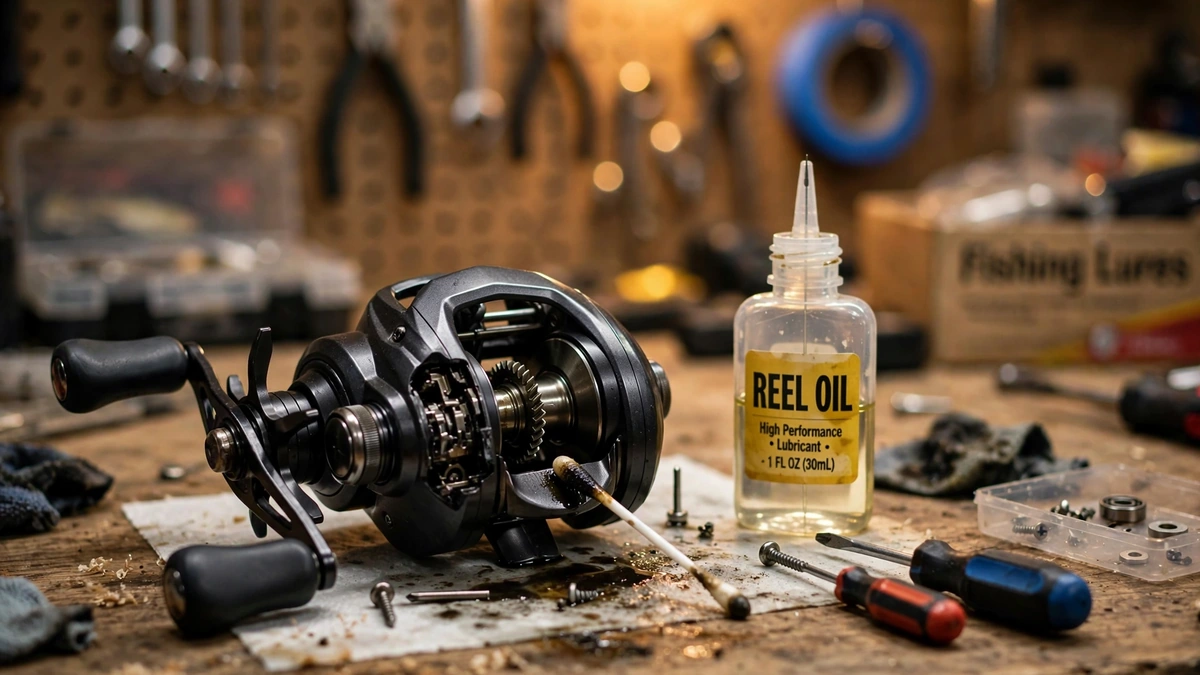
The after-trip routine: five minutes that protects the reel
Most baitcaster maintenance happens before the reel ever needs to come apart. A quick clean after fishing prevents salt crystals, dried mud and grit from becoming an internal problem. This matters most after brackish or saltwater fishing, but it is a good freshwater habit as well — grit in the levelwind track and under the spool is the slow killer of casting performance.
Step 1
Secure the reel before a light rinse
Tighten the star drag before any water touches the reel — this seals the drag stack against intrusion. Then rinse gently with a light fresh-water spray or a damp cloth. Never use high pressure: it drives water, salt and grit past seals into the bearings and gears.
Step 2
Wipe the exterior and line guide
Wipe the frame, sideplates, handle and knobs with a microfiber cloth. Run a cotton swab along the levelwind track and line guide — grit hides here and scores line on later casts. A soft brush reaches the textured areas around the thumb bar.
Step 3
Check the line while you are there
Pull several yards through your fingers feeling for nicks, flat spots and abrasion. Line is a wear item; catching damage now prevents the break-off later. Strip past any damaged section and rewind clean wraps under tension.
Step 4
Dry the reel completely
Shake off excess water, wipe dry, and let the reel air-dry fully before storage — trapped moisture corrodes bearings and swells drag washers. Store in a cool, dry place, ideally in a reel cover or case rather than loose in a damp tackle bag.
Step 5
Back off the drag for storage
Once dry, back the star drag off. Storing a reel with the drag cranked tight compresses the drag washers into a permanent set, and you will feel it as a sticky, jerky drag next trip. This thirty-second habit extends drag life enormously.
Basic baitcaster cleaning supplies
You do not need a workshop — a small kit covers everything in this guide. Reel-specific oil and grease (not general-purpose substitutes), microfiber cloths, cotton swabs, a soft brush and a precision screwdriver set for side-plate screws handle routine and deep cleaning alike. Keep the kit with your tackle so the after-trip routine actually happens.
For wiping the frame, level wind and tight external areas without scratching finishes.
Use a light reel oil only at points the manufacturer identifies. One small drop is usually enough.
Use a thin film of reel grease on appropriate gear teeth or sliding points—never a heavy coating.
Useful only for models you are comfortable servicing and for hardware specified in the reel’s diagram.
How to deep clean a baitcaster safely
Once a season — or after a dunking, a gritty trip or noticeably degraded performance — give the reel a deeper service. Work over a light-coloured towel (small parts bounce), and photograph each stage with your phone; modern reels hide springs and tiny screws that are much easier to reassemble with a visual record.
Step 1
Remove the side plate and spool
Following your manual’s exploded diagram, remove the handle-side side plate and lift out the spool. Note the order of any washers and spacers — lay them out left to right in removal order.
Step 2
Clean accessible parts
Wipe the spool shaft, brake components and interior with a lightly dampened cloth, then dry. Use cotton swabs for the brake track and tight corners. Remove old, dirty lubricant with a cloth — do not flood the reel with solvents unless the manual approves.
Step 3
Inspect before you lubricate
Look for corrosion, cracked parts, worn drag washers and rough bearings (spin them — gritty means replace or professional service). Cleaning without inspecting just seals problems back inside.
Step 4
Lubricate lightly and reassemble
Apply lubrication per the oil-vs-grease guidance below, reassemble in reverse order using your photos, and function-test: the spool should spin freely, the clutch engage crisply, the drag slip smoothly and the levelwind travel evenly.
Oil vs. grease: use less than you think
Oil goes on bearings and the spool shaft — one small drop per bearing. Oil keeps high-speed parts spinning freely; too much migrates where it should not and attracts debris. Grease goes on gears and heavy-contact surfaces — a light film, not a packing. Grease cushions load and resists washout; too much creates drag and sluggishness. The universal rule: if you can see globs, you used too much. Always use products designed for fishing reels — automotive greases and penetrating oils like WD-40 can attack plastics, swell seals or leave residues that impair the precise tolerances baitcasters depend on. When in doubt, your reel manufacturer’s own oil and grease are the safe choice.
Extra steps after saltwater or brackish water
Saltwater is the ultimate test of maintenance discipline. Salt crystals are abrasive, hygroscopic and corrosive — they keep working long after the trip ends. After every salt or brackish trip, run the full after-trip routine the same day; never let a salt-exposed reel sit. If you fish salt regularly, consider reels with sealed or shielded corrosion-resistant bearings and protective frame coatings — and shorten your deep-clean interval to every few months. Sealed does not mean maintenance-free; it means maintenance-forgiving.
- Tighten the drag before a gentle fresh-water rinse.
- Never pressure-spray the reel.
- Wipe dry, then allow it to air-dry fully before storage.
- Check the line guide, handle and exposed fasteners for salt residue.
- Back off the drag once the reel is dry.
- Schedule professional service sooner if the reel gets submerged, gritty or rough.
Common baitcaster problems and the sensible first check
Grinding when cranking: grit in gears or dry bearings — clean and lubricate; persistent grinding means worn parts. Sticky or jerky drag: washers glazed or compressed from storage under tension — clean the stack, back the drag off in future. Reduced casting distance: dirty brake track, dry spool bearings or line digging from loose winding — clean, oil lightly, check line lay. Handle hard to turn: corrosion or over-tightened parts — inspect, clean, re-lubricate sparingly. Reel was submerged: do not just dry the outside — deep clean promptly or send it for service; water inside bearings starts corrosion within days. When any problem survives a proper clean and lube, that is the technician’s cue, not a reason to force parts.
Read next
Keep the reel fishing like new: baitcasting reel parts explained, how to spool a baitcasting reel, how to adjust your baitcasting reel, and when a baitcaster is good to go for fishing.
Frequently asked questions
How often should I clean a baitcaster reel?
Wipe down and rinse after every trip, deep-clean once a season or after saltwater dunkings and gritty trips, and lubricate bearings and gears lightly once or twice a season. Heavy saltwater use shortens every interval.
Can I rinse a baitcaster with water?
Yes — gently. Tighten the drag first, use a light fresh-water spray or damp cloth, and never pressure-spray, which drives water and grit past seals into bearings and gears. Dry completely before storage.
Should I oil or grease a baitcaster?
Both, in different places: oil (one drop) on bearings and the spool shaft; a light film of grease on gears and heavy-contact surfaces. Use products designed for fishing reels, and use less than you think — excess lubricant attracts debris.
Can I use WD-40 or automotive grease on a baitcaster?
Not recommended. General-purpose products can attack plastics, swell seals or leave residues unsuited to a baitcaster’s precise tolerances. Use reel-specific oil and grease, ideally your manufacturer’s own.
When should I send a baitcaster to a technician?
When it grinds after cleaning, the drag stays irregular, corrosion is visible, it was submerged and you are not comfortable deep-cleaning it, or any disassembly feels beyond your confidence. Professional service is cheaper than a ruined reel.
How do I maintain a baitcaster used in saltwater?
Rinse gently with fresh water the same day, dry completely, back off the drag, and deep-clean every few months. Prefer reels with sealed corrosion-resistant bearings — and remember sealed means forgiving, not maintenance-free.
© baitcastingreelz.com · Affiliate disclosure: As an Amazon Associate, baitcastingreelz.com earns from qualifying purchases. Supply links are provided for convenience and do not change the instructional guidance. Product availability and specifications may change.