Tackle Care Guide
How to Oil a Baitcasting Reel: A Step-by-Step Guide That Actually Works
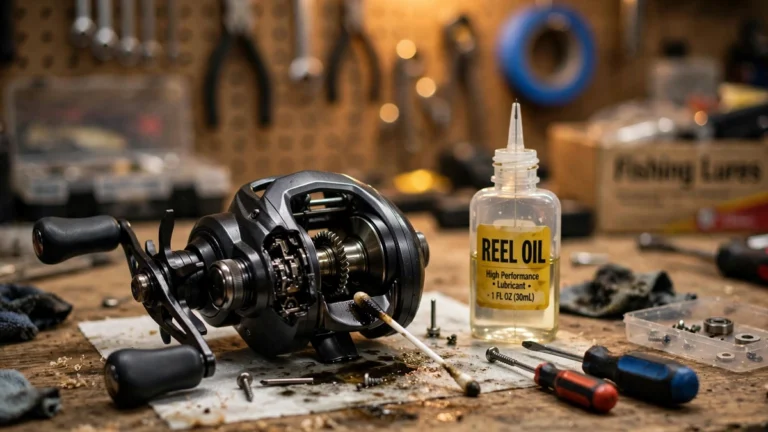
To oil a baitcasting reel, remove the side plate and spool, then place one drop of light reel oil on each spool bearing, two to three drops on the worm gear, and a drop on each handle knob. Grease (not oil) goes on the main and pinion gears. Keep oil away from the drag washers and brake shoes. The whole job takes about ten minutes, and doing it once or twice a season keeps your casting distance and smoothness right where they should be.
Most maintenance guides try to cover every reel type in one page, which is why they say almost nothing useful about your reel. This guide is only about baitcasting reels: which parts need oil, which need grease, how much to use, and the spots where oil will actively hurt performance.
Before you start, it helps to know what is inside your reel. Our baitcasting reel parts guide names every component you will meet below, and if your reel also needs a deeper clean, pair this guide with our full baitcaster cleaning routine.
What you need before you start
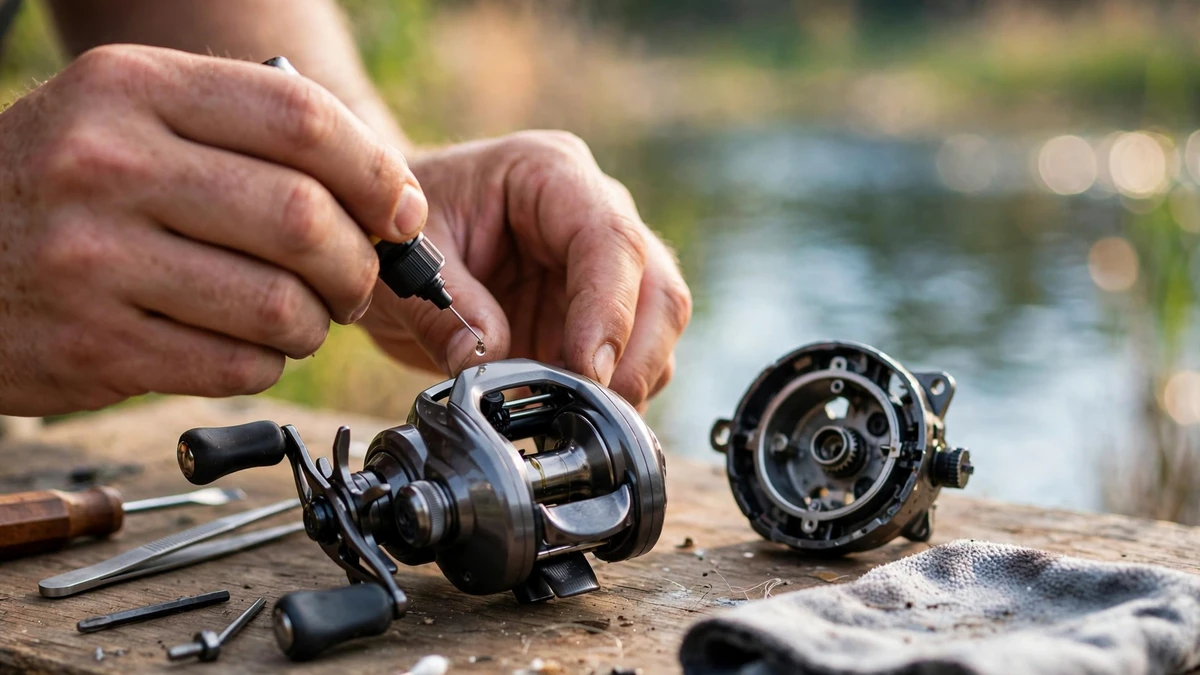
You do not need a workbench full of tools. Here is the short list:
- Light reel oil made for fishing reels (not household oil, not WD-40)
- Reel grease for the gears (covered in the oil vs grease section below)
- A small Phillips screwdriver, for reels with a screwed side plate or oil port cover
- Cotton swabs and a clean, lint-free cloth
- A small tray or bowl to hold the side plate screws and small parts
Work on a clean table with good light, and keep small screws and springs in the tray so nothing rolls away.
Oil vs grease: the one rule that matters most
Here is the rule that decides whether your maintenance helps or hurts: bearings get oil, gears get grease. Oil is thin, so it flows into fast-spinning bearings without dragging them down. Grease is thick, so it stays put on slow-turning, high-pressure gear teeth. Swap them and you get the worst of both: greased bearings cast like they are full of mud, and oiled gears fling the oil off and run metal on metal.
Some older guides tell you to put oil directly on the gears through the oil port. That advice is outdated. Modern practice, and every major manufacturer, says grease on the gears. Here is the full breakdown:
| Part | Use | Why |
|---|---|---|
| Spool bearings (2 to 3) | Oil, one drop each | Fastest-spinning parts in the reel; thin oil keeps the spool free |
| Worm gear (level wind) | Oil, 2 to 3 drops | Slides back and forth constantly; oil keeps the line guide moving smoothly |
| Handle knob bushings | Oil, one drop each | Low load, constant motion; a drop keeps them silent |
| One-way bearing area | Oil, sparingly (see warning below) | Needs light lubrication to engage cleanly, but excess causes slipping |
| Main gear and pinion gear | Grease, light coat | High pressure, slow speed; grease stays on the teeth |
| Drag washers | Neither (or manufacturer-approved drag grease only) | Oil makes the drag slip and surge; leave them alone |
| Brake shoes / brake ring | Neither | These work by friction; any lubricant kills their braking effect |
Where the oil actually goes: a bearing-by-bearing map
A typical low-profile baitcaster has three spool-related bearings that matter for casting:
1. The two spool bearings
One sits under the cast-control cap on the handle side, and the other sits inside the palm-side cover (the side plate opposite the handle). On some reels there is a third bearing on the spool shaft itself. These are the most important drops in the whole job. One drop of oil on each, no more. These bearings decide how freely your spool spins, which is another way of saying they decide your casting distance.
2. The worm gear
This is the grooved shaft at the front of the reel that drives the line guide back and forth. It collects grime faster than any other part because it is partly exposed. Wipe it clean with a cloth first, then put two to three drops of oil along its length and turn the handle a few times to spread it.
3. The handle knobs
Pop the knob caps if your reel allows it, or just work a single drop into each knob where it meets the handle arm. This is a five-second job that silences a surprising number of mystery squeaks.
If you want to put names to every part you are touching, our baitcasting reel parts diagram labels them all.
Where oil must never go
Drag washers
The drag stack lives under the star drag on the handle side. If oil migrates onto the washers, your drag will slip when it should hold and grab when it should slip. When you oil near the handle side, keep the reel tilted so oil runs away from the drag stack, not toward it.
Centrifugal brake shoes
On reels with centrifugal brakes, small brake shoes press against a brake ring inside the palm-side cover during the cast. Oil on either surface means less braking and more backlashes. If you are fighting backlashes right after oiling your reel, contaminated brake shoes are the first suspect. Clean them with a dry cotton swab.
The one-way bearing (use caution, not avoidance)
The one-way bearing stops the handle from spinning backward. It does need a little oil to engage smoothly, but this is the one spot where too much causes a real malfunction: an over-oiled one-way bearing can slip, and your handle will spin backward under load. A single small drop at the bearing, then wipe away any excess, is the safe approach.
Step-by-step: oiling your baitcaster in 10 minutes
- Back off the drag and remove the side plate. Loosen the star drag a few turns (this takes pressure off the drag stack), then open the palm-side cover. Most modern reels have a hinged or twist-off side plate; older ones need a small screwdriver. Put the screws in your tray.
- Lift out the spool. It should come straight out once the side plate is off. Set it on your clean cloth. Take a look at the bearings: one in the side plate, one under the cast-control cap, sometimes one on the spool shaft.
- Oil the spool bearings: one drop each. Touch the oiler tip to each bearing and let a single drop fall in. Spin each bearing with your fingertip to work the oil in. If oil pools or drips, you used too much. Dab the excess with a cotton swab.
- Clean and oil the worm gear. Wipe the grooved shaft at the front of the reel with your cloth to remove old grime, then run two to three drops of oil along it. Turn the handle a few turns so the line guide travels and spreads the oil.
- Oil the handle knobs. One drop where each knob meets the handle arm. Spin the knobs to distribute it.
- Grease the gears (through the oil port if you have one). Many reels have a small port on the underside near the gear housing, held by a tiny screw. Open it and apply a light coat of reel grease directly to the gear teeth while turning the handle a quarter turn at a time. No port? You can skip this on a routine oiling and save gear greasing for your annual deep clean.
- Reassemble and test. Drop the spool back in, close the side plate, and reset your spool tension and brakes for the lure you plan to throw. Make a few test casts. The reel should feel smooth and quiet, and the spool should spin freely without grinding.
How often should you oil your baitcasting reel?
It depends on how hard you fish and where:
| How you fish | Oil the bearings | Full service |
|---|---|---|
| Once or twice a week, freshwater | Every 3 months | Once a year |
| Four or more trips a week | Once a month | Twice a year |
| Saltwater or inshore | Monthly, plus a freshwater rinse after every trip | Every 6 months |
| Occasional weekends only | Twice a season | Once a year |
Saltwater is the special case. Salt corrodes fast, so saltwater baitcasters need a gentle freshwater rinse after every trip, and a full teardown twice a year.
Troubleshooting: when oiling goes wrong
My casts got shorter after oiling
You almost certainly over-oiled the spool bearings. Extra oil adds drag to the fastest-spinning parts in the reel. Open the side plate, dab each bearing with a clean cotton swab to pull out the excess, and test again. One drop really is the dose.
The reel feels sluggish or gummy
Either too much oil, or oil where grease belongs (or grease where oil belongs). Bearings should never get grease, and gears should never get oil.
The drag slips or surges after maintenance
Oil reached the drag washers. This needs a proper fix, not just wiping: the drag stack should be disassembled, the washers cleaned, and reassembled dry (or with manufacturer-approved drag grease only). Be more careful with tilt direction next time.
Can I use WD-40 instead of reel oil?
No, and this one matters enough to repeat: WD-40 is a solvent and water displacer, not a lubricant. It dissolves the oil and grease your reel needs and leaves the metal unprotected. It is fine for loosening a rusted screw on the workbench. It should never go inside your reel.
The reel oils I actually recommend
You do not need a shelf of lubricants. One good reel oil and one reel grease cover everything in this guide. These are the three oils I keep coming back to:
Best all-round reel oil
Ardent Reel Butter Oil
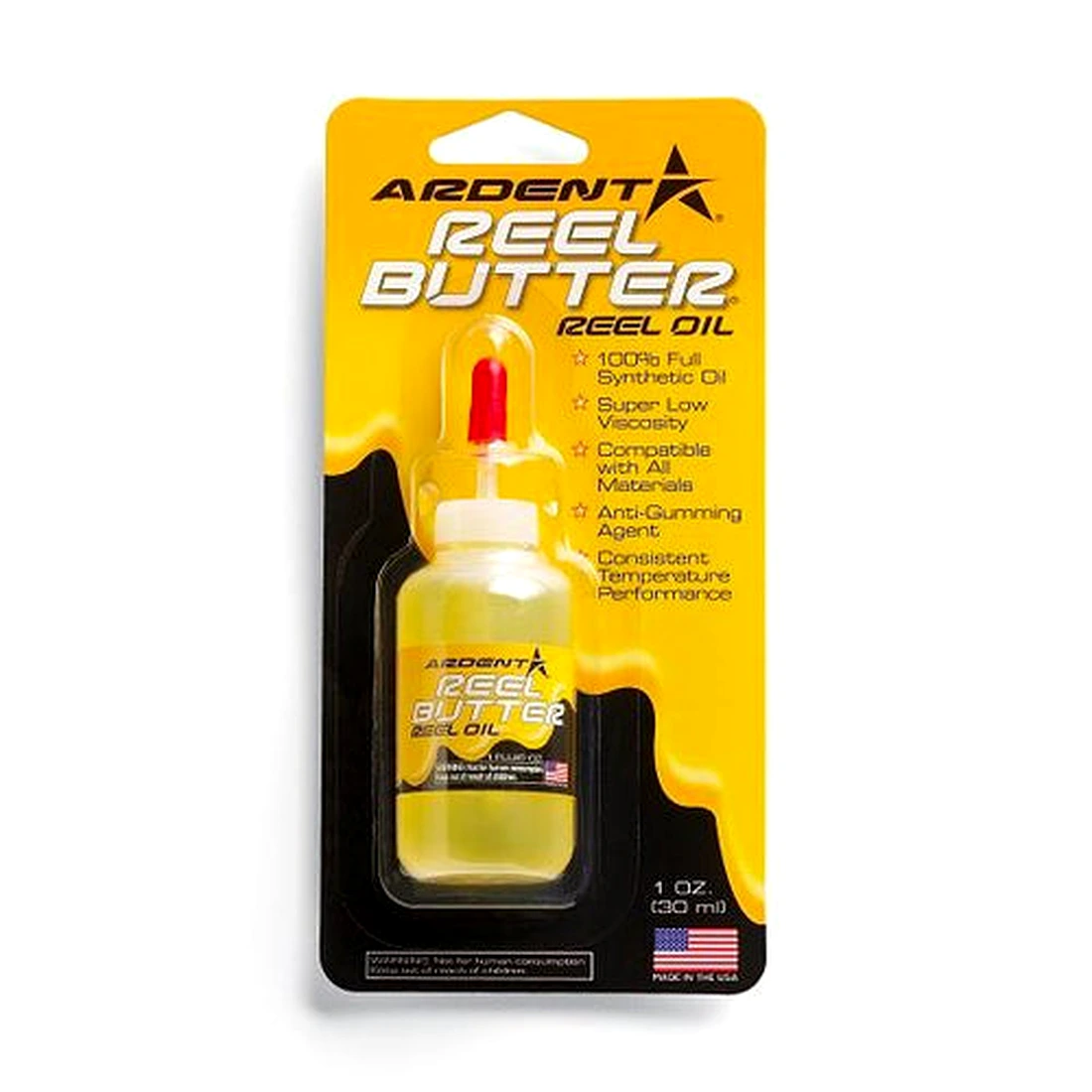
This is the bottle I reach for most. It is a 100% synthetic oil with low viscosity, which is exactly what spool bearings want: thin enough to let the spool spin freely, stable enough not to gum up between sessions. The needle applicator makes one-drop dosing easy. It works in freshwater and saltwater, and one bottle lasts a very long time because you use so little per session.
Best oil for casting distance
Quantum Hot Sauce Reel Oil
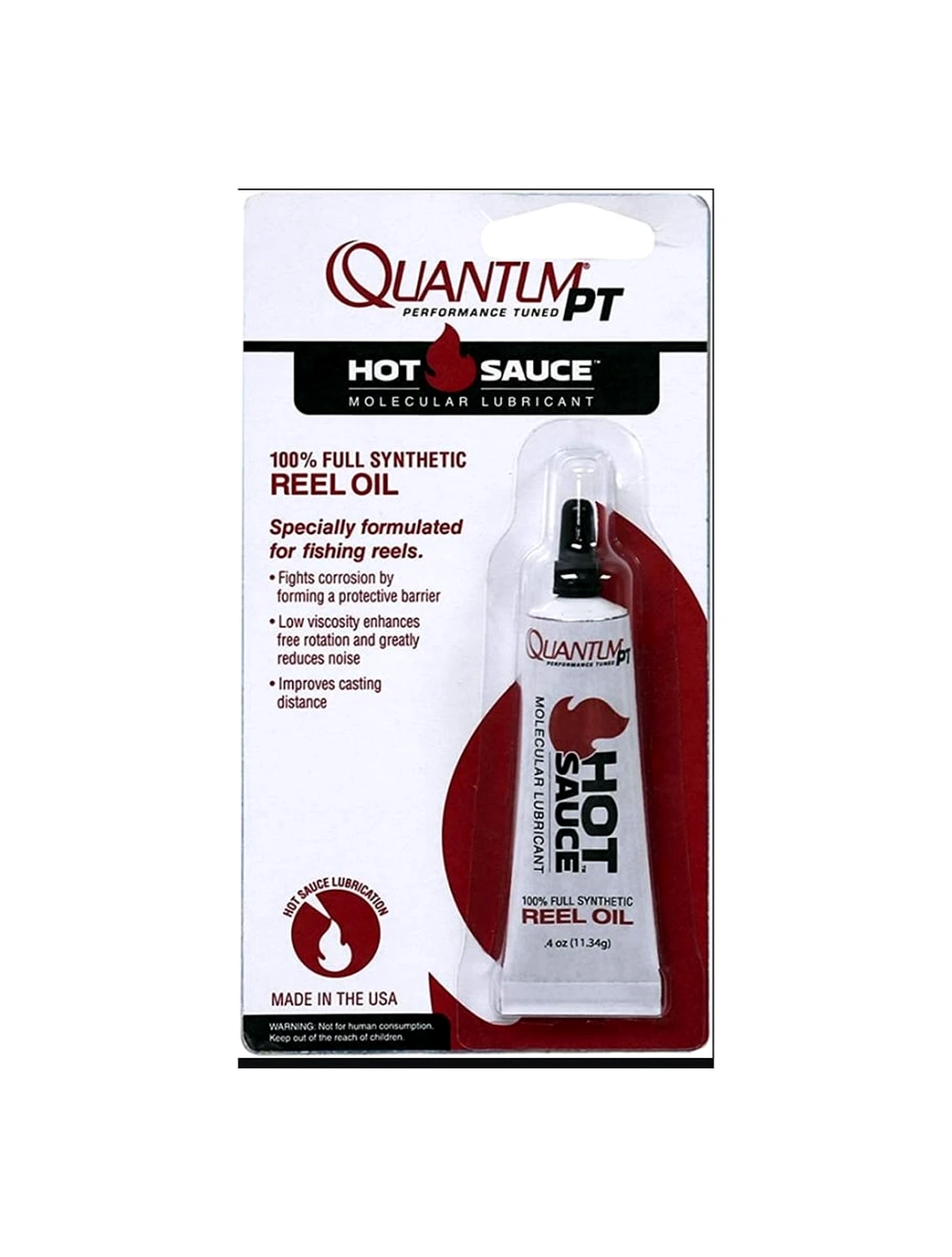
Hot Sauce has a loyal following among distance casters, and the reason is simple: it is an ultra-low-viscosity full synthetic that adds almost no drag to spool bearings. If your priority is squeezing every foot out of your cast, this is the oil people point to. It also has solid corrosion resistance, which makes it a sensible pick for inshore reels.
Best precision applicator oil
Abu Garcia Precision Reel Oil
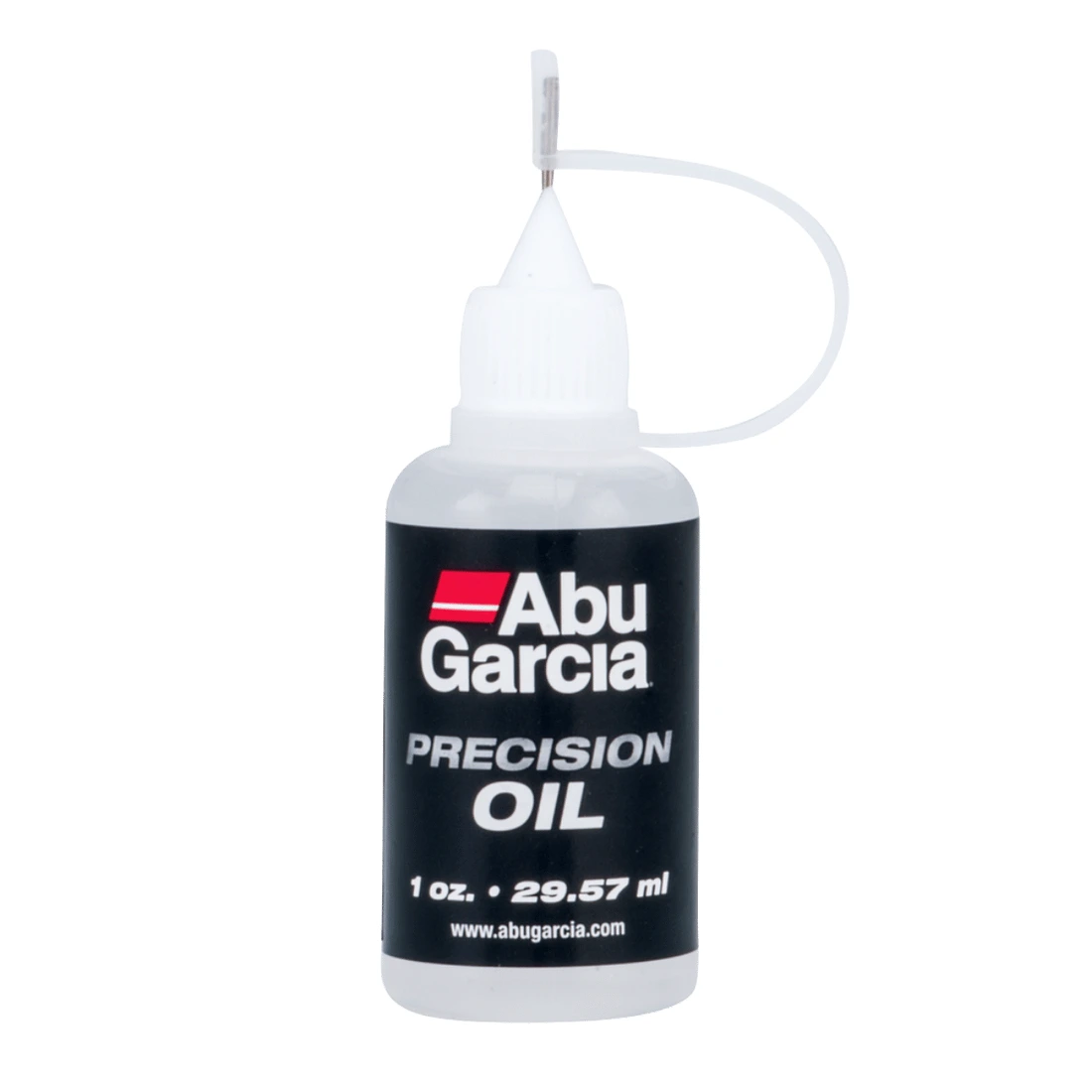
If you fish Abu Garcia reels, this is the no-brainer pick: it is the oil their own service guidance is built around. The precision needle tip is genuinely useful for placing a single drop exactly on a bearing without flooding the area around it. It is a straightforward, dependable synthetic oil with no gimmicks.
For the gears, grab a matching reel grease from the same brand as your oil. Keeping oil and grease in the same product family avoids any compatibility guesswork. Manufacturer service pages, like Lew’s official baitcast lubrication instructions, are also worth bookmarking for brand-specific part locations.
Frequently asked questions about oiling a baitcasting reel
Can I use WD-40 on my baitcasting reel?
No. WD-40 is a solvent and water displacer, not a lubricant. It strips the oil and grease your bearings and gears need and leaves the metal unprotected. Use a light reel oil made for fishing reels.
How often should I oil my baitcasting reel?
For a reel fished once or twice a week in freshwater, oil the spool bearings and worm gear about once every three months. Fish four or more times a week and make it monthly. Saltwater reels should be rinsed after every trip and get a full service roughly twice a year.
What is the difference between reel oil and reel grease?
Reel oil is thin and made for fast-moving, low-load parts like spool bearings and the worm gear. Reel grease is thick and made for slow-moving, high-load parts like the main and pinion gears. Bearings get oil, gears get grease.
Where should you never put oil on a baitcaster?
Keep oil off the drag washers, the centrifugal brake shoes, and the brake ring on magnetic-brake reels. These parts work by friction, and oil destroys friction. Oil on drag washers causes slipping and surging; oil on brake shoes causes backlashes.
Can you over-oil a baitcasting reel?
Yes, and it is one of the most common maintenance mistakes. Too much oil on the spool bearings slows the spool and shortens casting distance. One drop per bearing is the rule. If you overdo it, wipe the excess away with a clean cotton swab.
Do I need to take the whole reel apart to oil it?
No. Routine oiling only needs the side plate off and the spool out. That gives you access to every bearing that matters, the worm gear, and the handle knobs. Save the full teardown with gear greasing for your annual deep clean.
Keep learning
Pair this guide with the rest of our maintenance and setup coverage:
Affiliate disclosure: As an Amazon Associate, baitcastingreelz.com earns from qualifying purchases made through links on this page, at no extra cost to you. Product recommendations are maintenance-led and independent of commissions.