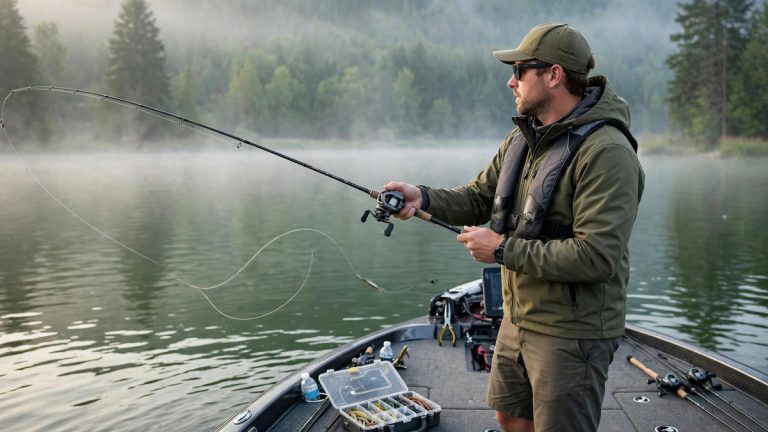
Head to Head · $100 Baitcasters
Shimano SLX vs Daiwa Fuego CT: The $100 Baitcaster Showdown
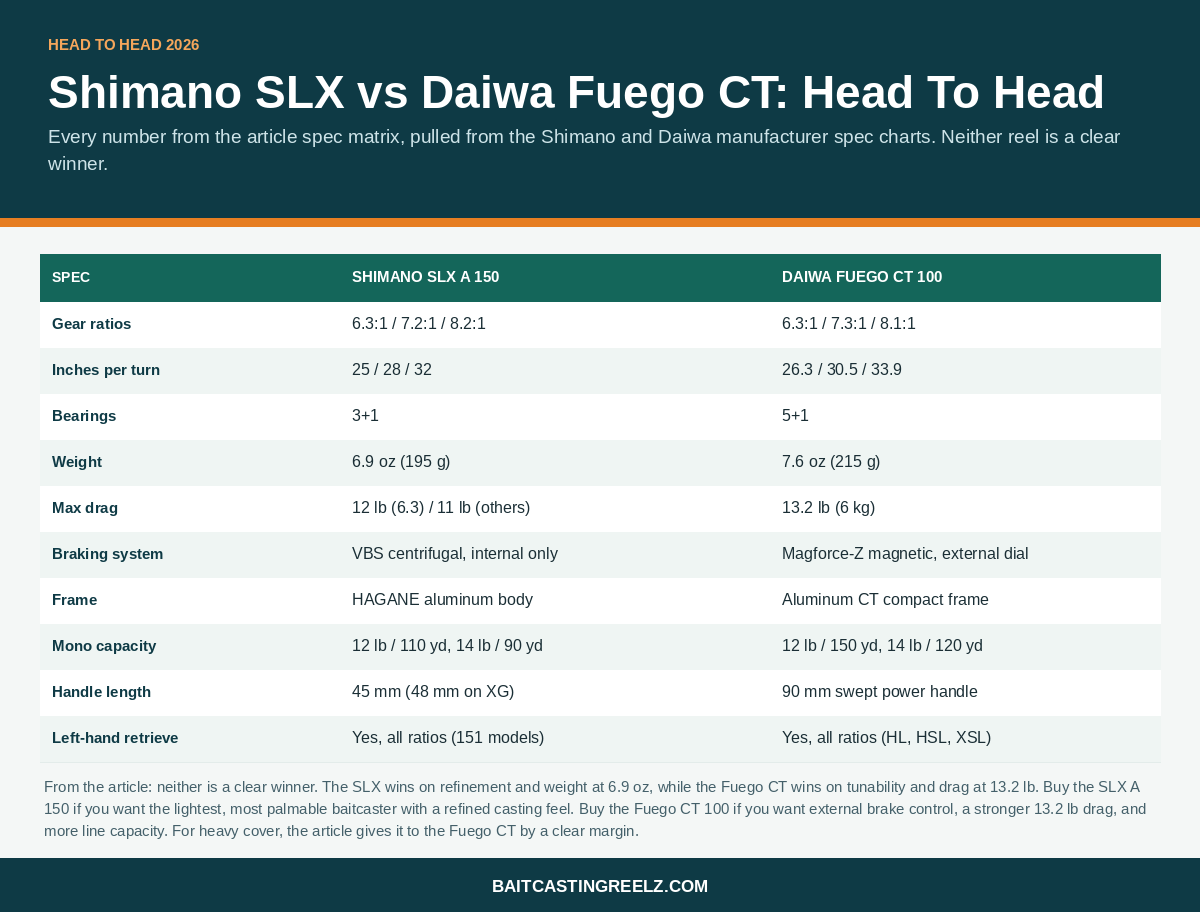
The Shimano SLX A 150 and the Daiwa Fuego CT 100 are the two most recommended baitcasting reels at the $100 mark, yet no dedicated comparison of the two exists anywhere online. After checking the manufacturer spec charts and listening to what real owners actually say, my take is this: the SLX wins on refinement and weight at 6.9 oz, while the Fuego CT wins on tunability and drag at 13.2 lb. Which one you should buy comes down to how you fish. Below is the full spec matrix, honest cons on both sides, and exactly who should pick which reel.

Affiliate disclosure: As an Amazon Associate, baitcastingreelz.com earns from qualifying purchases made through links on this page, at no extra cost to you. Rankings are technique-led and independent of commissions.
I keep getting this question in one form or another. Two anglers, one budget, two reels that dominate every “best baitcaster under $100” thread on the internet. The funny thing is that when I went looking for a proper head-to-head, I found only forum threads: a long running BassResource “Daiwa Fuego CT vs Shimano SLX” thread from 2021, and TackleTour’s giant 2019 $99 reel roundup, which is a roundup, not a head-to-head.
So here is the comparison that should exist: verified specs pulled from Shimano’s and Daiwa’s own charts, a full inches-per-turn matrix for every gear ratio, and the honest cons each reel carries that marketing copy never mentions. For a deeper dive on the Shimano side, my Shimano SLX A 150 review covers the full SLX family.
How do the SLX A 150 and Fuego CT 100 compare?
This is the most complete SLX A versus Fuego CT spec matrix I have seen published anywhere. Every number below is from the manufacturer spec charts, not retailer estimates.
| Spec | Shimano SLX A 150 | Daiwa Fuego CT 100 |
|---|---|---|
| Gear ratios | 6.3:1 / 7.2:1 / 8.2:1 | 6.3:1 / 7.3:1 / 8.1:1 |
| Inches per turn | 25 / 28 / 32 | 26.3 / 30.5 / 33.9 |
| Bearings | 3+1 | 5+1 |
| Weight | 6.9 oz (195 g) | 7.6 oz (215 g) |
| Max drag | 12 lb (6.3) / 11 lb (others) | 13.2 lb (6 kg) |
| Braking system | VBS centrifugal, internal only | Magforce-Z magnetic, external dial |
| Frame | HAGANE aluminum body | Aluminum CT compact frame |
| Mono capacity | 12 lb / 110 yd, 14 lb / 90 yd | 12 lb / 150 yd, 14 lb / 120 yd |
| Handle length | 45 mm (48 mm on XG) | 90 mm swept power handle |
| Left-hand retrieve | Yes, all ratios (151 models) | Yes, all ratios (HL, HSL, XSL) |
| Price tier | About $100 | About $100 |
Three numbers tell most of the story. The SLX is 0.7 oz lighter, which you feel by hour four. The Fuego carries 40 more yards of 12 lb line and over 2 lb more drag, which matters when a fish buries in grass. And only the Fuego lets you change brakes without opening the reel.
$100 baitcaster · Shimano
Shimano SLX A 150: the refined pick
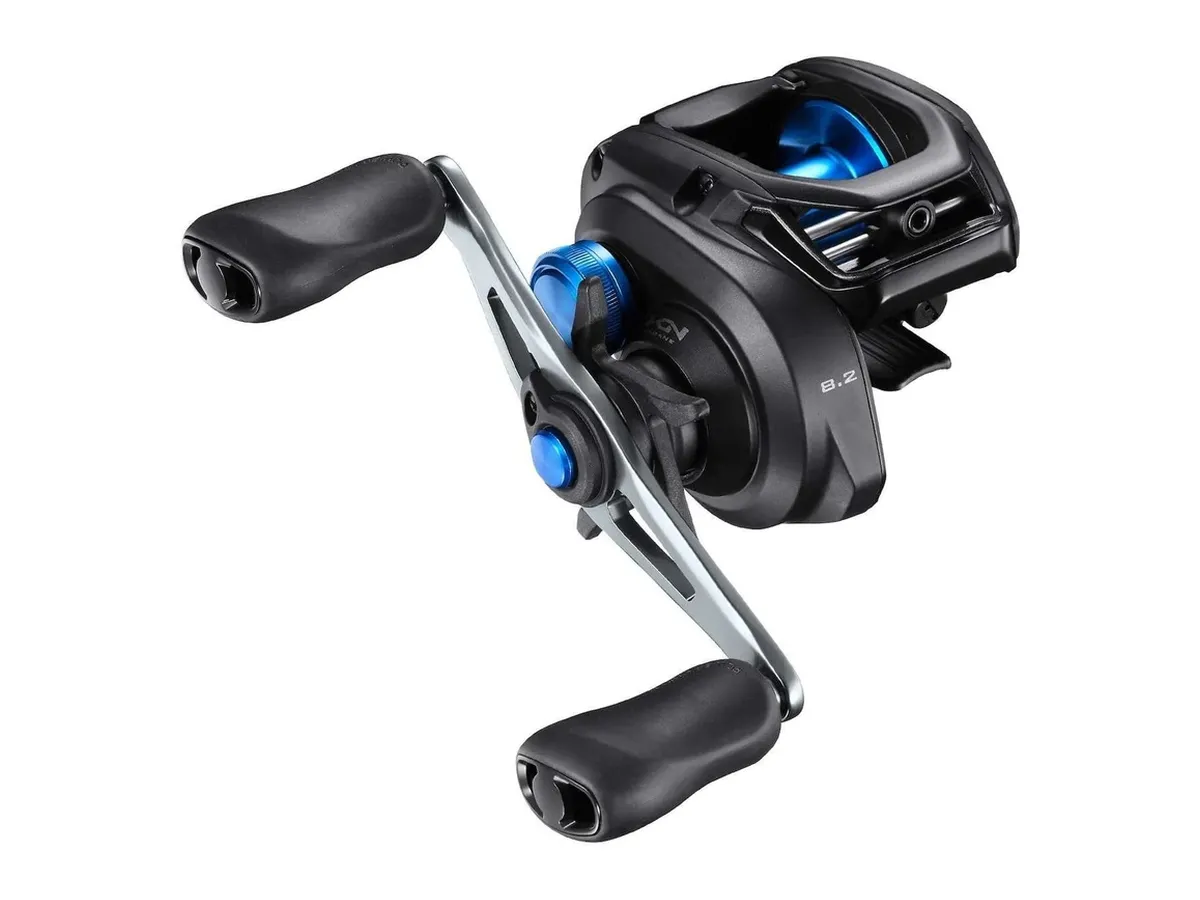
The SLX is the reel I recommend to people who ask for “the nice one” at $100. The current A generation kept what made the original a bestseller: a compact body with 150-size line capacity, brass gearing inside a HAGANE body, and Shimano’s VBS centrifugal braking. Shimano’s own spec chart lists three SUS bearings plus one roller bearing, not the 4+1 or 5+1 figures still floating around old retailer listings.
What the specs do not show is how small it fishes. At 6.9 oz with a low profile, the SLX palms better than anything else at this price. Owners consistently call it the more “refined” of the two, and that matches my experience: the retrieve feels tighter, the VBS brakes give a controlled, predictable cast on medium lures, and the 45 mm throw handle (48 mm on the XG) gives real cranking leverage for a $100 reel.
Best for: Anglers who want a HAGANE aluminum body and Shimano’s centrifugal braking under $100
Why choose it: The HAGANE body keeps the gears aligned under load, and VBS centrifugal braking is set inside the reel, nothing external to knock out of tune
Specs: 6.3:1 / 7.2:1 / 8.2:1 (25 / 28 / 32 inches per turn), 3+1 bearings, 6.9 oz, 11-12 lb max drag, VBS internal braking, 12/110 mono.
Pros
- lightest reel in the $100 class
- best palmability
- refined retrieve feel
- HAGANE body
- left-hand models at every ratio
Cons
- brakes are internal only
- lowest drag of the two (11 lb on the fast ratios)
- smallest line capacity
- only three bearings
The internal-brake complaint is real and repeated by owners everywhere. If you adjust brakes often between casts, this will annoy you. If you set your brakes once for the lure and leave them alone, it will never matter.
The button above goes to the right-hand SLX A 150. A left-hand version, the 151HGA, exists, but I could not verify a clean listing for it, so no button. Always confirm the model number on the listing.
$100 baitcaster · Daiwa
Daiwa Fuego CT 100: the tuner’s pick
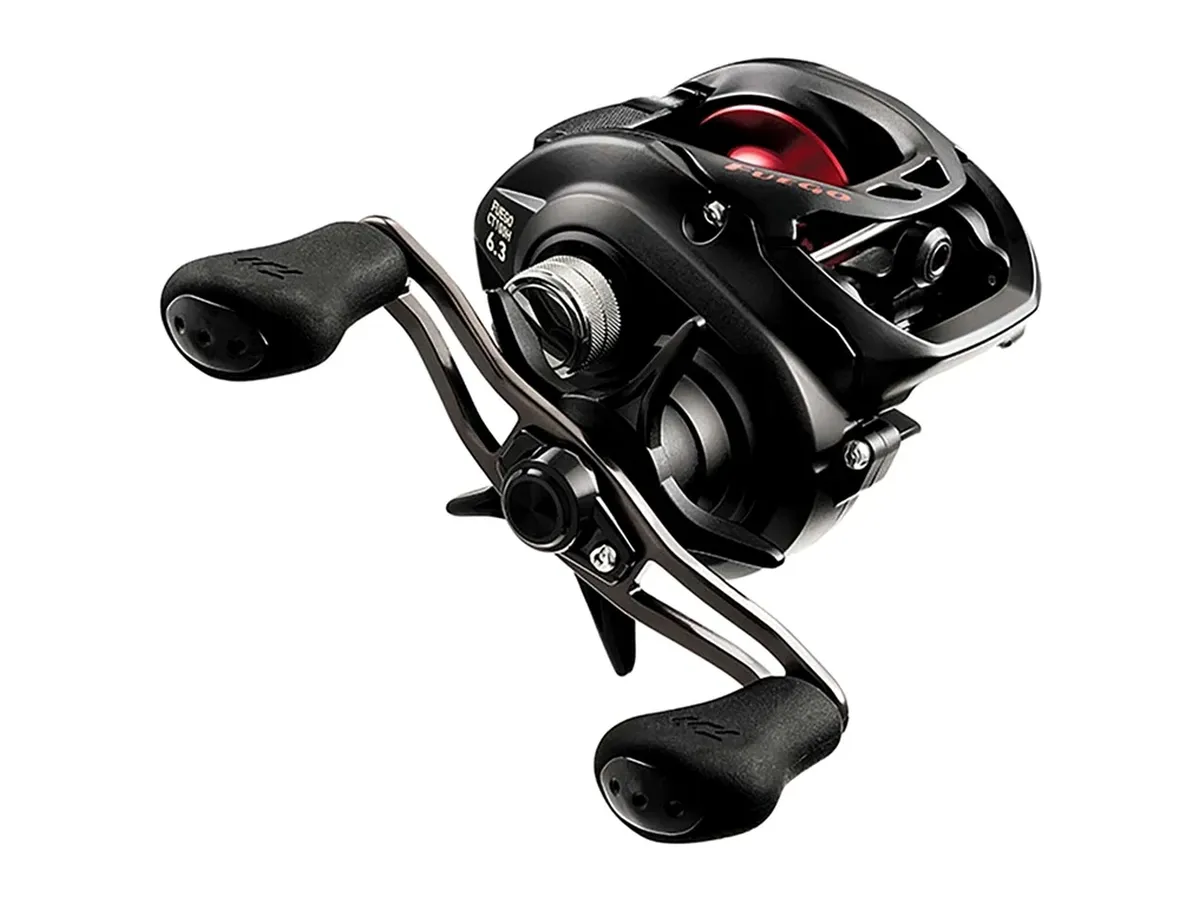
The Fuego CT is the reel I recommend to people who like to tune. Daiwa put its Magforce-Z magnetic cast control on an external dial, the single biggest functional difference between the two reels. You change braking mid-session, with your thumb, without opening the reel. The aluminum CT frame, the Ultimate Tournament Carbon Drag, and 5+1 bearings round out a package that TackleTour measured at 7.6 oz with 14.1 lb of drag against a 13.2 lb published rating.
That 13.2 lb drag is not a paper number. TackleTour measured 14.1 lb independently, and owners fishing heavy cover repeatedly single it out. The 12/150 line capacity also matters more than it looks: 40 extra yards of 12 lb mono over the SLX, which is exactly what you want when a big fish runs for timber.
Best for: Anglers who want magnetic braking with an external dial and more line capacity under $100
Why choose it: Magforce-Z adjusts from an external dial, the drag is stronger at 13.2 lb, and the 90mm swept handle and bigger spool capacity suit power fishing
Specs: 6.3:1 / 7.3:1 / 8.1:1 (26.3 / 30.5 / 33.9 inches per turn), 5+1 bearings, 7.6 oz, 13.2 lb max drag, Magforce-Z external braking, 12/150 mono.
Pros
- external brake dial
- strongest drag in the $100 class
- most line capacity
- 90 mm swept handle
- left and right in every ratio
Cons
- 0.7 oz heavier and less palmable
- the brake dial sits where your rod hand grips and gets bumped
- several owners report it arrives under-lubed
The brake dial placement is the honest trade-off for external adjustability. One BassResource owner was so annoyed by it he went back to Shimano entirely. Others fish it for years and never care. If you grip high on the reel, test this before committing, and plan to check the lube on a new Fuego before its first trip.
No Amazon button here: I could not verify a Fuego CT 100H listing with a confirmed model match, and I do not guess at ASINs. Search your preferred retailer for “Daiwa FGCT100H” and confirm the model number on the listing.
What is the biggest difference between the SLX and the Fuego CT?
The braking systems. This is the fork in the road, and it decides the reel for most anglers.
The SLX A 150 uses Shimano VBS, a centrifugal system of brake shoes on the spool that engage hardest at high spool speed. It is set internally: you pop the hinged non-handle sideplate, click shoes on or off, and close it. In TackleTour’s $100 roundup, the SLX was the only reel without external brake adjustment. On the water, VBS is a set-it-and-forget-it system. It shines for anglers who fish one lure weight most of the day, and it frustrates anglers who jump from a 1/4 oz spinnerbait to a 1 oz swimbait and want to dial brakes between casts.
The Fuego CT 100 uses Daiwa Magforce-Z, a magnetic system whose variable inductor rotor moves deeper into the magnetic field at high spool speed and retracts as the spool slows. It brakes hardest at the start of the cast, where backlashes happen, and lets the lure fly at the end. The external dial means you adjust it between casts, for the wind, or for lure changes, in seconds. That is why beginners often cast the Fuego better in the first session: forgiveness is one click away. If you are learning the basics of how to cast a baitcaster, external control shortens the learning curve.
Which reel has the better gear ratio options?
Both reels come in three ratios, and the inches-per-turn matrix shows the Fuego winning top-end speed while the SLX stays slightly slower and more controlled.
| Model | Ratio | Inches per turn | Best use |
|---|---|---|---|
| SLX150 | 6.3:1 | 25 | Crankbaits, spinnerbaits |
| SLX150HG | 7.2:1 | 28 | All-around, jigs |
| SLX150XG | 8.2:1 | 32 | Frogs, flipping |
| Fuego CT 100H | 6.3:1 | 26.3 | Crankbaits, spinnerbaits |
| Fuego CT 100HS | 7.3:1 | 30.5 | All-around, topwater |
| Fuego CT 100XS | 8.1:1 | 33.9 | Frogs, burning baits |
Neither ratio lineup is a mistake. The Fuego picks up about 2 more inches per turn in the fast models, which matters for burning baits and for taking up line on a frog hookset. The SLX’s slightly slower pickup pairs well with crankbaits, where you want torque over speed. For more detail, see my baitcasting reel gear ratios explained guide.
Which is better for heavy cover: SLX or Fuego CT?
The Fuego CT, by a clear margin. Its 13.2 lb drag beats the SLX’s 11 lb, its 12/150 capacity beats the SLX’s 12/110, and both have rigid metal frames (HAGANE body on the SLX, aluminum CT on the Fuego).
This matches what owners report. In the BassResource comparison thread, the one scenario where an SLX owner said he would reach for the Fuego was a heavier rod setup. The Fuego CT 100XS at 8.1:1 with 33.9 inches per turn is the natural budget fit for frog work. For frog technique detail, see my frog fishing guide and the flipping and pitching roundup.
Who should buy the Shimano SLX, and who should buy the Daiwa Fuego CT?
Here is the honest head-to-head as a buyer guide, not a spec repeat.
| Buy the Shimano SLX A 150 if | Buy the Daiwa Fuego CT 100 if |
|---|---|
| You value comfort and palmability over tunability | You adjust brakes often and want an external dial |
| You fish long days and want the lightest reel (6.9 oz) | You want the strongest drag in the class (13.2 lb) |
| You prefer a smoother, more refined retrieve feel | You want more line capacity for long runs (12/150) |
| You set brakes once and fish all day | You are still learning and want forgiving brake control |
| You are a committed Shimano fan who likes VBS | You are stepping up from a cheaper reel like the Black Max vs SLX loser |
A few special cases. Left-hand anglers are served equally: both reels come in left-hand retrieve at every ratio, though my verified Amazon listing is for the right-hand SLX A 150, so lefties should confirm the model number on their retailer. If the budget needs to go lower, my best baitcasting reels under $50 roundup is the honest next stop. If it stretches further, the step-up fight is Daiwa Tatula vs Shimano Curado. And before ordering, check my left hand vs right hand baitcaster guide.
Shimano SLX vs Daiwa Fuego CT: FAQs
Is the Shimano SLX or the Daiwa Fuego better?
Neither wins outright. The Shimano SLX A 150 is lighter at 6.9 oz, more compact in hand, and smoother in feel. The Daiwa Fuego CT 100 offers external brake adjustment, a stronger 13.2 lb drag, and more line capacity. Pick the SLX for refinement and comfort. Pick the Fuego for tunability and muscle.
Is the Daiwa Fuego CT good for beginners?
Yes. The externally adjustable Magforce-Z brake dial lets beginners add forgiveness without opening the reel, which is friendlier than the SLX’s internal VBS brakes. The one caveat is the dial’s position, which some anglers say gets bumped during fishing. Also read my my braid vs fluoro guide guide before spooling your first baitcaster.
Does the Shimano SLX A have external brakes?
No. The SLX A 150 uses Shimano’s internal VBS centrifugal brakes, adjusted by opening the hinged non-handle sideplate. Only the DC model in the SLX family has external brake control. This is the most common complaint about the standard SLX.
Which has more drag, the SLX or the Fuego CT?
The Daiwa Fuego CT has more drag: 13.2 lb published, 14.1 lb measured independently by TackleTour, versus 11 lb on the SLX A 150HG and XGA or 12 lb on the base 150.
What is the difference between the SLX 150 and 150HG?
The model letter indicates gear ratio. The SLX150 runs 6.3:1 and retrieves 25 inches per turn, the SLX150HG runs 7.2:1 and retrieves 28 inches per turn, and the SLX150XG runs 8.2:1 and retrieves 32 inches per turn. Weight, bearings, and frame are identical across all three. Source: Shimano’s official spec chart at fish.shimano.com.
Can the Daiwa Fuego CT handle frog fishing in heavy cover?
Yes, the Fuego CT is a realistic budget frog reel. Its 13.2 lb drag and 12/150 line capacity suit heavy cover better than the SLX’s 11 lb drag and 12/110 capacity. Pair the 100XS (8.1:1) with 50 lb braid for the fastest line pickup on frog hooksets.
Verdict
There is no single winner in the $100 baitcaster showdown, and anyone telling you otherwise is selling one of the two reels. The Shimano SLX A 150 is the reel I hand to the angler who wants the nicest-feeling, lightest tool in the class. At 6.9 oz with a HAGANE body and a retrieve owners call refined, it is the best pure casting experience $100 buys. Its price is paid in brakes: internal-only VBS, the smallest line capacity of the two, and the weakest drag.
The Daiwa Fuego CT 100 is the reel I hand to the angler who wants control and muscle. External Magforce-Z adjustment, a 13.2 lb drag, and 12/150 capacity make it the better tool for heavy cover, frogging, and beginners who want to dial in forgiveness fast. Its price is paid in ounces and ergonomics: it is heavier, larger, and the brake dial placement annoys some anglers.
If you can only buy one and you fish a bit of everything, I lean Fuego CT for the drag and the external brakes. If you fish open water all day and value how a reel feels in your hand after eight hours, I lean SLX. Either way, you are getting the best $100 in baitcasting buys.
© baitcastingreelz.com · Affiliate disclosure: As an Amazon Associate, baitcastingreelz.com earns from qualifying purchases. This does not change the editorial selection criteria. Editorial note: Specifications change and listings vary. Verify model numbers and specs on the product listing before ordering. “Buy From Amazon” buttons take you to Amazon; availability, specifications and prices can change.