Reel Review · 2026
Lew’s Mach Crush Review (2026)
The Lew’s Mach Crush SLP is a 7.5:1 workhorse with dual braking, a 20-pound carbon fiber drag and a 10-bearing system, typically around $170 to $200. I have fished this reel enough to know exactly where it shines and where it does not: the cast control is superb, the drag is genuinely strong, and the graphite frame is the compromise you should know about before buying.
Affiliate disclosure: As an Amazon Associate, baitcastingreelz.com earns from qualifying purchases made through links on this page, at no extra cost to you. Rankings are technique-led and independent of commissions.
A mid-priced reel that fishes above its price, mostly
The Mach Crush sits in the busiest part of the baitcaster market: the $150 to $200 zone where every brand promises tournament features at a working angler’s price. Most reels here make you choose between cast control and power. The Mach Crush refuses that trade, and that is why it has stuck around while competitors cycle through model names.
I have spent a lot of time with this reel across the techniques it was built for: pitching jigs to wood, working Texas rigs through grass, throwing spinnerbaits and chatterbaits on windy banks. The 7.5:1 ratio picks up 30 inches per crank, which keeps you connected when a fish charges the boat, and the dual brake system is the most adjustable setup I have used under $200. It is not perfect. The frame is graphite, not aluminum, and there is exactly one gear ratio. But for the angler who wants one reel to cover the core bass techniques, the value math is hard to argue with.
The quick verdict
In-depth review
Lew’s Mach Crush Speed Spool SLP (MCR1SH)
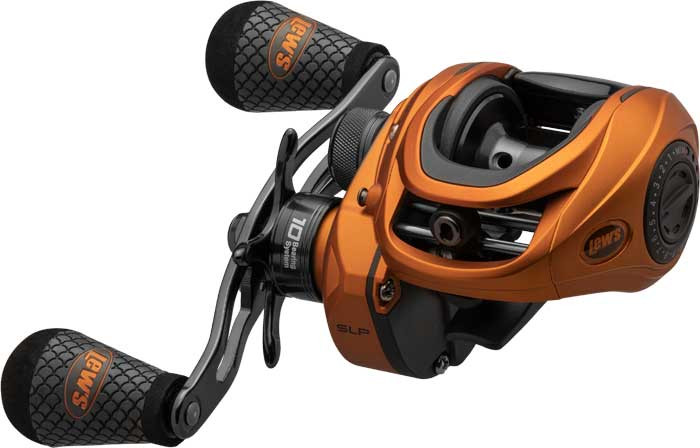
Key specs, and what they mean on the water
The headline numbers tell a coherent story. A 7.5:1 ratio pulling 30 inches per turn is fast enough for pitching and frogging without being twitchy for steady retrieves. Ten bearings (nine stainless plus the Zero-Reverse clutch) is a legitimately premium count at this price, and you feel it in the handle: the retrieve stays smooth when the reel is loaded, not just when it is free-spooling in the shop.
The 20-pound carbon fiber drag is the spec that separates this reel from most of its price rivals, which typically top out around 15 pounds. In practice, that headroom matters most as insurance: you can lock down on a fish buried in cover without the drag feeling like the weak link. The 7.3-ounce weight keeps it comfortable on a 7-foot rod all day, and the 95mm bowed handle with Winn Dri-Tac knobs is one of my favorite touches. Those knobs stay grippy when your hands are wet, which is when you need grip most.
Line capacity is honest mid-size: 110 yards of 12-pound mono or 110 yards of 50-pound braid. Enough for long casts and a strong run, without a deep spool that hurts casting efficiency. If you are new to spooling, our guide to spooling a baitcaster covers the tension trick that prevents most early problems.
What it does well
Cast control you can actually tune
The Multi-Setting Brake system is the best reason to buy this reel. You get an external click dial for the magnetic brake and four internal centrifugal pins you can engage or disengage. Here is how I fish it: set the internal pins for the lure weight at the start of the day, then work the external dial as conditions change. Wind picks up? Two more clicks. Switching from a 1/2-ounce jig to a lighter Texas rig? Back the dial off and let the spool breathe. That on-the-fly adjustment is something centrifugal-only reels simply cannot do without popping the side plate, and it is why I reach for this reel on gusty days.
Power where it counts
Solid brass main gear and crankshaft, 20 pounds of carbon drag, and a frame that stays composed under normal bass loads. I have leaned on this reel pulling fish out of matted grass and wood, and the drag engagement is smooth rather than grabby. The instant anti-reverse is properly instant: hooksets feel direct, with no handle rock before the gears catch.
Ergonomics for long days
The SLP (Super Low Profile) platform palms genuinely small, the 32mm aluminum spool starts up easily for clean launches, and the whole package at 7.3 ounces does not wear on your wrist. Small thing, big deal: the spool tension knob and drag star both have audible clicks, so you can track adjustments by feel without looking down.
Honest cons: what I don’t love
No reel is perfect, and I would rather you hear the flaws from me than discover them yourself.
The frame is graphite, not aluminum
This is the real compromise. At this price, Lew’s competitors like the Tournament MB offer aluminum frames, and aluminum resists flex better when the drag is maxed and a big fish is surging. In normal bass fishing I have never felt the Mach Crush flex in a way that cost me a fish, but if you routinely fish heavy cover with the drag cranked down, an aluminum-frame reel is the more rigid tool. Lew’s keeps the weight down with graphite, which is a fair trade, but it is a trade.
One gear ratio, take it or leave it
The Mach Crush comes in 7.5:1 and nothing else. That ratio is versatile, but it is too fast for dedicated deep cranking and slower than specialists want for burning baits or frogging. If your fishing centers on crankbaits, a dedicated 5.x:1 or 6.x:1 reel from our crankbait reel guide will serve you better than forcing this reel into that job.
The color is a commitment
Orange and black, loud and proud. I happen to like it, but tackle fashion is personal and this reel makes a statement whether you want it to or not. There is no stealth colorway.
Availability comes and goes
This reel sells out at major retailers with some regularity, and the Gen 2 refresh has made pricing bouncy: street prices drift between the high $100s and $200 depending on stock. If you see it at a fair price from a retailer you trust, that is the time.
Who it’s for (and who should skip it)
Buy it if you want one reel to cover jigs, Texas rigs, spinnerbaits, chatterbaits and topwater, you value adjustable cast control, and you fish in wind or changing conditions where the external brake dial earns its keep. It is also a strong second or third reel for an angler building a technique-specific arsenal on a budget. If you are still deciding between reel types overall, our baitcaster vs spinning reel comparison lays out the tradeoffs.
Skip it if you are building a dedicated crankbait setup (get a slower ratio), you insist on an aluminum frame, or you are a beginner who would be better served by a simpler magnetic-only reel and a full combo. Beginners should look at our best baitcasting reels for beginners and the best baitcasting combos guide instead.
Mach Crush vs Mach 2: which Lew’s should you buy?
This is the question I get most about this reel, because the two are close in price and share Lew’s DNA. The differences are mechanical, not cosmetic. The Mach Crush gives you dual braking (external magnetic dial plus internal centrifugal pins) and a 20-pound carbon fiber drag. The Mach 2 gives you an externally adjustable magnetic control system only, with a 15-pound Rulon drag, on a 9+1 bearing platform at 7.5:1.
In practical terms: the Crush casts more adjustably and fights harder at the top end of the drag range. The Mach 2 is simpler, just as smooth in normal use, and usually a bit cheaper. If you tune your brakes for conditions, get the Crush. If you set the brake once and never touch it, save the money and get the Mach 2. Neither is a bad reel; they are built for different kinds of anglers.
Setting the brakes: the 2-minute routine
Start with the spool tension knob: tighten it until your lure falls slowly when you release the thumb bar, with minimal side-to-side spool play. Then set all four internal centrifugal pins to engaged and the external magnetic dial to the middle. Make a few casts. If the spool overruns mid-cast, add magnetic brake. If distance feels choked, back the dial off one click at a time. Once the dial is near minimum and you still want less braking, disengage one internal pin and re-tune the dial. Our full brake adjustment guide and anti-backlash reel roundup go deeper if you are still getting nests.
Frequently asked questions about the Mach Crush
Is the Lew’s Mach Crush good for beginners?
It can work, because the external magnetic dial is forgiving, but it is more reel than a beginner needs. The dual brake system rewards anglers who understand what each adjustment does. Beginners get more value from a simpler combo; experienced casters get more from the Crush.
What gear ratio does the Mach Crush come in?
Only 7.5:1, in both right-hand (MCR1SH) and left-hand (MCR1SHLA) retrieve. There is no slower or faster option, so crankbait specialists should look at dedicated low-ratio reels.
How much drag does the Mach Crush have?
20 pounds from a carbon fiber drag system, which is strong for a mid-priced reel. Most competitors in this price band top out around 15 pounds.
Is the Mach Crush frame aluminum?
No. The frame and sideplates are graphite, which keeps the weight at 7.3 ounces. The spool, handle and gears are metal. If you want an aluminum frame at a similar price, look at the Lew’s Tournament MB.
Mach Crush vs Mach 2, which is better?
The Crush has dual braking and a stronger 20 lb carbon drag; the Mach 2 has magnetic-only braking and a 15 lb Rulon drag, usually for less money. Brake tuners should pick the Crush; set-and-forget anglers should pick the Mach 2.
What rod pairs well with the Mach Crush?
A 7-foot medium-heavy, fast-action rod is the standard match for the techniques this reel covers. The Mach Crush combo pairs it with an IM8 graphite rod, which is a well-judged factory pairing if you want the matched set.
The verdict
The Mach Crush is the rare mid-priced reel that does not ask you to pick between casting finesse and fighting power. The dual brake system is genuinely best in class under $200, the 20-pound drag gives you headroom most rivals lack, and the ergonomics hold up over long days. The graphite frame and single gear ratio are real limitations, and I would not choose it for dedicated cranking or max-drag heavy cover work. But as a versatile 7.5:1 workhorse for the core bass techniques, it earns its reputation. If it fits your techniques, buy with confidence.
For more context, see our best baitcasting reels of 2026 roundup and the best baitcasting reel for the money guide.
Affiliate disclosure: As an Amazon Associate, baitcastingreelz.com earns from qualifying purchases made through links on this page, at no extra cost to you. Prices change, so check the current listing before ordering.