How to Spool a Spinning Reel: Step-by-Step Guide (2026)
Short answer: To spool a spinning reel, run line through the rod guides, open the bail, tie an arbor knot to the spool, then wind under firm finger tension with the supply spool flat so line comes off counterclockwise. Fill to 1/8 inch below the lip, checking for twist every 15 cranks.
Spooling looks trivial until the consequences show up: wind knots on the third cast, line springing off the spool in coils, casting distance cut in half. Nearly all of it traces back to how the line went on, twist introduced during spooling, the wrong fill level, or no tension while winding. Done correctly, the whole job takes ten minutes and the reel fishes cleanly for months. This guide covers mono and fluorocarbon first, then the adjustments braid requires.
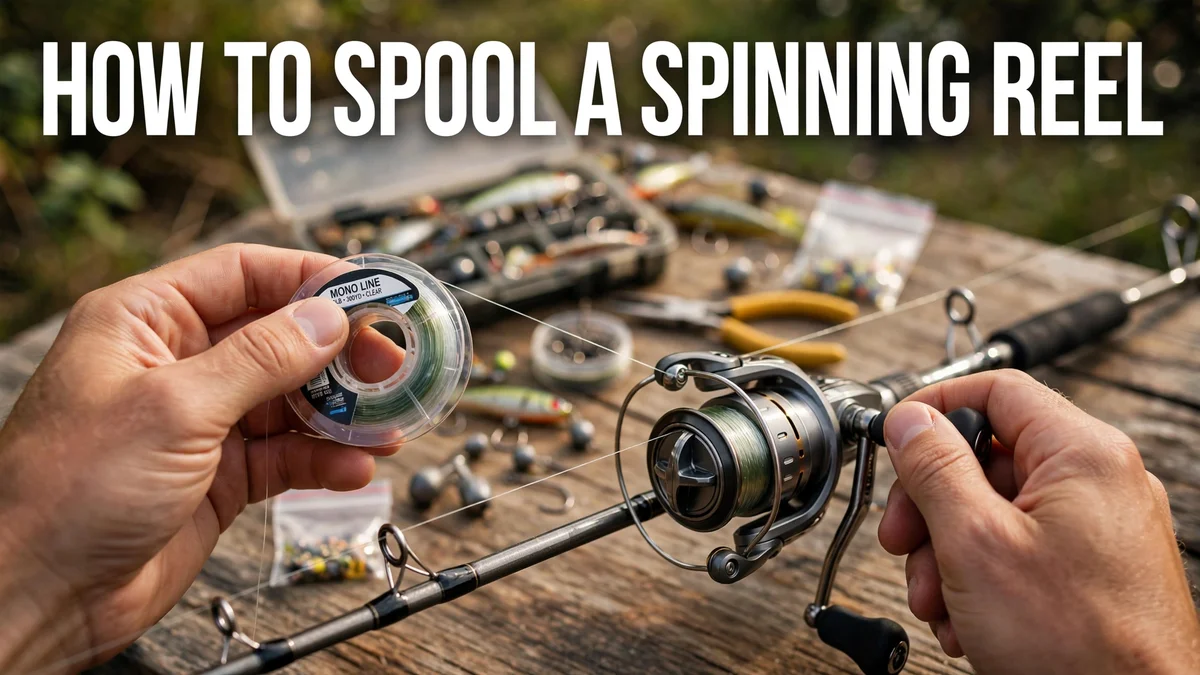
What You’ll Need
- Spinning reel mounted on its rod
- Fishing line matched to the reel’s printed capacity (e.g., 8 lb mono for a 2500-size reel)
- Scissors or line clippers
- Optional: a pencil or screwdriver through the supply spool, or a second person to hold it
Choosing the Right Line First
Check the capacity printed on the spool, something like “8 lb / 140 yd”, and stay within it. Line heavier than the rating is too stiff to flow through the guides and off the spool cleanly, which kills casting distance. For most freshwater spinning reels, 6–10 lb monofilament or 10–20 lb braid covers bass, walleye, and trout duty. Mono is the most forgiving to spool because it has enough body to wind neatly; fluorocarbon is stiffer and springier, so it demands more tension. Braid needs a backing (covered below) because it slips on a bare spool.
How to Spool a Spinning Reel: Step by Step
Step 1: Thread the line through the guides
With the reel mounted on the rod, feed the tag end of the line through the rod’s guides starting from the one closest to the reel, working up to the tip. Threading through at least the first guide keeps the line aligned with the spool during winding; running all the guides is better because it keeps the entry angle consistent.
Step 2: Open the bail and tie an arbor knot
Flip the bail open. Wrap the tag end around the spool arbor, tie a simple overhand knot around the standing line, then a second overhand knot in the tag end itself to act as a stopper. Pull the standing line to slide the first knot tight against the spool and trim the tag. The arbor knot only needs to hold until line pressure takes over, friction does the real work after the first few wraps.
Step 3: Close the bail and position the supply spool
Close the bail. Lay the supply spool flat on the floor with the label facing up as a starting guess, but treat it as a guess. The rule that matters: line must come off the supply spool in the same rotational direction it goes onto the reel spool. For most spinning reels that means counterclockwise off the supply spool. The twist check in the next step settles it definitively.
Step 4: Wind under tension and check for twist
Pinch the line between thumb and forefinger about a foot above the reel and crank steadily, keeping firm, even pressure. After about 15 cranks, stop and let the pinched line go slack. If it hangs limp, the orientation is correct, keep going. If it twists into coils, flip the supply spool over and continue. Recheck after another 15 cranks. This single check is what separates clean-spooling reels from twist-plagued ones.
Step 5: Fill to 1/8 inch below the lip
Keep winding until the line sits roughly 1/8 inch below the outer edge of the spool lip. Underfilled by much more and casting distance drops because the line drags across the lip; overfilled to the edge and loose coils jump off on the cast. The 1/8-inch gap is the working tolerance every reel manufacturer designs around.
Step 6: Cut, stretch, and settle the line
Cut the line from the supply spool and tie on your terminal tackle. On the first outing, make a long cast, let most of the line out, and reel it back slowly under tension; this seats the wraps tightly and works out residual twist. Monofilament also benefits from a brief soak in warm water before spooling, which relaxes the coil memory it picked up on the supply spool.
The Upright Spool Method (Alternative)
Instead of laying the supply spool flat, it can be stood on edge, on a pencil held by a helper, or in a simple line-winding station, so line feeds straight off the top and through the guides. This method introduces almost no twist regardless of orientation, which makes it the safer choice for twist-prone fluorocarbon. The tradeoff is needing the holder setup; the flat method with the twist check is faster for mono.
Using a Line Winder or Spooling Station
A basic line winder, the clamp-on type sold for under $30, holds the supply spool on a spindle and applies adjustable tension as line feeds off. It removes the helper, the pencil, and the floor-flip guesswork in one step, and it pays for itself the first time fluorocarbon goes on without a single twist. For anglers who respool several reels a season, it is the most worthwhile bench accessory in the tackle room. The technique is identical otherwise: arbor knot, 1/8-inch fill, twist check.
Spooling Braided Line: What Changes
Braid has no memory, so twist is rarely an issue and either spool orientation works. The problem is slippage: braid is so slick it spins freely on a bare aluminum spool no matter the knot. The fix is a mono or fluorocarbon backing, wind on enough backing to cover the spool arbor (roughly 1/4 to 1/3 of capacity), attach the braid with a double uni knot or FG knot, and finish as normal. The backing also saves money, since braid’s thin diameter would otherwise take far more line than needed to fill the spool.
When to Respool
Line degrades even sitting in a garage. Monofilament should be replaced at least once a season, sooner if it feels brittle, holds tight coils that won’t relax, or shows nicks. Fluorocarbon lasts longer but still fatigues. Braid can fish two or three seasons; when the first 30 yards get fuzzy, the cheap trick is reversing it, wind it onto another spool so the unused back half becomes the working front half. If casting tangles keep appearing on line that was spooled correctly, worn line is the prime suspect. Our spinning reel casting guide covers the technique side of tangle-free fishing.
How to String a Spinning Reel
Stringing a spinning reel and spooling a spinning reel are the same job with two names. If a tutorial tells you to string your reel, follow the six steps above: thread the guides, tie an arbor knot, wind under tension, and fill to 1/8 inch below the lip. Respooling is the same job done again: strip the old line off first, then repeat the same steps with fresh line. Anglers search for all three wordings, but the technique never changes, only the line on the spool does.
Line Twist Troubleshooting
Match the symptom to the cause before you strip line off the spool. Most twist is put on during spooling, but some appears only after fishing, so the fix depends on when the problem shows up. If the reel is not matched to the line, check the spinning reel sizes guide, and the spinning reel casting guide for casting habits that add twist after a clean spool.
| Symptom | Likely cause | Fix |
|---|---|---|
| Line springs off the spool in coils on the cast | supply spool fed line in the wrong direction | strip and respool with the supply spool flipped, rechecking for twist every 15 cranks |
| Loops and wind knots after a few casts | loose wraps wound with no tension | strip and respool under firm, even finger tension on every crank |
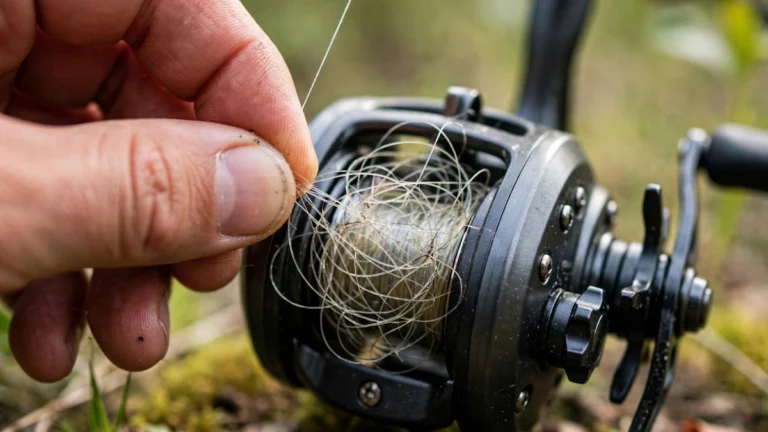
| Twist that appears only after fishing, not right after spooling | lure spinning in the water or a sticky bail roller | check the bail roller spins freely and add a swivel ahead of a spinning lure |
| Coils that will not relax | old monofilament with heavy memory | soak mono in warm water before spooling and stretch it on the first outing, or respool if the line is a season old |
| Braid digging into itself on the hookset | loose wraps under load | respool under firm tension and do not fill past 1/8 inch below the lip |
Common Spooling Mistakes
- Winding with no tension: loose wraps dig into each other under load and cause wind knots. Firm finger pressure on every crank.
- Skipping the twist check: fifteen seconds of checking saves a season of frustration.
- Spooling braid with no backing: the whole spool of braid will rotate as one slick mass on the hookset.
- Overfilling: line above the lip guarantees coils jumping off on the cast.
- Wrong line weight: 20 lb mono on a 1000-size ultralight reel will spring off like a slinky. Respect the printed capacity, see spinning reel sizes for the right pairings.
Frequently Asked Questions
Which way should line come off the spool when spooling a spinning reel?
It should come off the supply spool in the same rotational direction it winds onto the reel spool, usually counterclockwise when the supply spool lies flat. The definitive test: wind 15 cranks, release tension, and check for coils. If it twists, flip the supply spool over.
Do I need backing for braided line on a spinning reel?
Yes. Braid is too slick to grip a bare spool and will slip no matter what knot is used. Wind on a mono or fluoro backing first (about 1/4 to 1/3 of the spool), then join the braid with a double uni knot.
How full should a spinning reel spool be?
Filled to about 1/8 inch below the spool lip. More than that causes tangles; significantly less reduces casting distance as line drags over the lip.
What knot ties line to the reel spool?
The arbor knot, an overhand knot around the standing line backed by a stopper knot in the tag end. It only needs to hold until the first wraps build friction.
How often should I respool a spinning reel?
Monofilament at least once per season; fluorocarbon when it shows wear; braid every two to three seasons, or reverse it to use the unfished half. Respool sooner if tangles appear on correctly-spooled line.
Why does my new line have so much memory?
Line takes a coiled set from sitting on the small-diameter supply spool, especially mono and fluoro. Spooling under firm tension, a warm-water soak beforehand, and the first-outing stretch routine all relax it.
Is stringing a spinning reel the same as spooling it?
Yes. Stringing and spooling describe the same job: putting fresh line on the spool. Respooling means doing that job again after stripping old line off.
Why does my line twist even though I spooled it correctly?
Twist can arrive after spooling, from a lure spinning in the water or a sticky bail roller. Check the roller, use a swivel with spinning lures, and respool under firm tension if the twist is already in the line.
Related Reading
- How to Cast a Spinning Reel, technique for the freshly spooled reel
- Spinning Reel Parts, know the bail, spool, and roller
- Best Spinning Reels, reels worth spooling up
- Types of Fishing Reels, how spinning compares