Troubleshooting
A baitcaster that starts clicking is giving you a location, not just a noise. When the click happens tells you which system to open: in time with the line guide, it is the level wind; only on the cast, it is the spool; once per handle turn, it is the gears. Read the timing first, then work through the six causes below. Most are free or a few dollars to fix, and two of them are not faults at all.
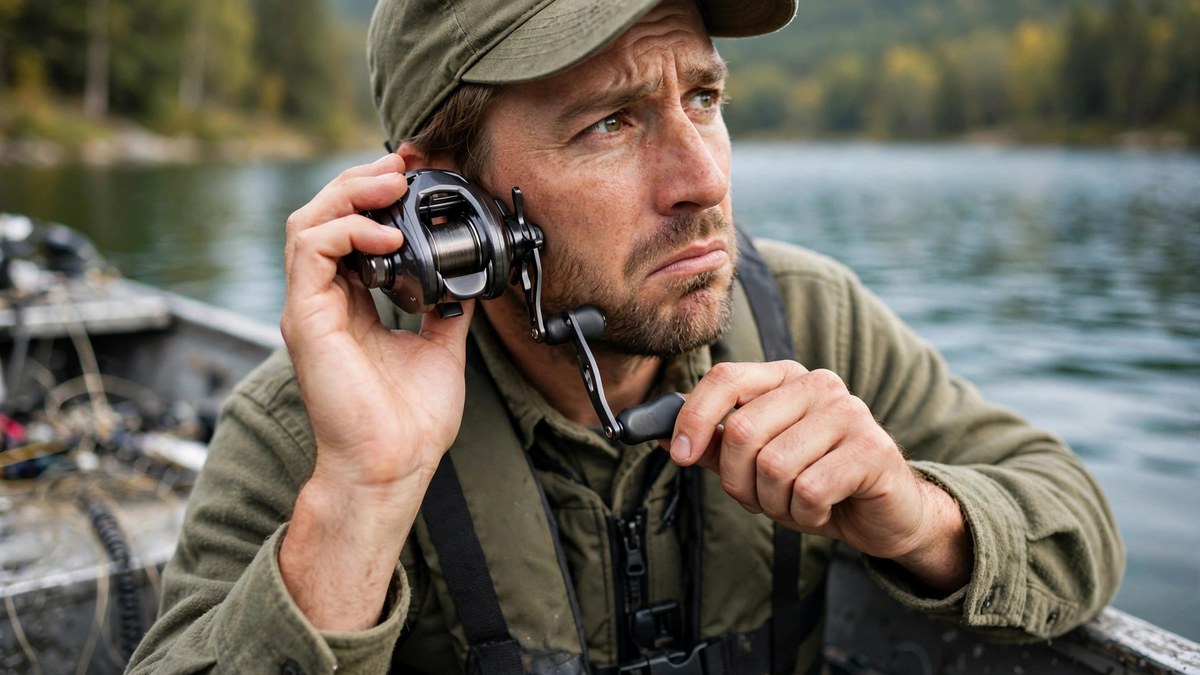
First, the clicks that are normal. The drag star clicks as you turn it, because a spring detent is doing its job. Brake dials click through their settings for the same reason. Some reels (several Lew’s models among them) have an audible drag that clicks when a fish pulls line, and a bait clicker on a round reel clicks whenever the spool turns, but only when switched on. None of these need fixing. A click that is new, and tied to the cast or the retrieve, is the one to chase.
In this guide
- Read the timing: what each click pattern means
- Cause 1: worn line guide pawl or a nicked worm gear
- Cause 2: spool play and the pinion tick
- Cause 3: the bait clicker you forgot was on
- Cause 4: debris in the gears, or a chipped gear tooth
- Cause 5: loose handle nut or worn knob bearings
- Cause 6: anti-reverse pawl on older reels
- FAQs
Read the timing: what each click pattern means
| When it clicks | Pattern | Go to |
|---|---|---|
| Retrieve | Clicks in time with the line guide crossing the spool, or a double click at each end of its travel | Cause 1 |
| Retrieve | Tick that speeds up as you crank faster, spool feels loose side to side | Cause 2 |
| Any time the spool turns | Steady clicking on a round reel, including when you pull line by hand | Cause 3 |
| Retrieve | One click per handle turn, often with a gritty or rough feel | Cause 4 |
| Retrieve | Click you can feel in your cranking hand, knob wobbles | Cause 5 |
| Under load | Clicking plus handle back play on an older reel | Cause 6 |
| Cast only | Ticking while the spool is spinning free, silent on retrieve | Spool bearings or brake blocks (see FAQ) |
One timing fact unlocks the cast only case: on most modern baitcasters, pressing the thumb bar disengages the pinion, so the gears and level wind do not turn during the cast at all. A noise that exists only while the lure is flying cannot be coming from the drive train. It lives in the spool assembly itself.
Cause 1: worn line guide pawl or a nicked worm gear
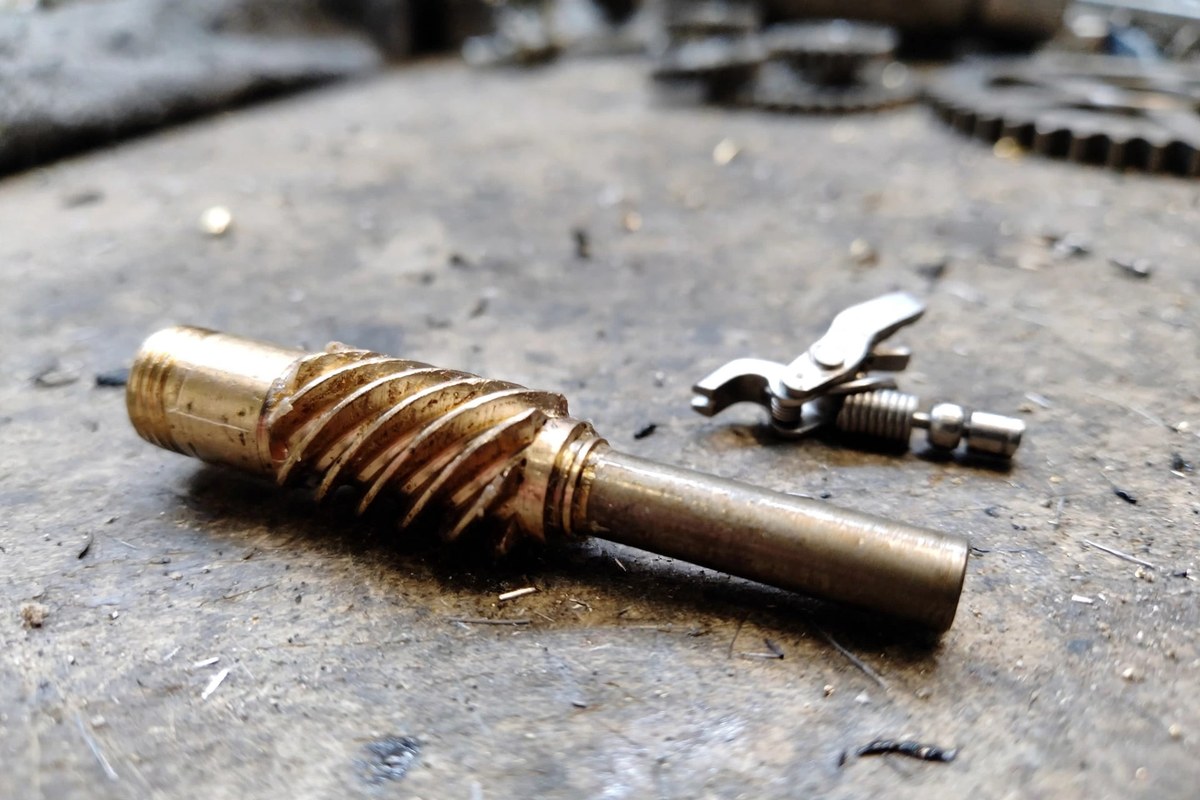
The line guide travels because a small pawl underneath it rides in the spiral grooves of the worm gear. The pawl is a sacrificial part: its tip wears a little every season, and once it gets sloppy in the groove it starts to chatter and click, worst at the ends of the guide’s travel where it changes direction. The worm gear itself can cause the same noise with a single tiny nick in the groove. In one widely reported case, an angler sent a ticking Shimano Calcutta back to the factory, and Shimano’s diagnosis was exactly this: a bad level wind with a nick on it that was almost too small to see.
The fix: remove the pawl cap, slide the pawl out, and inspect its tip under a bright light; a healthy tip is crisp, a worn one is rounded or chipped. Replace it (a few dollars, model specific) and clean and lightly grease the worm gear while you are there. Run a fingertip along the worm grooves: if you feel a catch or a nick, the worm shaft needs replacing too. If your guide has stopped traveling altogether rather than just clicking, our level wind troubleshooting guide covers that failure step by step.
Cause 2: spool play and the pinion tick
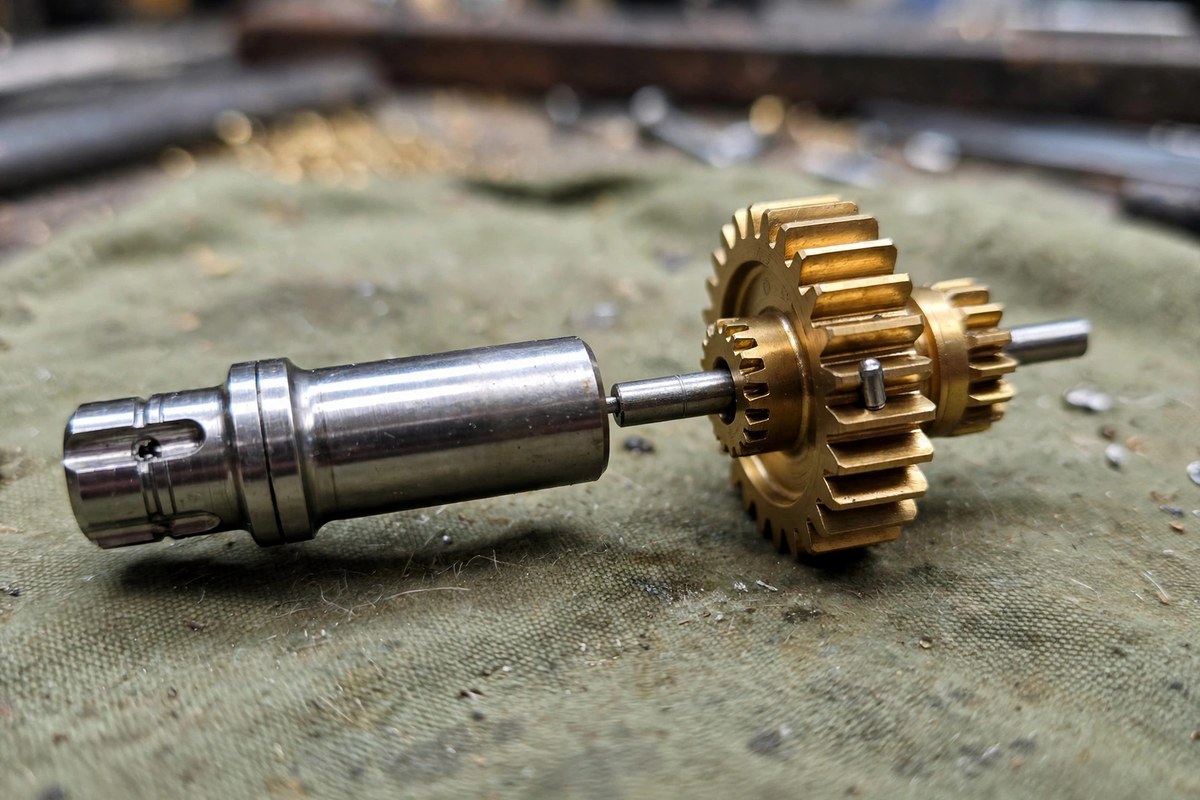
When the clutch re-engages, the pinion gear slides over the spool shaft and its slot captures the shaft’s cross pin. If the spool has too much side to side play, because the spool tension knob is set loose or a shim went missing during a service, the spool floats and that pin ticks against the pinion as things take up the slack. Reel technicians have traced persistent ticking to exactly this: a spool sitting a fraction too close to the pinion after an extra spacer was fitted.
The fix: with the clutch engaged, push the spool side to side with your thumb. There should be no knock and barely any movement. Set the spool tension knob until the play just disappears. If the noise started right after a clean and rebuild, check the shim stack on the spool shaft against the schematic: one shim too many or too few moves the spool exactly the wrong amount.
Cause 3: the bait clicker you forgot was on
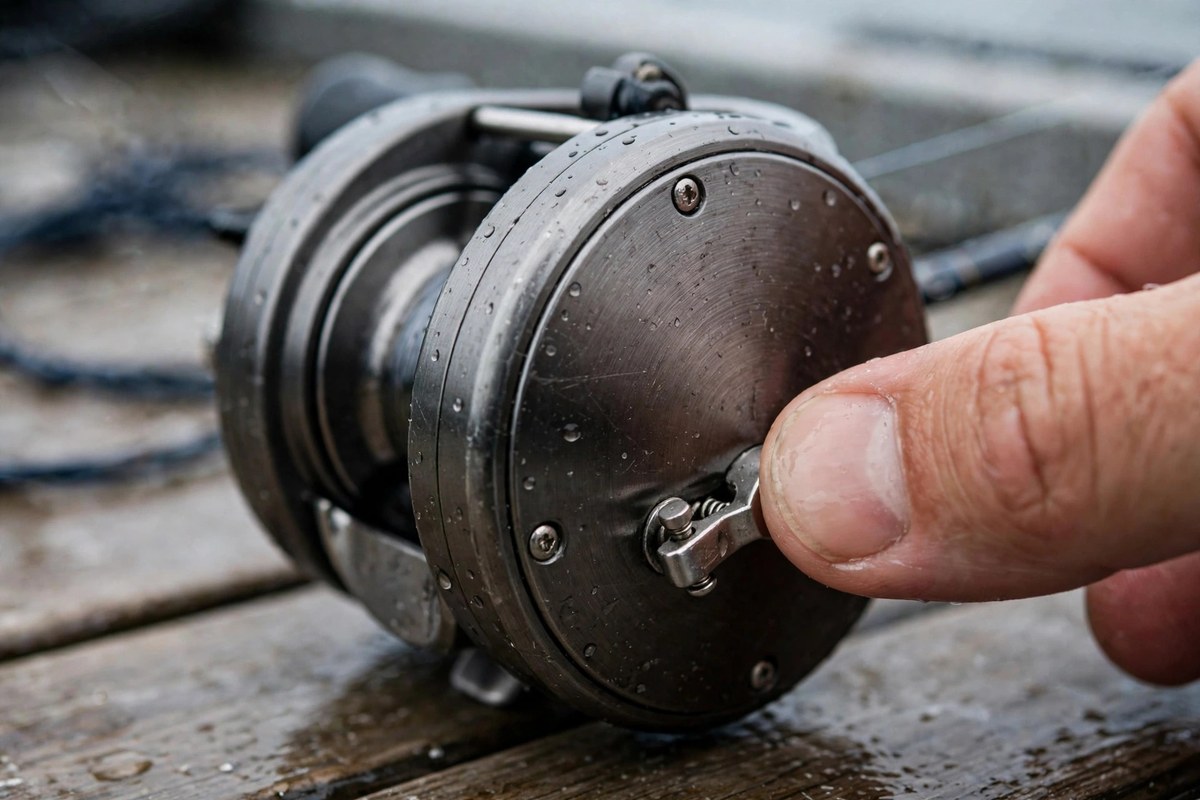
Round baitcasters in the Ambassadeur and Calcutta tradition carry a bait clicker: a spring tongue that engages the spool gear and clicks loudly whenever the spool turns, meant to announce a taking fish while the rod sits in a holder. Left switched on, it clicks through every retrieve and every cast, and it is astonishing how many “my reel started clicking” reports end at this little lever. The giveaway is that the clicking also happens when you pull line off by hand with the reel in free spool.
The fix: slide the switch off. Done. If the lever feels stuck or the clicker will not disengage, the mechanism is usually just gummed up: flush it with warm water, work the lever back and forth, and add one drop of oil. Only open the side plate if it still refuses to move.
Cause 4: debris in the gears, or a chipped gear tooth
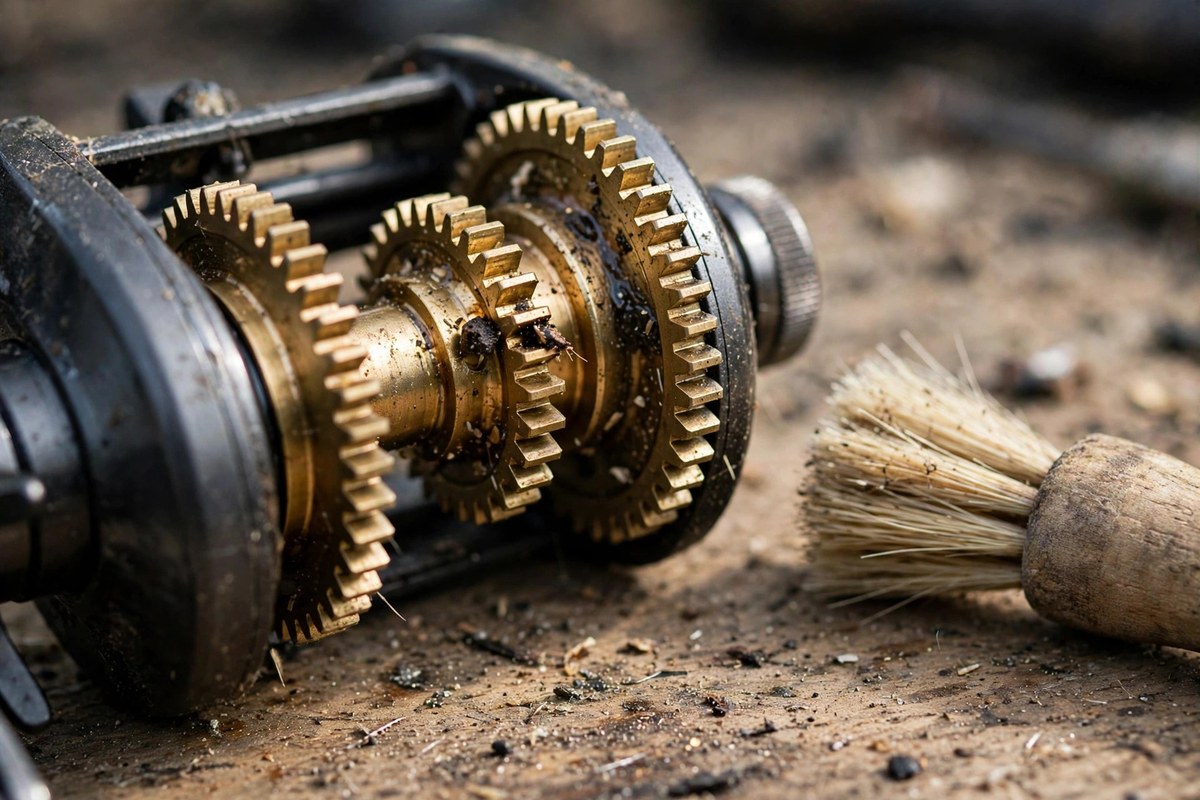
A click that lands once per handle turn, at the same point in every revolution, is a gear localising itself. Two things produce it: grit that has worked into the gear teeth (sand is the usual suspect after bank fishing), or one damaged tooth on the main gear or pinion, often from a drop or from a tooth that met debris under load. Repair technicians list debris in the gears and a bent shaft among the standard causes of reel clicking, and a bent shaft from a drop produces the same once per turn click as it wobbles the gear mesh.
The fix: first do the 30 second checks: side plate screws snug, nothing trapped under the spool edge. Then open the reel, clean the gears with a soft brush, and inspect the teeth slowly under a strong light while turning the shaft. Grit alone means clean, re-grease, and fish on. A chipped or cracked tooth means replacing that gear, because it will keep clicking, keep wearing its partner gear, and shed more debris. Our cleaning and maintenance guide shows the safe way to open and rebuild the reel.
Cause 5: loose handle nut or worn knob bearings
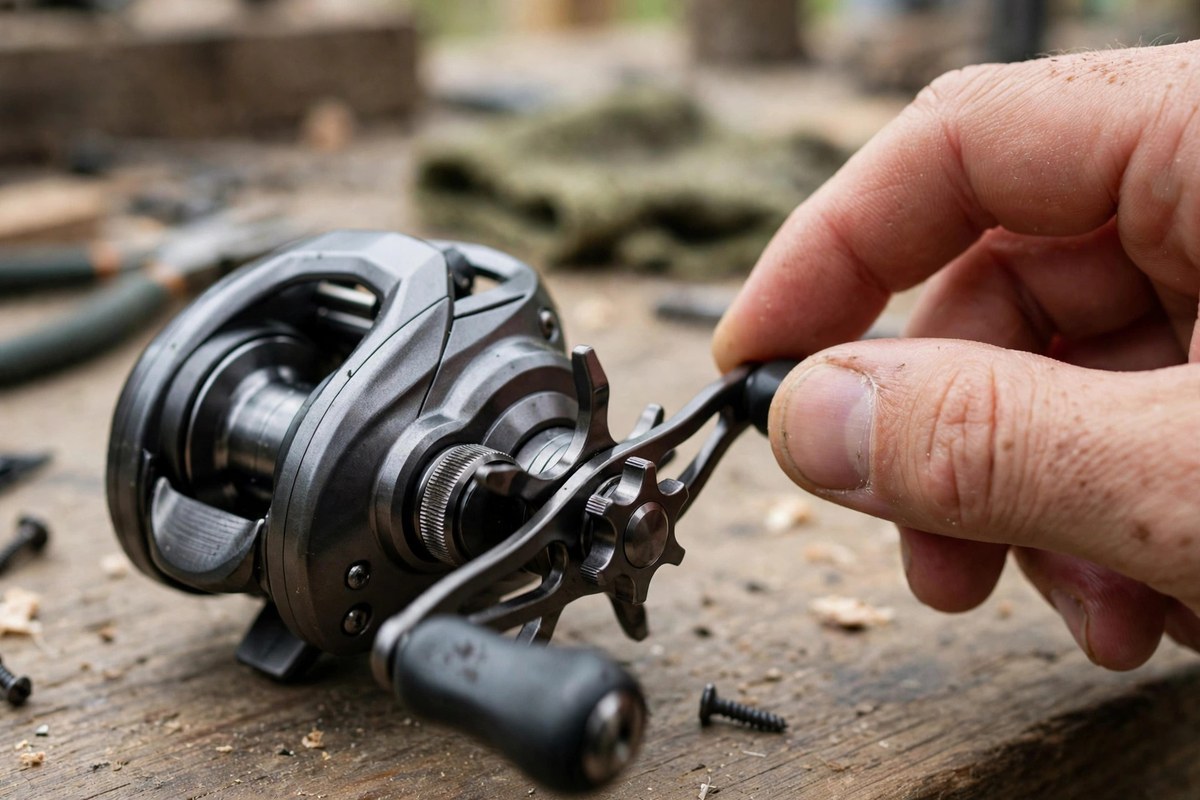
Some clicks are not in the reel at all; they are in your hand. A handle nut that has worked a quarter turn loose lets the handle shift on its shaft with a small click at each change of cranking direction, and worn or dry handle knob bearings click and rattle as the knob spins. If you can feel the click through your cranking hand more than you can hear it, and the knob has visible wobble, you have found it.
The fix: pop the handle nut cap, snug the nut down, and spin each knob. A knob that rocks on its post or feels gritty needs its bearings (or the knob assembly) replaced; a knob that merely rattles dry often quiets with the tiniest drop of oil on its shaft. This is the cheapest diagnosis on the page, so always check it before opening the reel.
Cause 6: anti-reverse pawl on older reels
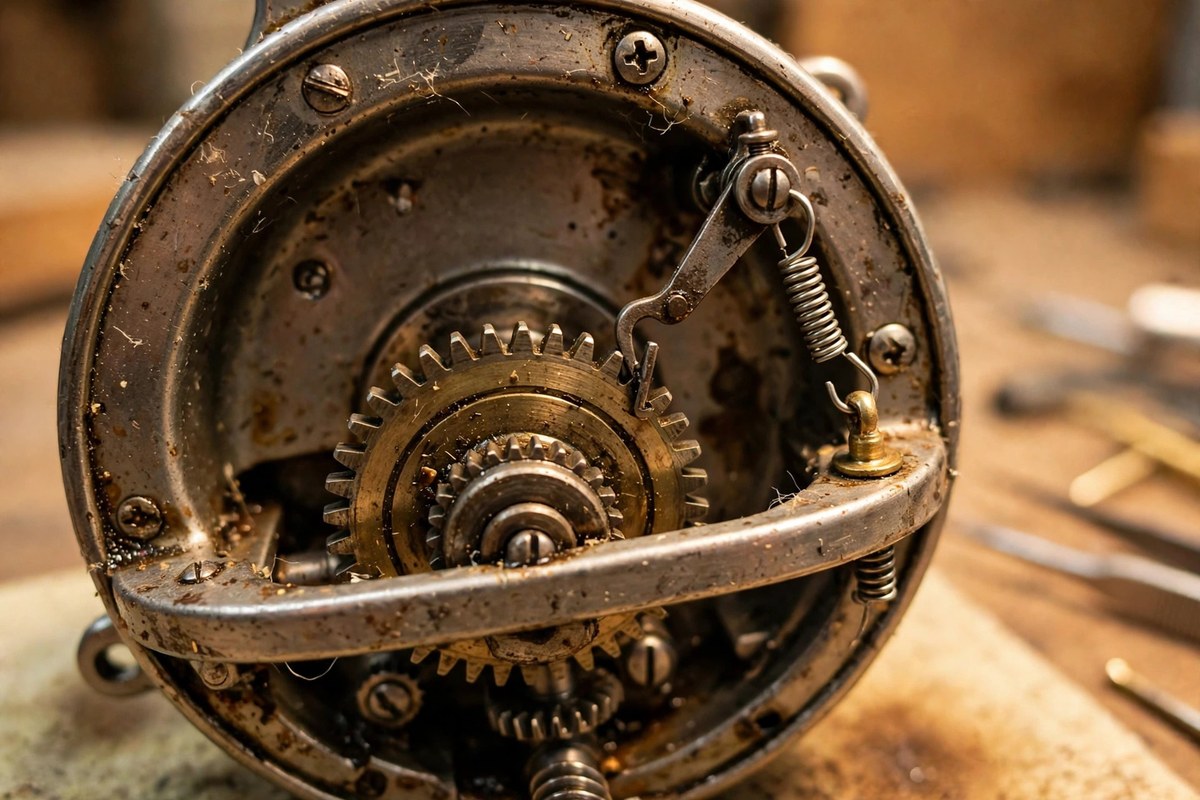
Before instant anti-reverse bearings became standard, reels stopped the handle from turning backward with a pawl (often called a dog) that drops into a ratchet gear, held there by a small spring. When that spring weakens or the pawl tip wears, the pawl starts riding the ratchet teeth instead of seating in them: clicking under load, a clunk of back play when you set the hook, and in bad cases the handle slipping backward a tooth at a time.
The fix: this is a service job: replace the pawl spring first (it is usually the spring, not the pawl), and the pawl itself if its tip is rounded. On a modern reel with a one way bearing, the equivalent failure feels different: the handle turns backward without a healthy ratchet click, which is the anti-reverse bearing problem covered in our drag slipping guide. Do not confuse the two; the parts and fixes are entirely different.
The 5 minute diagnosis, in order
1. Pull line by hand in free spool. Clicking? Check the clicker switch (Cause 3). 2. Crank slowly and watch the line guide. Clicks sync with its travel? Pawl or worm gear (Cause 1). 3. Push the spool sideways. A knock means play; set the tension (Cause 2). 4. Wiggle the handle and knobs (Cause 5). 5. Still clicking once per turn? Open it and look at the gears (Cause 4), and on an older reel, the anti-reverse pawl (Cause 6). Five minutes, no parts bought, and you will know which system you are in.
FAQs
Is it normal for a baitcaster to make clicking sounds?
Some clicks are built in: the drag star clicks as you turn it, brake dials click through their settings, some reels have an audible drag that clicks when line is pulled, and a bait clicker clicks on purpose when switched on. A new click that appears during the retrieve or the cast, and was not there before, is the kind worth diagnosing.
Why does my baitcaster click only when I reel in?
Retrieve only clicking usually comes from the level wind: a worn line guide pawl or a nicked worm gear clicks in time with the line guide’s travel. If the click comes once per handle turn instead, suspect debris in the gears or a damaged gear tooth, and a click you can feel at the handle itself points to a loose handle nut or worn knob bearings.
Why does my baitcaster click only when I cast?
On most modern baitcasters the gears and level wind do not turn during a cast, because the clutch has disengaged them. A cast only tick therefore points at the spool itself: dry or worn spool bearings, worn centrifugal brake blocks rubbing the spool, or the spool cross pin. Test the bearings by spinning them with a fingertip; they should turn quietly. Our guide to baitcaster brakes explains the brake block side of this.
Can I keep fishing a reel that clicks?
For the harmless causes, yes: a forgotten clicker or a loose handle nut will not damage anything. Stop and open the reel if the click comes with a gritty feel, a slipping anti-reverse, or a click that is getting louder, because debris and a chipped gear tooth get worse with every turn and can take other parts with them.
How much does it cost to fix a clicking baitcaster?
Most clicking fixes are cheap. A line guide pawl costs a few dollars, spool bearings are inexpensive, and cleaning costs nothing but time. A replacement worm gear or main gear costs more but is still a routine service part. The expensive outcome is ignoring grit in the gears until it damages several parts at once.
My reel started clicking after I dropped it. What should I check?
Check the simple things first: side plate screws still snug, spool tension still set so the spool has no side to side play, and the handle nut tight. Then open the reel and look for a bent spool shaft or a cracked gear tooth, both classic drop damage that produces one click per revolution.
Affiliate disclosure: baitcastingreelz.com is reader supported. When you buy through links on this page we may earn a commission at no extra cost to you. Diagnostic guidance reflects manufacturer service practice and reel technician references checked in October 2026.