Fishing fundamentals · US guide
How to Jig Fish: Jig Types, Setups, and Retrieves That Catch Bass
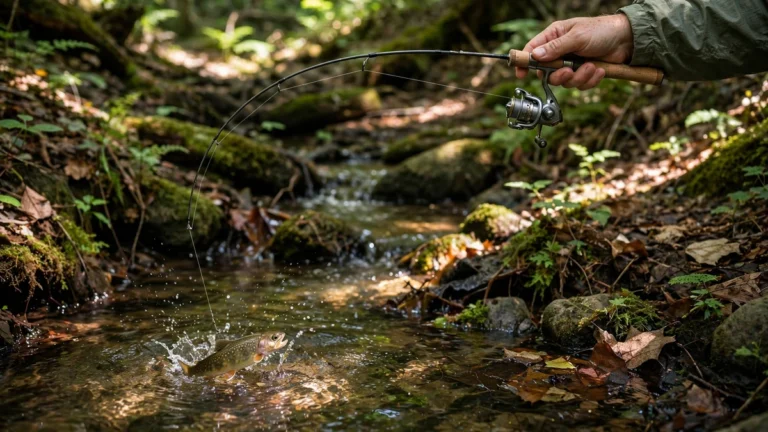
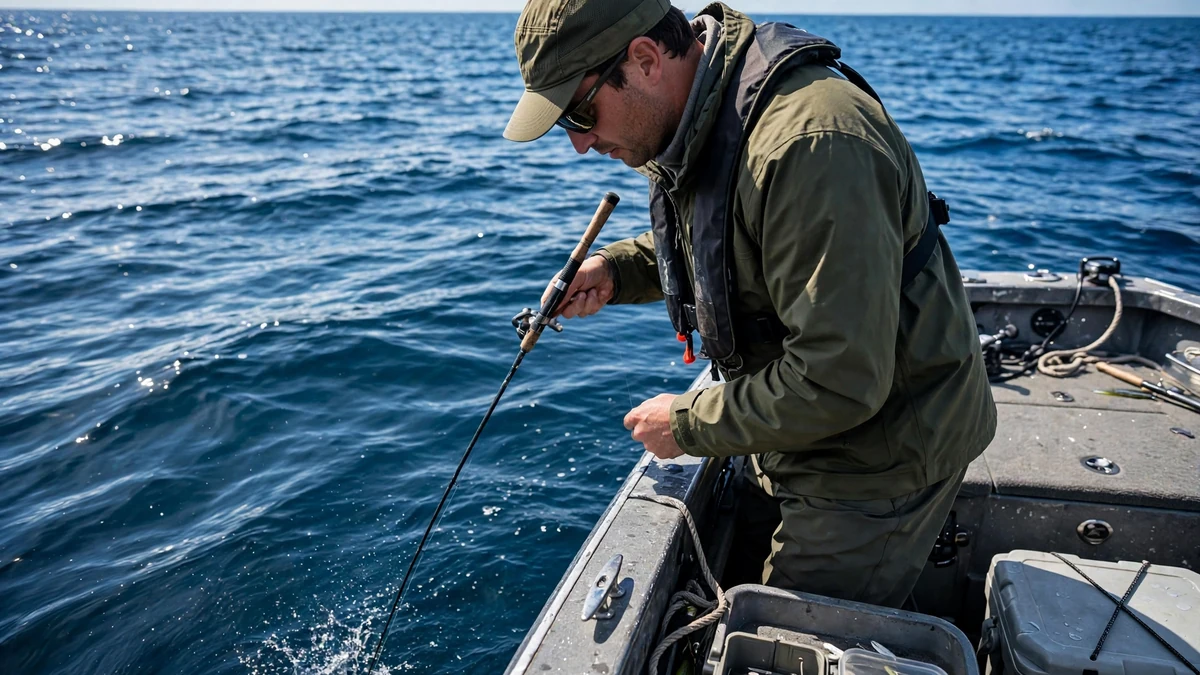
Learning how to jig fish well comes down to three habits: choosing a jig you can control at the depth you’re fishing, moving it with a deliberate lift-and-fall, and watching the line while it drops. Before choosing a setup, it helps to understand the different types of fishing reels and where each one fits. Nail those three habits and a jig becomes one of the most consistent big-fish baits in bass fishing.
By baitcastingreelz.com · Updated 15 October 2026 · 10-minute read
The basic jig-fishing sequence
A jig is a weighted hook dressed with a skirt, hair, feathers, or a soft-plastic trailer. Everything below is a variation on one repeatable sequence: cast, fall, lift, pause.
- Reach the target depth. After the cast, watch the line. A sudden slackening usually means the jig hit bottom; a line that stops early can mean a bass grabbed it on the way down.
- Move the jig with a compact rod motion. A lift of a foot or two is plenty. Big sweeping motions pull the jig out of the strike zone and create unnecessary slack.
- Lower the rod while staying connected. Follow the falling jig rather than leaving a big bow of slack — “controlled slack” keeps bite information coming up the line.
- Pause. Let the jig settle. Many fish eat on the fall or in the first seconds after the jig stops moving.
- Repeat with intent. If you’re not getting feedback, change one variable — pause length, hop height, depth, or jig weight — not everything at once.
Know your jig types
Different head shapes are built for different jobs. Match the jig to the cover and depth you’re fishing, and the retrieve gets dramatically easier.
| Jig type | Head design | Best for | Typical weights |
|---|---|---|---|
| Casting jig (Arkie/pointed head) | Narrow head that slips through cover | All-around bass fishing around docks, laydowns, and riprap | 1/4–1/2 oz |
| Football jig | Wide, flat-sided head that rocks on bottom | Deep rock, ledges, and shell beds where you drag rather than hop | 1/2–3/4 oz |
| Flipping/pitching jig | Compact head with heavy weed guard | Heavy matted vegetation, thick brush, and dock pilings | 3/4–1 oz |
| Finesse jig | Small, light head with a fine skirt | Clear water and pressured fish that shy away from bulky presentations | 1/8–5/16 oz |
| Swim jig | Streamlined head with a pointed nose | Retrieved steadily through grass, pads, and shallow flats like a crankbait | 1/4–1/2 oz |
Color is simpler than tackle aisles make it look: natural greens and browns in clear water, black and blue in stained water for maximum silhouette. For swim jigs, match the shad or bluegill the bass are feeding on. For a broader look at matching profiles to conditions, see our guide to different types of fishing baits.
Optional supply: jig fishing starter assortment
A handful of 3/8 oz casting jigs in green pumpkin and black/blue, plus one or two football heads for deep rock, covers most bass jigging situations.
Trailers: the half of the jig most anglers ignore
The trailer changes the jig’s action, fall rate, and profile — treat it as a tuning knob, not decoration.
Craw-style trailers
Flapping claws give a casting jig its classic defensive-crayfish look around rock and wood. A bulkier trailer also slows the fall — useful in shallow water.
Chunk and grub trailers
Subtle, compact movement. Chunks pair with flipping jigs in heavy cover where the jig must drop fast and straight; grubs work on finesse jigs in clear water.
Paddle-tail and swimbait trailers
A kicking tail turns a swim jig into a constant-motion bait for grass flats, and keeps a casting jig lively during a slow bottom drag.
Creature trailers
Extra appendages add bulk and slow the fall. Good for dragging a football jig deep, where hang time keeps the bait in the strike zone longer.
One practical rule: thread the trailer on straight. A crooked trailer makes the jig corkscrew on the fall. If the trailer won’t sit right after a couple of fish, swap it out instead of fighting it.
Rod, reel, and line pairings
Jig fishing rewards a fast-action rod with enough backbone to drive a thick-gauge hook home, and low-stretch line so you feel the fall and the strike. If you’re learning on a spinning outfit, these basics pair well with our guide on how to cast a spinning reel.
| Situation | Rod | Line | Reel |
|---|---|---|---|
| All-around casting jigs | 7’–7’3″ medium-heavy, fast action | 15–17 lb fluorocarbon | Baitcasting, 7.1:1 |
| Heavy cover / flipping | 7’6″–8′ heavy, fast action | 50–65 lb braid | Baitcasting, 7.5:1 or faster |
| Deep football jigs | 7’–7’6″ medium-heavy, moderate-fast action | 12–14 lb fluorocarbon | Baitcasting, 6.3:1 |
| Finesse jigs | 7′ medium, fast action spinning rod | 8–10 lb fluorocarbon | Spinning, 2500 size |
Retrieve cadences: four patterns that cover nearly everything
Lift-and-fall
The default. Lift the rod tip a foot or two, let the jig fall on controlled slack, pause 3–5 seconds, repeat. Master this one first — it catches bass on docks, points, and channel swings all year.
Drag-and-deadstick
Pull the jig slowly along the bottom, then let it sit dead for 10–20 seconds. Built for football jigs on deep structure and cold-front days when bass want a meal that isn’t escaping.
Swim it
Reel a swim jig just fast enough to keep it tracking above the grass, adding occasional rod twitches. Covers water fast on windy banks and submerged vegetation in spring and fall.
Flip and pitch
Drop a compact jig vertically into pockets in heavy cover — mats, brush, docks — let it fall on a tight line, shake it once or twice, and lift it out. Precision beats distance here.
Start with the calmest cadence that keeps contact with the jig. Speed up only when active fish reward it — smaller hops and longer deadsticks when the bite is tough.
When and where to throw a jig for bass
Jigs catch bass year-round; the pattern just shifts with the season. These retrieves slot into the patterns in our guide on how to catch bass, and the finesse approach overlaps with our crappie fishing guide.
- Spring: Work 3/8 oz casting jigs along prespawn staging banks — chunk rock transitions, secondary points, and the first deep water near spawning flats.
- Summer: Flip 3/4–1 oz jigs into the darkest midday shade: matted grass, thick laydowns, dock walkways. Swim jigs cover grass flats early and late.
- Fall: Chase the shad migration with swim jigs through shallow grass and along creek channel banks, where a faster cadence pays off.
- Winter: Slow down with a 1/2 oz football jig dragged across deep points, ledges, and shell beds with long pauses for lethargic bass.
A chop on the water hides your line and breaks up light — cast into the windward side of banks and points and let the jig fall through the feeding zone.
How to detect a jig bite
Most jig bites are not dramatic. A bass may inhale the jig and sit there, so the “bite” looks like nothing — your line simply stops falling early or goes slack at the wrong time.
Equipment helps, but attention is what detects bites; for a few all-purpose habits that sharpen a day on the water, see these practical fishing tips.
Fix the problems that stop a jig from working
| Problem | Likely cause | First adjustment |
|---|---|---|
| You can’t feel the jig | Too little weight, too much line bow, or poor depth control | Improve the line angle; step up weight only if needed |
| You snag on every cast | Jig running through cover it can’t clear | Change the angle, switch to a more streamlined head, or pick a new target |
| Jig falls too fast | Weight overpowers the presentation | Step down in weight or add a bulkier trailer to slow the fall |
| No bites on a spot that looks perfect | Cadence, depth, or location may be off | Change one variable and give it a dozen quality casts before judging |
| Soft plastic spins or tracks badly | Trailer is crooked or chewed up | Rig it straight; replace it if it won’t sit correctly |
| Missed hooksets on bites you feel | Slack in the line or too-soft rod | Reel down before setting; check that the rod has enough backbone |
Frequently asked questions
What is the best jig weight for beginners learning how to jig fish?
A 3/8 oz casting jig is the best starting point for bass in moderate depths — heavy enough to hold bottom contact, light enough to fall at a pace bass will chase. Go heavier in deep water or current, lighter in shallow calm water.
How do you know when a fish bites a jig?
A jig bite can feel like a tap, sudden heaviness, or nothing at all. Watch for the line to twitch, jump sideways, or go slack before the jig should have reached bottom. When anything feels different, reel down and set firmly.
What rod and line should you use for jig fishing?
A 7′ to 7’3″ medium-heavy fast-action baitcasting rod with 12- to 17-pound fluorocarbon is the standard bass jig setup. Flip heavy cover with 50- to 65-pound braid, and fish finesse jigs on a spinning rod with 8-pound fluorocarbon. For heavier saltwater work, see our guide to the best saltwater spinning reels.
Do you jig fast or slow?
Start with a measured lift and a pause of several seconds, then let the fish decide. Aggressive bass may want a sharper snap and shorter pause; neutral or cold-front fish usually need smaller hops and longer dead-stick pauses.
What is the best time of year to jig fish for bass?
Jigs catch bass year-round: prespawn staging areas in spring, shallow feeding in fall, deep structure in winter, and thick shade flipped at summer midday.
Affiliate disclosure: baitcastingreelz.com participates in the Amazon Associates Program and may earn from qualifying purchases. The optional link is for convenience and does not affect editorial guidance.