Ice Fishing Tips: 15 Tactics to Catch More Fish (2026)
Short answer: The most effective ice fishing tips: drill multiple holes and move every 15 minutes until fish are found, use 1/16–1/8 oz jigs with live bait, jig slowly with long pauses, watch the line for subtle bites, and fish dawn and dusk. Safety first: never go out on less than 4 inches of solid ice.
Ice fishing rewards process over luck. The anglers who consistently catch fish through the ice aren’t fishing different lakes; they’re drilling more holes, adjusting depth more often, jigging more deliberately, and reading subtle bites that beginners miss entirely. These fifteen tips are organized the way a trip actually unfolds: finding fish, presenting bait, detecting bites, and staying safe and comfortable long enough for it all to work.
Finding Fish Under the Ice
1. Hole-hop instead of camping one spot
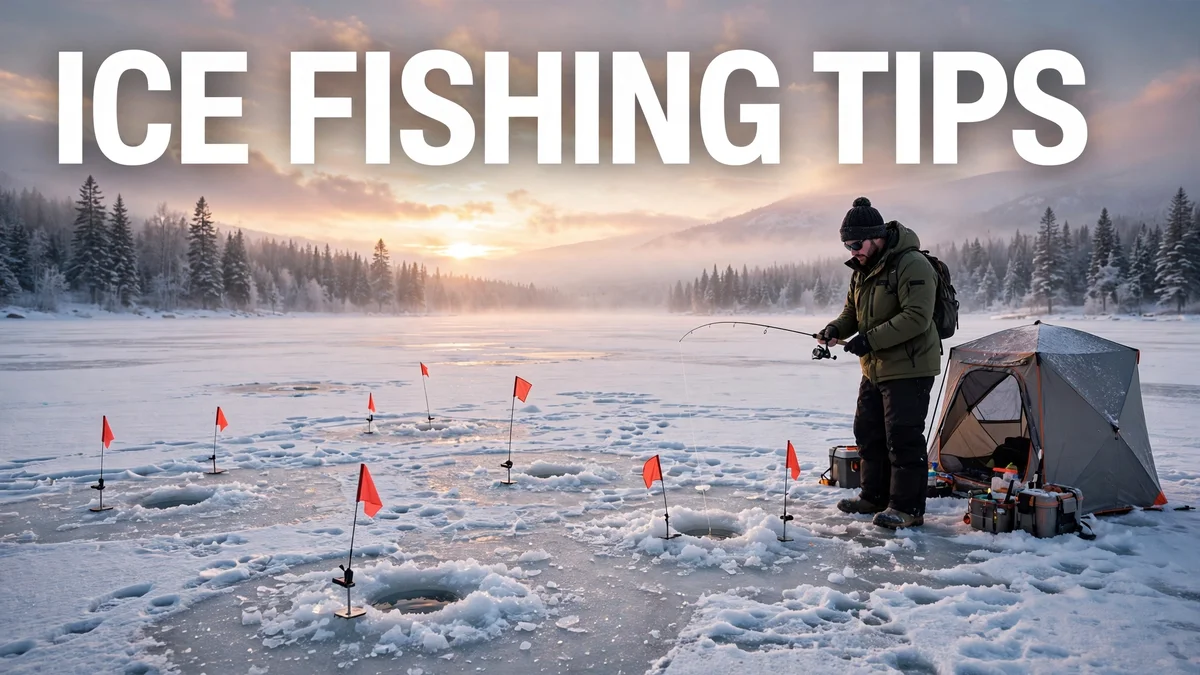
The single biggest difference between slow and productive days. Drill a spread of holes across depths and structure, fish each for 10–15 minutes, and keep moving until marks appear on the flasher or bites come. Sitting over empty water all day hoping fish arrive is the most common beginner mistake in ice fishing.
2. Learn the lake before the trip
Depth maps, many free through state DNR sites and navionics apps, show the humps, drop-offs, and weed edges where winter fish hold. Perch and bluegill relate to weed edges in 8–15 ft; walleye cruise breaklines in 15–30 ft; pike patrol shallow bays. Arriving with three waypoint areas picked out beats drilling blind. Our ice fishing for beginners guide covers the essential gear for getting started.
3. Use electronics: even a basic flasher
A flasher or portable sonar shows depth, bottom composition, and fish entering the cone in real time. Watching a mark rise to meet the jig and feeling the tick of the bite a second later is both the fastest teacher and the biggest catch-rate multiplier in modern ice fishing. Even an entry-level unit changes the game versus fishing blind.
4. Don’t ignore shallow water at first and last ice
Early and late in the season, high oxygen and light penetration pull perch, bluegill, and crappie into water as shallow as 4–6 ft. Most anglers walk right past these areas heading for deep structure. Some of the fastest action of the season happens in surprisingly skinny water, drill a few shallow test holes before committing to the long walk out.
Presentation: Bait, Jigs, and Jigging Cadence
5. Go small: then go smaller
Cold water slows fish metabolism, and winter fish prefer small meals. When bites don’t come, the fix is usually downsizing, not upsizing: drop from a 1/8 oz spoon to a 1/16 oz teardrop jig, or from a full minnow to a minnow head. Tiny presentations get eaten when larger ones get inspected and refused.
6. Match bait to species
- Bluegill/perch/crappie: waxworms, spikes (maggots), or small soft plastics on teardrop jigs
- Walleye: jigging spoons (Swedish Pimple, Kastmaster types) tipped with a minnow head, or live shiners on a deadstick
- Northern pike: large shiners or suckers on tip-ups set along weed edges
7. Jig slow, and embrace the pause
Winter jigging is measured in inches, not feet: lift the rod tip 3–6 inches, pause, and lower slowly. Most strikes come during the pause, on the fall, when the jig hangs motionless. If aggressive jigging isn’t producing, deadsticking, leaving the bait perfectly still, often triggers the wary fish that watched the show and refused it.
8. Run a deadstick alongside the jigging rod
Where regulations allow two lines, the highest-percentage spread is one rod jigged actively and a second deadstick, a live minnow on a plain hook under a bobber or on a tip-up, fishing untouched nearby. A remarkable share of the day’s fish, especially walleye, come on the rod that isn’t moving. Check local rules on line limits first.
9. Change something every 20 minutes without bites
Color, size, bait, depth, cadence; rotate one variable at a time until the pattern reveals itself. Some days the entire difference is chartreuse versus white, or 12 ft versus 16 ft. Anglers who change nothing catch nothing new.
Detecting the Bite
10. Watch the line, not the rod tip
Winter bites are often just a slight slackening or sideways twitch of the line, no rod bend at all. Keep eyes on where the line enters the water. A spring bobber (a sensitive wire extension on the rod tip) makes these whisper bites visible for panfish and is one of the cheapest upgrades in ice fishing.
11. Set the hook quickly but gently
A short, firm wrist snap, not a bass-style power swing. Light ice rods and small hooks punish heavy hooksets by tearing free. The motion should take up slack and drive the point home, nothing more.
Comfort and Safety: Staying Out Longer
12. Respect the 4-inch rule: no exceptions
Clear, solid ice needs to be at least 4 inches thick for foot travel, 6–8 for snowmobiles and ATVs. Check with a spud bar every few steps early in the season, avoid inlets, outlets, and pressure cracks, and never assume yesterday’s ice is today’s. Our dedicated ice fishing safety tips cover thickness, self-rescue gear, and what to do if the ice fails.
13. Dress in layers, not one heavy coat
Thermal base layer, insulating mid-layer, windproof waterproof shell; and no cotton anywhere, since it holds moisture against the skin. Insulated boots rated for the actual temperature, windproof gloves, and a balaclava or neck gaiter decide whether the trip lasts two hours or six. Pack dry backup gloves and socks; wet extremities end more trips than slow fishing does.
14. Keep holes ice-free and stay quiet
Skim holes regularly with a slotted scoop, ice buildup in wind closes a hole fast. Move softly and keep gear off the ice with a thud; sound transmits efficiently through ice, and shallow fish spook from heavy footsteps and dropped augers.
15. Track patterns in a notebook
Depth, location, time, weather, barometer trend, bait, color, cadence; logged for every trip. Within a season, patterns emerge that no article can give: which bay turns on after a cold snap, which color the local perch want under clouds, and how the bite shifts from first ice to late season. The notebook becomes the most valuable tackle owned. Steady or falling barometric pressure consistently outfishes the bright, high-pressure day after a front.
Weather Patterns: Reading the Barometer
Ice anglers who watch barometric pressure consistently outfish those who don’t. Steady or slowly falling pressure, the day or two ahead of a weather system, is the prime window; fish feed actively before the front. The bright, high-pressure day immediately after a storm is typically the toughest, with fish holding tight and biting tentatively. On those bluebird days, fish the warmest part of the afternoon, downsize everything, and work the deadstick harder than the jigging rod. A $20 pocket barometer or any weather app’s pressure trend graph is all the equipment this takes. Over a season, the anglers who plan trips around falling pressure consistently spend their hours over active fish instead of waiting out lockjaw.
Frequently Asked Questions
How thick does ice need to be for ice fishing?
At least 4 inches of clear, solid ice for walking and fishing; 6–8 inches for snowmobiles or ATVs. Avoid ice near inlets, outlets, and pressure cracks, and test with a spud bar as you go.
What is the best time of day for ice fishing?
Early morning and late afternoon produce the most consistent bites. On overcast days the bite can extend through midday, and walleye often feed best after dark.
What bait works best for ice fishing?
Live bait, waxworms and spikes for panfish, minnows and shiners for walleye and pike, outfishes artificials for most beginners. Tip jigs and spoons with live bait for the best of both.
Do I need a shelter to ice fish?
No, especially on calm, mild days. A portable shelter blocks wind, keeps holes from freezing, and extends comfortable fishing time significantly, but plenty of fish are caught sitting on a bucket in the open.
What is hole hopping in ice fishing?
Drilling multiple holes across different depths and structure, fishing each briefly, and moving on until active fish are found, instead of sitting in one spot hoping fish arrive. It’s the fastest way to locate fish under the ice.
Can you ice fish at night?
Yes, walleye and burbot are notably more active after dark. Use a headlamp, glow jigs charged with a light, and take extra safety precautions since hazards are harder to see.
Related Reading
- Ice Fishing for Beginners, gear and getting started
- 10 Essential Ice Fishing Safety Tips, the full safety playbook
- How Long Can You Keep Fish on Ice, handling the catch
- Best Ultralight Spinning Reels, light reels for panfish duty