How to Surf Fish: Complete Shoreline Fishing Guide (2026)
Short answer: To surf fish, rig an 8–12 ft rod with a 4000–6000 spinning reel loaded with 20–30 lb braid, tie on a fish-finder rig with a 1–4 oz pyramid sinker and 1/0–3/0 circle hook baited with shrimp, and cast into troughs past the breakers. Fish dawn, dusk, and rising tides, and check local license rules first.
Surf fishing is saltwater fishing stripped to its essentials: no boat, no electronics, just a long rod, the right rig, and the ability to read a beach. Fish feed in the surf zone in predictable places — troughs between sandbars, cuts in the bar, the edges of rip currents — and an angler who learns to see those features consistently outfishes one with twice the tackle. This guide covers the full system: gear, rigs, reading the beach, timing, bait, and the first-trip routine that gets beginners into fish quickly.
What Surf Fishing Is (and Why It Works)
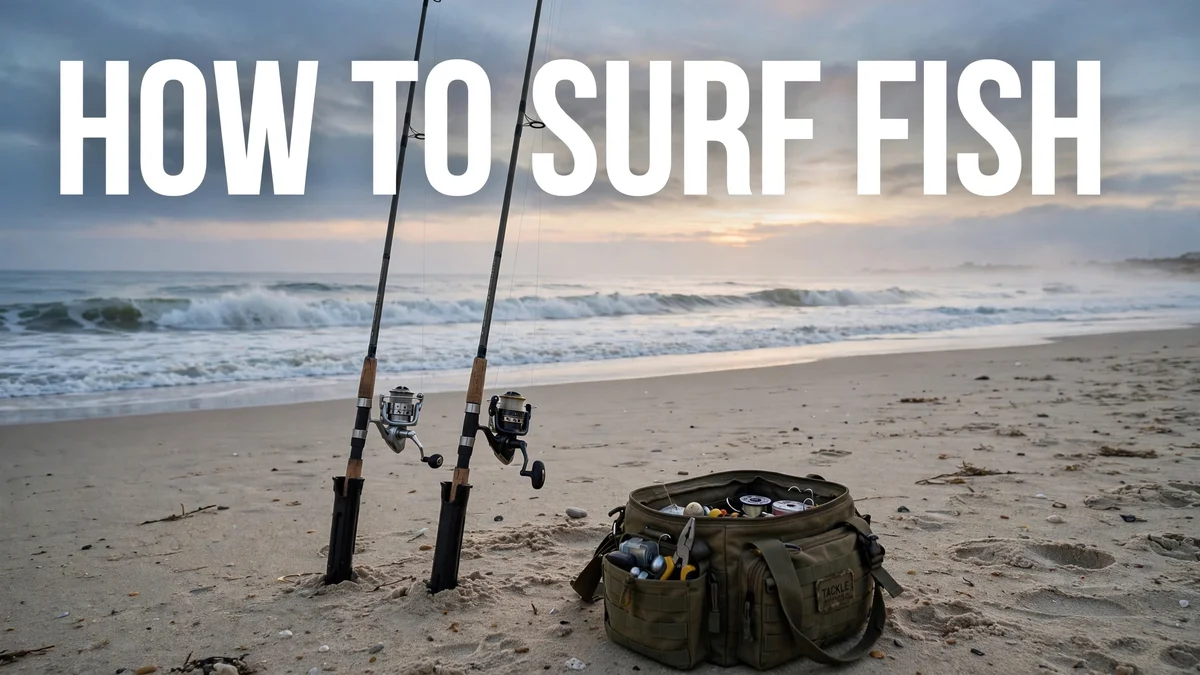
Surf fishing means casting from the beach, jetty rocks, or piers into the ocean’s surf zone — the turbulent band of water between the shoreline and the outer sandbar. Waves stir up sand fleas, mole crabs, and baitfish in this zone, which draws predators: pompano, whiting, redfish, striped bass, bluefish, and flounder on most US coasts. The appeal is access — productive saltwater within a short walk — and the fact that some of the best fishing happens within 50 yards of where beachgoers swim.
The Surf Fishing Setup: Rod, Reel, and Line
Rod: 8–12 ft, medium-heavy
Length is the defining trait of a surf rod — it keeps the line above the breaking waves and adds casting distance. A 9–10 ft medium-heavy rod handles most beach situations; go 11–12 ft when maximum distance matters (targeting bull redfish or sharks) and 8 ft when fishing jetties or piers where leverage beats length. Two-piece rods are the norm for transport. For reel and rod pairings by scenario, see our best saltwater spinning reels roundup.
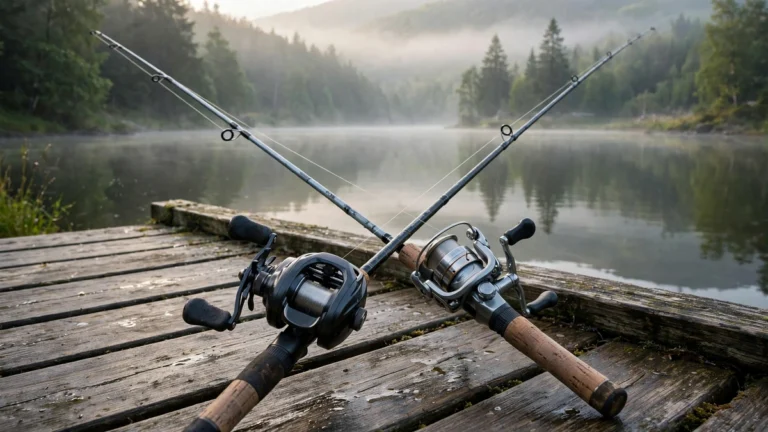
Reel: 4000–6000 size spinning reel
A 5000-size spinning reel is the sweet spot for most surf fishing — enough line capacity (200+ yards of 20–30 lb braid) and drag strength (15–20 lb max) for redfish and striped bass without being a chore to cast all day. Sealed or shielded bearings matter here; sand and salt spray destroy unsealed reels within a season.
Line: 20–30 lb braid with a fluorocarbon leader
Braid is the standard because its thin diameter casts far and its zero stretch transmits bites in heavy surf. Run 20–30 lb braid mainline to a 2–3 ft, 20–40 lb fluorocarbon leader for abrasion resistance against sand and shells. The leader takes the beating; the braid does the work.
Terminal Tackle: Sinkers, Hooks, and Rigs
Sinkers: pyramid vs. sputnik
Pyramid sinkers (1–4 oz) dig into sandy bottoms and hold position in moderate surf — the default choice. Sputnik (spider) sinkers with wire prongs grip in heavy current where pyramids roll. Carry 2, 3, and 4 oz and size up until the rig holds; a rig dragging down the beach catches nothing.
Hooks: match to bait and species
Circle hooks in 1/0–4/0 cover the core surf species on shrimp, sand fleas, and cut bait — they hook fish in the corner of the mouth, which matters for released fish. Use 1/0–2/0 for pompano and whiting, 3/0–5/0 for redfish and striped bass. Corrosion-resistant finishes (tin or nickel) are worth the small premium in saltwater.
The three rigs that cover everything
- Fish-finder rig: sinker slides on the mainline above a swivel, with the hook on a short leader below. Lets fish take the bait without feeling the sinker — the best all-around surf rig for pompano, redfish, and whiting.
- High-low (dropper) rig: two hooks on dropper loops above the sinker. Doubles the bait in the water and is deadly for whiting and croaker when they’re schooled up.
- Carolina-style rig for larger targets: heavier sinker and 5/0–8/0 hook for bull redfish, sharks, and tarpon with chunk baits.
Reading the Beach: Finding Fish Without Electronics
This is the skill that separates consistent surf anglers from lucky ones. Scout at low tide, when the structure is visible: look for troughs (darker, deeper channels between the beach and the sandbar), cuts (breaks in the sandbar where water and baitfish funnel through), and rip currents (discolored water pushing outward — fish feed along their edges, though swimming in them is dangerous). Coarse sand and shell patches signal current-swept areas where food accumulates. Mark what you see at low tide; fish those exact spots as the tide rises. Our fall fishing and best fishing times guides cover the seasonal and timing patterns that stack with beach structure.
Timing: Tides, Light, and Weather
The two hours on either side of high tide are the prime window — rising water pushes baitfish and predators tight to the beach and into the troughs. Dawn and dusk add the low-light feeding advantage on top of the tide. Overcast days extend the bite through midday. After storms, the stirred-up surf can fish exceptionally well once the water starts to settle, but never fish a beach during lightning or when waves are dangerously large. A tide chart for the specific beach, not the general area, is essential — inlets and geography shift local timing by an hour or more.
Bait and Lures for the Surf
Fresh or frozen shrimp is the universal surf bait — almost everything in the surf zone eats it. Sand fleas (mole crabs) dug from the swash zone are the top pompano bait on Gulf and Southeast beaches. Cut mullet, menhaden chunks, and squid strips handle redfish, bluefish, and sharks. Fishbites-style artificial bloodworm strips are a durable backup that survives bait-stealers. For artificials, 1–2 oz bucktail jigs hopped along the bottom take flounder and striped bass, and casting spoons (Krocodile-style, 1–2 oz) draw strikes from bluefish and Spanish mackerel in clear water. Tip jigs with a shrimp tail when the bite is tentative.
The First-Trip Routine: Your First 30 Minutes
Arrive an hour before the target tide window. Walk the beach at the water’s edge and read the structure — pick the two best-looking troughs or cuts within casting range of each other. Set the first rod in a sand spike on a fish-finder rig with shrimp in the closer trough; this is the “confidence rod” that usually produces first. Work the second rod actively — cast a bucktail or spoon along the bar edges and through the cut while the bait soaks. Check the bait rod every 15 minutes (crabs and small fish strip hooks fast). If nothing touches either rod in 45 minutes, move 100 yards down the beach rather than waiting out dead water — mobility is the beginner’s biggest edge.
Safety and Regulations
Saltwater fishing licenses are required in every coastal state — buy before the trip, as wardens check beaches regularly. Know the size and bag limits for the target species; they change by state and season. Never turn your back on the surf while wading, watch for stingrays by shuffling your feet, and give rip currents a wide berth. Rinse all gear with freshwater after every trip — our reel maintenance guide covers the post-salt routine that keeps reels alive.
Common Beginner Mistakes
- Casting too far: most surf fish feed in the first trough, 30–60 yards out. Bombing every cast past the bar overshoots the fish.
- Too light a sinker: if the rig won’t hold bottom, nothing else matters. Size up until it stays put.
- Fishing one spot all day: the beach changes hourly with the tide; move with it.
- Ignoring the leader: a nicked leader from shells or teeth is a lost fish waiting to happen — re-tie often.
- No sand spike: laying rods on the sand fills reels with grit. A $15 sand spike is the best-value surf accessory there is.
Frequently Asked Questions
What is the best rig for surf fishing beginners?
The fish-finder rig: a pyramid sinker sliding on the mainline above a swivel, with a 1/0–3/0 circle hook on a short fluorocarbon leader below. It presents bait naturally, lets fish run without feeling resistance, and catches everything from whiting to redfish.
How far do you need to cast when surf fishing?
Usually 30–80 yards — the first trough between the beach and the sandbar holds most fish. Only shark, tarpon, and kingfish specialists routinely need 100+ yard casts.
What size hooks for surf fishing?
1/0–2/0 circle hooks for pompano, whiting, and croaker on shrimp or sand fleas; 3/0–5/0 for redfish and striped bass on cut bait; 5/0–8/0 for sharks and bull reds.
Is surf fishing better at high or low tide?
The rising tide into high tide is generally best — water pushes baitfish tight to the beach and predators follow. Low tide is for scouting structure, not fishing it.
Do I need a fishing license to surf fish?
Yes, in every US coastal state. Requirements and exemptions (some piers are covered by blanket licenses) vary, so check the state’s wildlife agency before the trip.
What is the best bait for surf fishing?
Fresh shrimp is the universal choice. Sand fleas are the top pompano bait where available; cut mullet and menhaden handle larger predators; Fishbites-style artificials are a durable backup.
Related Reading
- Best Saltwater Spinning Reels — sealed reels for the surf
- Best Fishing Times — tides and feeding windows
- High-Low Rig Fishing — the double-hook surf rig in detail
- Fishing in the Fall — prime surf season on many coasts