Ice safety · US guide
10 Essential Ice Fishing Safety Tips
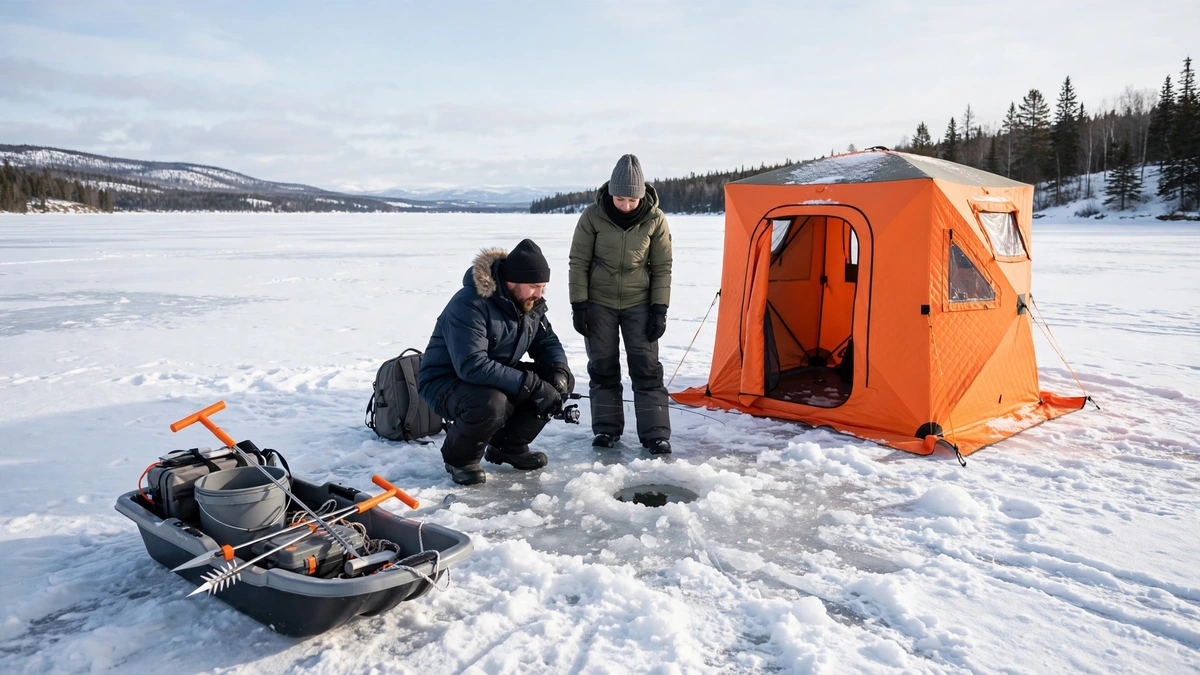
These ice fishing safety tips start where every safe trip starts: with the decision that no fish is worth a preventable cold-water emergency. Check current local conditions, carry rescue gear you know how to use, fish with a partner, and keep a turn-back plan ready before you ever step onto the ice.
By Natalia · Updated 15 October 2026 · 8-minute read
Ice thickness: what the numbers mean (and what they don’t)
The most widely cited guideline in North America is straightforward: about 4 inches of new, clear, solid ice for one person on foot. Beyond that, the commonly repeated figures are 5–7 inches for a snowmobile or ATV, 8–12 inches for a car or small pickup, and 12–15 inches or more for a medium truck. Treat these as guidelines for clear ice, not guarantees.
Use the numbers as a starting filter, then let current local information and your own testing make the final call. Many state natural-resource agencies publish their own thickness guidance for the waters they manage; follow the most conservative figure that applies to your exact lake.
10 essential ice fishing safety tips
1. Make a fresh go/no-go call every trip
Check current conditions for the exact water body before you leave — official reports, recent angler observations and the weather trend, not last week’s report. Ice that was fine Tuesday can be dangerous after a warm, windy Thursday. If reliable local information is unavailable, that is your answer: pick another day.
2. Test the ice as you walk, not just at the shoreline
Carry a spud bar (a long chisel) and strike the ice hard every few steps on the way out. On 4 inches of good ice, one solid blow should not punch through. Shoreline ice is often the weakest of the day because water levels fluctuate there — probe it before committing your weight.
3. Give weak-ice zones a wide margin
Inlets, outlets, creek mouths, bridges, docks, aeration systems, springs, pressure ridges and clusters of old holes all create thin or unpredictable ice. Moving water is the big one: even a slight current eats ice from below where you cannot see it. Route around these features generously and obey every posted closure.
4. Don’t fish alone
A partner is the single most effective safety device on ice. Walk and fish spaced at least 20 feet apart so your weight is not concentrated, but stay close enough to talk. If one of you goes through, the other calls for help and throws the rope — solo anglers get neither.
5. Leave a float plan on shore
Tell a trusted person the water body, your access point, where you plan to fish and when you will check in or return. Carry your phone in a waterproof case in an inside pocket — cold kills batteries fast, and a phone at the bottom of a sled is useless in an emergency.
6. Wear flotation, and dress for immersion
A float suit or an inflatable life vest keeps you at the surface during the critical first minute of a breakthrough. Under it, layer wool or synthetics and skip cotton, which loses its insulation when wet. Stash a complete change of dry clothes in the vehicle, not on the ice.
7. Keep self-rescue gear on your body
Ice picks — two short spiked handles — belong around your neck, not in the sled. A 50-foot throw rope should ride in a jacket pocket or clipped where a partner can grab it. A whistle costs almost nothing and carries farther than a shout in wind. Practice using the picks on solid ice before you ever need them.
8. Spread the load
Don’t cluster shelters, augers, sleds and people in one spot; concentrated weight is how good ice becomes a problem. If local rules allow vehicles on the ice, follow them exactly, drive slowly, keep windows down and doors unlatched so you can exit fast if the ice fails.
9. Watch the weather — and your own body
Wind, wet clothing and fatigue erode judgment long before they feel dangerous. Know the hypothermia warning signs: violent shivering, clumsiness and confusion — and when shivering stops, the situation is critical. Head in early while you still have warmth, daylight and good judgment; the fish will be there another day.
10. Rehearse the rescue before you need it
Talk through the plan on the drive over: who calls emergency services, who throws the rope, where everyone stands. A rescue attempted for the first time during a real breakthrough is how one victim becomes two. Rescue gear is not a purchase — it is a practiced skill.
If someone falls through: don’t create a second victim
Call emergency services immediately — that is step one, before any rescue attempt. Then follow the reach-throw-don’t-go order: extend a pole, branch or rope from solid ice, or throw the rope bag to the victim. Do not walk or crawl out onto the failed ice to grab them.
If you go in: fight the gasp reflex, get horizontal in the water, kick your feet hard and pull yourself forward onto the ice with your picks, then roll away from the hole to spread your weight. Cold-water survival follows a rough 1-10-1 pattern — about a minute to get breathing under control, about ten minutes of useful movement before muscles fail, and roughly an hour before hypothermia becomes life-threatening. Use those first minutes to get out, not to save gear.
After anyone is out of the water, treat it as a medical emergency: get them dry and warm, watch for signs of hypothermia, and seek medical attention after any cold-water immersion, even if they feel fine. Symptoms can develop later.
Optional supply: ice safety rescue kit
A compact kit can keep self-rescue picks and throw-rescue rope together and accessible, but it must be matched to local conditions, practiced before the trip, and never treated as permission to walk onto uncertain ice.
Only after safety: plan the fishing
Once conditions are verified and your group has a safe plan, the fishing itself rewards a measured approach. Midday — roughly 10 a.m. to 2 p.m. — is often the most productive window under the ice, when light penetration peaks; see our best fishing times guide for how timing overlaps with conditions. Our ice fishing tips guide covers finding fish, depth control and staying warm. Crappie are a classic hard-water target — read how to fish for crappie and crappie fishing tips for presentation details. For a broader trip checklist, see our essential fishing tips. Keep every technique choice secondary to changing ice and weather.
Frequently asked questions
How thick does ice need to be for ice fishing?
As a widely cited guideline, about 4 inches of solid, new, clear ice is considered the minimum for one person on foot. White or milky ice is roughly half as strong, so it needs roughly double the thickness. These are guidelines, not guarantees — always check current local conditions and obey closures, because ice thickness varies across a single lake.
Is ice ever 100% safe?
No. Ice can change with temperature, current, snow cover and water movement, and it can vary in thickness across one water body. Treat every trip as a fresh go/no-go decision based on current local information, and turn back when anything feels uncertain.
What should I do if someone falls through the ice?
Call emergency services first, then rescue without becoming a second victim: reach or throw aid from a safe position instead of walking out onto the weak ice. If you fall in yourself, get horizontal, kick hard and pull forward with ice picks, then roll away from the hole. Seek medical attention after any cold-water immersion.
What safety gear should I bring ice fishing?
Carry ice picks worn around your neck, a spud bar for testing ice as you walk, a throw rope of at least 50 feet, flotation (a float suit or life vest), layered cold-weather clothing with no cotton, a phone in a waterproof case, and a whistle. Just as important: fish with a partner and leave a float plan with someone on shore.
Affiliate disclosure: baitcastingreelz.com participates in the Amazon Associates Program and may earn from qualifying purchases. The optional link is for convenience and does not affect editorial guidance.