Trip planning · US guide
Best Time to Go Fishing: When to Pick Your Window
Asking for the best time to go fishing is really asking when fish will be feeding on your water. Dawn and dusk are the classic answers, but water temperature, wind, current, tide and season usually have the final vote. Here’s how to read those conditions and stop guessing.
By Natalia · Updated 15 October 2026 · 8-minute read
The short answer, then the real one
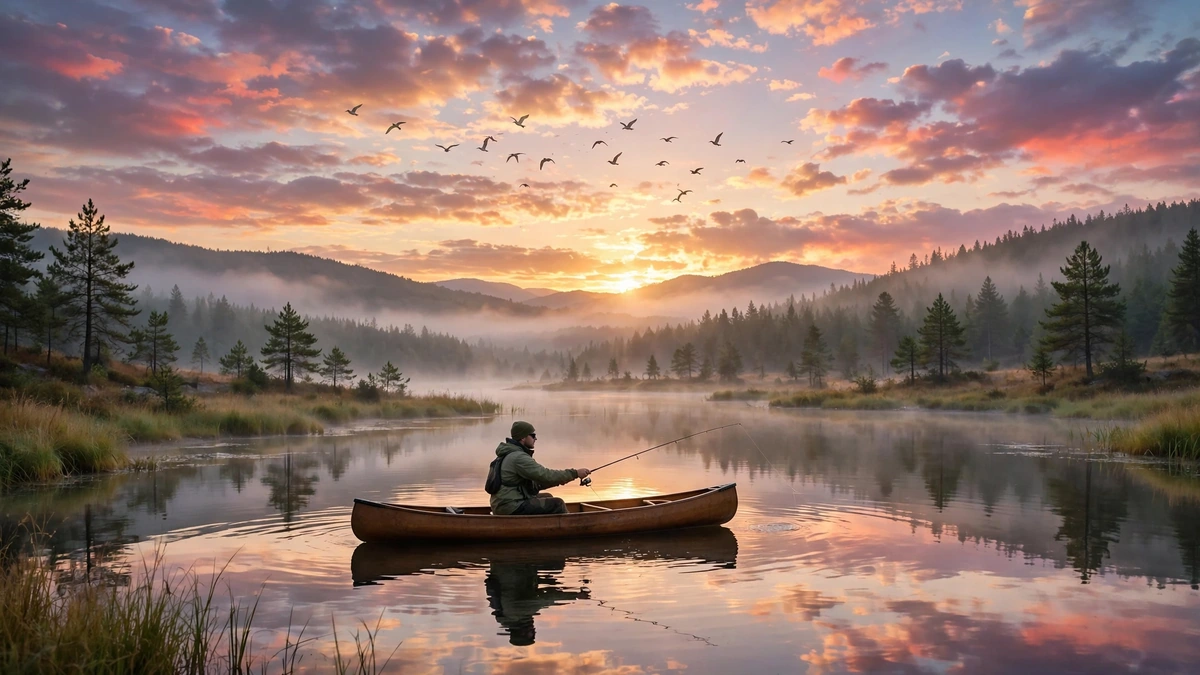
Low light is the closest thing fishing has to a universal rule. During the first hour after sunrise and the last hour before sunset, many predators leave cover and hunt openly, and baitfish scatter in ways that trigger strikes. That is why dawn and dusk top nearly every “best time” list ever written.
Six conditions that decide the bite
Light
Low light moves fish shallow and makes them bolder. But shade, cloud cover and stained water all mimic dawn’s effect — an overcast Tuesday at noon can fish like an evening.
Water temperature
Temperature is the thermostat of fish activity. Largemouth bass feed most aggressively roughly between 55°F and 75°F; trout prefer water under about 65°F; crappie spawn when shallows hit the low 60s. A surface thermometer is worth more than any bite-time app.
Wind and weather
A light chop breaks up the surface, hides your line and pushes bait against windward banks. The day before a front often produces a feeding flurry; the flat, bluebird day after can be brutally tough. Never trade safety for a forecast.
Current and tide
In tidal water, moving water beats the clock. The last two hours of an incoming tide and the first hour of the outgoing concentrate bait along creek mouths, flats edges and current seams. In rivers, the same logic applies to generation schedules and rain-driven flows.
Forage and cover
Find the food and you find the window. Shad flicking on the surface at dusk, mayflies hatching at midday, shrimp moving on a tide — these are your real bite alarms. Cover (docks, grass, timber) tells you where fish will be when the light changes.
Fishing pressure
On crowded water, the best time to go fishing may be when nobody else is there. Weekday mornings and nasty-weather windows see less pressure, and unpressured fish make more mistakes.
Best time of day, by season
| Season | Highest-percentage window | Why it works |
|---|---|---|
| Spring | Mid-morning through afternoon | Warming shallows pull fish up; afternoons run several degrees warmer than dawn. |
| Summer | First light, last light, and night | Fish feed in low light and rest deep or shaded during midday heat. |
| Fall | All day, peaking late afternoon | Bait moves shallow and bass feed heavily ahead of winter; afternoons are warmest. |
| Winter | Late morning to mid-afternoon | The warmest hours nudge lethargic fish; a 2°F rise can restart the bite. |
| Species | Prime window | Notes |
|---|---|---|
| Largemouth bass | Dawn and dusk, spring through fall | Topwater at first light; shade and deeper structure at midday in summer. See our bass fishing tips for beginners. |
| Smallmouth bass | Early morning and overcast days | Current breaks and rocky points; fall afternoons can be electric. |
| Trout (streams) | Morning hatches; cool overcast days | Water under ~65°F; stop fishing for trout when water tops 70°F — released fish may not survive. |
| Crappie | Dawn, dusk and night around lights | Brush piles and docks; vertical jigging shines midday too. See how to fish for crappie. |
| Catfish | Night and pre-storm evenings | Smell-driven feeders; moving water after rain pulls them to inflows. |
| Redfish / seatrout | Moving tides, early morning | Fish the tide chart, not the sunrise — incoming water over flats is the trigger. A popping cork over potholes is a proven setup: see popping cork fishing. |
Moon, fronts and rain: useful clues, not guarantees
Moon phases. Solunar tables predict “major” and “minor” feeding periods tied to moonrise, moonset and overhead/underfoot positions. Some anglers plan whole trips around them; others notice nothing. The honest position: the effect, if real, is small next to water temperature and current. Use a moon table to choose between two otherwise equal days, and verify against your own log before believing it.
Fronts. The pattern most anglers actually observe is pre-front activity followed by post-front lockjaw. As pressure falls ahead of a storm, bait gets nervous and predators feed; after the front passes with bluebird skies and a north wind, fish sulk tight to cover. The adjustment is simple: fish before the front if you can, and slow down and downsize after it.
Rain. Light rain is rarely a problem and often helps by breaking the surface and washing insects in. Heavy rain is a different trip: rising, muddy water and dangerous flows. If you go after a downpour, fish the inflows and the first band of clearing water — and check access and water levels first.
Build your own best-time log
- Record the water and target. Note the exact area, species and access conditions.
- Record conditions. Include light, wind, water temperature, current or tide stage, and any weather change during the trip.
- Record bait and cover. Where were bait and fish relative to structure, depth or current?
- Record the presentation. Note lure, depth, retrieve speed and the casting angle that produced.
- Look for repeatable overlap. Three trips where the bite starts when the tide turns is a pattern; one good morning is a story.
Optional supply: fishing logbook
A simple waterproof logbook turns timing observations into water-specific patterns over a season — the only “best time” forecast that is truly yours.
Pair the log with our essential fishing tips for the full trip framework, and review our ice fishing tips before applying any of this to frozen water — winter is a separate discipline with safety as the entire plan.
Frequently asked questions
What is the best time of day to go fishing?
The first and last hour of daylight are the most reliable starting windows in most fisheries, because low light lets fish move shallow comfortably. In summer heat, night fishing can outproduce midday; in winter, the warmest part of the afternoon is often better. Tidal fisheries run on current, not the clock — fish the moving water.
Do moon phases really affect fishing?
The evidence is mixed. Some anglers swear by major and minor feeding periods around moonrise and moonset, and brighter nights can change how bait behaves — but no moon table replaces direct observation of bait, current and water temperature on your water. Treat moon data as a tiebreaker for choosing between two otherwise equal days, not a guarantee.
Is fishing better before or after rain?
The day or two before a front often brings a feeding flurry as pressure drops, while the bluebird skies right after a front can shut fish down. Rain itself can help where runoff washes food into the water, but rising, muddy water demands safety first — check flows and access before you go.
What is the best time to go fishing in winter?
Fish the warmest, brightest part of the day — typically late morning through mid-afternoon — when shallow water has had time to warm a degree or two. Slow everything down, fish deeper structure, and on frozen water make ice safety the entire plan before you think about the bite.
Affiliate disclosure: baitcastingreelz.com participates in the Amazon Associates Program and may earn from qualifying purchases. The optional link is for convenience and does not affect editorial guidance.